Learning about ecosystems Normal Worksheets for Ages 3-8
3 filtered results
-
From - To
Explore a world of nature with our "Learning about Ecosystems" worksheets for kids aged 3-8. Tailored to young learners, these fun and educational activities introduce children to various ecosystems, their inhabitants, and the importance of each one. Through engaging visuals and interactive tasks, kids enhance their knowledge about deserts, oceans, forests, and more. Perfect for helping youngsters develop scientific thinking and environmental awareness. These age-appropriate worksheets support foundational learning skills while celebrating the wonders of nature. Ignite curiosity and instill eco-friendly values with our diverse collection of ecosystem-focused resources.
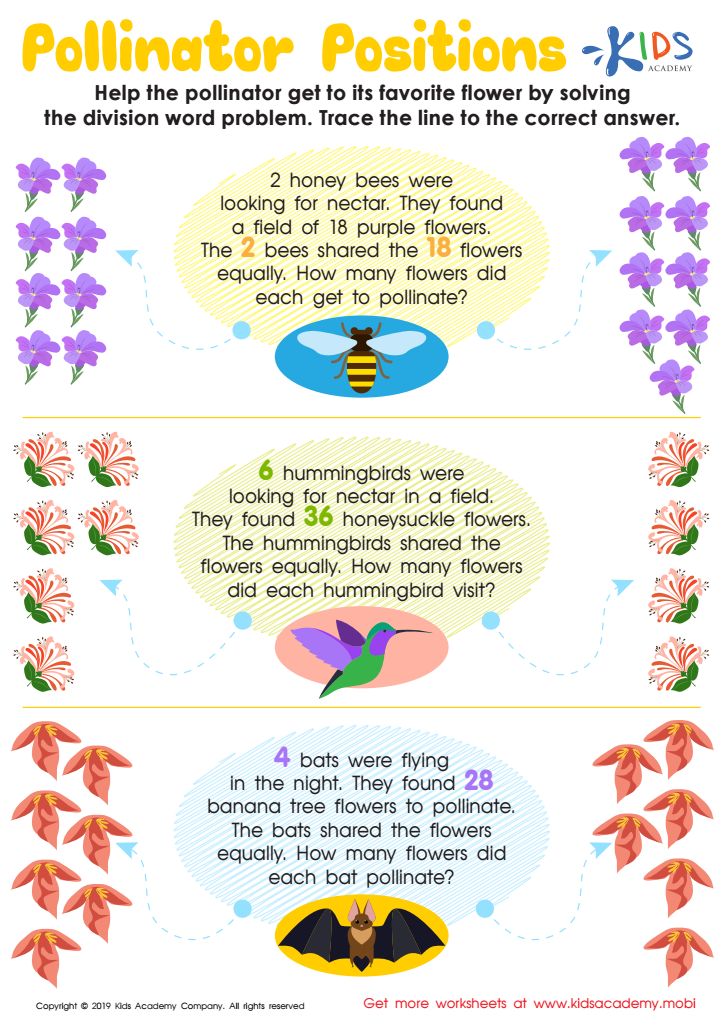
Pollinator Positions Worksheet
 Assign to My Students
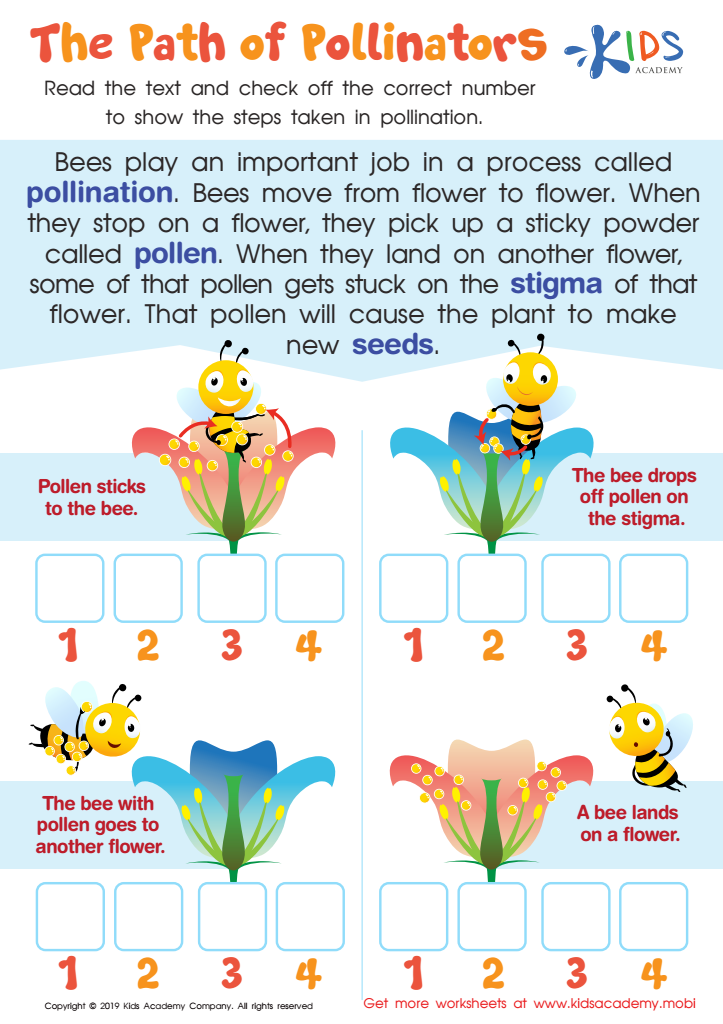
The Path of Pollinators Worksheet
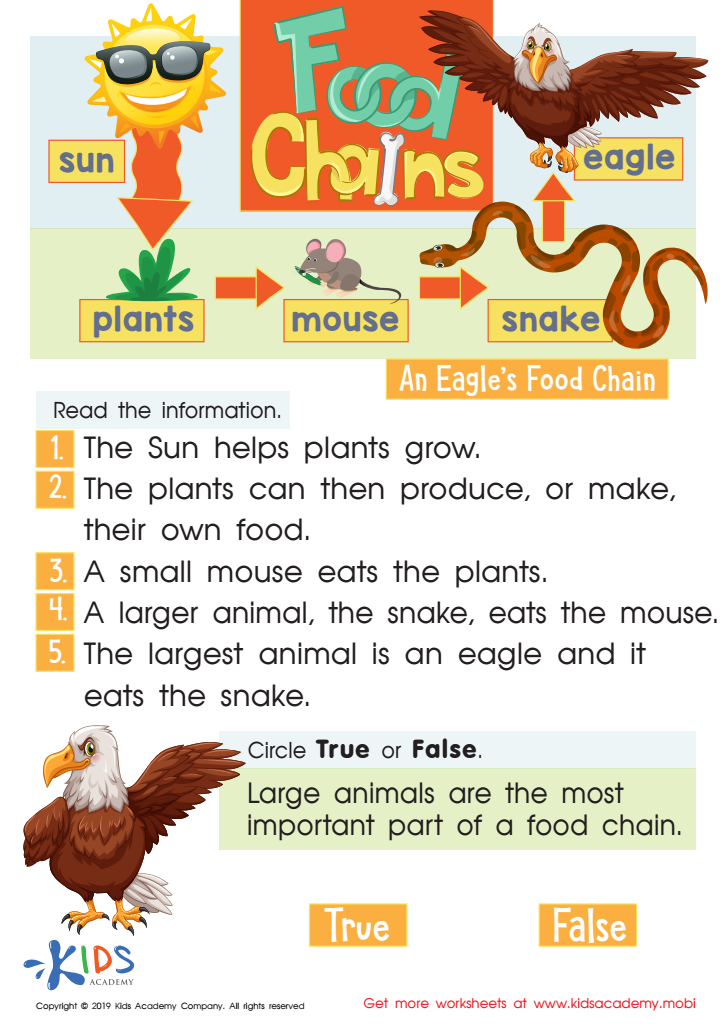
Food Chains Worksheet







Learning about ecosystems is crucial for young children, and parents and teachers should dedicate time to it for several reasons. Firstly, introducing ecosystems at an early age fosters a sense of environmental awareness and stewardship. By understanding how plants, animals, and organisms interact within their habitats, children develop an appreciation for nature and the importance of biodiversity.
Secondly, it enhances critical thinking and observational skills. As children explore different ecosystems, they ask questions and make connections about how living organisms depend on and influence one another. This inquiry-driven learning promotes curiosity and analytical thinking necessary for all areas of learning.
Moreover, learning about ecosystems ties directly into subjects like science, geography, and even literacy, providing a holistic educational experience. Stories and activities about forests, oceans, and other habitats naturally pique children’s interest and make learning fun and engaging.
Additionally, early eco-literacy empowers students with the knowledge to make informed choices about their environment. Simple practices like recycling, conserving water, or protecting wildlife start with knowing why it matters.
Lastly, teaching about ecosystems builds empathy and social skills. Recognizing that human actions affect other life forms can inspire collaborative action, fostering a sense of responsibility and community in young learners. Thus, ingraining ecosystem knowledge at an early age has far-reaching benefits for their personal and academic development.








