Letter tracing skills Normal Worksheets for Ages 3-8
6 filtered results
-
From - To
Enhance your child's handwriting with our "Letter Tracing Skills Normal Worksheets for Ages 3-8." Perfect for early learners, these worksheets are designed to develop fine motor skills and foundational writing abilities. Each sheet features clear, easy-to-follow guides for tracing letters, boosting confidence and mastery in writing. Fun illustrations and engaging activities keep young minds interested and focused. Ideal for home or classroom use, these worksheets support skill progression from basic letter shapes to more complex writing tasks, ensuring a strong start in literacy. Download now to help your child achieve excellent handwriting skills effortlessly!
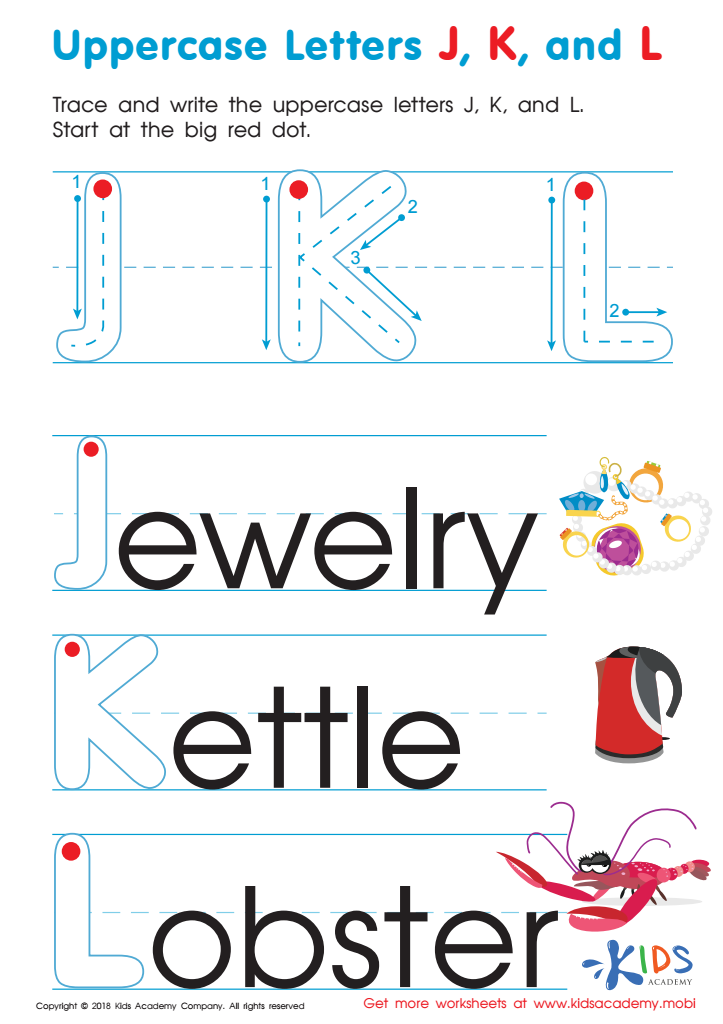
Uppercase Letters J, K, and L Worksheet

Letter C Tracing Page
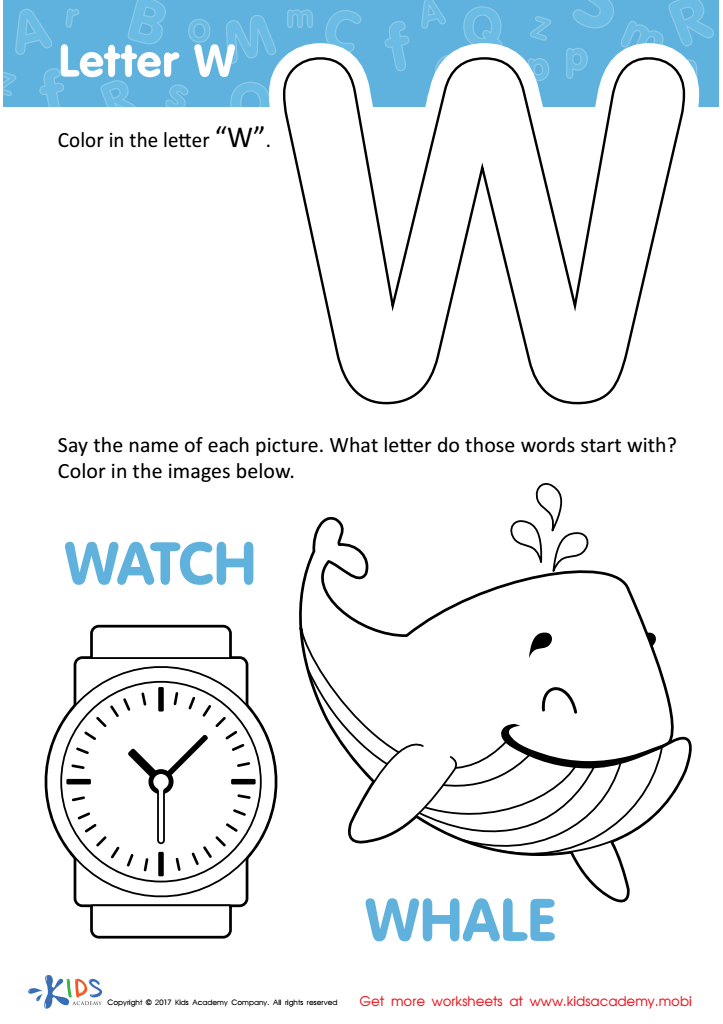
Letter W Coloring Sheet
 Assign to My Students
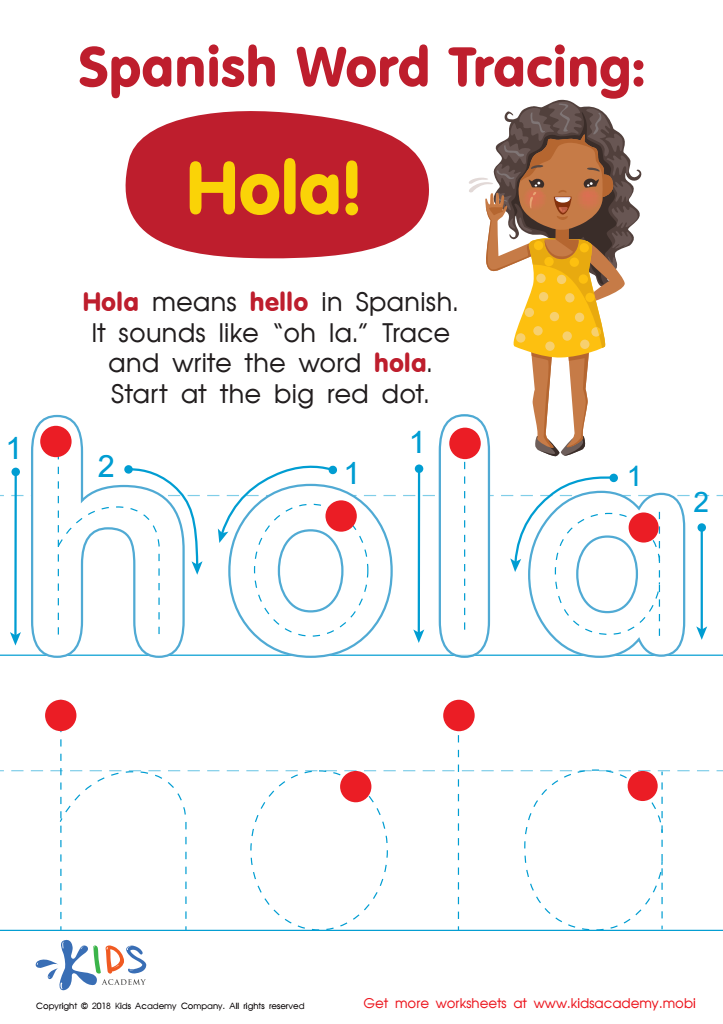
Spanish Word Tracing: Hola Worksheet
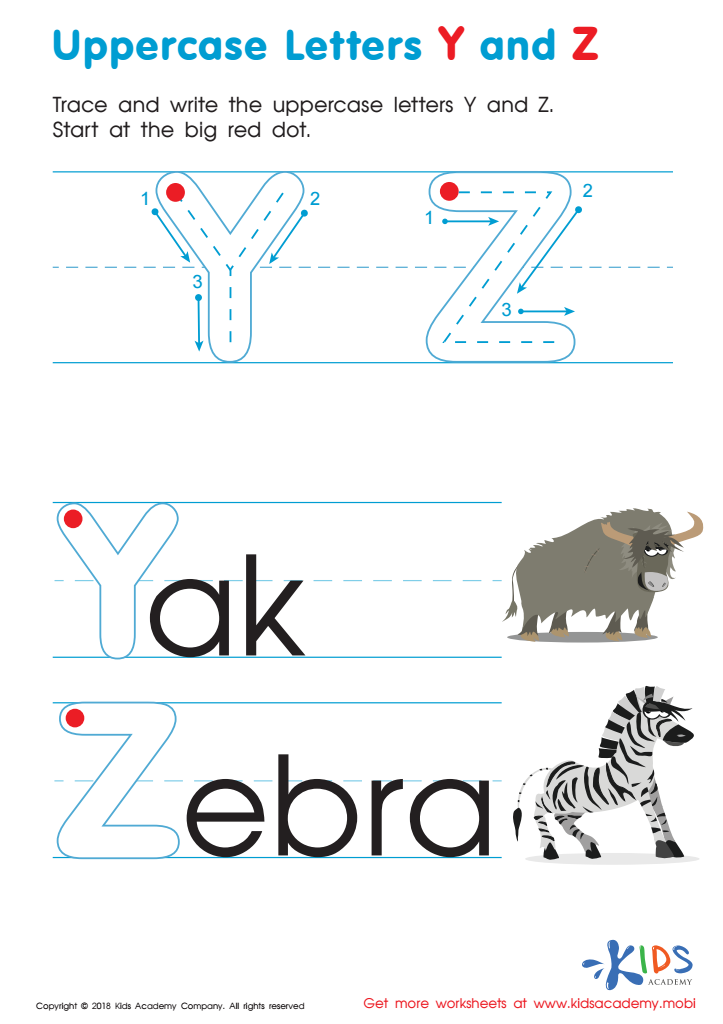
Uppercase Letters Y Z Worksheet
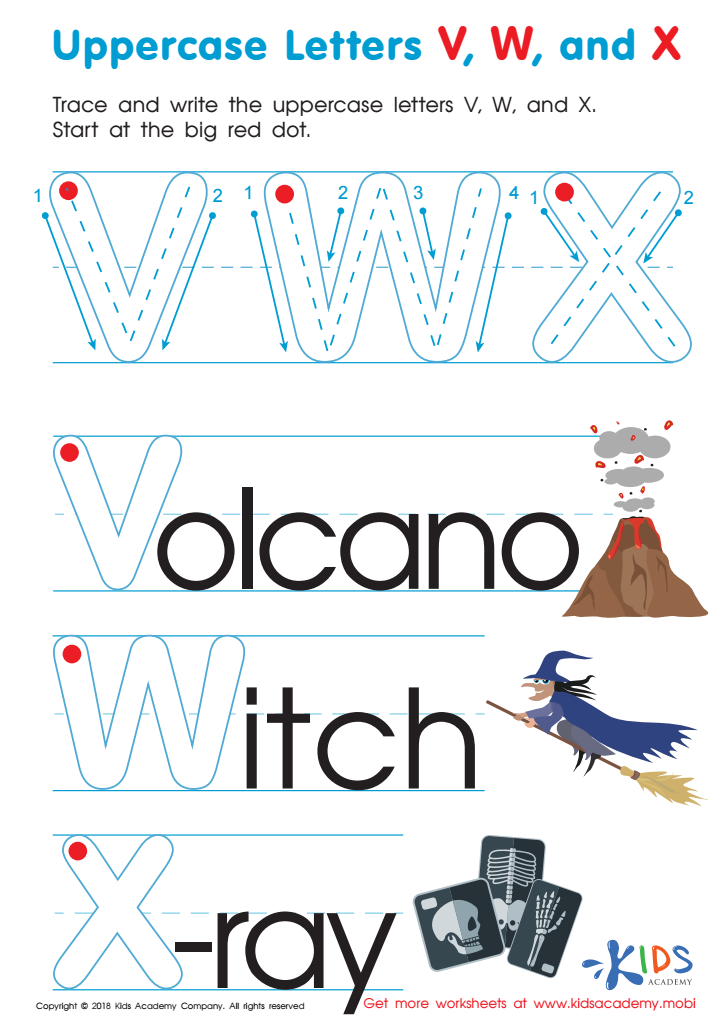
Uppercase Letters V, W, and X Worksheet




.jpg)


Letter tracing is a foundational activity essential for young children, typically ages 3 to 8, as it plays a crucial role in developing several fundamental skills critical for their overall academic growth. Firstly, letter tracing enhances fine motor skills. The act of holding a pencil and carefully tracing requires coordination and control of small hand muscles, laying the groundwork for clear and legible handwriting.
Additionally, letter tracing is invaluable for literacy development. It reinforces the ability to recognize and memorize letters, which is a vital step toward reading fluency. By repeatedly tracing each character, children internalize their shapes and patterns, making it easier to identify them in words and text.
It also helps establish spatial awareness and visual-motor integration—skills necessary for distinguishing between similar letters like 'b' and 'd'. This leads to improved reading and writing accuracy.
Furthermore, successful letter tracing builds confidence and fosters a positive association with writing activities, encouraging a child’s willingness to engage in more complex literacy tasks.
Teachers and parents should nurture these skills early, as they are directly linked to educational success. By making letter tracing a consistent practice, adults significantly contribute to a child's developmental milestones, setting them up for academic excellence and a lifelong love of learning.








