
Reading readiness Normal Worksheets for Ages 3-8
6 filtered results
Difficulty Level
Grade
Age
-
From - To
Subject
Activity
Standards
Discover our Reading Readiness Normal Worksheets for Ages 3-8, meticulously designed to ignite a love for reading in young learners. These worksheets focus on foundational skills like letter recognition, phonics, vocabulary, and comprehension. Perfect for both classroom and home settings, our engaging activities feature colorful visuals and interactive tasks that make learning enjoyable. They prepare your child for successful reading while nurturing their confidence and curiosity. Equip your little one with the tools they need to thrive, as these worksheets seamlessly blend education and fun. Unlock their potential today with Kids Academy!
Favorites
With answer key
Interactive
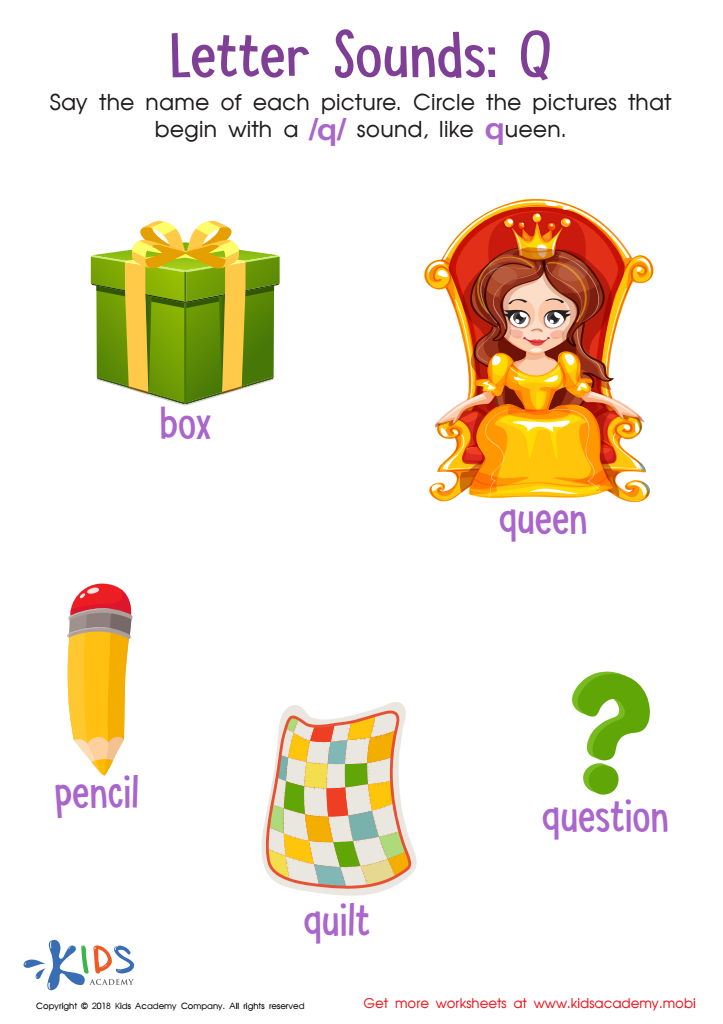
Letter Q Sounds Worksheet
Kids can get confused between "K" and "Q" sounds. Help them learn with this phonics worksheet. They'll name each image and read the word underneath. Point out that words with "Q" also have a "U" which affects how it sounds. Have them circle the matching pictures and watch as they learn this unique letter sound.
 Assign to My Students
Letter Q Sounds Worksheet
Worksheet
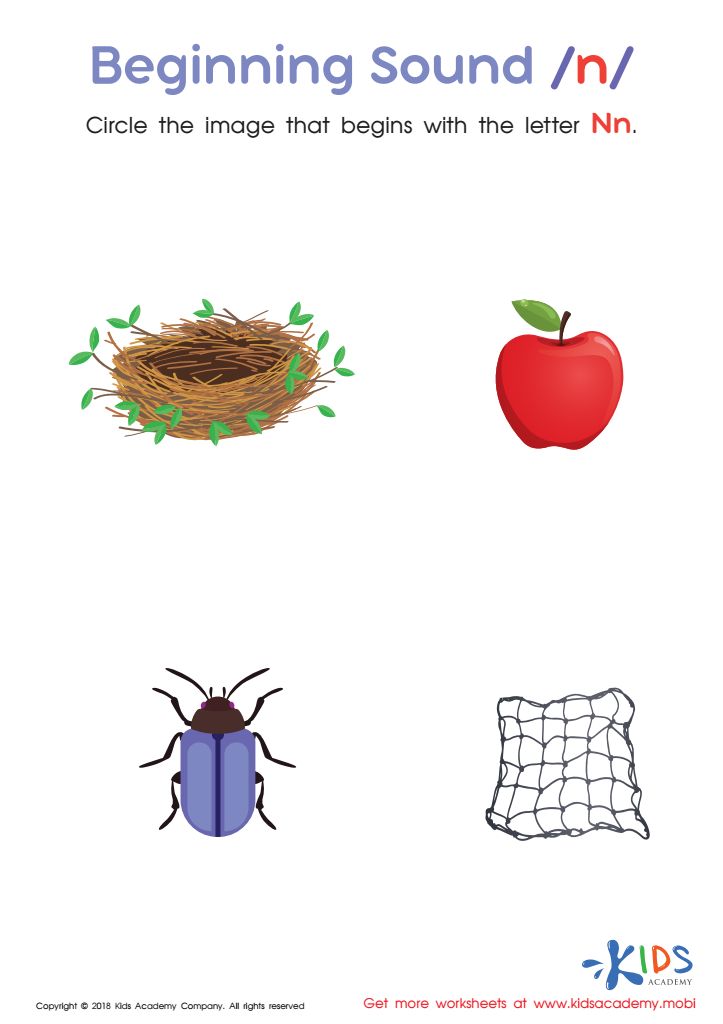
Beginning Sound «n» Worksheet
Help your emerging reader learn the initial «n» sound with this free PDF worksheet! Strengthen fine motor skills by tracing circles around words beginning with «n». Pictures are clear and engaging, giving beginning Phonics learners the right amount of practice and the confidence to succeed.
Beginning Sound «n» Worksheet
Worksheet
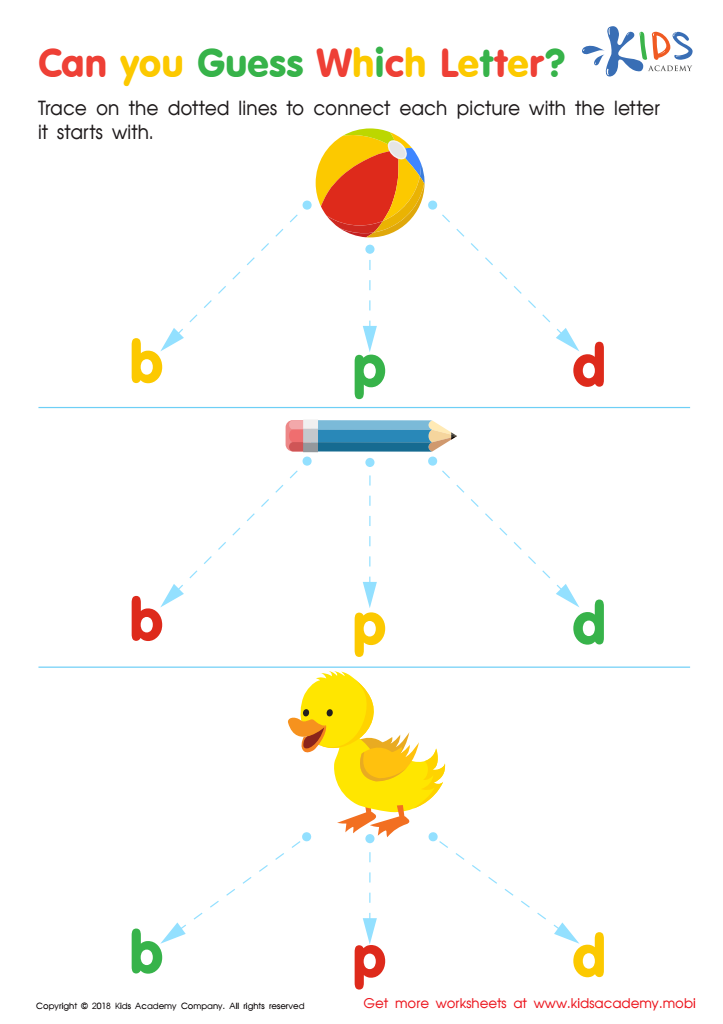
Can you Guess Which Letter? Worksheet
Connect the pictures with their corresponding letters with this fun worksheet! Ask your child what each picture is, then what letter it begins with. Download the PDF for colorful images and engaging texts to hold their attention, making learning an enjoyable activity.
Can you Guess Which Letter? Worksheet
Worksheet
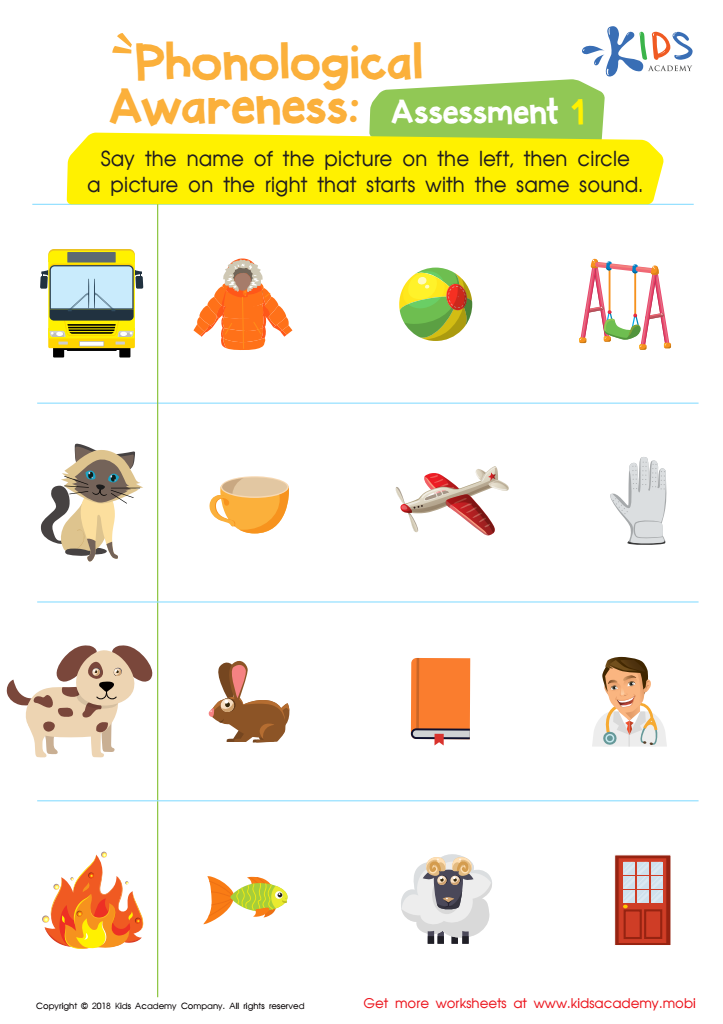
Phonological Awareness: Assessment 1 Worksheet
This worksheet helps kids build key phonics skills for pre-reading. They say each picture name aloud, focusing on the starting sound. Then, they match the sound with an image in the same row. Use as a checkpoint for kindergarten or grade 1 phonics readiness.
Phonological Awareness: Assessment 1 Worksheet
Worksheet
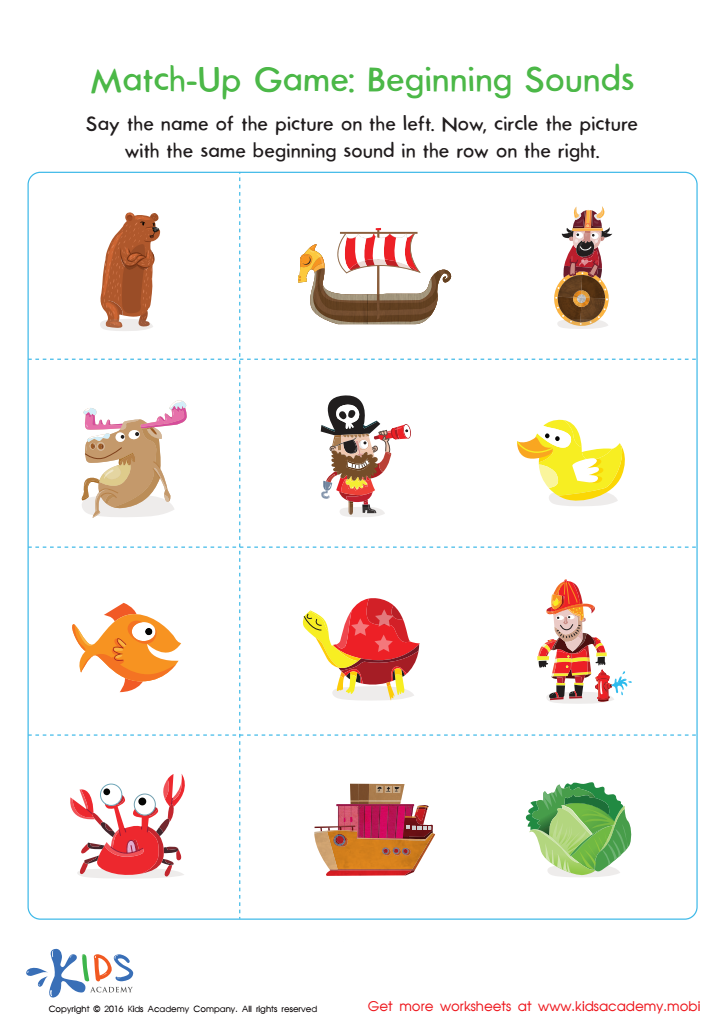
Match–Up Game: Beginning Sounds Worksheet
Start today with this beginning sounds match-up printable!
Teach your child to solve problems mentally with this beginning sounds match-up printable. They'll learn to categorize pictures based on phonics rules, developing mental stamina and focus. It's an important step for recognizing sounds and letters in print, building a foundation for reading and spelling. Start today and take your child's skills to the next level!
Match–Up Game: Beginning Sounds Worksheet
Worksheet
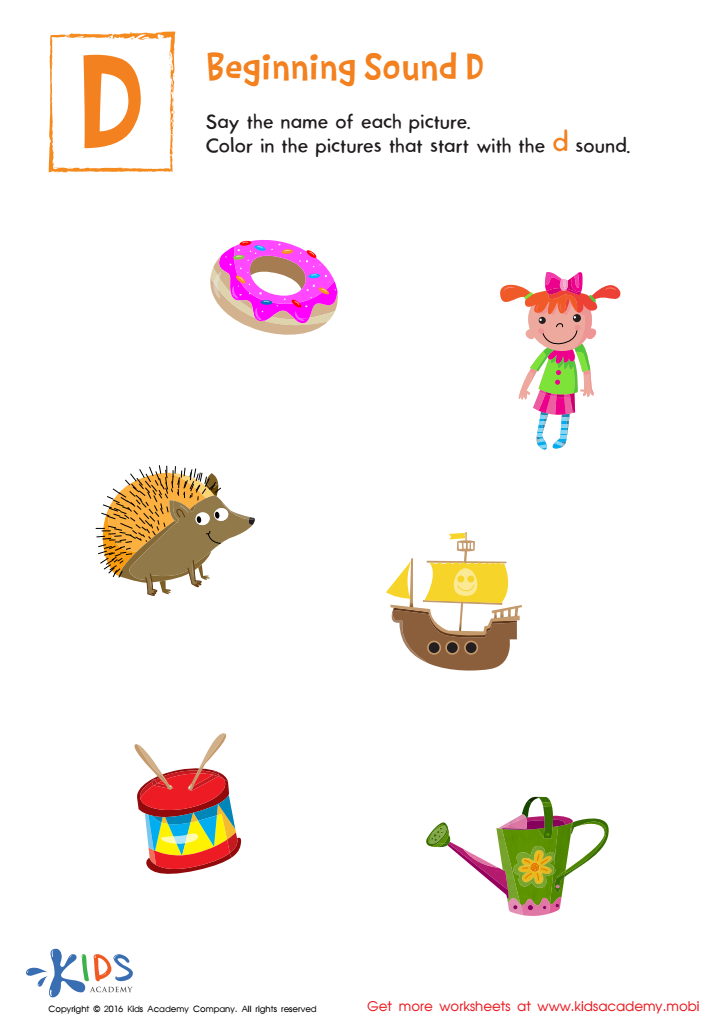
Beginning Sound D Worksheet
Reinforce phonics with this vibrant beginning sound d worksheet! Pictures help kids identify words beginning with 'd' and develop early reading skills. Sounding out each word increases literacy!
Beginning Sound D Worksheet
Worksheet
Join Kids Academy for Free
Who is primarily going to use this learning content?







Reading readiness is a crucial benchmark in early childhood development for children ages 3-8. When parents and teachers recognize and foster reading readiness, they are setting the foundational stones for a child's future academic success and lifelong love of learning. At this age, children's brains are highly receptive and adaptable; engaging them in reading activities supports cognitive, social, and language development.
Firstly, reading readiness builds vital language skills. It improves vocabulary, comprehension, and the ability to express thoughts clearly. Through stories and books, children are exposed to new words, sentence structures, and ideas, enriching their language experiences.
Secondly, early reading habits enhance cognitive skills like concentration, memory, and critical thinking. When children follow a storyline, predict outcomes, or recognize patterns, they improve their mental agility.
Moreover, reading readiness boosts emotional development and empathy. Stories often reflect various emotions and relationships, helping children understand and navigate their own feelings and social interactions.
Finally, promoting a love for reading at an early age sets a positive attitude towards learning. Children who enjoy reading are more likely to excel academically and cultivate a habit that benefits them throughout their lives. By investing in reading readiness, parents and teachers play an essential role in shaping well-rounded, capable, and curious individuals.








