Time recognition Normal Worksheets for Ages 3-8
5 filtered results
-
From - To
Explore our Time Recognition Normal Worksheets designed for children ages 3-8! These engaging resources are perfect for helping young learners develop essential time-telling skills in a fun and interactive way. Each worksheet features vibrant visuals and age-appropriate activities that aid in learning how to read clocks, understand time concepts, and develop a sense of daily routines. Ideal for both home and classroom settings, our worksheets cater to different learning styles, making time learning enjoyable for every child. Download now to give your child a head start in mastering time recognition with our thoughtful and educational materials!
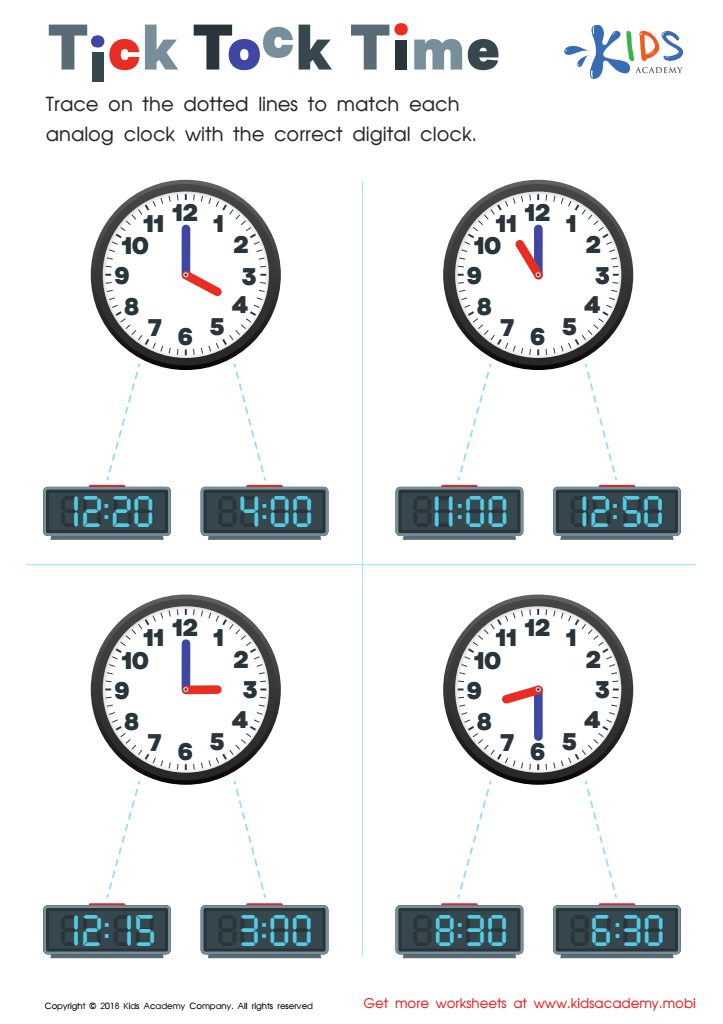
Tick Tock Time Worksheet
 Assign to My Students
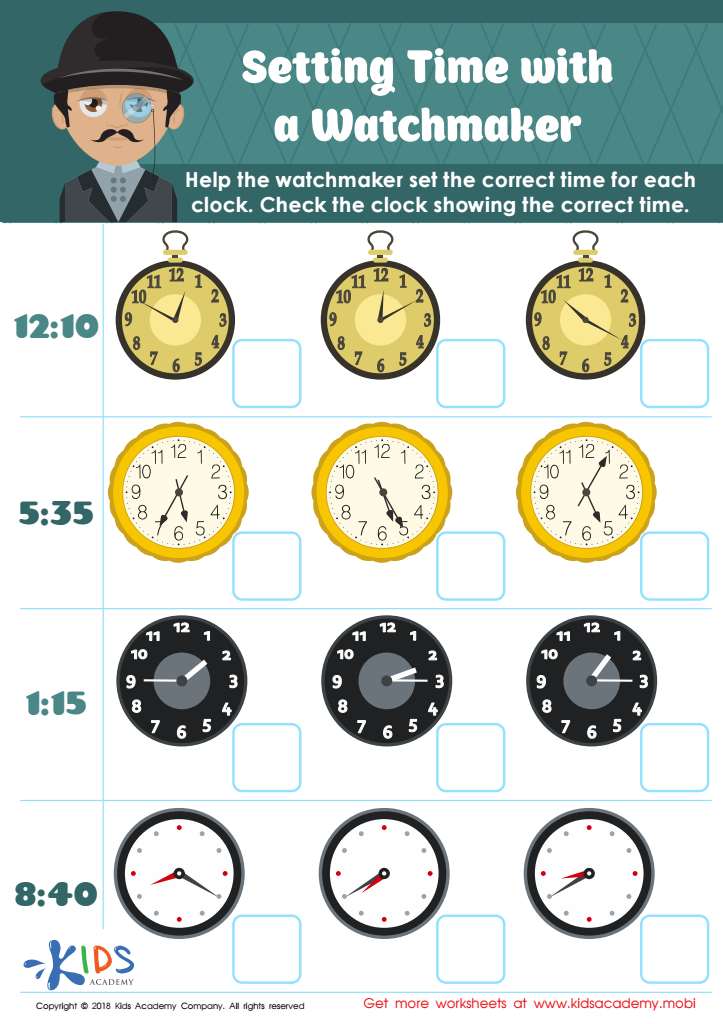
Setting Time with Watchmaker Worksheet
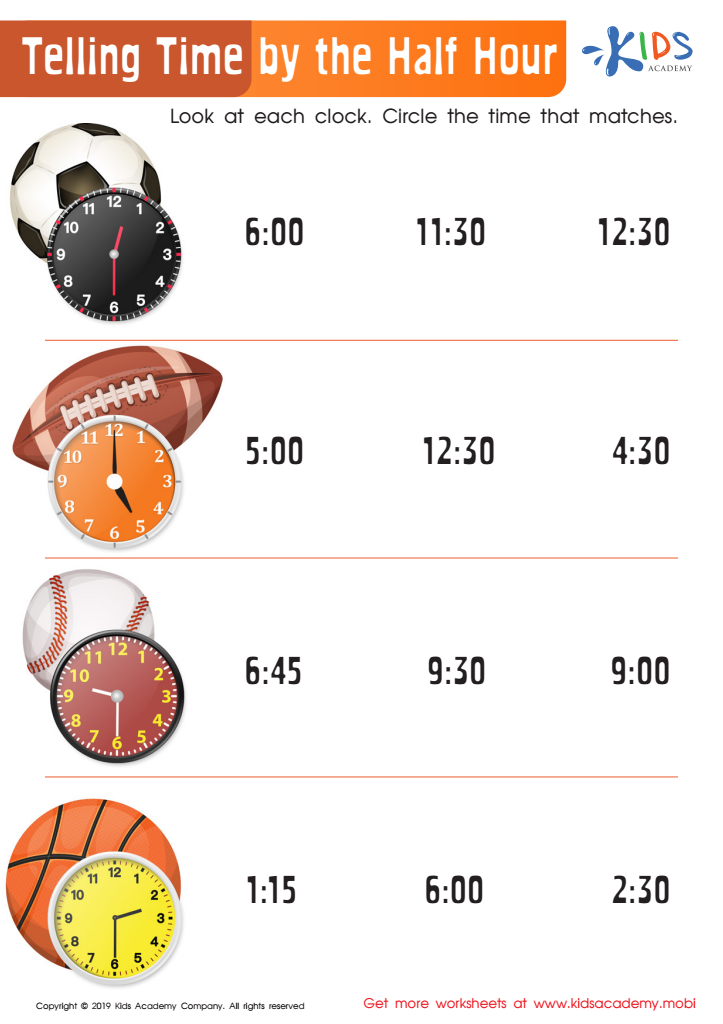
Telling Time by the Half Hour Worksheet
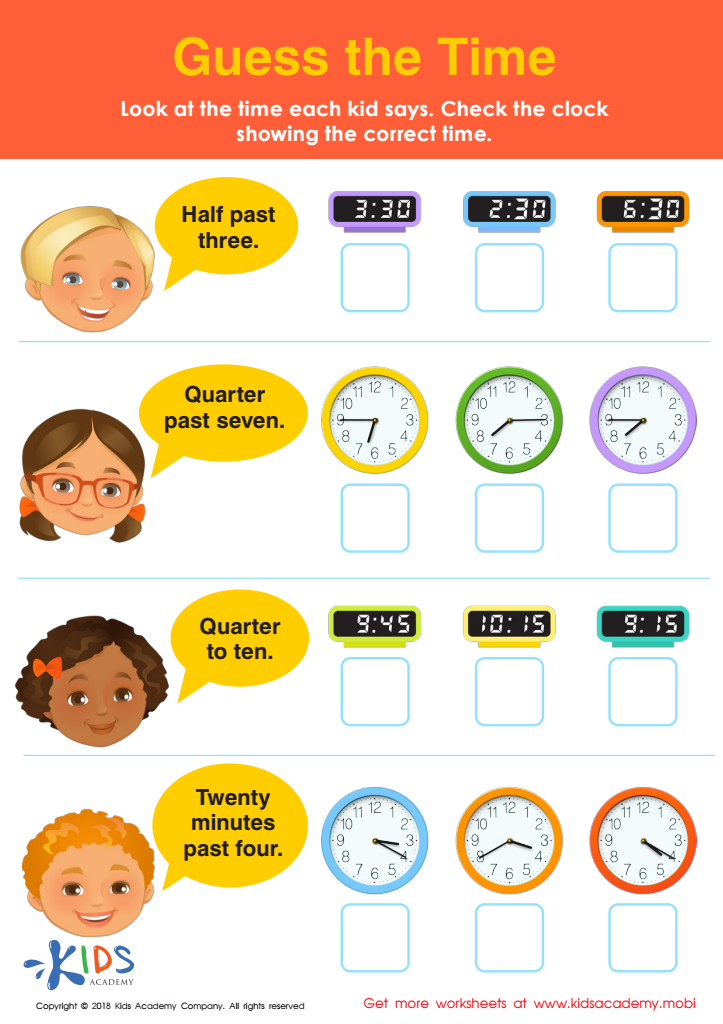
Guess the Time Worksheet
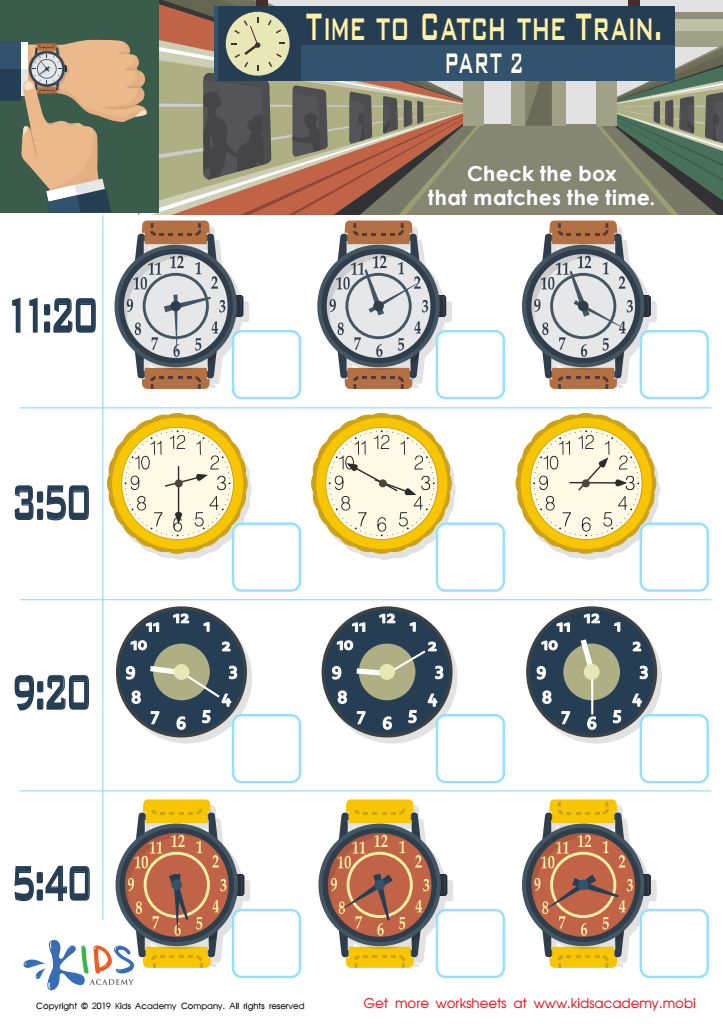
Time to Catch the Train Part 2 Worksheet








Time recognition is an essential skill for children aged 3-8, forming the foundation for their understanding of daily routines, responsibilities, and future planning. Parents and teachers should care about this developmental milestone for several reasons.
Firstly, effective time recognition helps children gain a sense of independence. By understanding concepts such as schedules and deadlines, children learn to manage their time wisely, allowing them to prioritize tasks such as homework or chores. This skill is crucial as they transition into more structured environments like school, where time management becomes increasingly important.
Secondly, time recognition fosters social skills. Many activities, both in school and at home, are organized around a clock—mealtime, playtime, and nap time. When children comprehend these timeframes, they can better empathize with others' schedules, enhancing their ability to cooperate and work together.
Moreover, time recognition stimulates cognitive development. It integrates various math concepts such as counting, pattern recognition, and spatial reasoning. Teaching children to read clocks, understand sequences of events, and manage their time contributes to their overall mental agility.
In summary, nurturing time recognition in early learners is vital for their cognitive, social, and emotional development, ultimately preparing them for future academic and personal success.








