Understanding economics Normal Worksheets for Ages 3-8
3 filtered results
-
From - To
Unlock the world of economics for young learners with our "Understanding Economics Normal Worksheets" designed specifically for ages 3 to 8. These engaging, age-appropriate worksheets introduce essential economic concepts in a fun and interactive way. Children will explore topics such as needs versus wants, saving, and basic exchanges through colorful illustrations and easy-to-follow activities. Perfect for parents and educators, these resources foster critical thinking and essential life skills while making learning enjoyable. Whether used at home or in the classroom, our worksheets will help little ones develop a foundational understanding of economics while having fun! Start their journey today!
 Assign to My Students
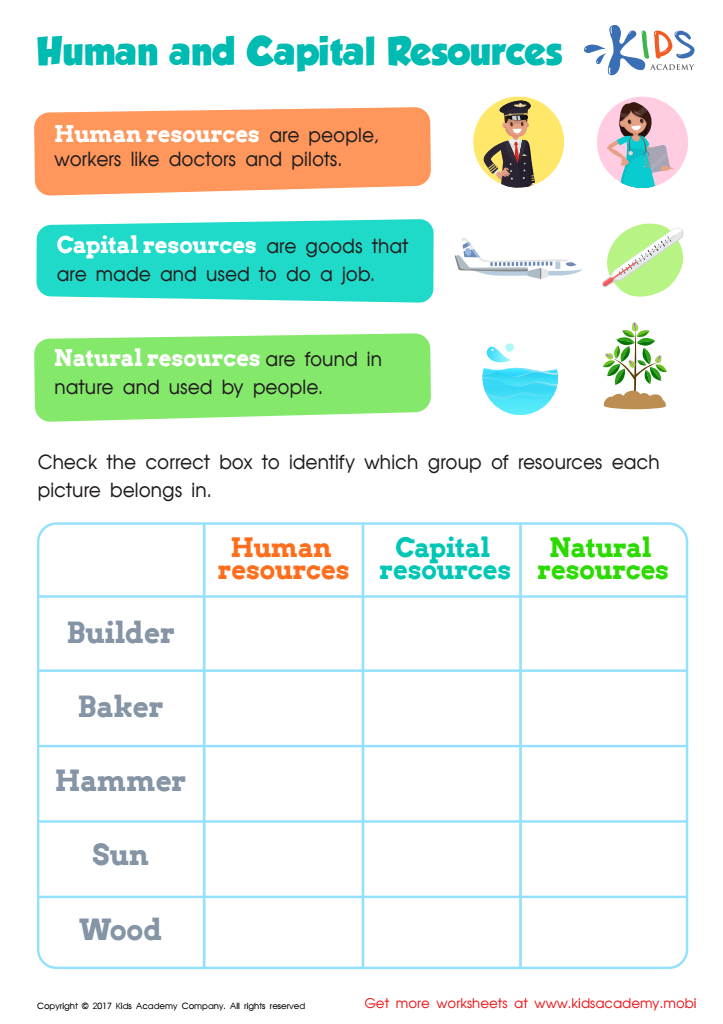
Human and Capital Resources Worksheet
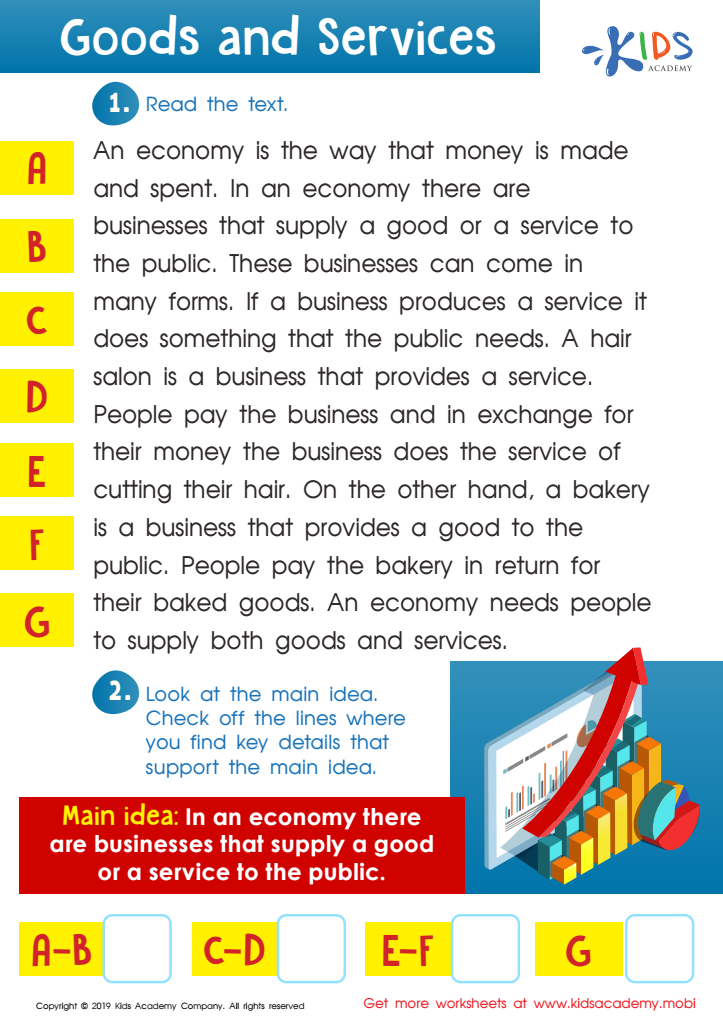
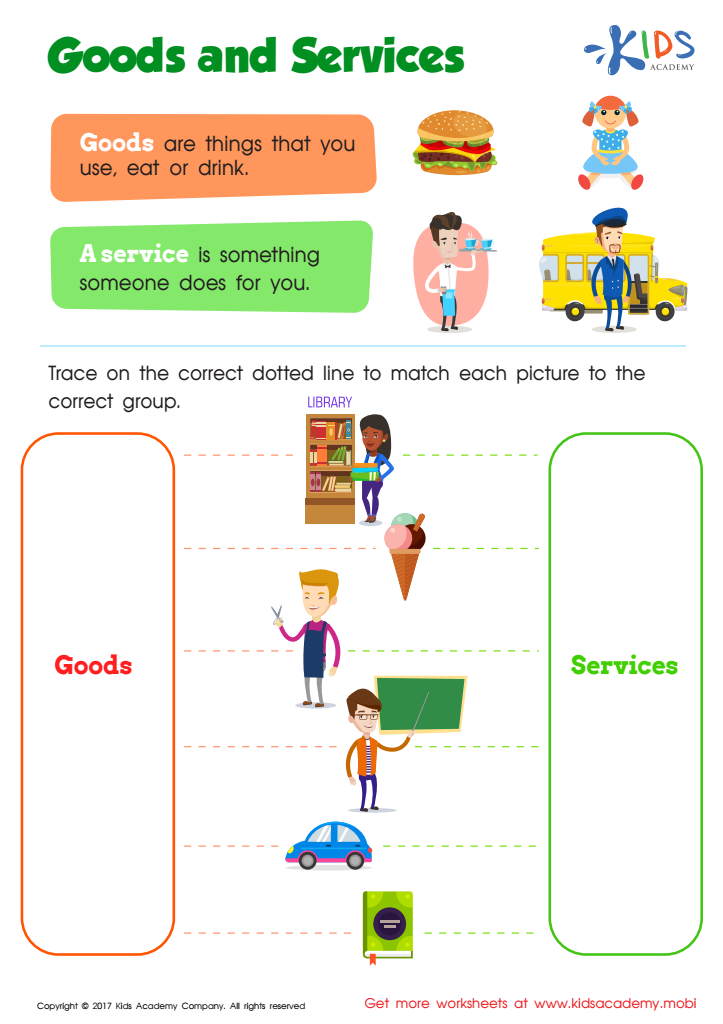
Goods and Services Worksheet






Understanding economics, even at a young age, is crucial for children aged 3-8. Early exposure to basic economic concepts can empower children to make informed decisions about money, resources, and relationships as they grow. Teaching them simple ideas like supply and demand, needs versus wants, and the value of saving helps lay the foundation for responsible financial habits.
When parents and teachers engage children in discussions about economics through games or storytelling, they foster critical thinking skills and problem-solving abilities. These experiences can enhance mathematical skills, as children learn to recognize patterns and make comparisons. For example, they can understand the concept of exchange through sharing toys or understanding the importance of saving allowance money for a desired toy.
Moreover, a fundamental grasp of economics can cultivate social awareness. Children learn that resources are limited and that thoughtful choices affect both individuals and communities. This knowledge nurtures empathy and collaboration, essential traits for future responsible citizens. Overall, integrating economic understanding into early childhood education can build a well-rounded intellect, equipping young learners with the tools they need for a successful future in an increasingly complex world.








