Understanding measurements Normal Worksheets for Ages 3-8
8 filtered results
-
From - To
Explore our "Understanding Measurements" worksheets, specially crafted for children ages 3-8. These engaging printables help young learners grasp the fundamentals of measuring objects, comparing sizes, and understanding units. Perfect for early education, each worksheet combines fun activities with essential skills, guiding children through concepts like length, weight, and volume. Tailored to fit their developmental needs, these worksheets support both classroom and at-home learning. Empower your child's growth in math and science with our easy-to-follow, step-by-step approach to understanding measurements. Download today and watch your child's confidence in measurement flourish!
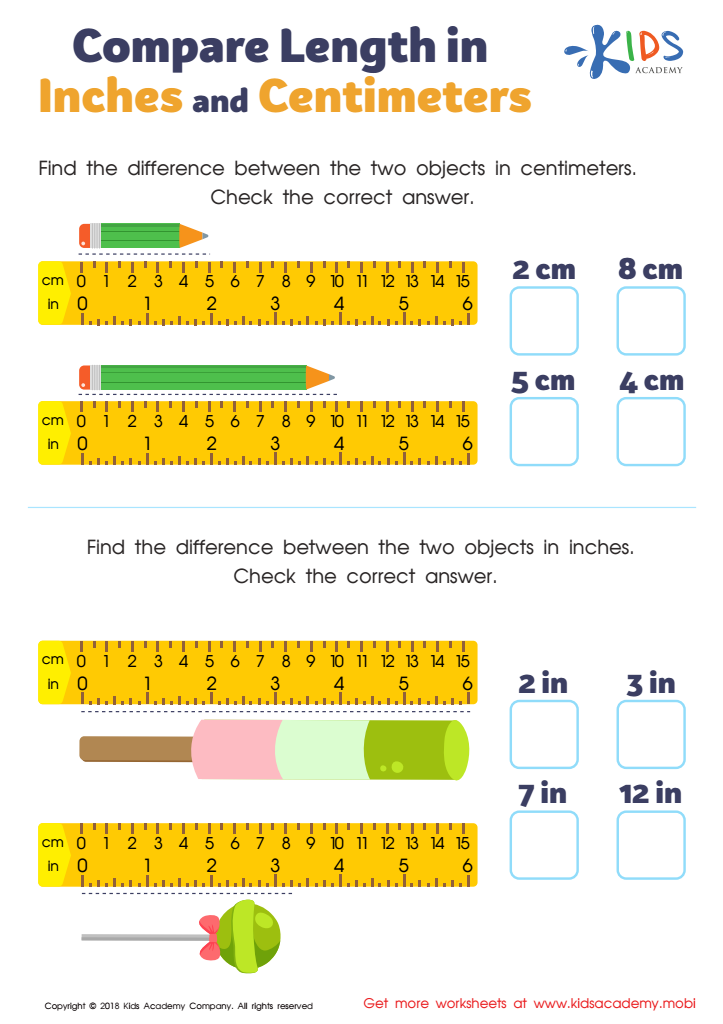
Compare Length in Inches and Centimeters Worksheet
 Assign to My Students
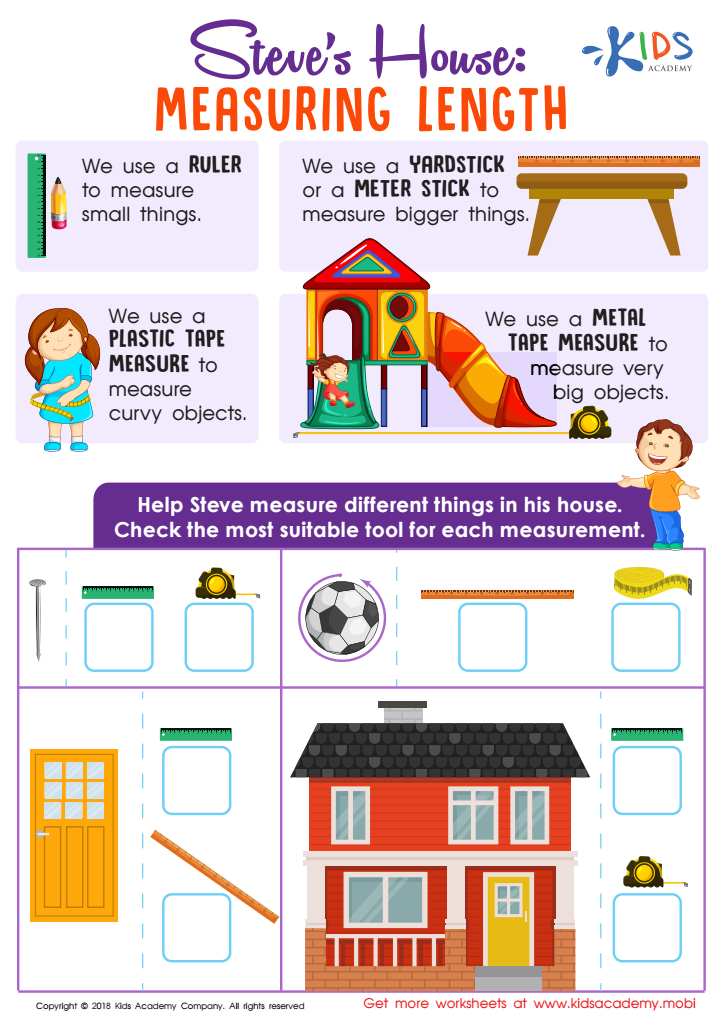
Steve's House: Measuring Length Worksheet
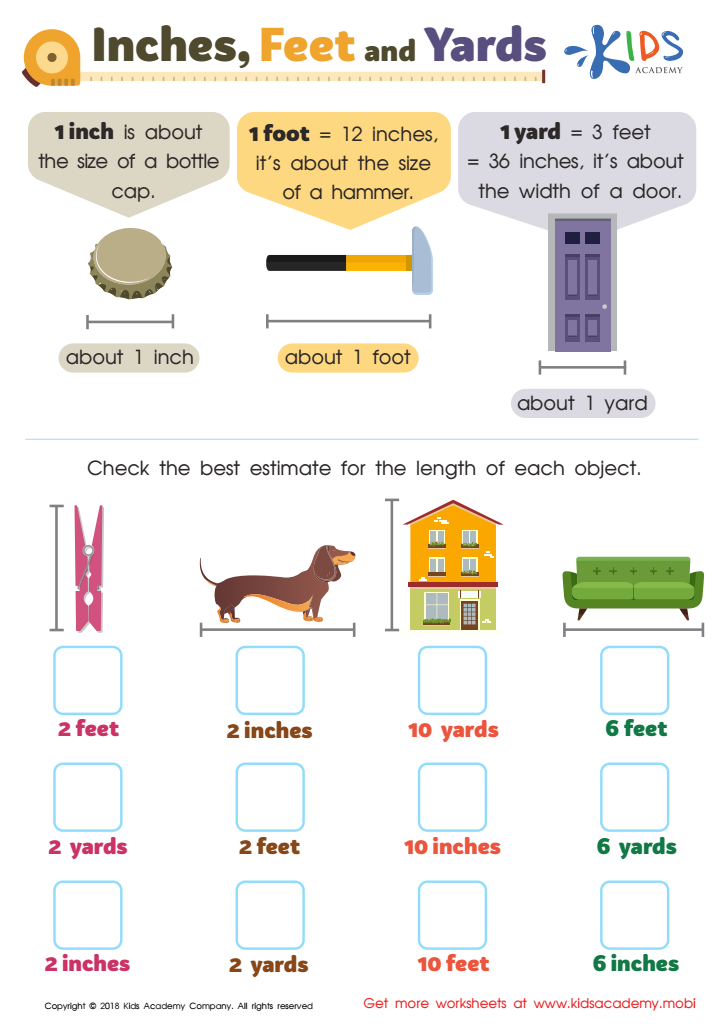
Inches, Feet and Yards Worksheet
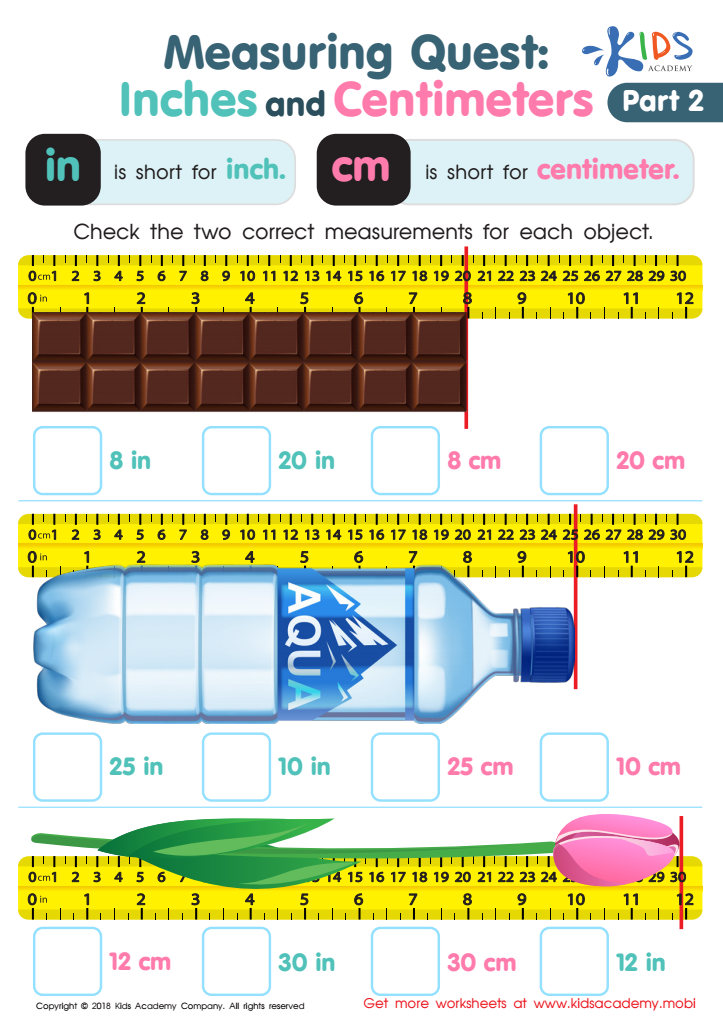
Measuring Quest: Inches and Centimeters - Part 2 Worksheet
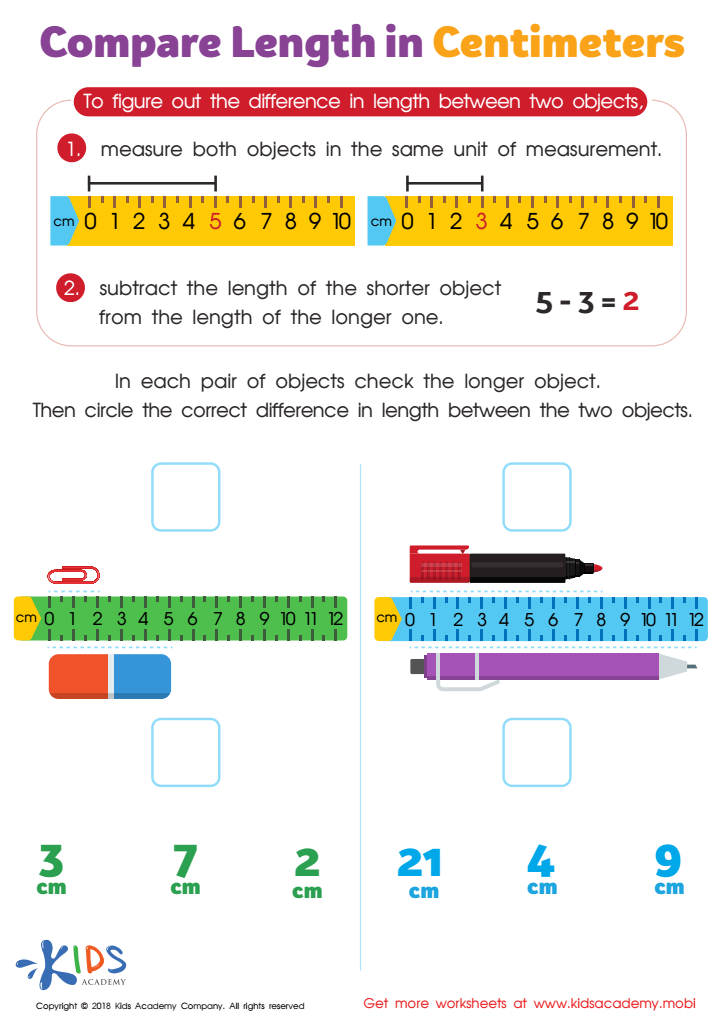
Compare Length in Centimeters Worksheet
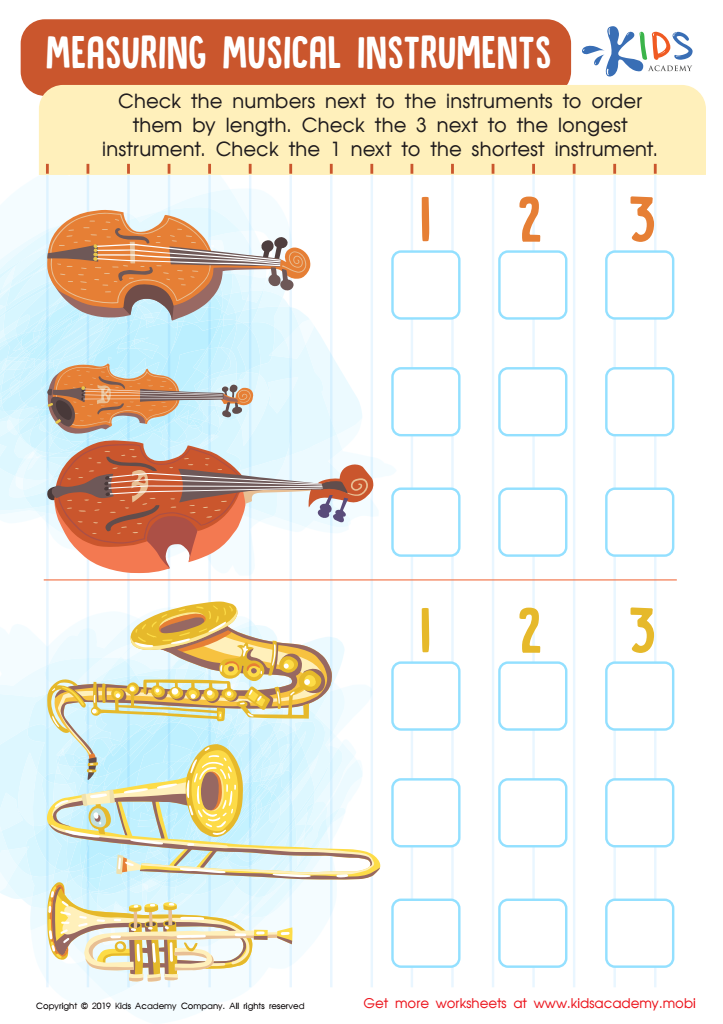
Measuring Musical Instruments Worksheet
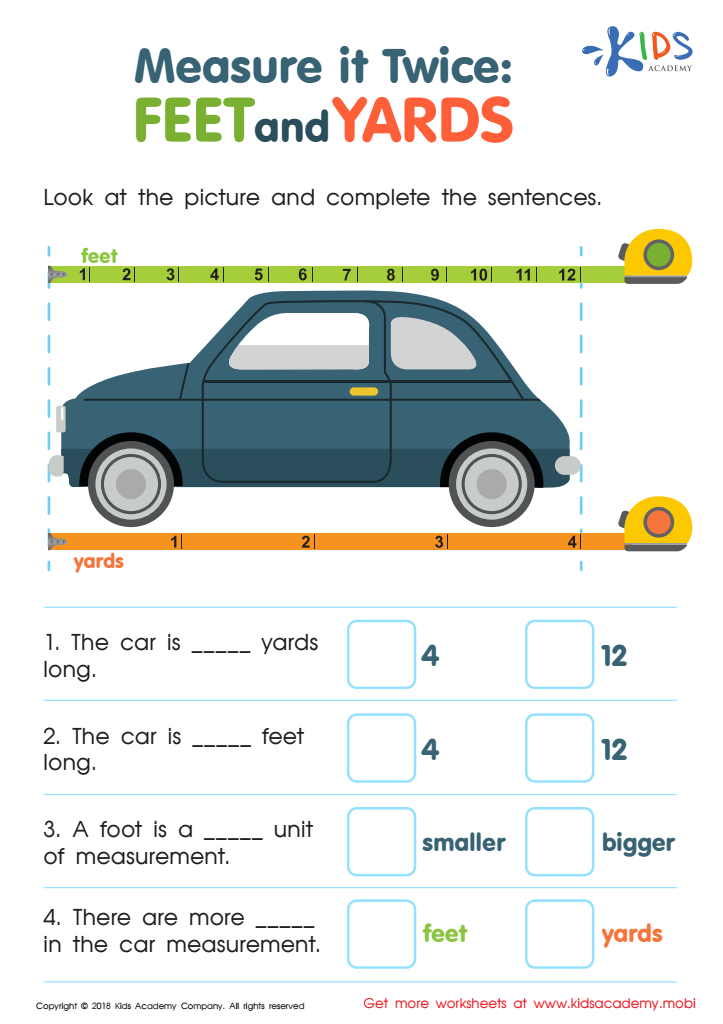
Measure It Twice: Feet and Yards Worksheet
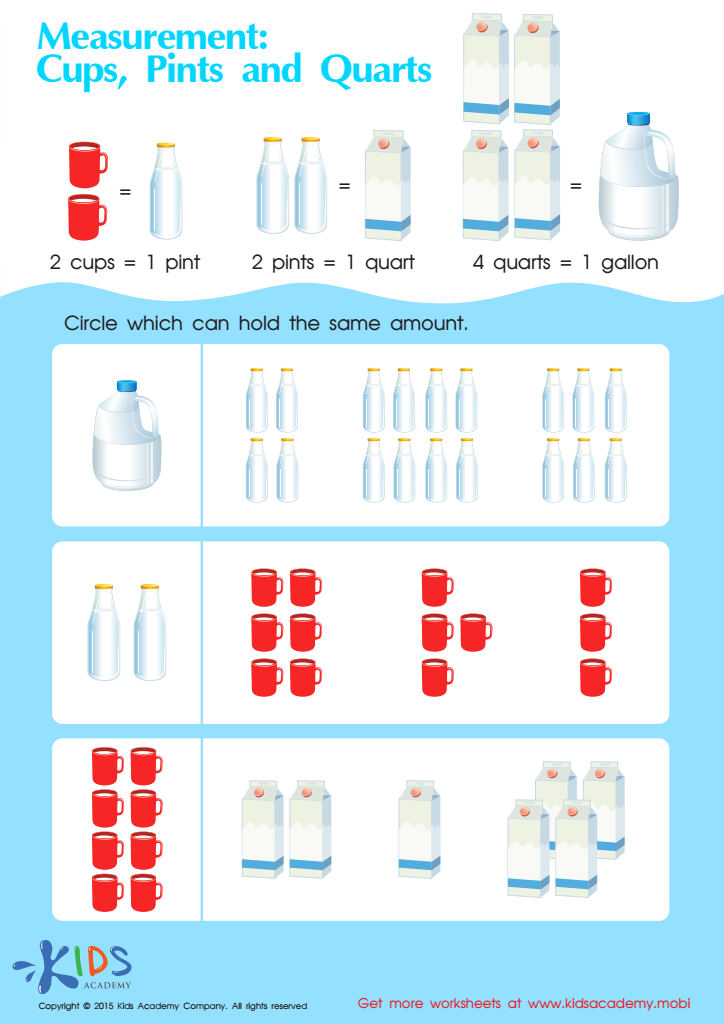
Cups, Pints and Quarts 2 Worksheet






Parents and teachers play vital roles in a child's early development, and understanding age-appropriate measurements is crucial. For children ages 3-8, various milestones and benchmarks help determine if they are on track in areas like physical growth, cognitive development, and social skills.
Firstly, developmental measurements provide a baseline to compare a child's progress. If a child's height or weight significantly deviates from the average, it might indicate health issues that need attention. Cognitive measurements help assess if a child is reaching key intellectual milestones, like language skills or problem-solving abilities, which are fundamental for school success.
Beyond health and intellect, social-emotional measurements offer insight into a child's ability to interact with peers, follow instructions, and manage emotions. Recognizing problems early ensures tailored interventions, potentially closing developmental gaps before they widen.
Moreover, understanding measurements promotes realistic expectations. It helps parents and teachers identify appropriate learning activities and social experiences, fostering an environment where children feel competent and confident. This tailored encouragement bolsters self-esteem, motivating lifelong learning.
In summary, understanding these measurements enables parents and teachers to support children's holistic development responsibly and effectively, helping children reach their full potential and ensuring any emerging issues are promptly addressed.








