
Wildlife knowledge Normal Worksheets for Ages 3-8
3 filtered results
Difficulty Level
Grade
Age
-
From - To
Subject
Activity
Standards
Explore our engaging Wildlife Knowledge Normal Worksheets, specially designed for children ages 3-8! These interactive resources enhance young learners’ understanding of animals, their habitats, and the importance of wildlife conservation. Each worksheet features fun activities that promote critical thinking and creativity, helping children to connect with the natural world. From identifying different species to understanding their roles in the ecosystem, these worksheets are an excellent resource for early education. Perfect for homeschooling or classroom use, our Wildlife Knowledge Worksheets encourage teamwork, discussion, and a love for nature. Dive into the wild and inspire curious minds today!
Favorites
With answer key
Interactive
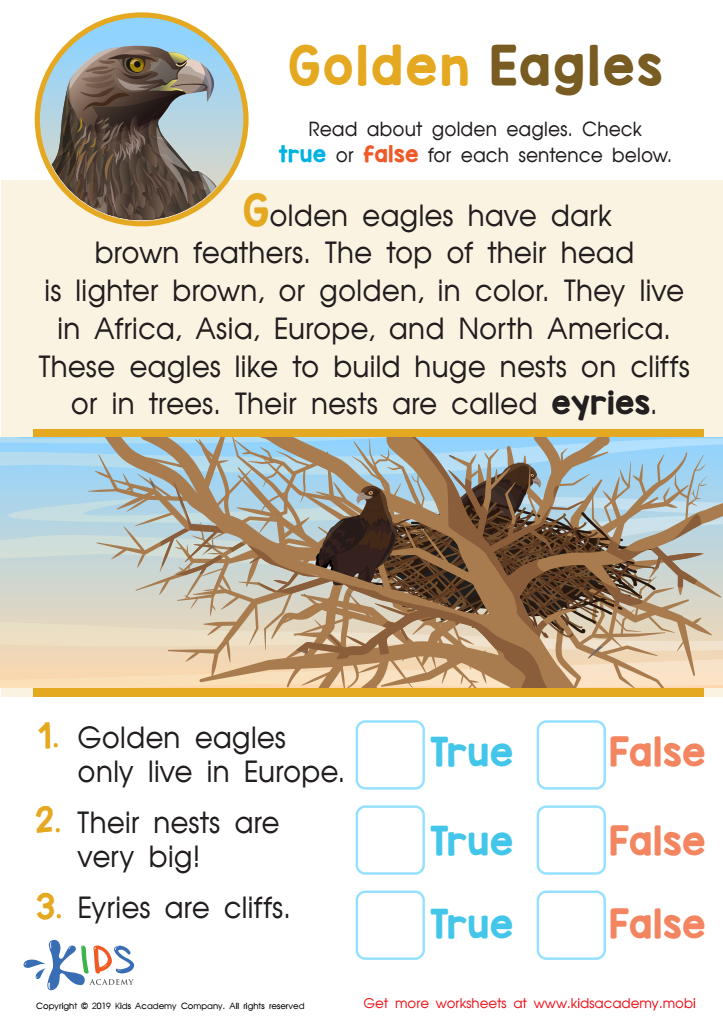
Golden Eagles Worksheet
Check your child's reading comprehension with this fascinating worksheet! Read the passage at the top of the page and discuss what was learned about golden eagles. Then, read the statements at the bottom and ask if they are true or false. Guide your child to circle the correct answer then read the text to back up the answer.
 Assign to My Students
Golden Eagles Worksheet
Worksheet
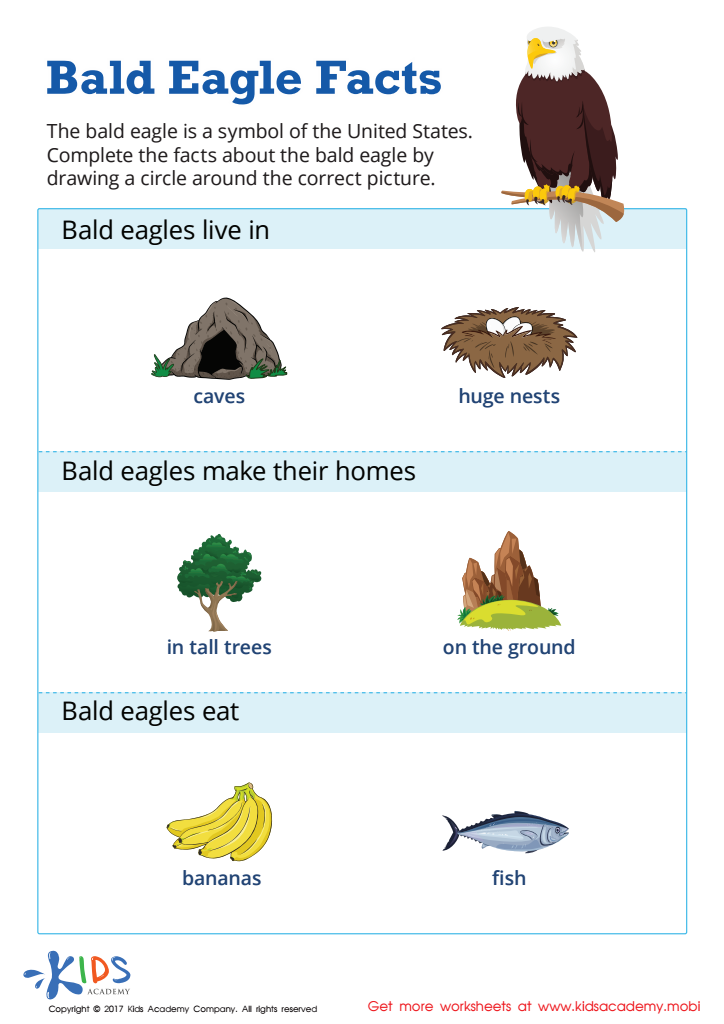
Bald Eagle Facts Worksheet
Teach your child to appreciate the beauty of bald eagles with this printable worksheet. It will help them to understand how they live and what they eat, as well as the importance of the bird as a national symbol. Take their learning to the next level by explaining the symbolism of the bird, and help them to develop a sense of respect.
Bald Eagle Facts Worksheet
Worksheet
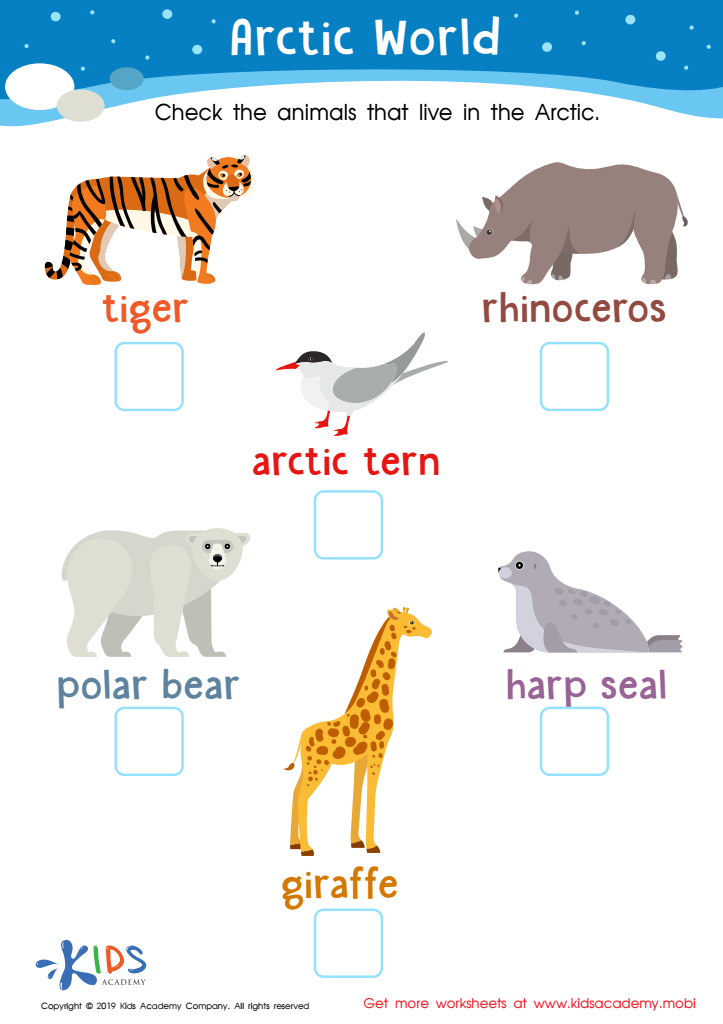
Arctic World Worksheet
Ask your students if they know where the Arctic is located and what lives there. If not, use a world atlas to show them. The Arctic is very cold and snow-covered; native animals have adapted to survive the harsh conditions. Look at the animals in the worksheet and help your students decide which ones live in the Arctic.
Arctic World Worksheet
Worksheet
Join Kids Academy for Free
Who is primarily going to use this learning content?








Parents and teachers should prioritize wildlife knowledge for children ages 3-8 for several compelling reasons. First, fostering an early appreciation for wildlife encourages curiosity about the natural world. Kids who learn about animals and their habitats develop a sense of wonder, sparking their innate desire to explore and learn.
Moreover, understanding wildlife plays a crucial role in developing environmental consciousness. Educating young children about different species and ecosystems instills values of respect and responsibility toward nature. This early environmental awareness is pivotal in cultivating future generations who are committed to conservation and sustainable practices.
Wildlife knowledge also supports cognitive and emotional growth. Engaging with the natural world can enhance critical thinking and problem-solving skills as children learn about habitats, food chains, and biodiversity. Furthermore, stories and experiences related to animals can foster empathy and compassion, helping children connect with living beings beyond their immediate surroundings.
Finally, integrating wildlife education into early learning promotes literacy and language skills as children describe their observations, share facts, and engage in discussions. By caring about wildlife knowledge, parents and teachers equip young children with the foundational skills and values necessary for navigating a world increasingly dictated by ecological and social challenges.








