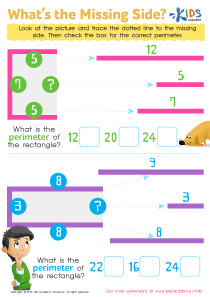
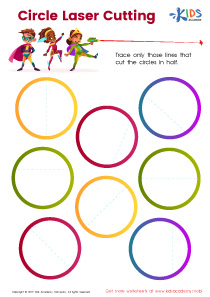
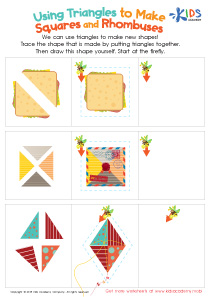
Critical Thinking Normal 2D Shapes Worksheets for Ages 3-8
5 filtered results
-
From - To
Unlock your child's potential with our engaging Critical Thinking Normal 2D Shapes Worksheets, designed for ages 3-8! These worksheets promote crucial cognitive skills while introducing young learners to the world of shapes. Packed with fun activities, our resources encourage children to analyze, compare, and classify different 2D shapes. Through interactive exercises, kids enhance their problem-solving abilities and develop a deeper understanding of geometry. Ideal for teachers and parents striving for a complete educational experience, these worksheets provide a perfect balance of learning and fun. Explore our collection and watch your child's critical thinking skills flourish as they navigate the exciting realm of shapes!
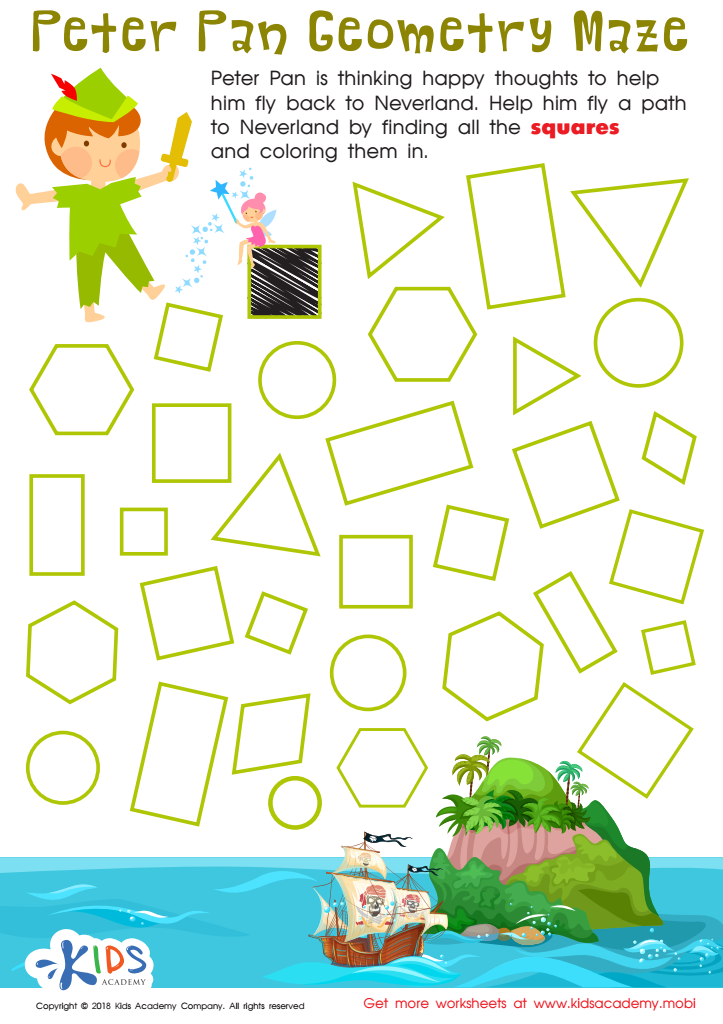
Peter Pan Worksheet
 Assign to My Students


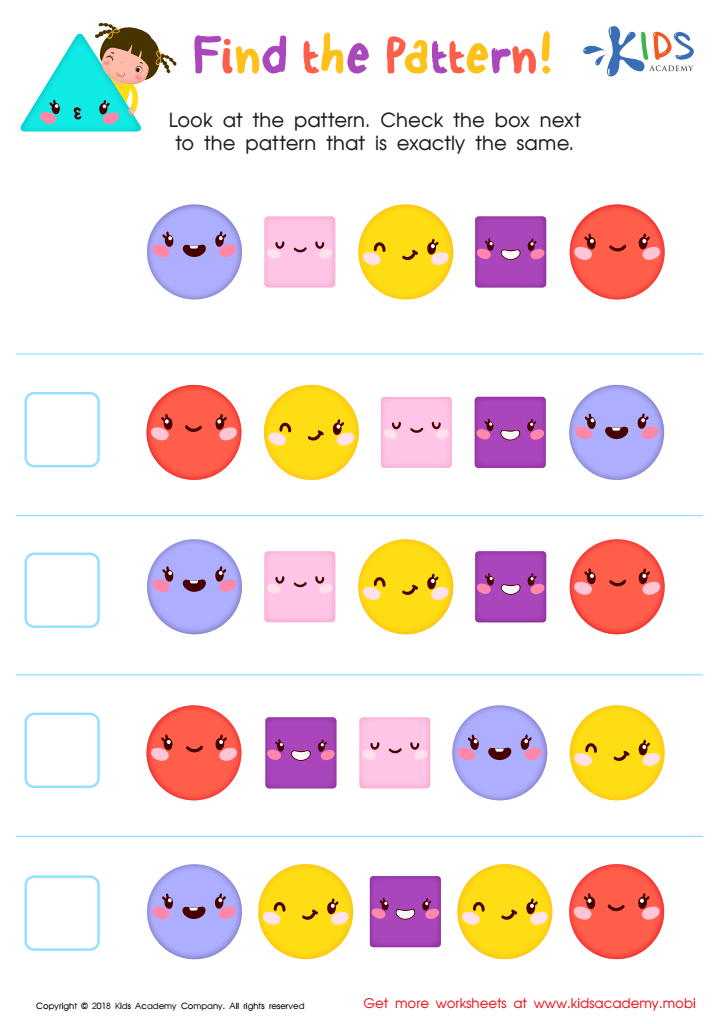
Find the Pattern Worksheet
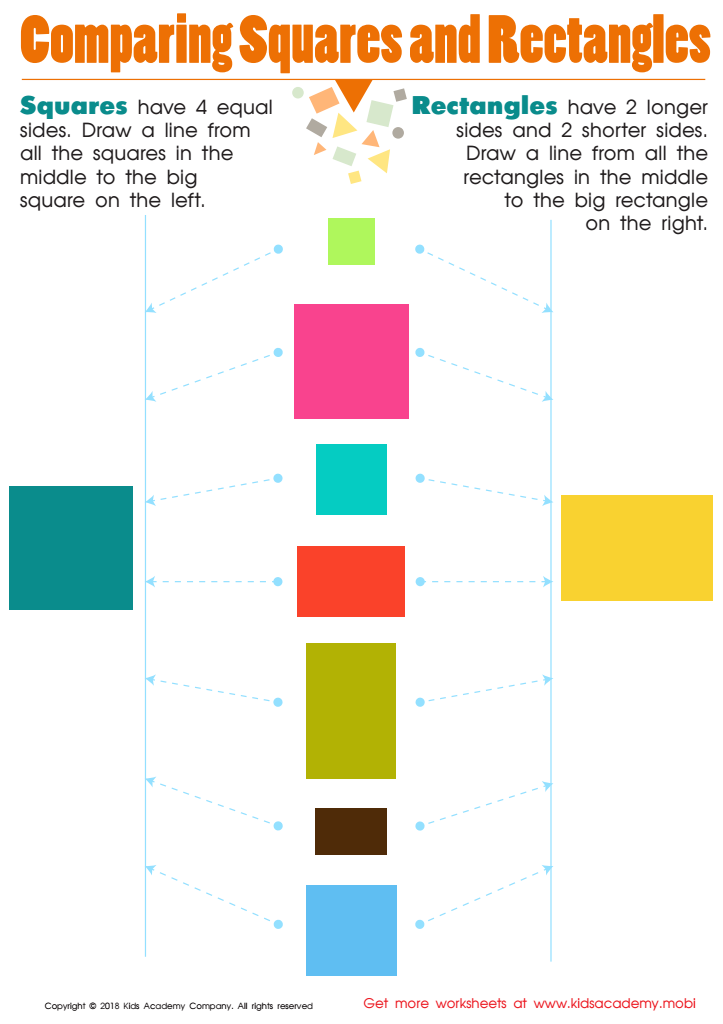
Comparing Squares Rectangles Worksheet
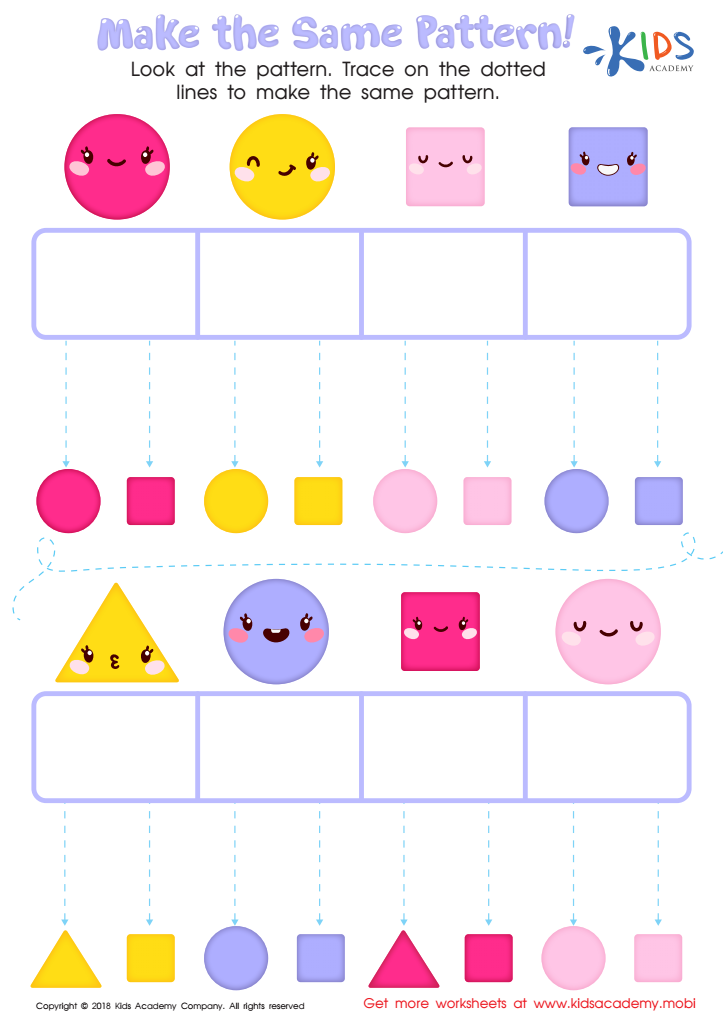
Make the Same Pattern Worksheet
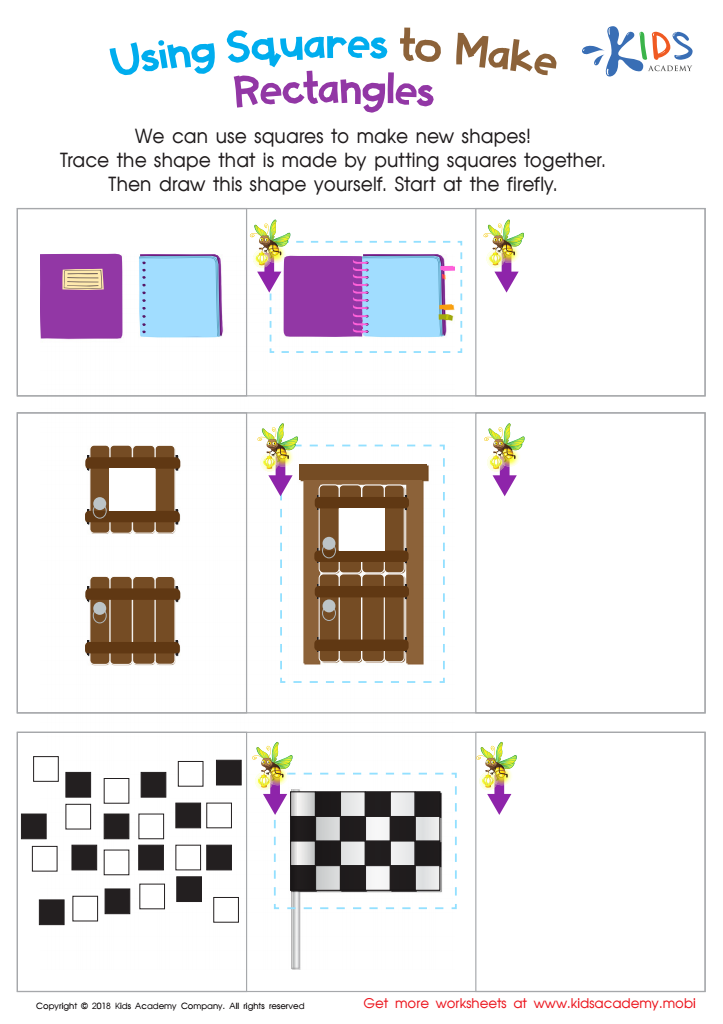
Using Squares to Make Rectangles Worksheet








Critical thinking in young learners, especially regarding normal 2D shapes, is essential for their cognitive development and future learning. Teaching children aged 3-8 to identify, compare, and manipulate 2D shapes engages their analytical skills and helps them make connections between concepts. When parents or teachers focus on critical thinking with shapes, they encourage children to observe patterns, solve problems, and reason both logically and creatively.
Understanding 2D shapes lays the groundwork for more complex mathematical concepts, such as geometry and spatial awareness. By challenging children to think critically about shapes—asking them to sort, combine, or explore their properties—educators foster skills that transcend mathematical learning. These cognitive skills apply to various disciplines, supporting comprehensive learning.
Moreover, engagement in critical thinking develops children's confidence and independence, as they learn to make informed decisions and express their thoughts clearly. Encouraging discussions about shapes allows children to articulate their reasoning, promoting communication skills essential for later academic and social interactions. In a rapidly evolving world, these foundational skills are vital, as they empower children to become effective problem solvers and innovators in their future endeavors. Overall, focusing on critical thinking in shape recognition cultivates a thoughtful, inquisitive mindset beneficial in all areas of learning.