Problem-solving practice Normal Addition & Subtraction Worksheets for Ages 3-8
4 filtered results
-
From - To
Introduce your little ones to the world of problem-solving with our Normal Addition & Subtraction Worksheets tailored for kids ages 3-8. These engaging worksheets help children practice addition and subtraction, fostering essential math skills and logical thinking in a fun and interactive way. Perfect for preschool to early elementary students, our worksheets guide children through various scenarios, enhancing their ability to solve problems step-by-step. Ideal for home or classroom use, these worksheets ensure that learning math becomes an enjoyable adventure. Boost your child's confidence and proficiency in math with our expertly designed problem-solving practice worksheets!
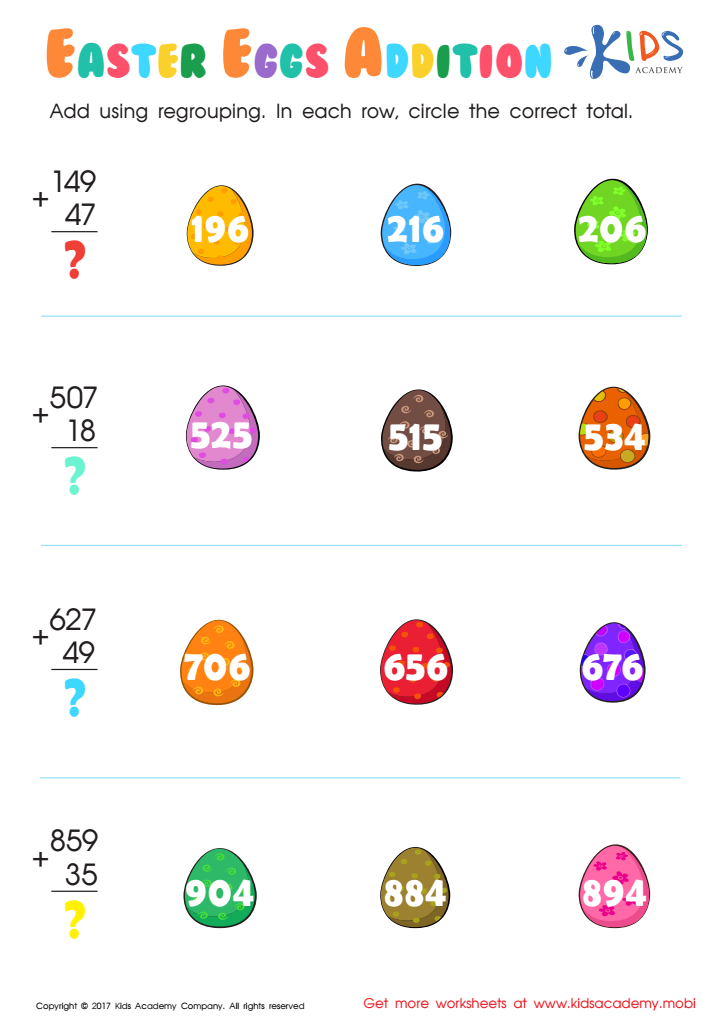
Addition with Regrouping Worksheet
 Assign to My Students
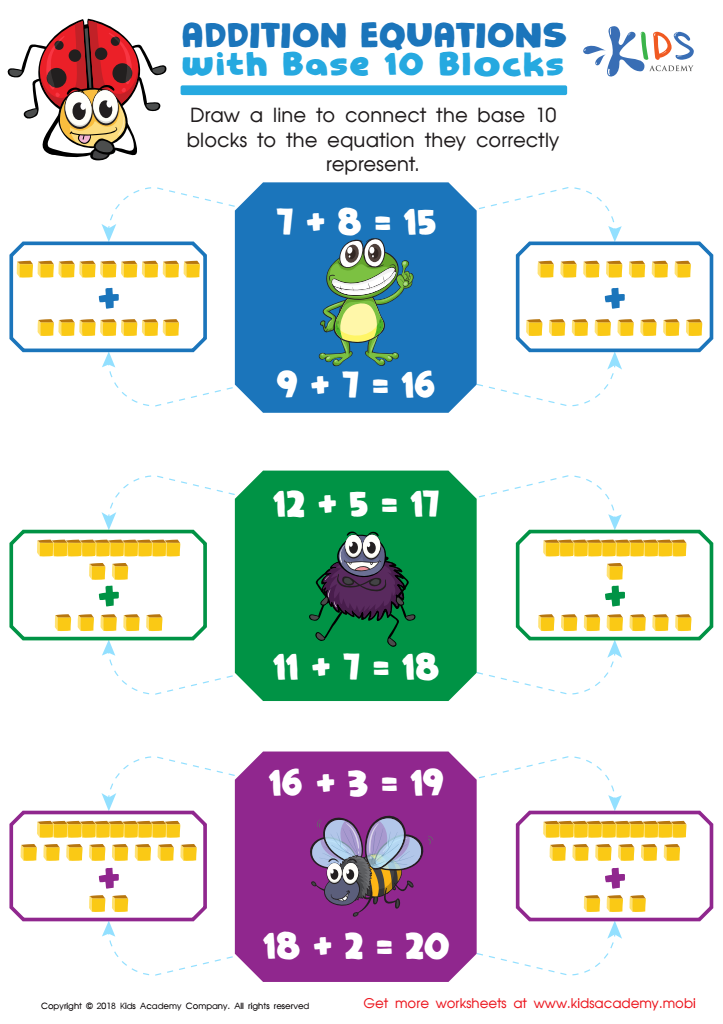
Addition Equations With Base 10 Blocks Worksheet
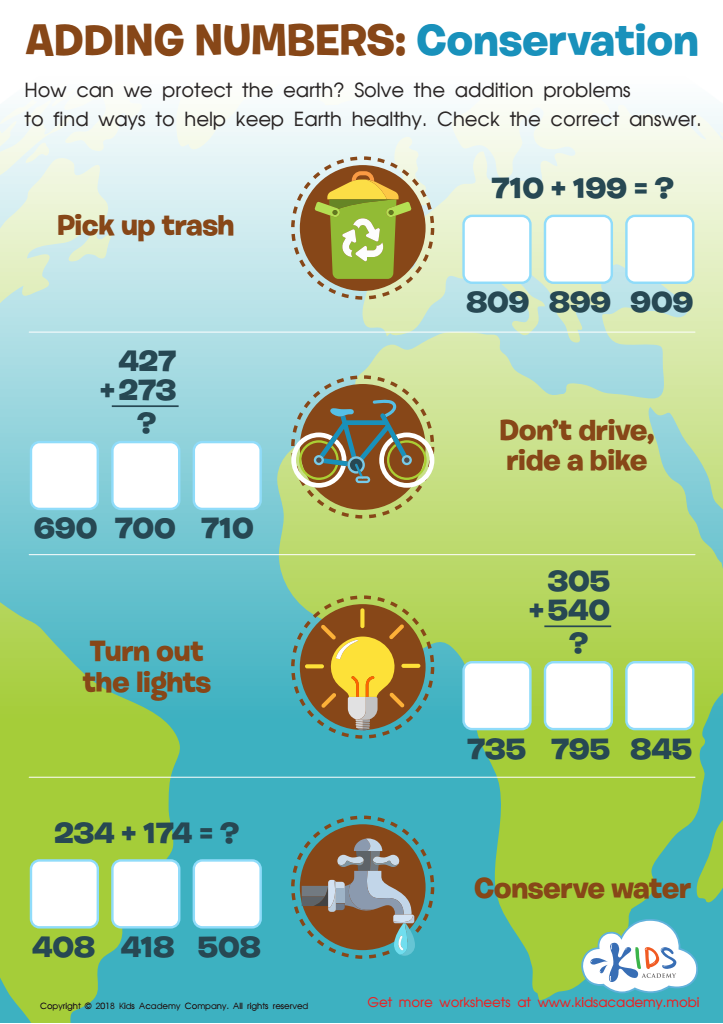
Adding Numbers: Conservation Worksheet
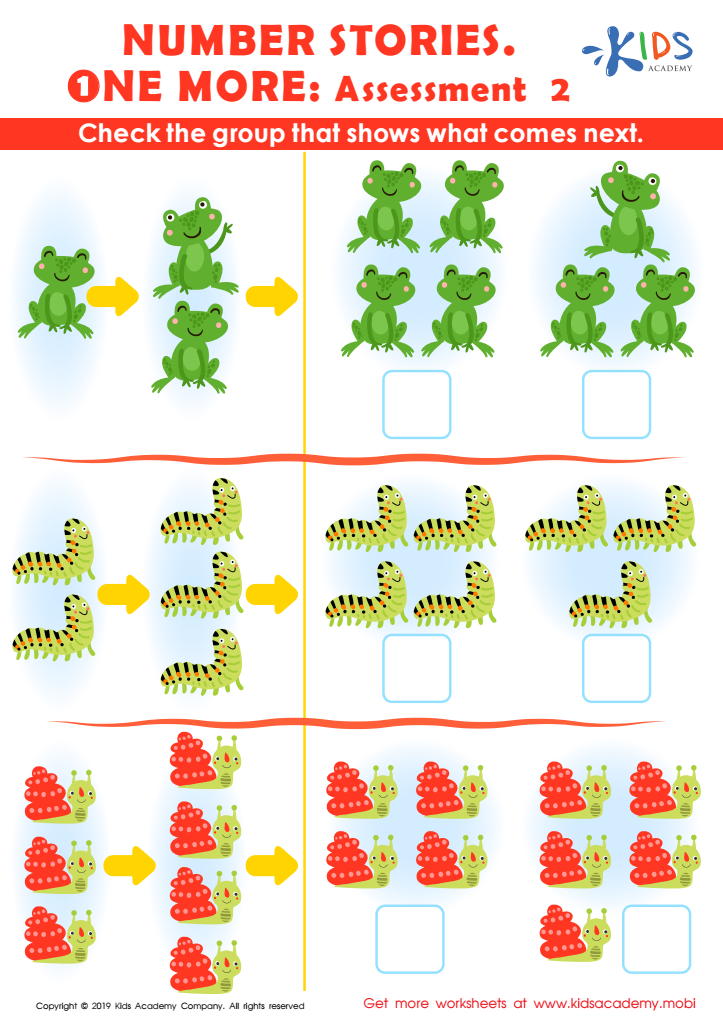
Number Stories One More – Assessment 2 Worksheet








Problem-solving practice in normal addition and subtraction for children ages 3-8 is crucial for their cognitive and academic development. During these formative years, the foundational skills for numeracy are established, which are essential for understanding more complex mathematical concepts later.
Engaging young learners in problem-solving activities helps develop their logical thinking and reasoning abilities. By exploring addition and subtraction problems, children learn to analyze situations, identify patterns, and decide on appropriate solutions. This fosters a sense of confidence and competence in handling everyday tasks, nurturing a positive attitude towards learning and perseverance.
Moreover, mastering these basic arithmetic skills has a direct impact on their overall academic performance. Numeracy is interconnected with other subjects like science, where quantitative problem-solving is often required. Early proficiency in math sets a strong foundation for future success across various disciplines.
Cognitively, engaging in problem-solving enhances memory, concentration, and executive functions such as planning and decision-making. It cultivates critical thinking and equips children with tools to approach challenges methodically.
Additionally, practical experience in solving problems collaboratively can improve social skills such as communication, teamwork, and empathy. When parents and teachers support problem-solving practice in addition and subtraction, they bridge academic learning with real-life skills, fostering well-rounded intellectual and personal growth in children.








