Understanding subtraction Normal Addition & Subtraction Worksheets for Ages 3-8
10 filtered results
-
From - To
"Understanding Subtraction Normal Addition & Subtraction Worksheets for Ages 3-8" offers engaging learning tools designed to help young learners grasp the fundamental concepts of subtraction. Tailored for children aged 3-8, these printable worksheets provide a fun and educational experience through interactive exercises and colorful illustrations. Each worksheet aims to build a solid math foundation by guiding kids step-by-step in solving subtraction problems. Whether used in a classroom or at home, these resources support early math skills development, boost confidence, and foster a love for learning. Discover an enjoyable way to teach subtraction with Kids Academy!
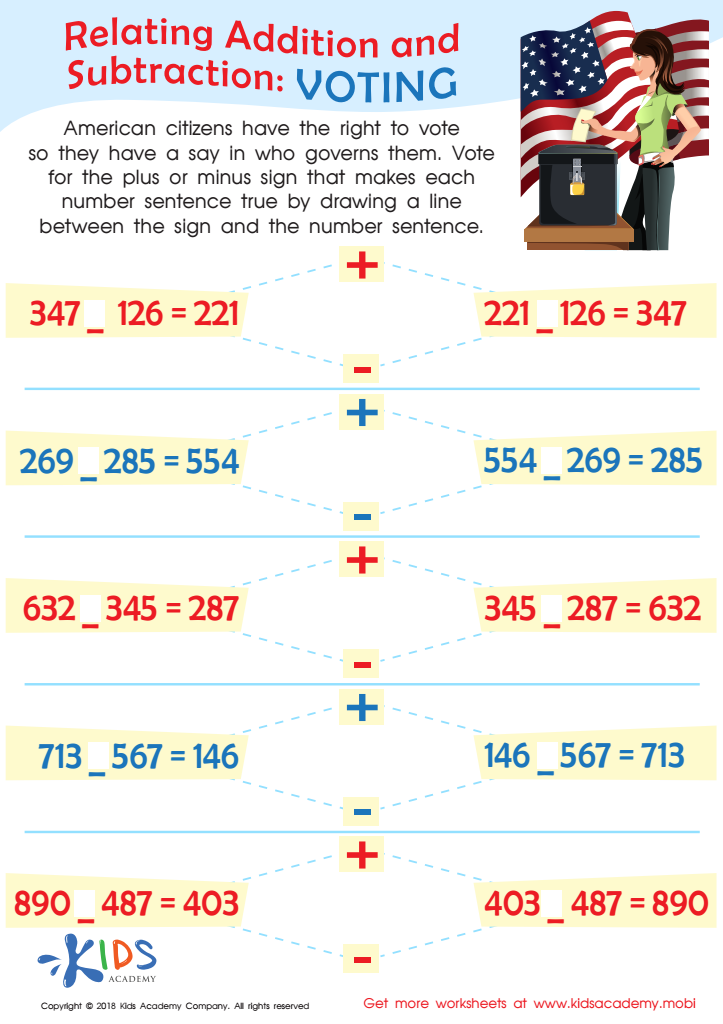
Voting Worksheet
 Assign to My Students
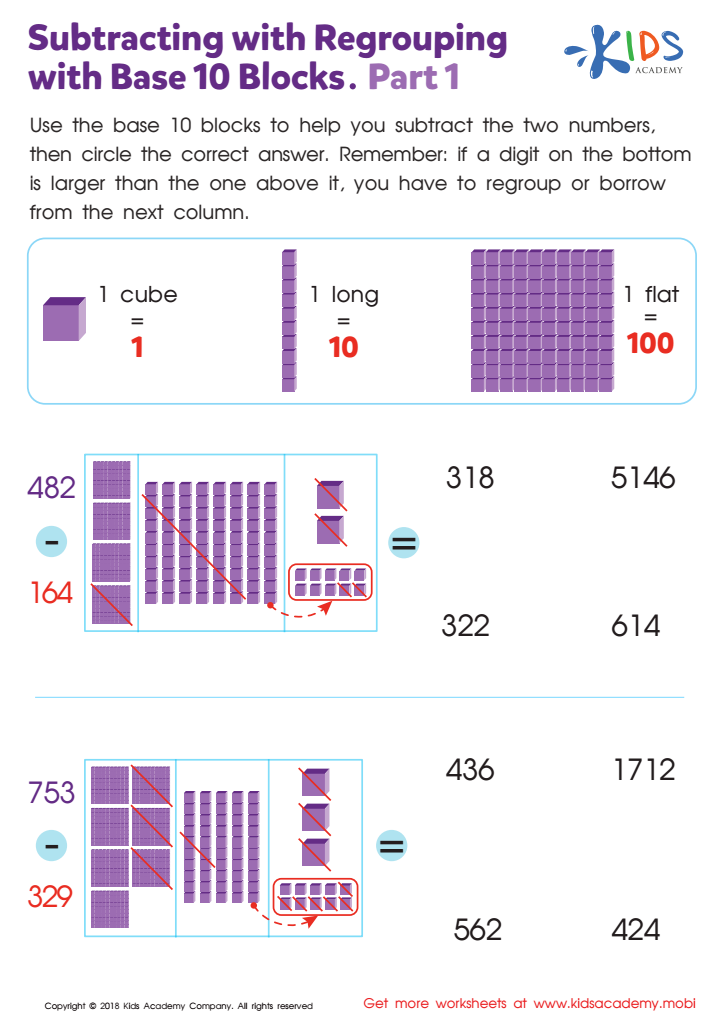
Subtracting with Regrouping with Base 10 Blocks. Part1 Worksheet
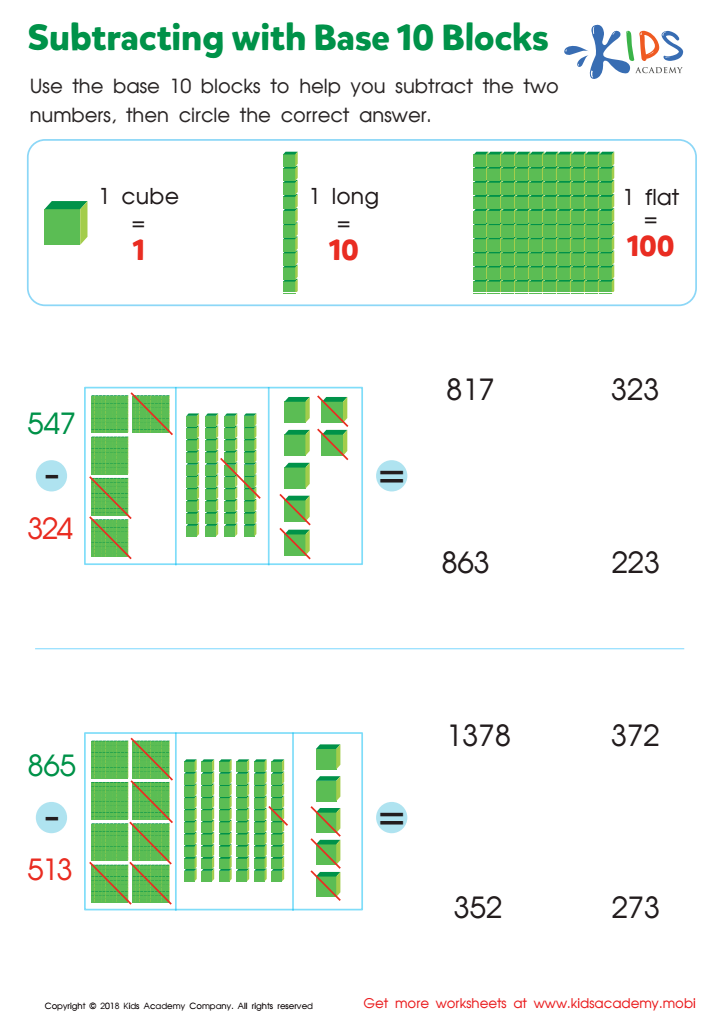
Subtracting with Base 10 Blocks Worksheet
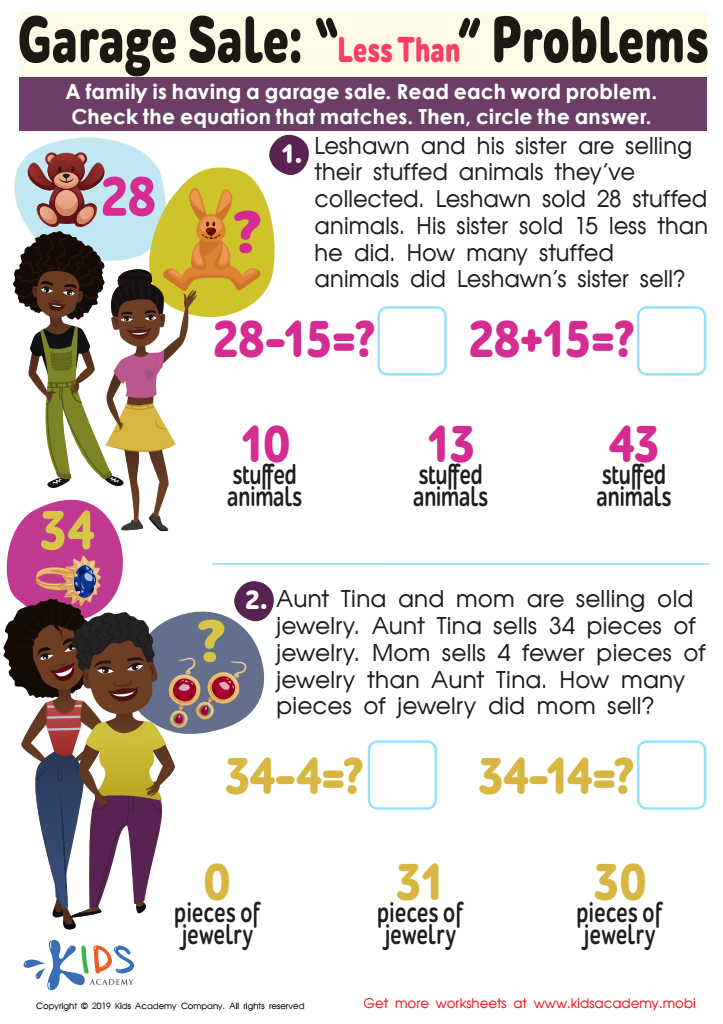
Garage Sale Less Than Worksheet
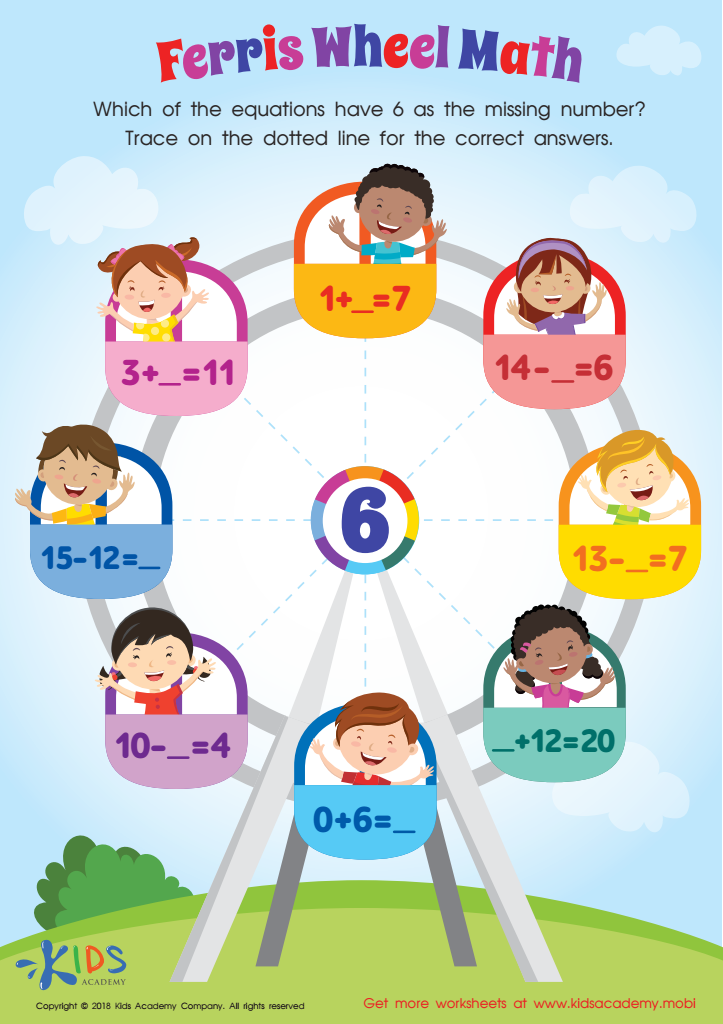
Missing Number: Ferris Wheel Math Worksheet
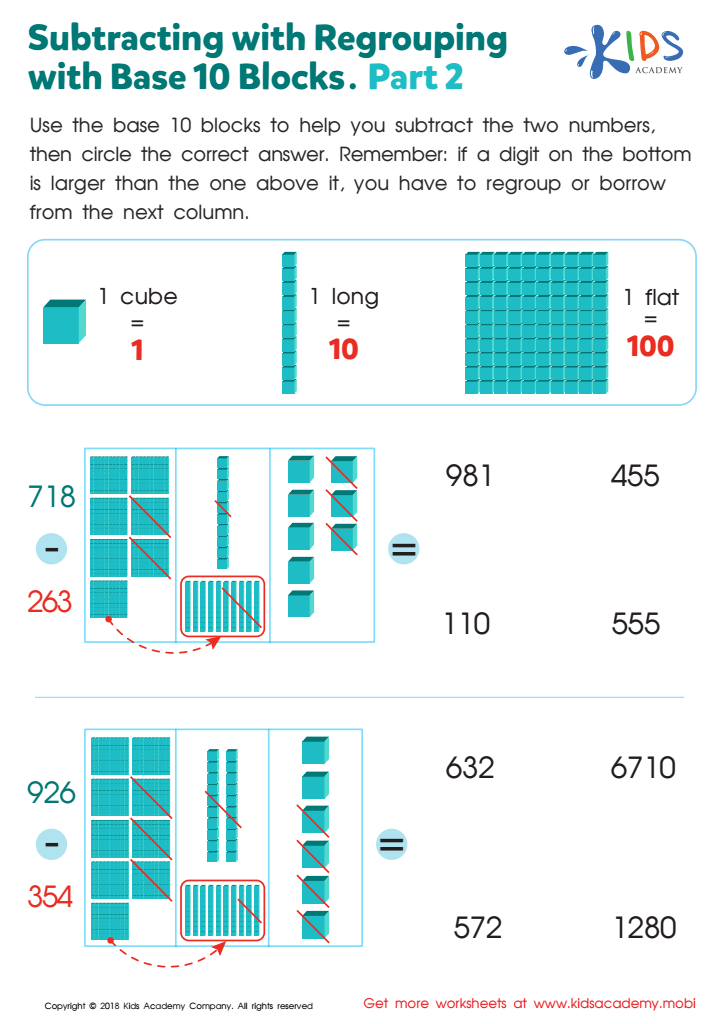
Subtracting with Regrouping with Base 10 Blocks. Part 2 Worksheet
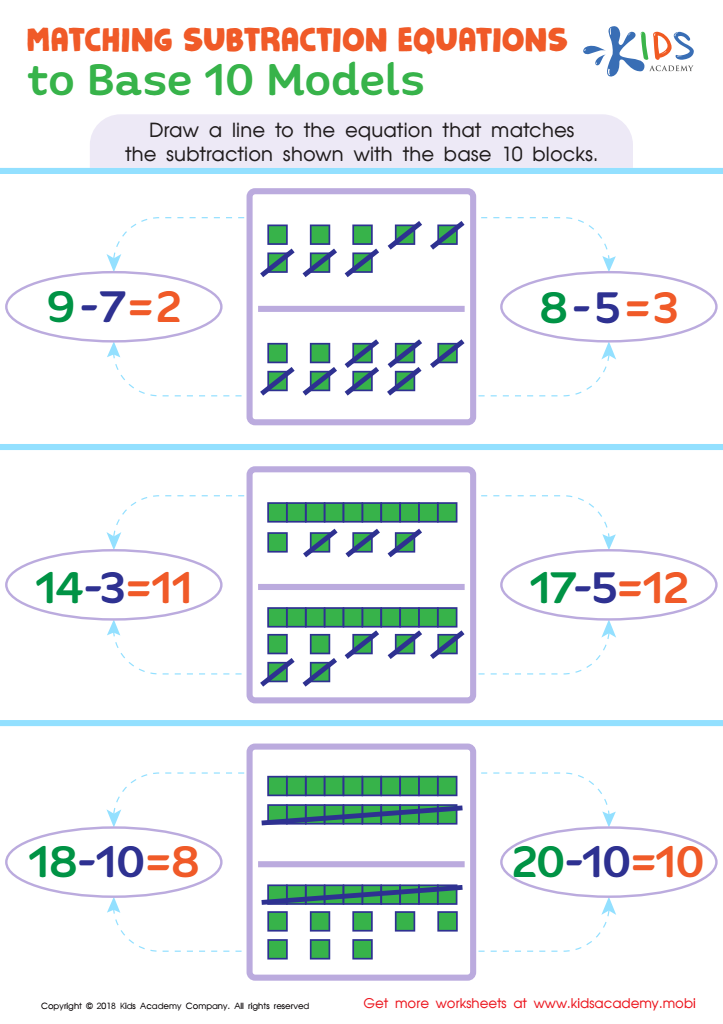
Matching Subtraction Equations To Base 10 Models Worksheet
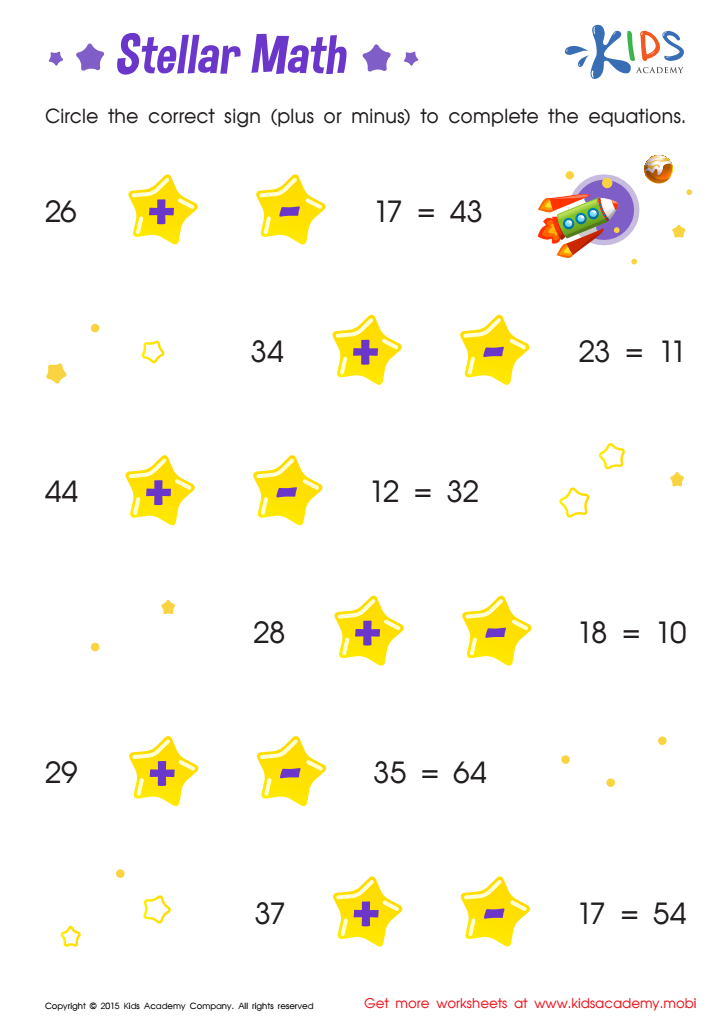
Stellar Math Substraction Worksheet
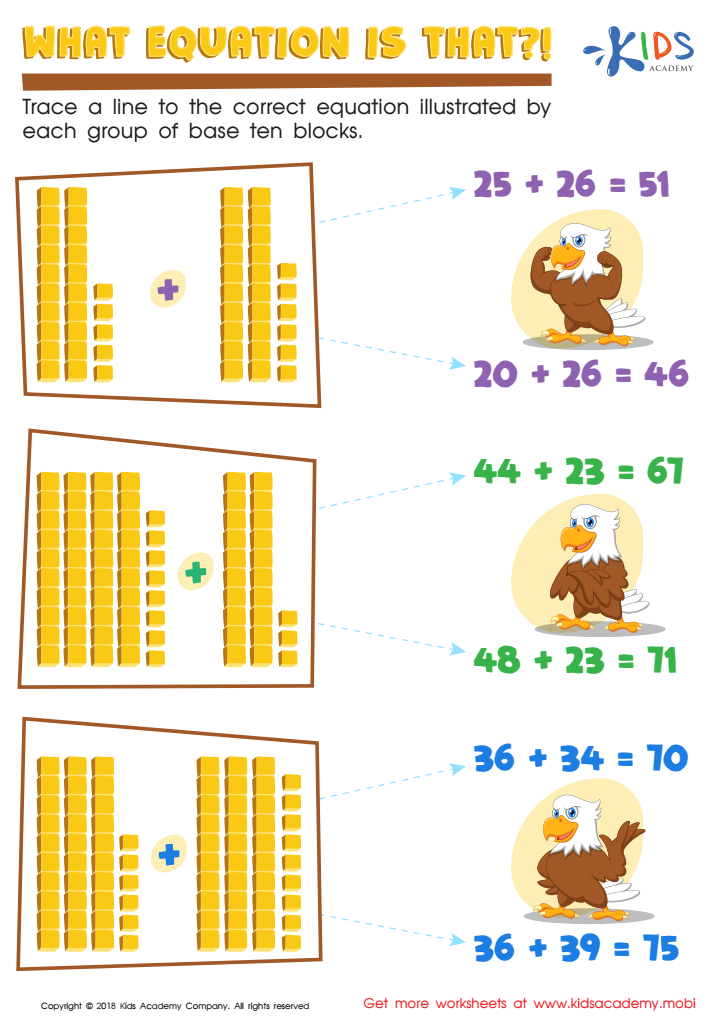
What Equation Is That? Worksheet
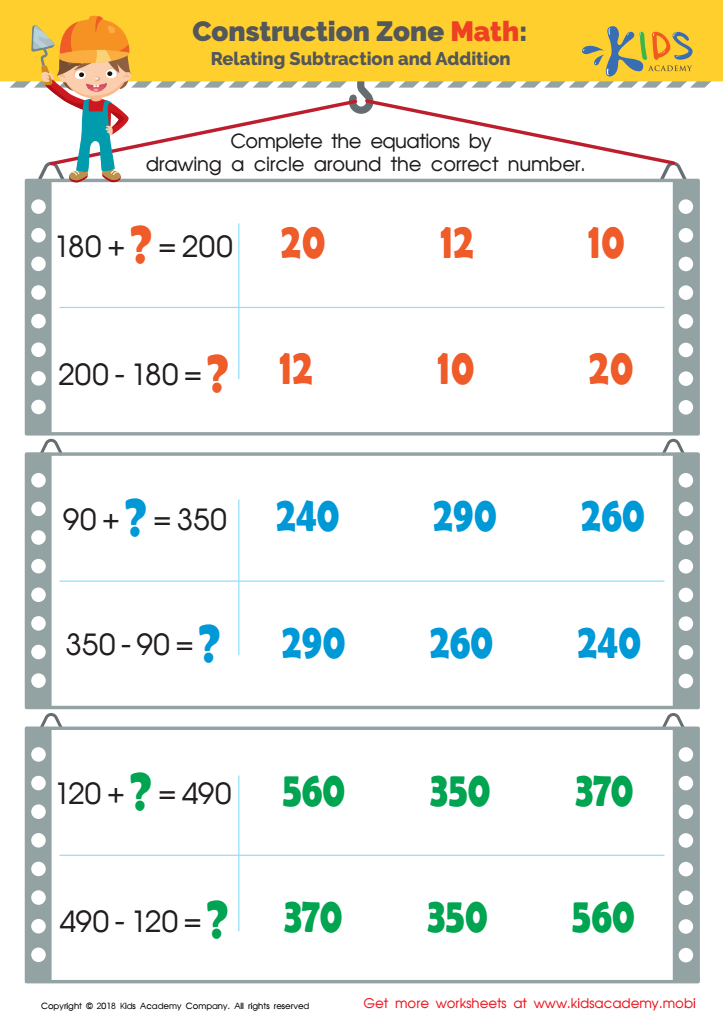
Construction Zone Math: Relating Subtraction and Addition Worksheet








Understanding subtraction, along with normal addition and subtraction, for children ages 3-8 is foundational to their cognitive development and overall educational success. During these formative years, children rapidly develop their mathematical understanding, which serves as a cornerstone for more advanced concepts. Both parents and teachers play a crucial role in facilitating this foundational learning.
Subtraction introduces the concept of taking away, which is an essential life skill that children encounter daily. It helps them understand quantitative relationships and the idea of balance. For instance, whether sharing toys or distributing snacks, children use basic subtraction unconsciously. By thoroughly understanding it from an early age, they become adept at problem-solving and critical thinking.
Additionally, early competency in these fundamental operations boosts a child's confidence. Positive experiences with basic math foster a proactive attitude towards more complex topics later. Teachers encountering these subjects should use engaging methods like visual aids, interactive games, and real-world examples to make learning fun and relatable.
Parents should also be engaged in this learning process, incorporating math practice into everyday activities to reinforce concepts. When both parents and teachers prioritize early math skills, children are more likely to develop a strong mathematical foundation, fostering better academic performance and lifelong problem-solving capabilities.








