
Basic geometry understanding Normal Geometry Worksheets for Ages 3-8
3 filtered results
Difficulty Level
Grade
Age
-
From - To
Subject
Activity
Standards
Discover the joy of learning with our Basic Geometry worksheets, designed for children aged 3-8! These engaging and colorful activities introduce essential geometry concepts, helping young learners understand shapes, patterns, and spatial relationships. Our normal geometry worksheets focus on foundational skills, promoting critical thinking and problem-solving. Each worksheet is thoughtfully crafted to encourage creativity while making learning fun and interactive. Perfect for parents and teachers alike, these resources can be easily printed and used for home or classroom activities. Watch as your child develops confidence and curiosity in geometry, laying the groundwork for future math success! Explore our collection today!
Favorites
With answer key
Interactive
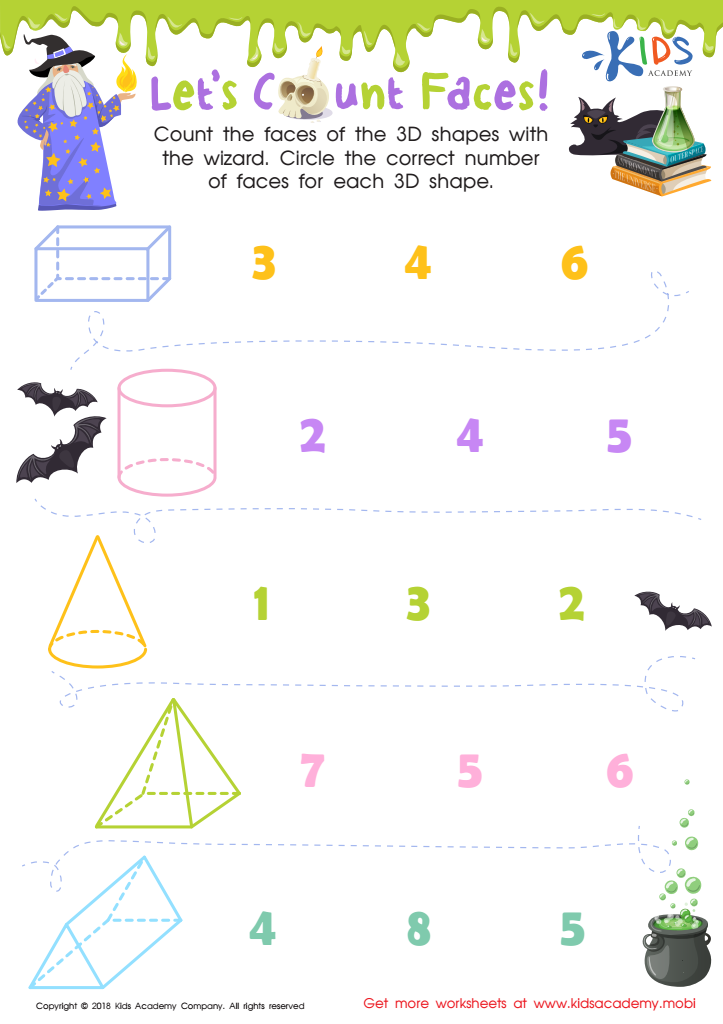
Let's Count Faces! Worksheet
Help the wizard count the faces of 3D shapes! Ask your kids to identify the shapes before beginning, then have them circle the correct number of faces. Enjoy this fun wizard-themed worksheet with your kids!
 Assign to My Students
Let's Count Faces! Worksheet
Worksheet











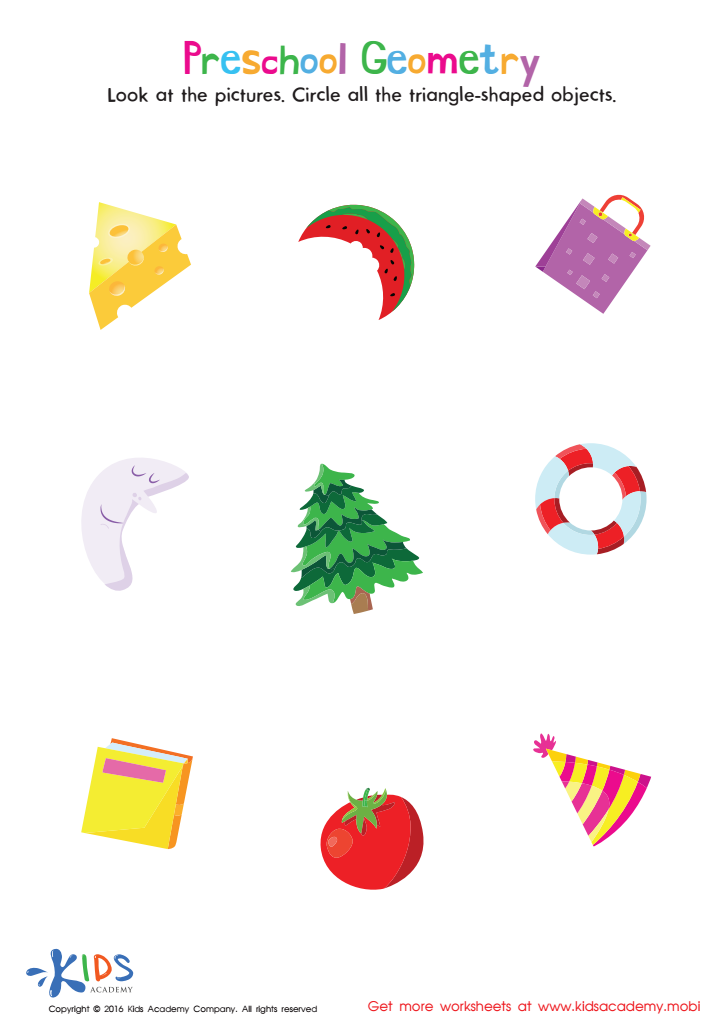
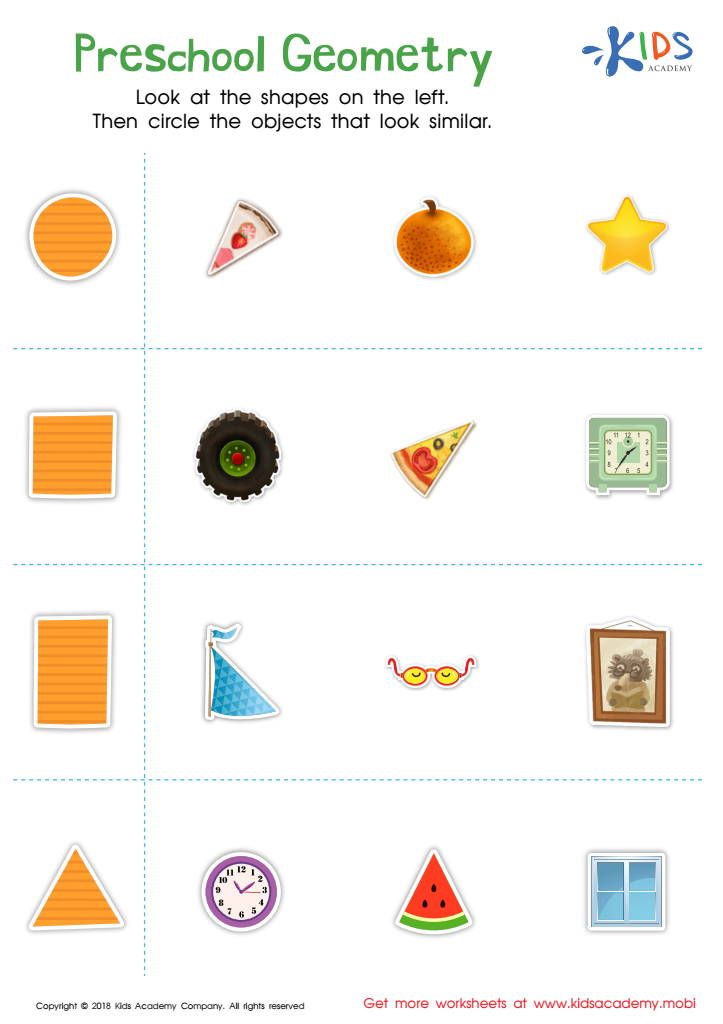
Preschool Geometry Worksheet
This worksheet gives 3rd graders the basics of geometry. Kids match everyday objects to shapes they know, e.g. an orange to a circle, a square to a slice of watermelon and a rectangle to a picture frame. It's a fun way to give them confidence to tackle more complex geometry in the future.
Preschool Geometry Worksheet
Worksheet
Join Kids Academy for Free
Who is primarily going to use this learning content?








Understanding basic geometry is crucial for the developmental milestones of children aged 3-8. At this age, children are naturally curious and keen to explore the world around them, and geometry offers a compelling way to engage this curiosity. Learning basic geometric concepts—such as shapes, sizes, and spatial relationships—helps children enhance their cognitive skills and boost their problem-solving abilities.
Geometry fosters spatial awareness, which is fundamental for understanding the environment. It aids in categorization and pattern recognition, both of which are essential skills for mathematics and science later in life. Through activities like sorting shapes, building with blocks, or even doing simple puzzles, children develop fine motor skills while applying geometric principles.
Moreover, early exposure to geometry in a playful and practical context supports the development of logical reasoning. Parents and teachers who prioritize these skills help instill a positive attitude towards math, which can influence children's academic success and confidence in future studies.
With a solid foundation in basic geometry, children are better equipped to tackle more complex mathematical concepts in later years, setting the stage for lifelong learning and resilience in education. Therefore, incorporating basic geometry into early childhood education should be an essential focus for educators and parents alike.








