
Color recognition Normal Numbers Worksheets for Ages 3-8
4 filtered results
Difficulty Level
Grade
Age
-
From - To
Subject
Activity
Standards
Unlock your child's learning potential with our engaging Color Recognition Normal Numbers Worksheets, designed specifically for ages 3-8! These vibrant and interactive worksheets make it easy for young learners to grasp key number concepts while exploring the world of colors. By combining color recognition with number identification, children will enhance their cognitive skills and develop a solid foundation for early math. Perfect for homeschooling or classroom settings, our resources are crafted to keep kids motivated and excited about learning. Dive into a colorful educational experience that empowers your little ones to thrive in their foundational math skills today!
Favorites
With answer key
Interactive
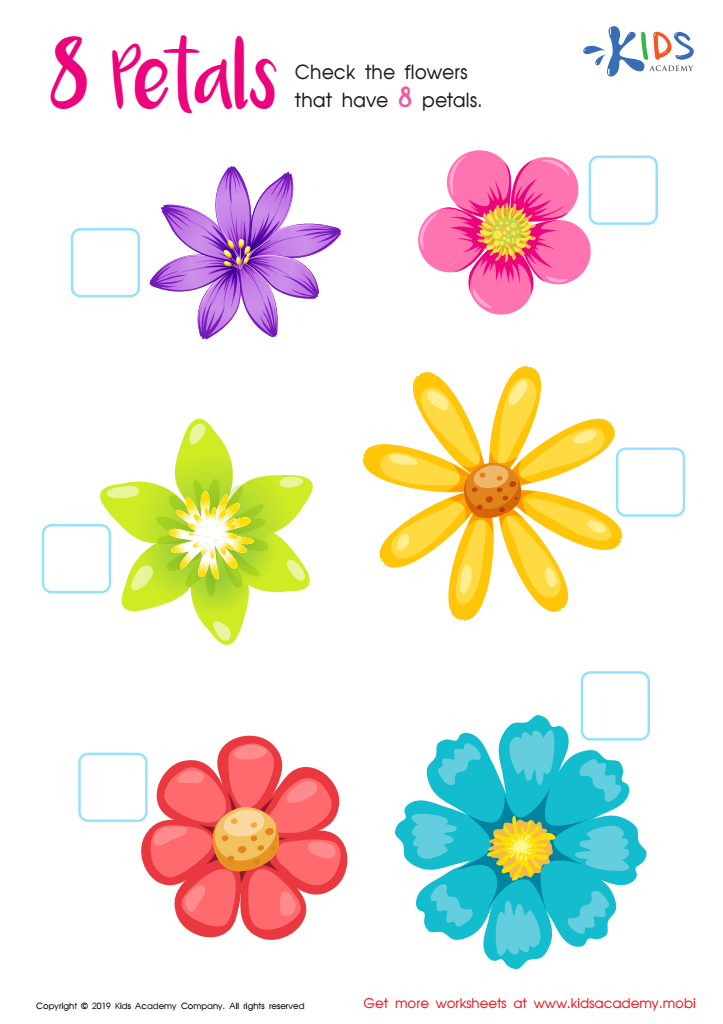
8 Petals Worksheet
Help your children master counting with this fun worksheet. It's filled with colorful flowers and they must count the petals and check the flowers with 8 petals. It's a great way to practice their counting skills and have some fun too!
 Assign to My Students
8 Petals Worksheet
Worksheet
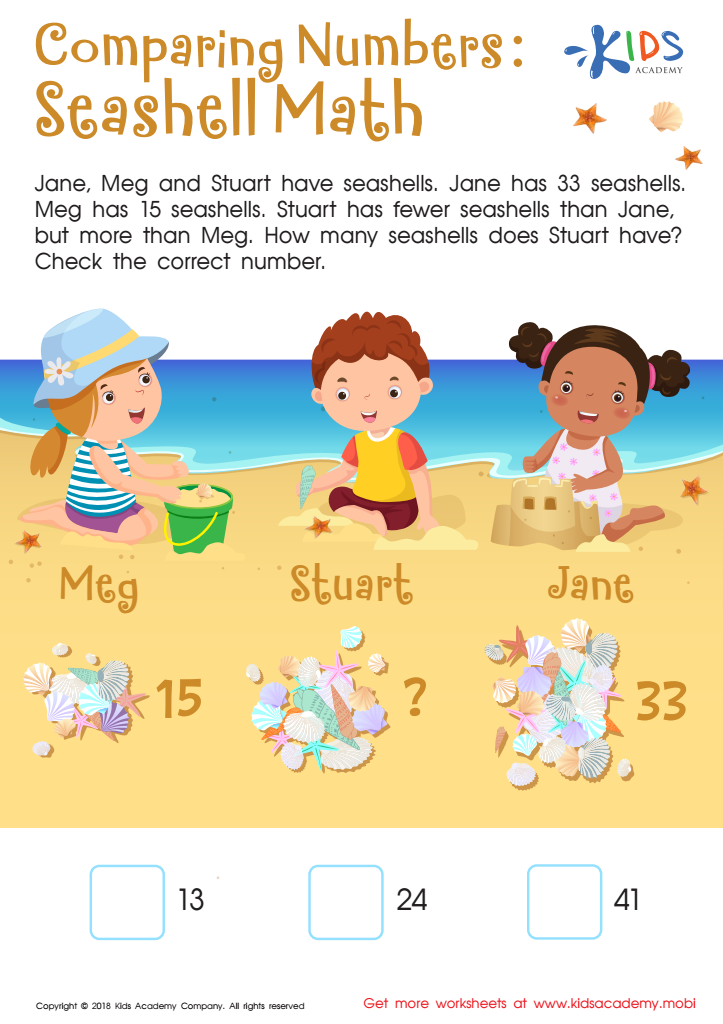
Seashell Collectors Worksheet
Bring beach fun into math with this printable worksheet! Carefully read the text with your child and figure out how many seashells Stuart has - more than Meg's, less than Jane's. Forget boring indoor math; your child won't want to miss out on this fun activity!
Seashell Collectors Worksheet
Worksheet
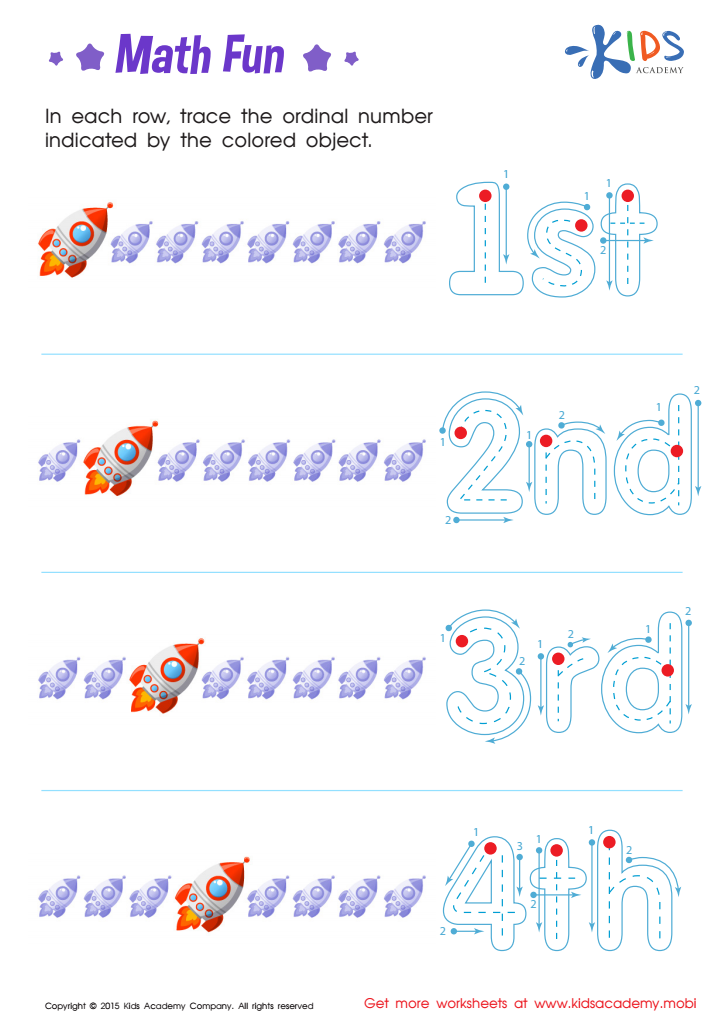
Ordinal Numbers: Math Fun Worksheet
Have fun learning ordinal numbers with our spaceship worksheet! Kids learn best while having fun and with repetition. Featuring vibrant spaceships, your child will understand placement, recognize and write ordinal numbers, and make connections. Understanding ordinal numbers leads to more advanced math concepts. Get your math whiz ready for preschool with our addition/subtraction worksheets! Have fun learning ordinal numbers and master them in no time!
Ordinal Numbers: Math Fun Worksheet
Worksheet
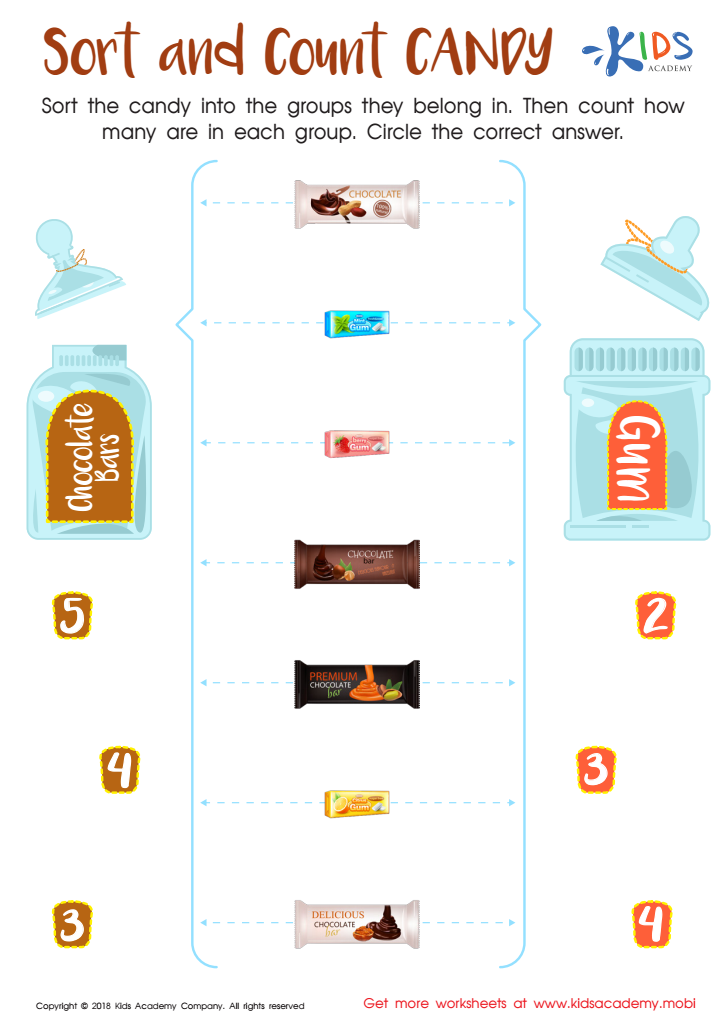
Sort and Count Candy Worksheet
Sort chocolate and candy with your kids! Help them use recognizable items and pictures to sort, practice counting with one-to-one representation, and develop their fine motor skills with the traceable lines. Download this free worksheet to get started. Yum!
Sort and Count Candy Worksheet
Worksheet
Join Kids Academy for Free
Who is primarily going to use this learning content?







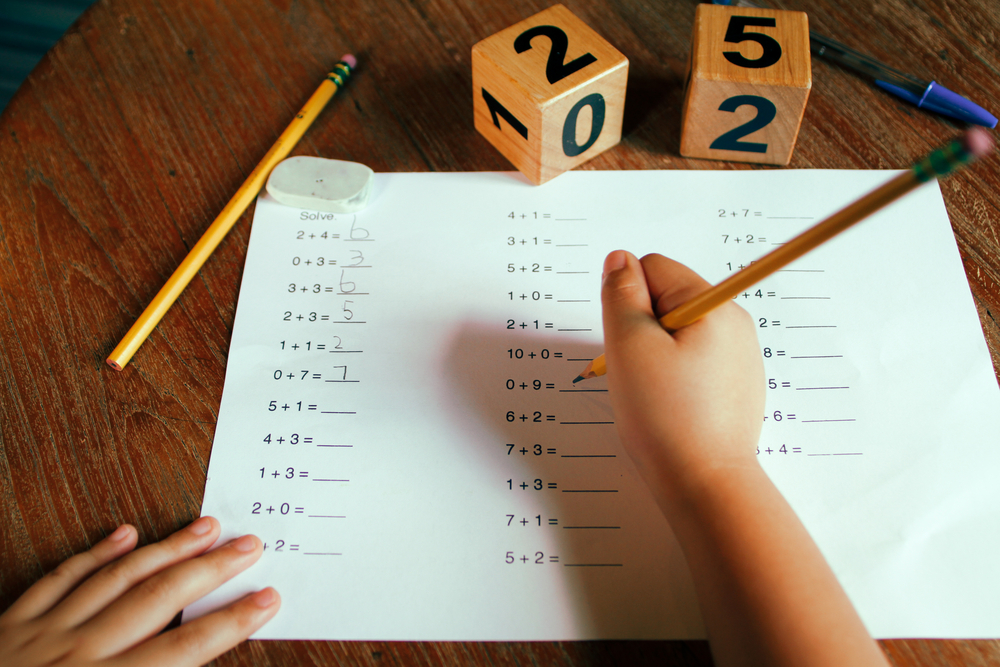
Color recognition and understanding normal numbers are essential foundational skills for children ages 3-8 that significantly aid in their cognitive development and everyday learning experiences. First, color recognition plays a crucial role in early childhood education as it helps enhance visual perception, language development, and problem-solving skills. By learning to identify and categorize colors, children improve their ability to communicate, articulate their observations, and engage with their environment creatively. This skill often serves as a gateway for more complex concepts in art, science, and mathematics, fostering curiosity.
Similarly, normal number recognition forms the basis of mathematical understanding. Mastery of numbers helps children develop counting skills, number sense, and basic arithmetic, which are crucial for their future academic success. Learning to identify and understand numbers prepares students for more complex mathematical concepts later on.
Both color recognition and number understanding promote social interactions, as children frequently use these skills in play and collaborative activities. By nurturing these abilities, parents and teachers can support holistic development, encourage exploration, and build a strong foundation for lifelong learning. Ultimately, prioritizing these early skills contributes to a child’s readiness for school and overall confidence in their ability to engage with the world around them.








