
Geography knowledge Normal Numbers Worksheets for Ages 3-8
5 filtered results
Difficulty Level
Grade
Age
-
From - To
Subject
Activity
Standards
Discover an engaging way to enhance geography knowledge with our Normal Numbers Worksheets, specifically designed for children ages 3-8. These worksheets incorporate basic math skills, helping young learners recognize numbers while exploring geographical concepts. With vibrant illustrations and interactive activities, children will enjoy identifying countries, landmarks, and natural features, all while practicing essential counting and number recognition. Our expertly crafted resources support early education by combining fun with learning, making it easier for kids to grasp complex subjects. Perfect for classroom or home use, these worksheets promise to ignite curiosity about the world and strengthen foundational math skills simultaneously.
Favorites
With answer key
Interactive
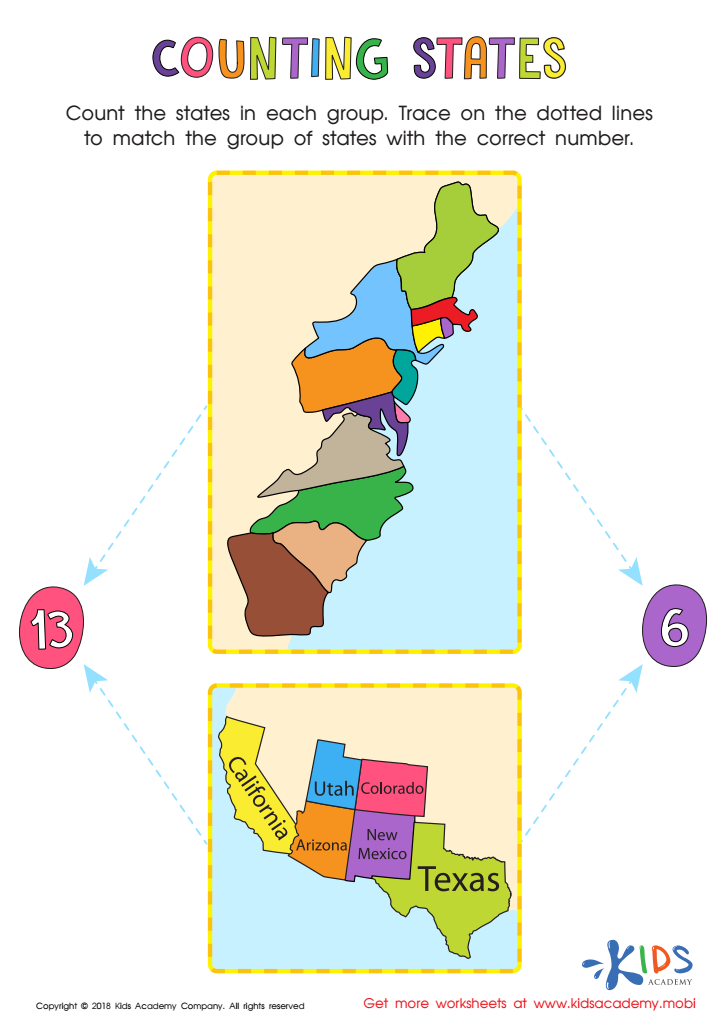
Counting States Worksheet
This fun and educative worksheet helps your kids learn more about their country. Ask them if they can name all the states, then help them trace on the dotted lines to match each state group to the correct number. Counting together is a fun way to reinforce learning.
 Assign to My Students
Counting States Worksheet
Worksheet
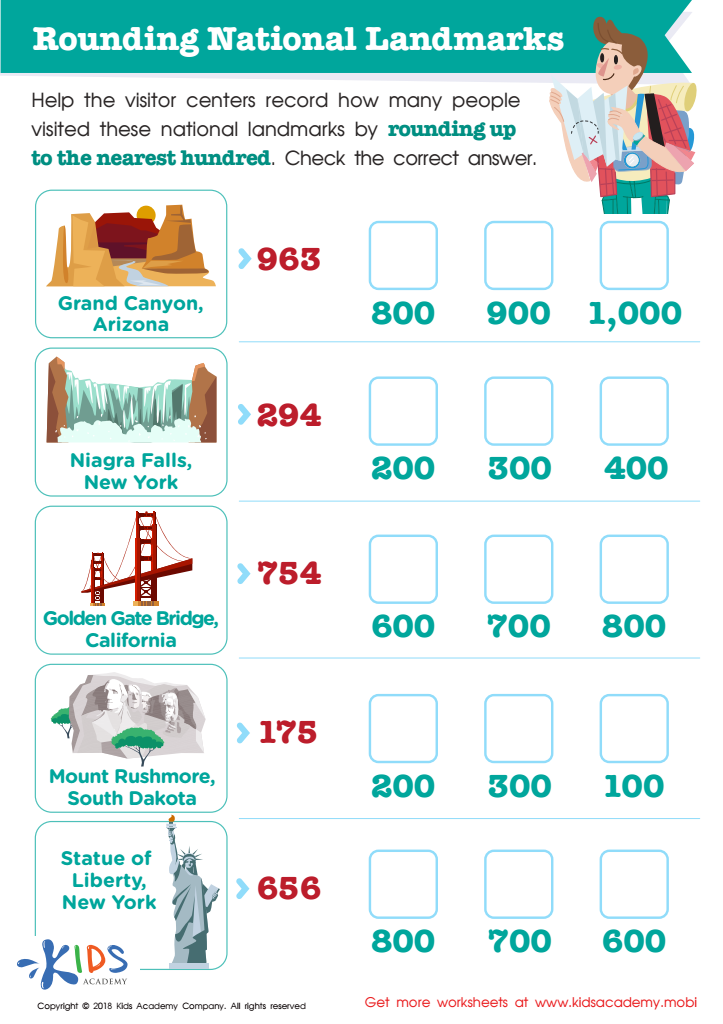
Rounding National Landmarks Worksheet
Does your city have tourist attractions? Help your kids count visitors to these national landmarks by rounding up to the nearest hundred. Then check the correct answer from the provided options. Or explore tourist centres in another state with your family.
Rounding National Landmarks Worksheet
Worksheet
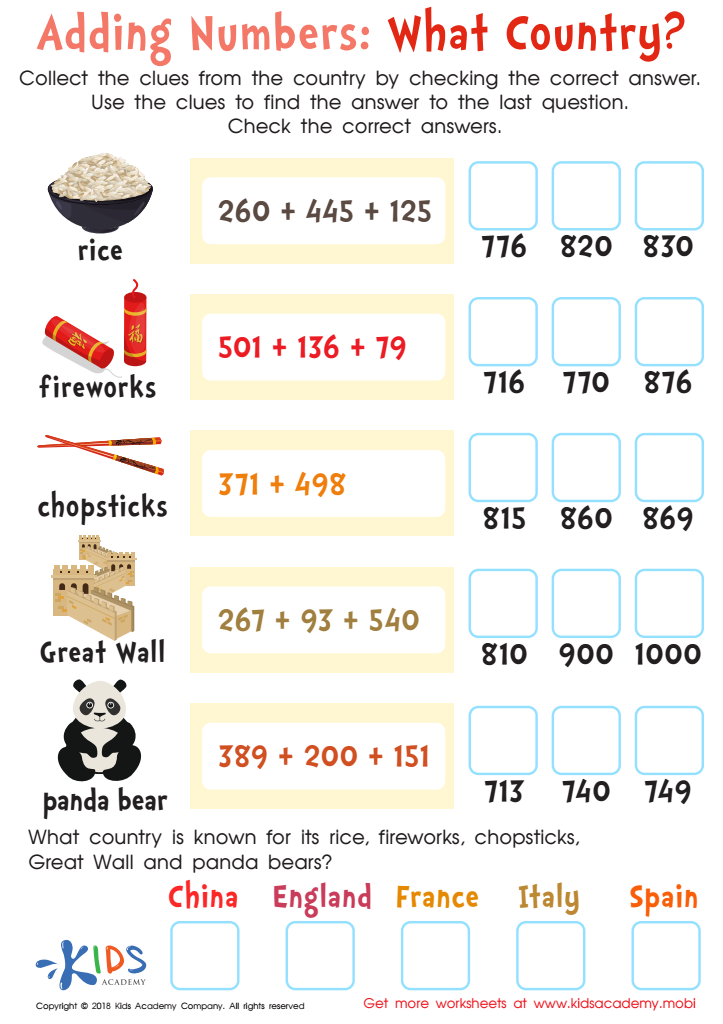
Adding Numbers: What Country Worksheet
Students can use this worksheet to learn more about different countries. Have them collect clues from the worksheet to answer the last question. Help them check the correct answer, and they'll gain knowledge about each country's food, animals, celebrations, and landmarks.
Adding Numbers: What Country Worksheet
Worksheet
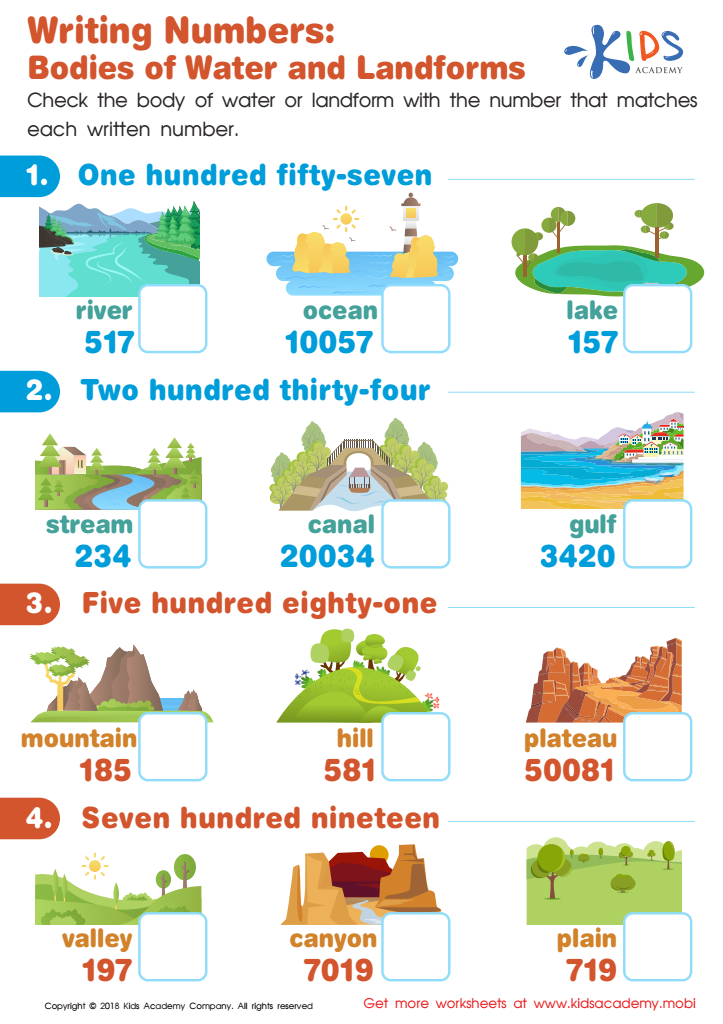
Bodies of Water and Landforms Writing Numbers Worksheet
Your student will love this engaging worksheet with its bright hues, while you give them practice comparing numbers with higher place values. Matching the correct number words to their numeral representations is key for our students as they deal with larger numbers and higher place values.
Bodies of Water and Landforms Writing Numbers Worksheet
Worksheet
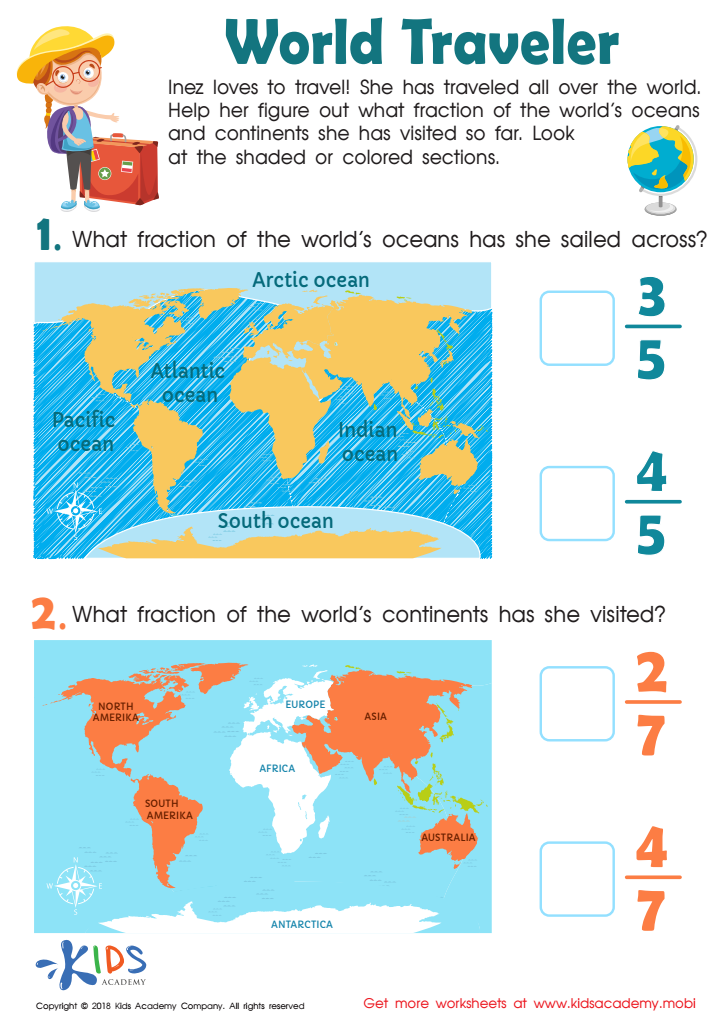
World Traveler Worksheet
Kids love exploring the world? Inez sure does! She's seen oceans and continents around the globe. Your kids can help her figure out what fraction of the world she has visited. Have them name all the countries they've been to, then look at the marked sections on the printout to find out!
World Traveler Worksheet
Worksheet
Join Kids Academy for Free
Who is primarily going to use this learning content?




%20(1).jpg)

Parents and teachers should care about geography knowledge for children ages 3-8 because it lays a foundational understanding of the world around them. Introducing geographic concepts helps young learners make sense of their environment, fostering curiosity and appreciation for diverse cultures and places. Understanding geography cultivates spatial awareness, which is crucial for cognitive development and critical thinking skills.
Moreover, as children learn about maps, continents, and landmarks, they begin to develop problem-solving abilities and improve their communication skills. These early geography lessons can spark meaningful conversations about community, different lifestyles, and global interconnections, encouraging empathy and respect for others.
Additionally, geographic knowledge aligns with various educational standards and can integrate seamlessly into other subjects like science and social studies. By incorporating engaging activities and discussions regarding physical and human geography, educators and parents can support lifelong learning habits.
In an increasingly globalized world, a solid grounding in geography empowers children to understand and navigate their surroundings with confidence and awareness. Ultimately, fostering a sense of place and a global perspective at a young age can inspire future generations to be informed, responsible citizens.








