Problem Solving Normal Numbers Worksheets for Ages 3-8
6 filtered results
-
From - To
Unlock your child's potential with our Problem Solving Normal Numbers Worksheets for ages 3-8. Our engaging worksheets are designed to make learning numbers both fun and educational. They focus on developing crucial problem-solving skills through interactive and age-appropriate activities. Your child will enjoy challenges tailored to their level, each promoting critical thinking, numerical understanding, and a love for math. Perfect for use at home or in the classroom, our worksheets are a valuable resource for parents and educators who want to support early mathematical development. Start building confidence in your young learner today!
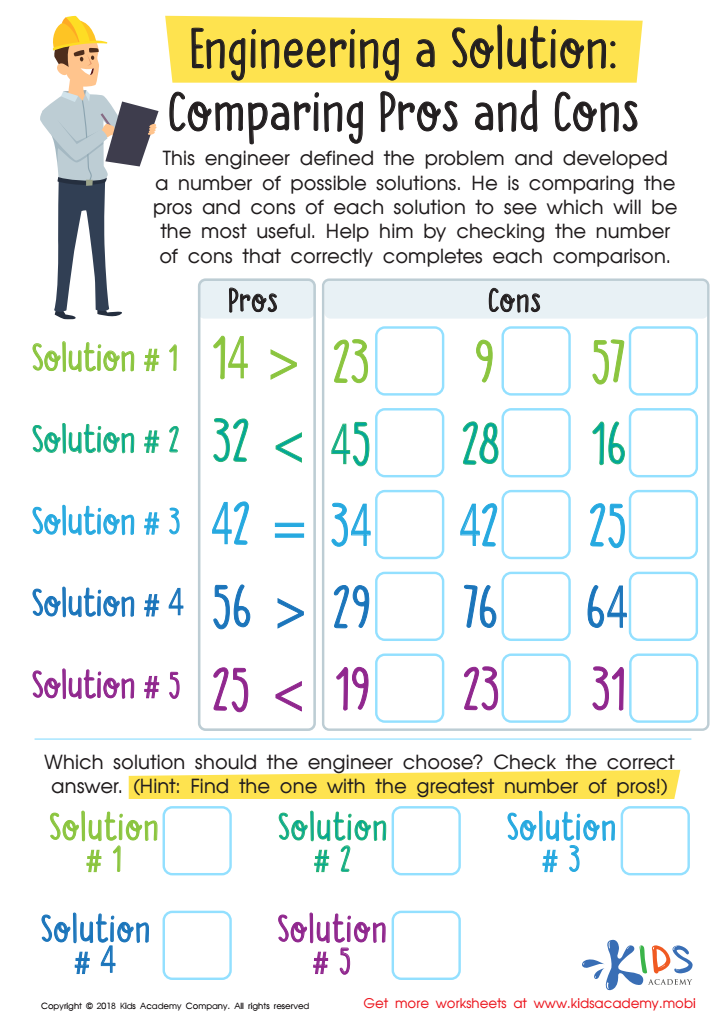
Engineering a Solution: Comparing Pros and Cons Worksheet
 Assign to My Students
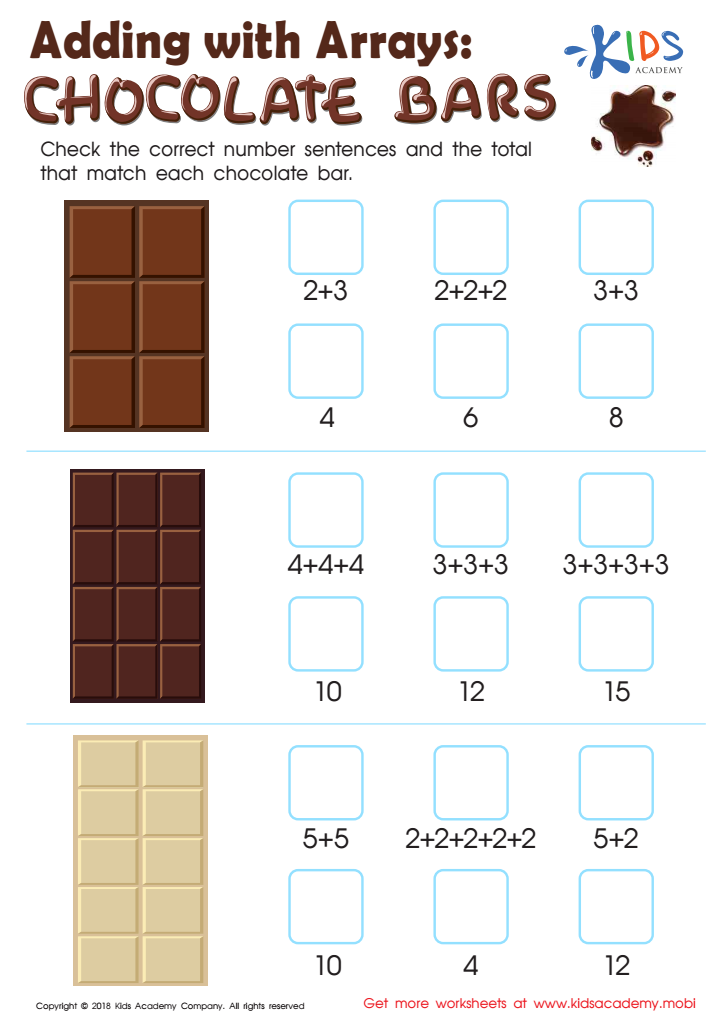
Adding with Arrays: Chocolate Bars Worksheet
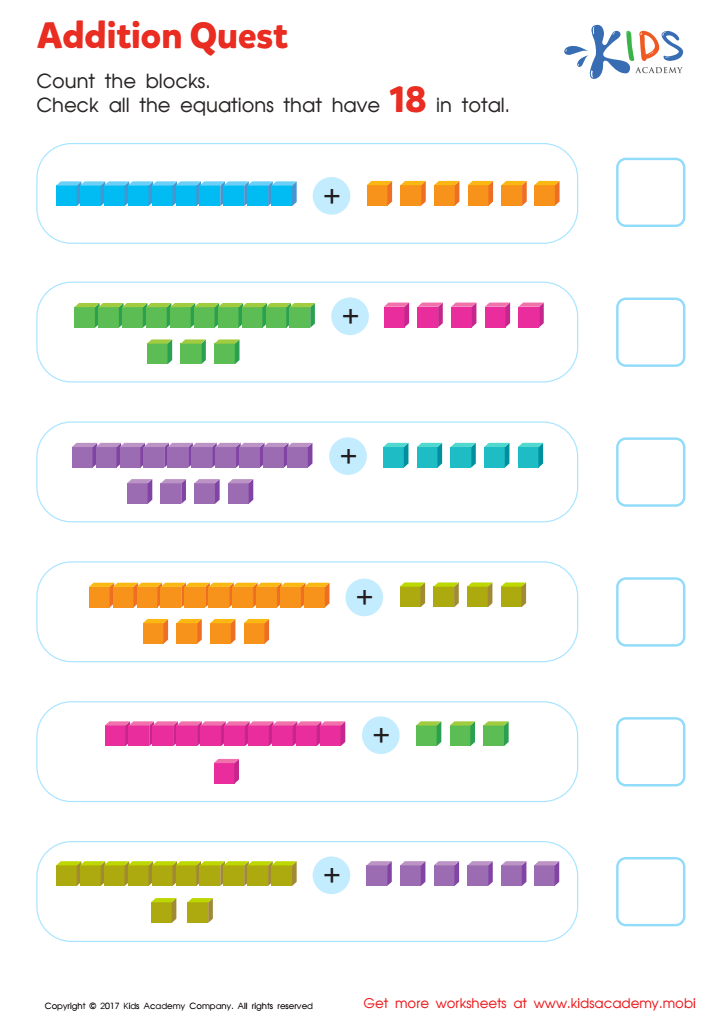
Addition Quest Worksheet: Part 2
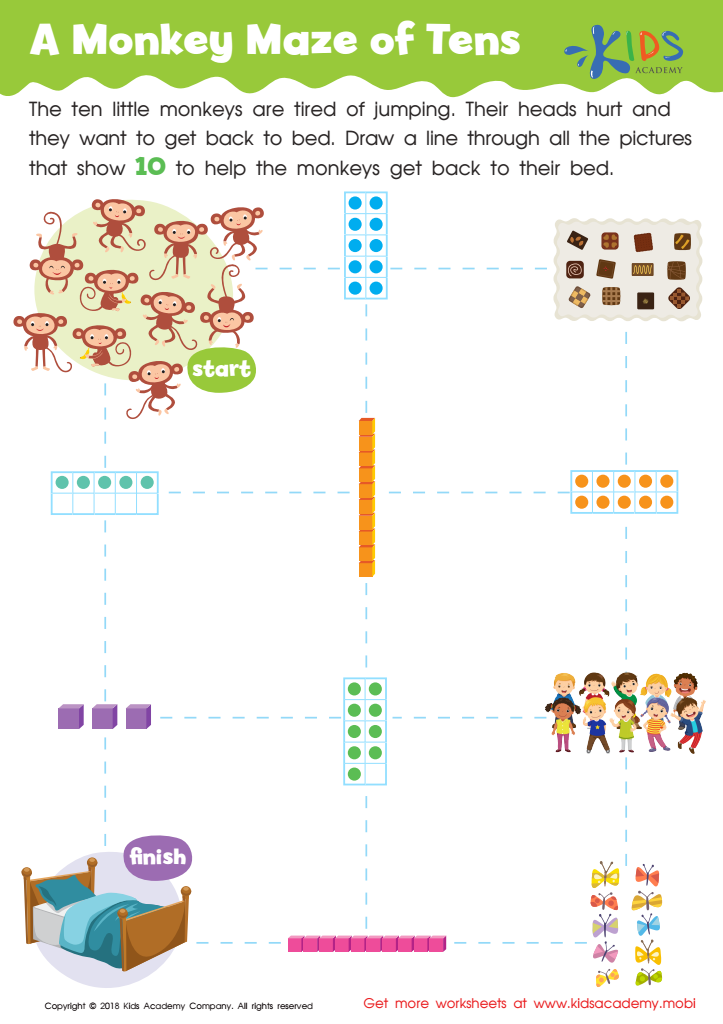
A Monkey Maze of Tens Worksheet
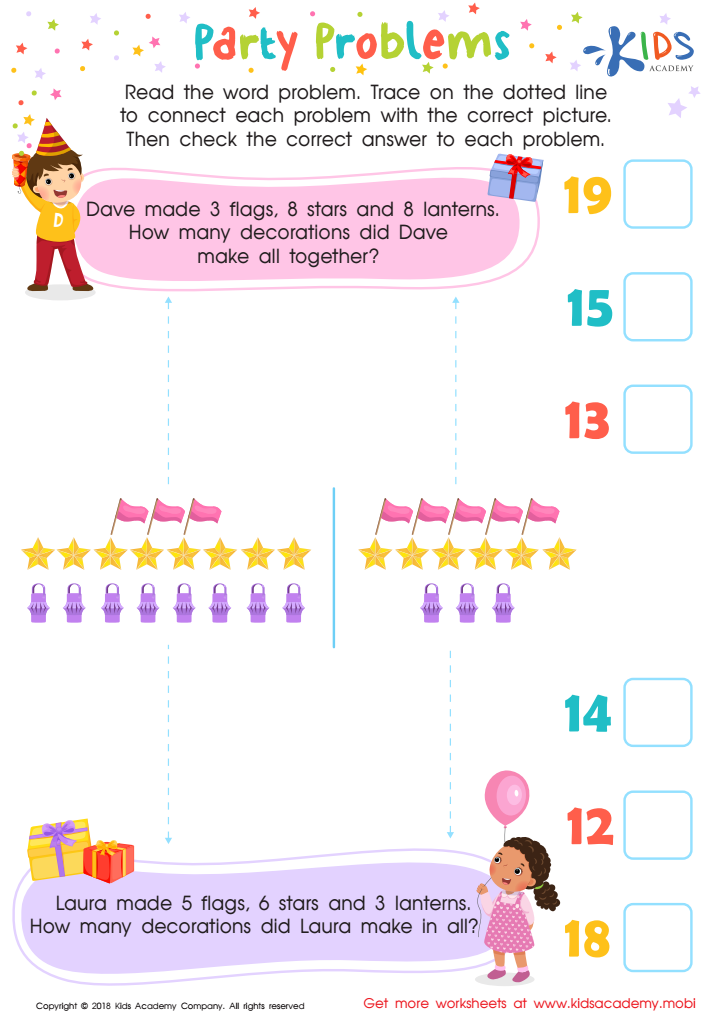
Party Problems Worksheet
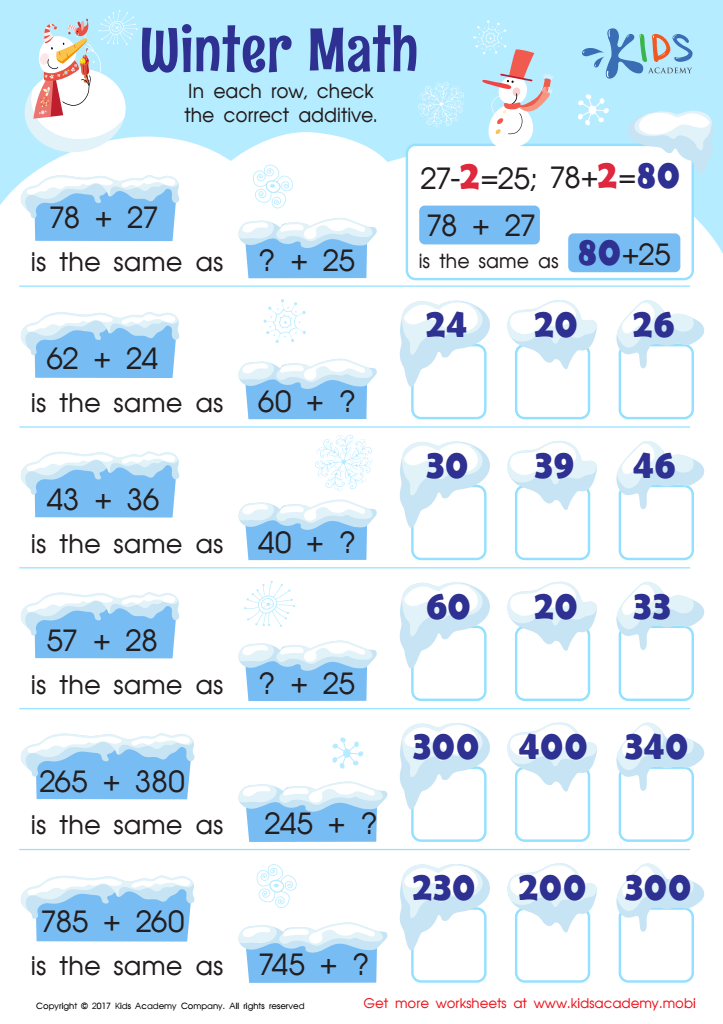
Free Addition Worksheet








Parents and teachers should care about problem-solving for normal numbers in young children (ages 3-8) because these foundational skills are critical for cognitive development and future academic success. At this age, children are rapidly learning how to navigate the world, making it an optimal time to develop problem-solving abilities that will serve them throughout their lives.
Firstly, problem-solving with numbers enhances a child’s mathematical thinking, allowing them to understand concepts such as counting, addition, and subtraction. These are the building blocks for more complex mathematical concepts they will encounter in the future. By tackling problems early, they develop critical thinking and analytical skills, which are essential not just in math, but across all subjects.
Furthermore, problem-solving fosters patience and perseverance. Children learn that not every solution is immediately apparent and that effort and persistence can lead to success. These traits are valuable for overcoming challenges beyond the classroom.
Additionally, engaging kids in problem-solving activities aids in developing their confidence. As they solve problems, they build a sense of achievement and self-efficacy, encouraging them to tackle new and harder tasks with optimism.
In summary, introducing problem-solving with numbers from an early age lays a strong foundation for academic prowess, critical thinking, and personal growth, setting young learners on a path to success both in school and in life.








