Understanding comparisons Normal Numbers Worksheets for Ages 3-8
3 filtered results
-
From - To
Unlock the world of numbers with our "Understanding Comparisons Normal Numbers Worksheets" designed for children ages 3 to 8! These engaging worksheets introduce young learners to the concept of comparisons through fun, interactive activities. Kids will grasp essential skills like greater than, less than, and equal to, while developing their critical thinking and numerical understanding. Tailored to suit various learning styles, our resources foster a positive learning experience, promoting confidence in math. Perfect for homeschooling or classroom use, these worksheets will captivate young minds, making math an enjoyable adventure. Explore our collection to enrich your child's numerical comprehension today!
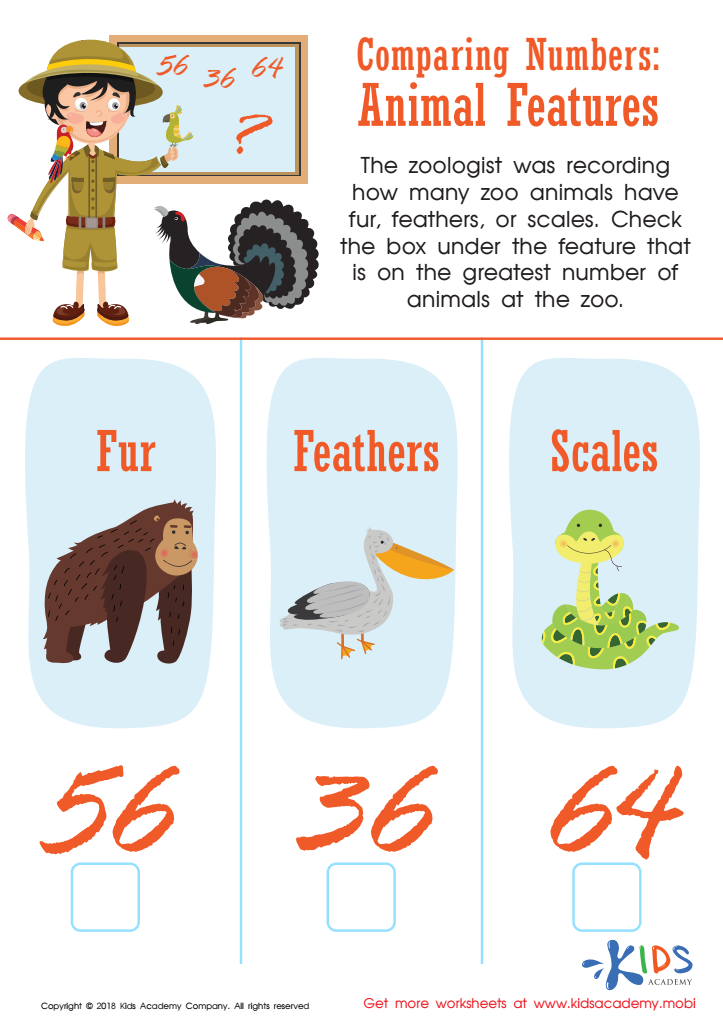
Animal Features Worksheet
 Assign to My Students
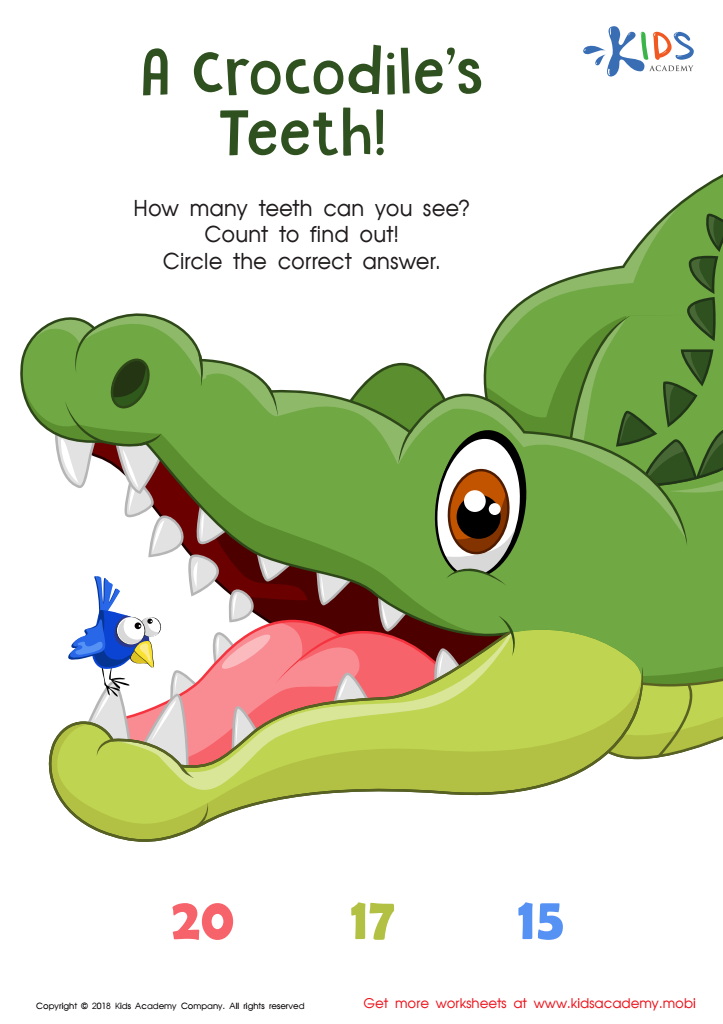
A Crocodile's Teeth Worksheet
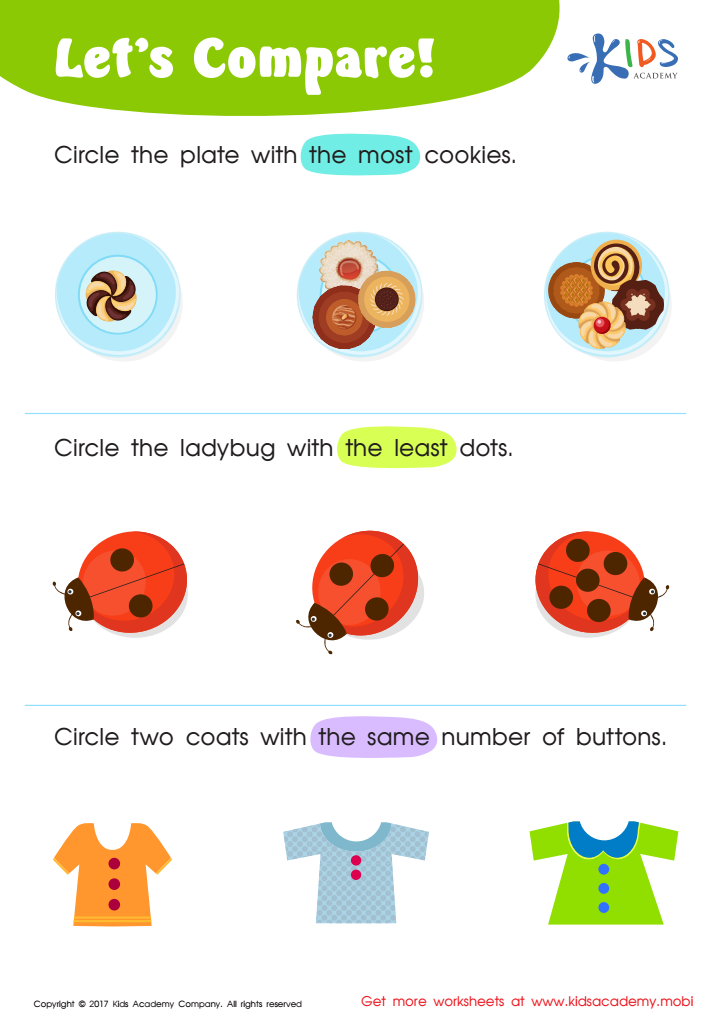
Matching: Classifying Toys by Size Worksheet







Understanding comparisons and normal numbers is crucial for children aged 3-8 as it lays the foundation for essential mathematical skills and critical thinking. During these formative years, children develop their cognitive abilities and begin to understand their world through measurements and comparisons. Teaching them how to compare objects—whether by size, quantity, or length—encourages logical reasoning and problem-solving.
Moreover, comprehension of normal numbers and their relationships aids in developing numerical sense, leading to more advanced skills like addition and subtraction. Engaging in activities that involve comparing quantities can also boost vocabulary and language skills, providing children with the words needed to articulate their thoughts and findings.
Parents and teachers can use ordinary, everyday situations to reinforce these concepts, making learning seamless and fun. Understanding comparisons not only fosters mathematical insight but also promotes confidence and independence, empowering children to make estimations and predictions in real-life contexts. In today’s world, where quantitative skills are increasingly in demand across various disciplines, nurturing these early numerical skills equips children with tools essential for academic success and future opportunities. Ultimately, investing in this foundational understanding benefits both children and society as a whole.








