Counting practice Normal Math Worksheets for Ages 3-8 - Page 2
28 filtered results
-
From - To
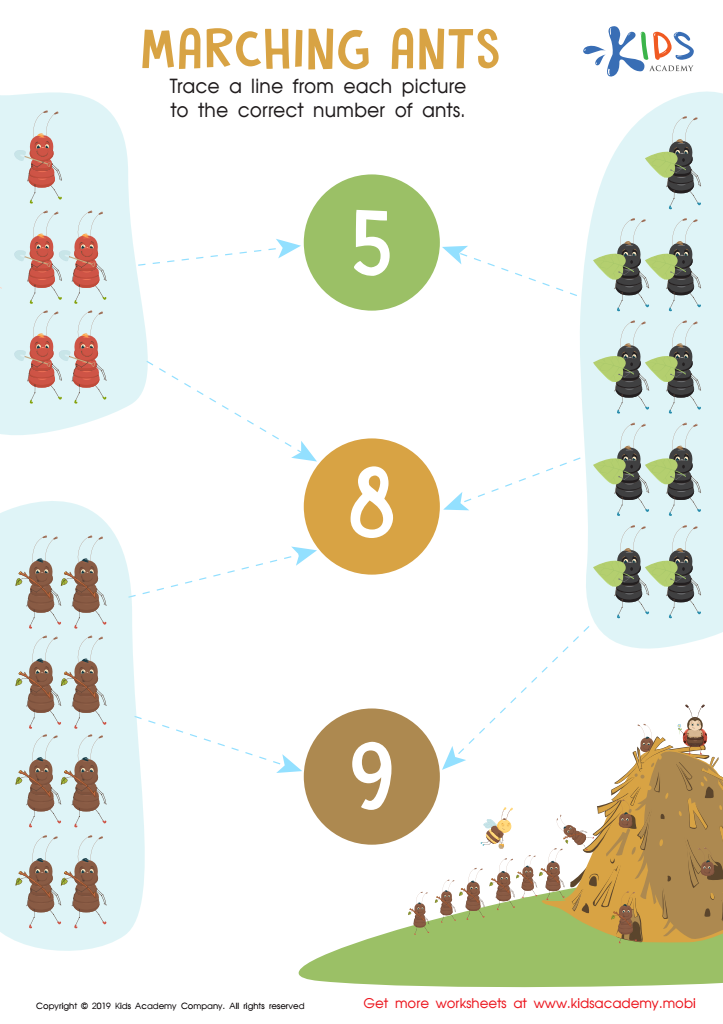
Marching Ants Worksheet
 Assign to My Students
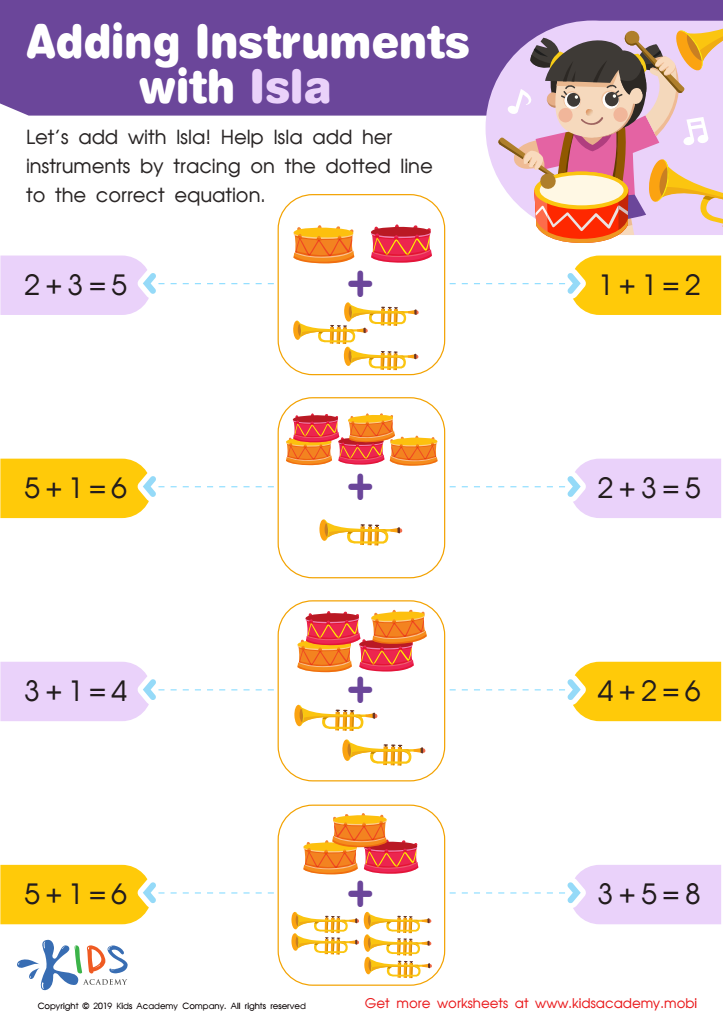
Adding Instruments with Isla Worksheet
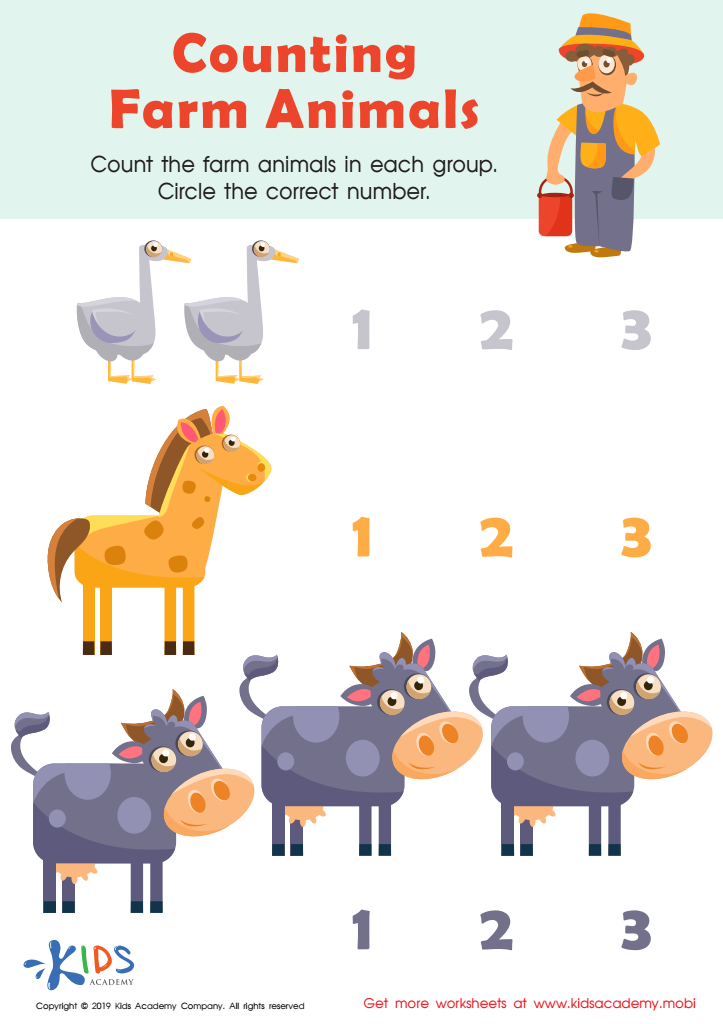
Counting Farm Animals Worksheet
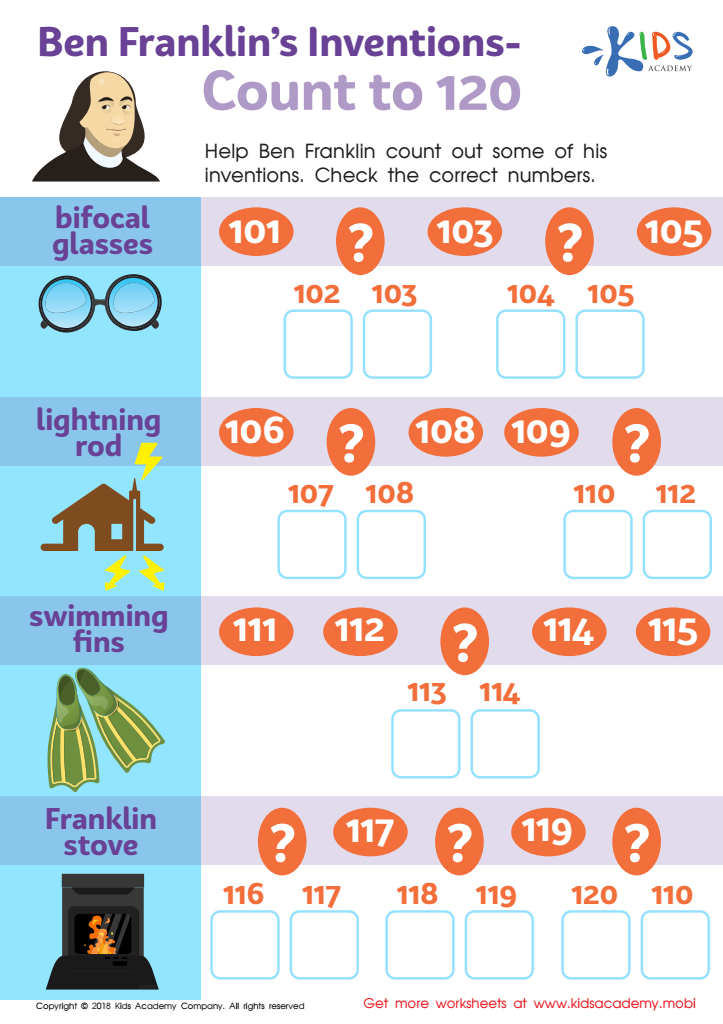
Ben Franklin’s Inventions – Count to 120 Worksheet





%20(1).jpg)
Counting practice in early childhood is crucial for several reasons. For children ages 3 to 8, developing counting skills lays the foundation for future math concepts. One of the key benefits is that counting helps enhance cognitive development. It encourages children to recognize patterns, understand quantities, and improve their problem-solving abilities.
Engaging in counting activities also aids in language development as children learn to associate numbers with objects and verbalize these concepts. This connection enhances their vocabulary while promoting a deeper understanding of math terms, which is essential for their overall academic growth.
Moreover, counting practice nurtures a child's confidence. Mastery of simple math skills allows them to progress to more complex concepts with ease. Parents and teachers should consider that early exposure to these skills can lead to a positive attitude toward math, reducing anxiety around the subject in later years.
Additionally, counting can be integrated into daily activities, making the learning process fun and practical. By caring about counting practice, parents and teachers play a vital role in shaping a child's future success in math and fostering a lifelong love for learning. It's an investment that pays off as children transition from concrete counting to abstract mathematical thinking.








