Developing problem-solving abilities Normal Math Worksheets for Ages 3-8
3 filtered results
-
From - To
Unlock your child's potential with our "Developing Problem-Solving Abilities Normal Math Worksheets" designed for ages 3-8! These engaging worksheets are crafted to enhance critical thinking skills and foster a love for math through interactive exercises. Tailored to suit early learners, each activity encourages kids to explore, analyze, and solve a variety of age-appropriate problems. From simple puzzles to real-life scenarios, our worksheets promote cognitive development while ensuring fun learning experiences. Equip your child with essential problem-solving skills that lay the foundation for future academic success. Discover the joy of learning with our creatively designed math resources today!
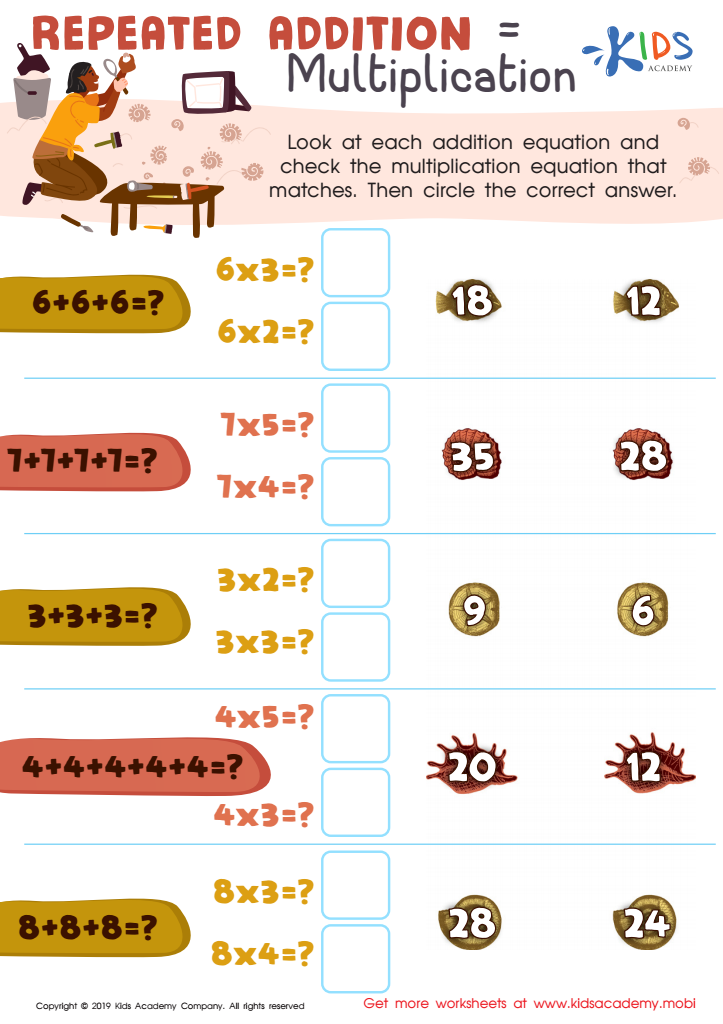
Repeated Addition = Multiplication Worksheet
 Assign to My Students
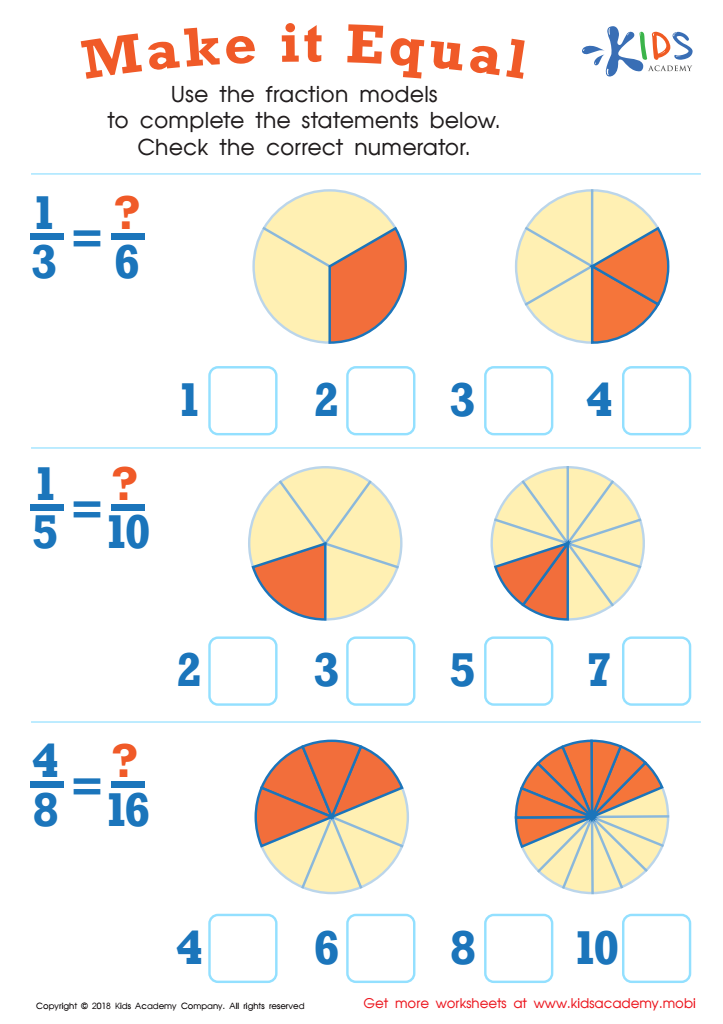
Make It Equal Worksheet
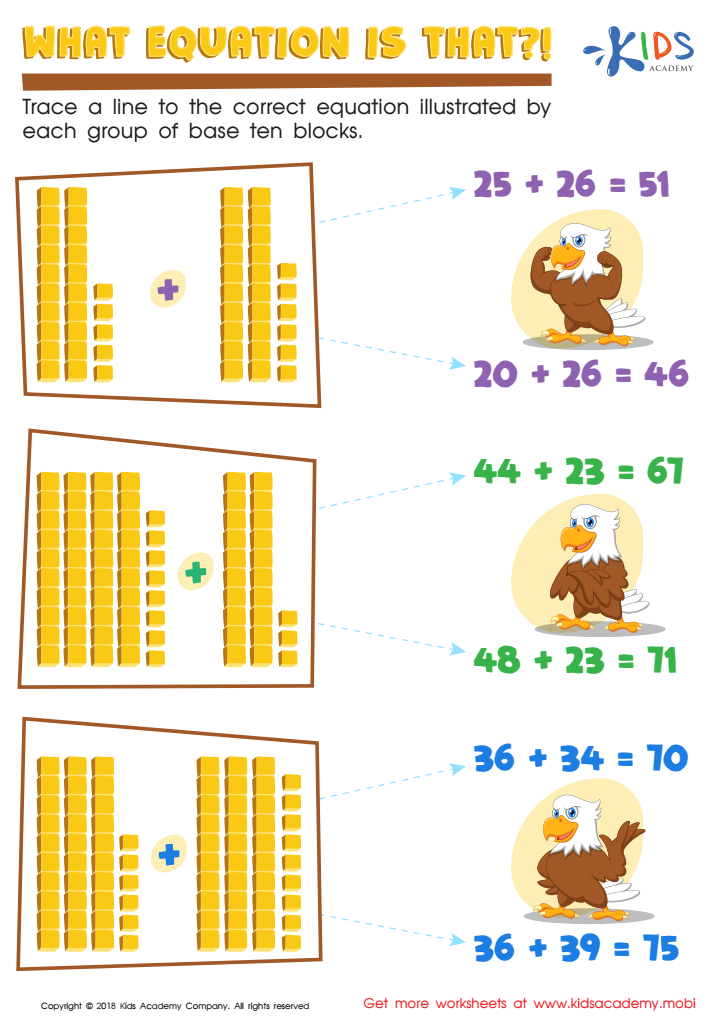
What Equation Is That? Worksheet






Developing problem-solving abilities in young children, particularly through subjects like math, is crucial for several reasons. First, early math skills reinforce cognitive development, helping children learn how to think critically and logically. When children engage with math, they practice identifying problems, exploring solutions, and reasoning through various scenarios, key skills that apply far beyond the classroom.
For ages 3-8, this foundation is essential as children are naturally curious and eager to understand the world around them. Introduced in a thoughtful manner, math can foster their inquisitiveness and encourage perseverance when faced with challenges, nurturing a growth mindset.
Moreover, nurturing problem-solving skills in math aids in developing a sense of competence and confidence in children. As they successfully tackle math-related challenges, they learn that making mistakes is part of the learning process, which is vital for lifelong learning.
Teachers and parents play a critical role in engaging children through interactive and enjoyable math activities, fostering a positive attitude towards learning. This early engagement sets the stage for future academic success, ensuring that children are well-equipped with the skills necessary to navigate complex problems throughout their educational journey and beyond.








