Enhancing observation skills Normal Math Worksheets for Ages 3-8
5 filtered results
-
From - To
Enhancing observation skills is crucial for young learners ages 3-8. Our collection of normal math worksheets is designed to help children develop key observational abilities while engaging with fun and interactive activities. These worksheets focus on recognizing patterns, shapes, and numbers, promoting critical thinking and cognitive growth. By completing these exercises, children will sharpen their attention to detail, improve their analytical skills, and foster a love for learning math. Whether at home or in the classroom, our worksheets provide an excellent opportunity for hands-on practice and skill development. Explore our resources today and watch your child's observational prowess flourish!
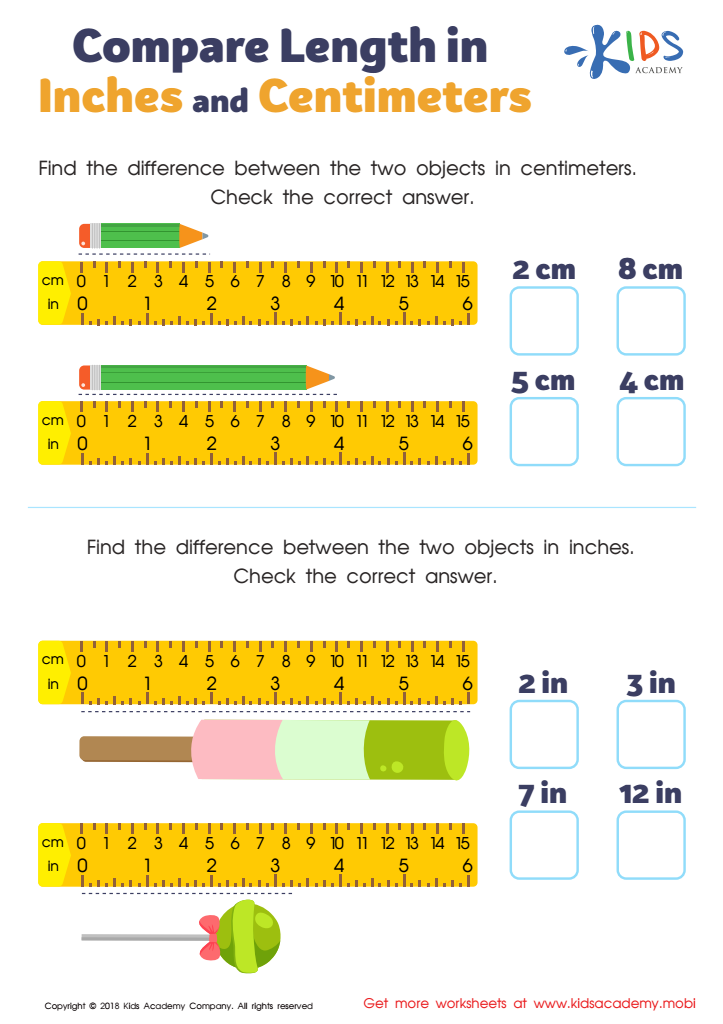
Compare Length in Inches and Centimeters Worksheet
 Assign to My Students
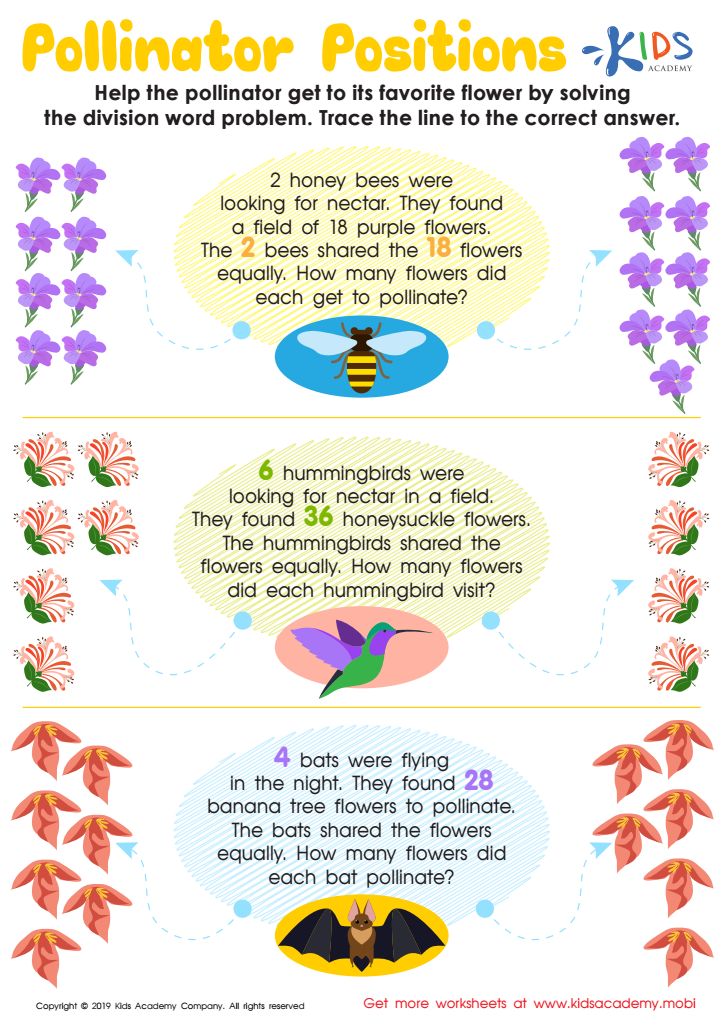
Pollinator Positions Worksheet
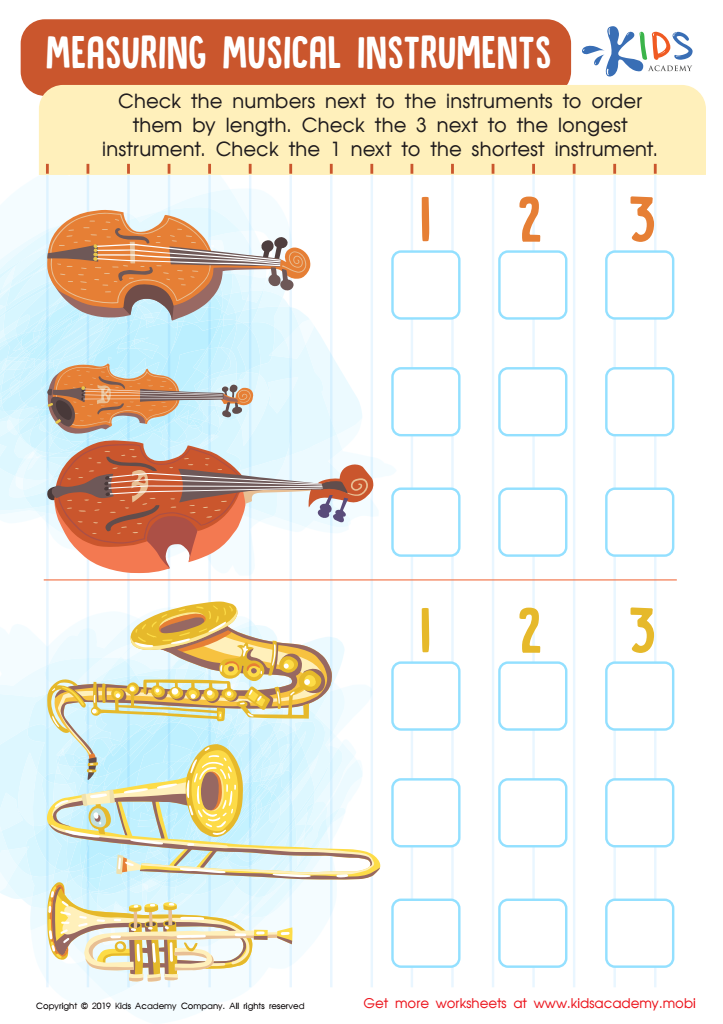
Measuring Musical Instruments Worksheet
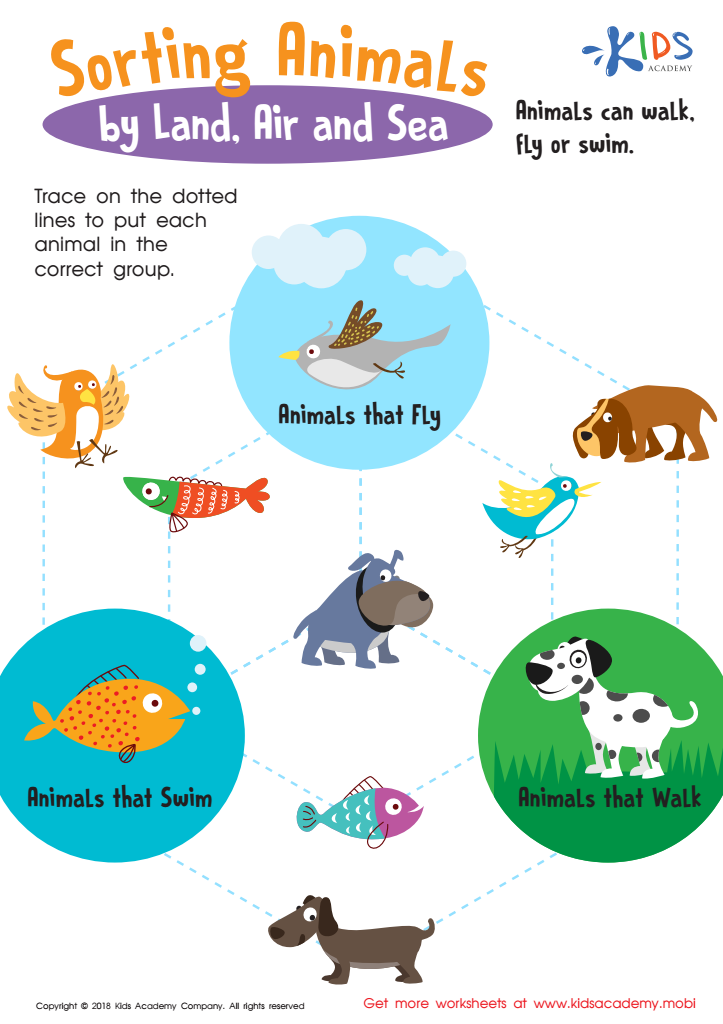
Sorting Animals by Land, Air and Sea Worksheet
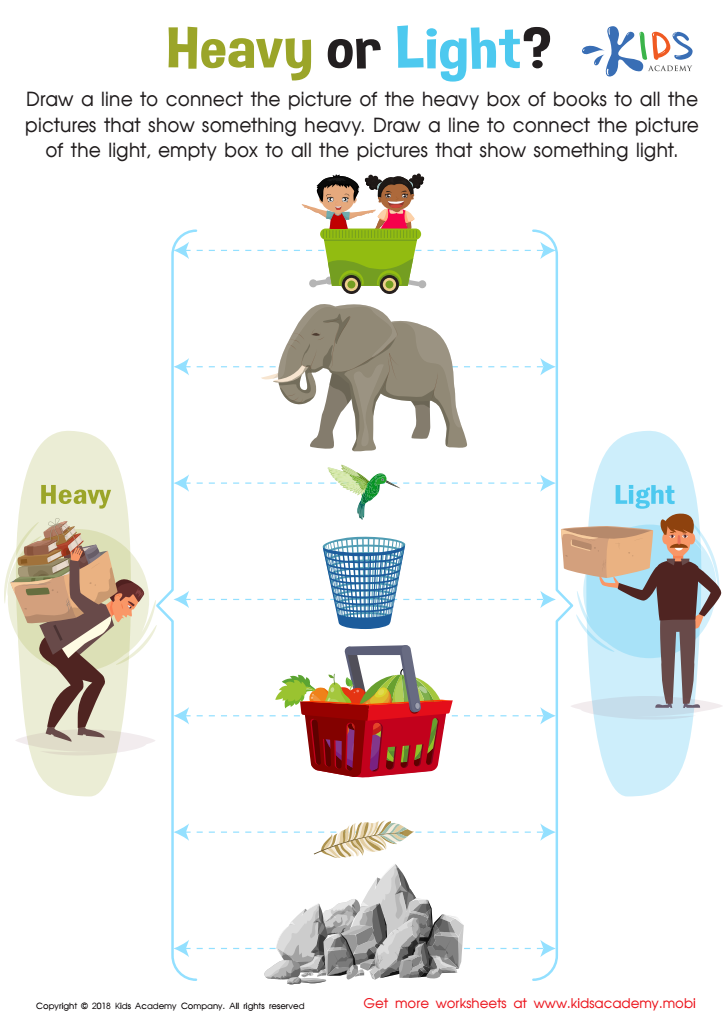
Heavy or Light? Worksheet







Enhancing observation skills in young children, particularly in the context of early math education, is crucial for their overall cognitive development. For ages 3-8, this foundational period involves not just learning facts, but developing critical thinking and problem-solving abilities. When parents and teachers focus on strengthening observation skills, they empower children to notice patterns, quantify objects, and recognize geometric shapes in their environment, fostering a deeper understanding of mathematical concepts.
Additionally, good observation skills contribute to children's ability to follow instructions and engage meaningfully in activities, such as sorting, counting, and measuring. By enhancing these skills, parents and teachers encourage children to explore their surroundings, ask questions, and make connections, leading to richer learning experiences.
Moreover, observational expertise nurtures engagement and curiosity, setting the stage for a lifelong love of learning. Early math skills are not just about numbers; they encompass spatial reasoning and logical thinking, vital in everyday life. By prioritizing observational skills, parents and teachers effectively enhance children's preparedness for future academic challenges, ensuring that they have a strong mathematical foundation to build upon as they progress through their education. Ultimately, these skills serve to instill confidence and a sense of competence in young learners.








