Problem-solving practice Normal Math Worksheets for Ages 3-8
4 filtered results
-
From - To
Discover engaging and educational problem-solving practice with our Normal Math Worksheets, designed especially for children ages 3-8. Our expertly crafted worksheets make learning fun and effective by focusing on crucial math skills, from basic addition and subtraction to more advanced concepts.
Tailored to suit varying skill levels, each worksheet promotes critical thinking and enhances a child’s ability to tackle everyday math problems confidently. Perfect for home or classroom settings, these resources ensure young minds build a strong mathematical foundation while also enjoying the learning process! Prepare your child for future success with these enriching activities.
Explore our range and let the problem-solving adventures begin!
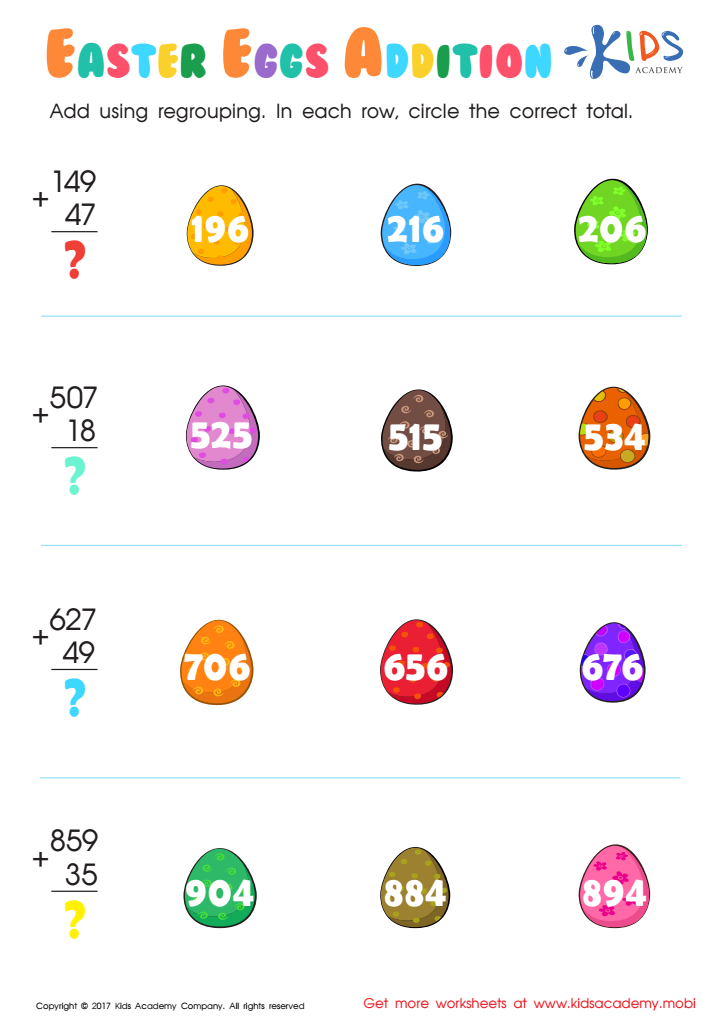
Addition with Regrouping Worksheet
 Assign to My Students
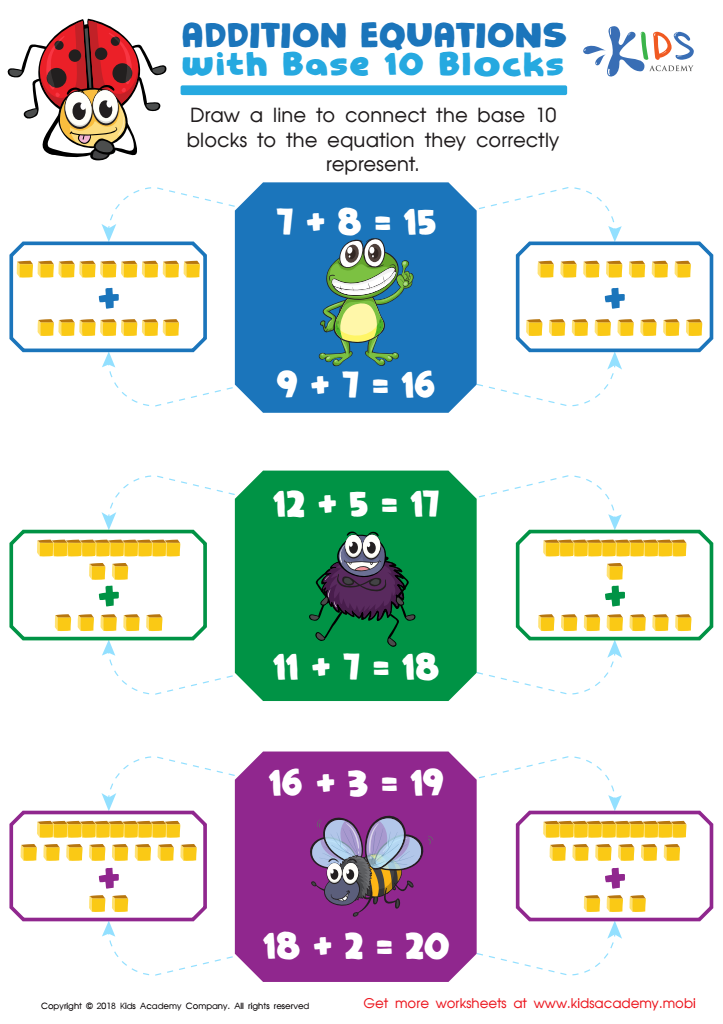
Addition Equations With Base 10 Blocks Worksheet
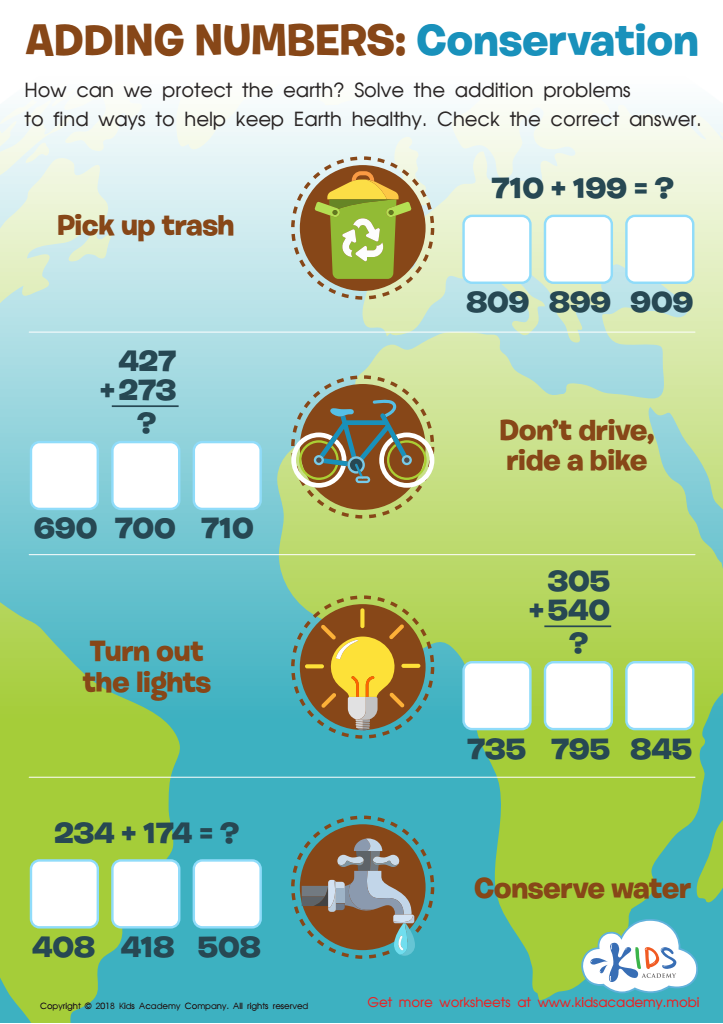
Adding Numbers: Conservation Worksheet
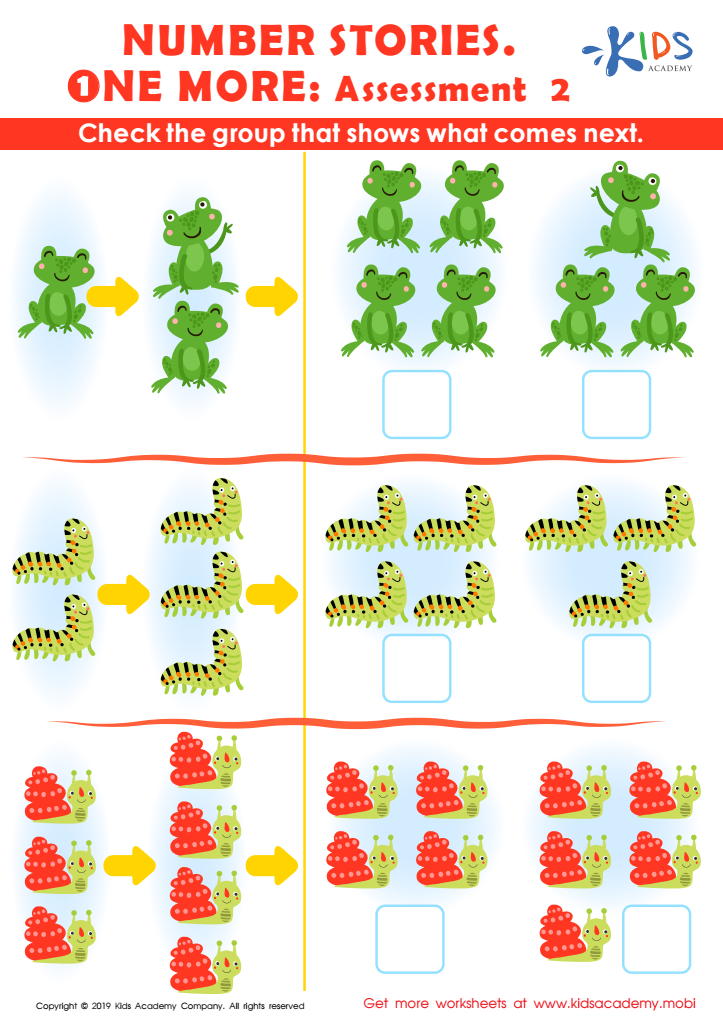
Number Stories One More – Assessment 2 Worksheet








Problem-solving practice in mathematics for children aged 3-8 is crucial for several reasons, providing foundational skills that support their overall cognitive development. Early exposure to problem-solving in math helps children learn critical thinking and analytical skills. It encourages them to explore, experiment, and understand mathematical concepts, rather than merely memorizing facts or procedures.
For parents and teachers, emphasizing problem-solving means guiding children through strategies to tackle unfamiliar problems and find logical solutions. This practice fosters resilience and perseverance because children learn that making mistakes is part of the learning process. In addition to strengthening math skills, problem-solving is inherently linked to reading, comprehension, and communication, as children are often required to interpret problems and explain their thinking.
Furthermore, early math problem-solving activities can boost a child’s confidence in their abilities, leading to a positive attitude towards math as they progress through school. It also provides an opportunity for children to work collaboratively with peers, improving their social and teamwork skills.
By caring about problem-solving practice in early mathematics, parents and teachers set the stage for lifelong competencies. These skills are not only essential in academic contexts but also in day-to-day decision-making and future professional environments. It ensures a well-rounded development that equips children to become independent and capable thinkers.








