Understanding biodiversity Normal Math Worksheets for Ages 3-8
3 filtered results
-
From - To
Explore the fascinating world of biodiversity with our Normal Math Worksheets designed for children aged 3-8. These engaging worksheets seamlessly blend math practice with ecological concepts, helping young learners understand the variety of life on our planet. Through fun activities, children will develop essential math skills while discovering different species, habitats, and ecosystems. Our resources promote environmental awareness and encourage creativity in problem-solving. Ideal for classroom use or at-home learning, these worksheets make understanding biodiversity both educational and enjoyable. Inspire your child's curiosity about nature and nurture their mathematical abilities with our thoughtfully crafted activities. Dive into diversity today!
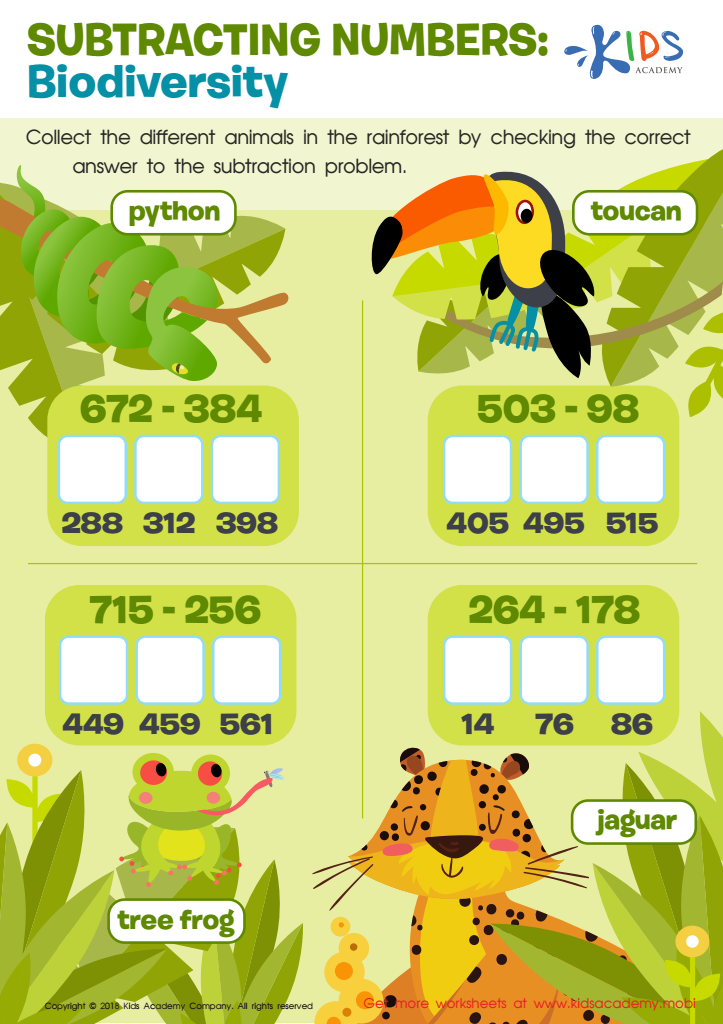
Subtracting Numbers: Biodiversity Worksheet
 Assign to My Students
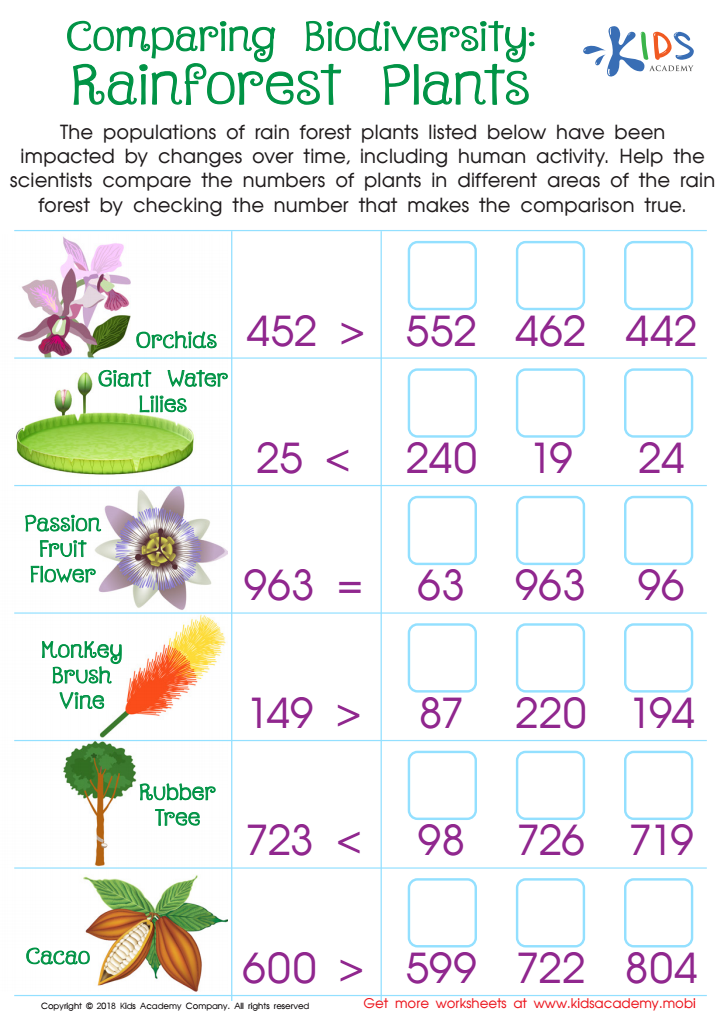
Comparing Biodiversity: Rainforest Plants Worksheet
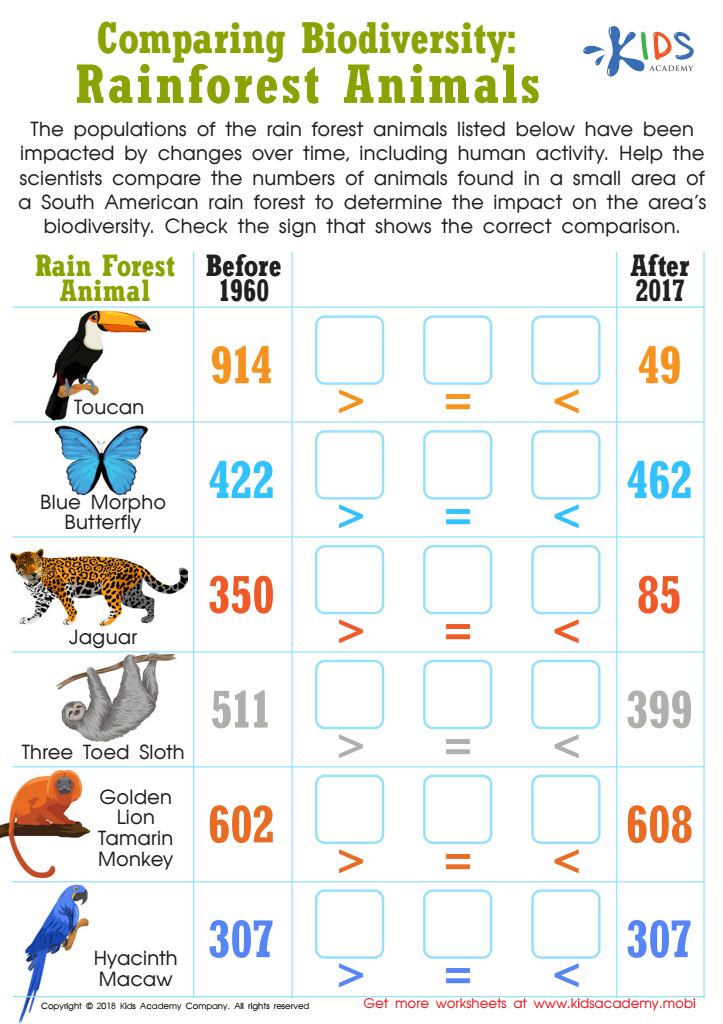
Comparing Biodiversity: Rainforest Animals Worksheet








Understanding biodiversity is essential for children aged 3-8, as it shapes their perception of the world around them. For parents and teachers, nurturing this understanding promotes curiosity and encourages respect for nature. Teaching young children about biodiversity highlights the importance of different species and ecosystems, fostering a sense of interconnectedness and responsibility for the environment.
Incorporating normal math concepts into these lessons, such as counting various animal species or measuring plant growth, can enhance children’s cognitive skills while deepening their appreciation for biodiversity. Engaging activities like sorting animals, identifying patterns in nature, or creating graph representations of different habitats can make learning both fun and educational.
Early exposure to biodiversity not only supports scientific understanding but also cultivates important life skills, such as critical thinking and problem-solving. Moreover, it instills an ethical framework for caring about our planet’s health and sustainability. By integrating math with biodiversity education, parents and teachers can create a well-rounded approach that nurtures children’s cognitive, emotional, and social development. Ultimately, understanding biodiversity fosters a generation of informed and compassionate individuals equipped to face environmental challenges in the future.








