Basic Math Skills Normal Measurement Worksheets for Ages 3-8
3 filtered results
-
From - To
Our Basic Math Skills Normal Measurement Worksheets for Ages 3-8 offer engaging and age-appropriate activities to help young learners develop essential measurement skills. Designed to build a solid foundation in math, these printable worksheets cover a wide range of concepts including length, height, weight, and volume. Perfect for preschoolers and early elementary students, each worksheet encourages hands-on learning through fun and interactive exercises. Ideal for both classroom and home use, these resources foster confidence and competence in math fundamentals, setting the stage for future academic success. Help your child thrive with our enjoyable and educational measurement worksheets!
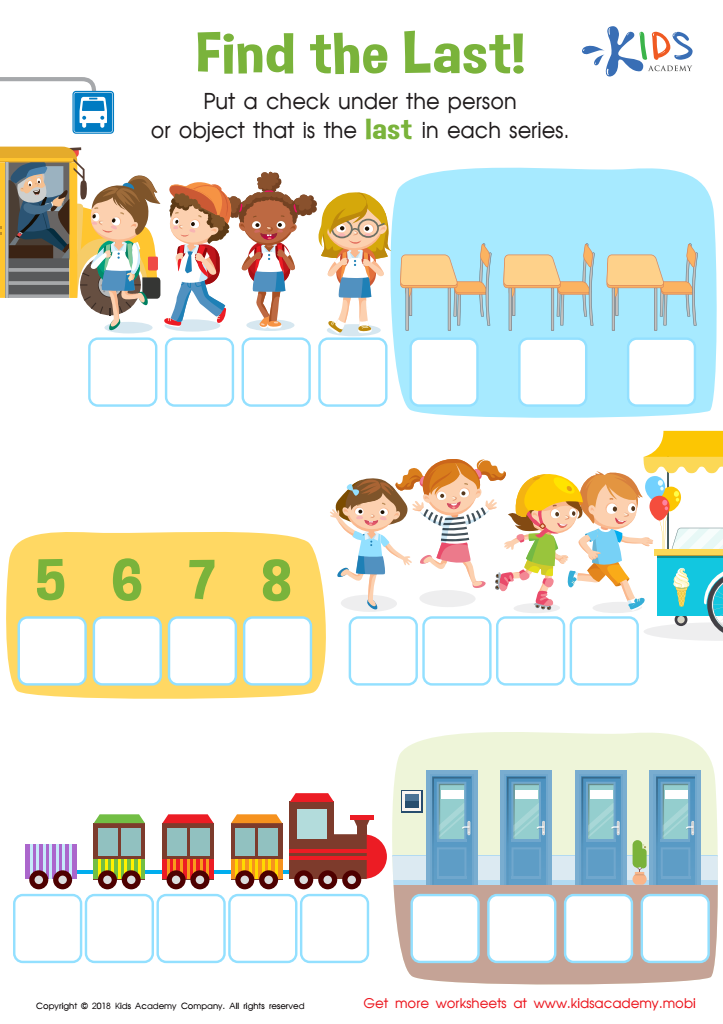
Find the Last! Worksheet
 Assign to My Students
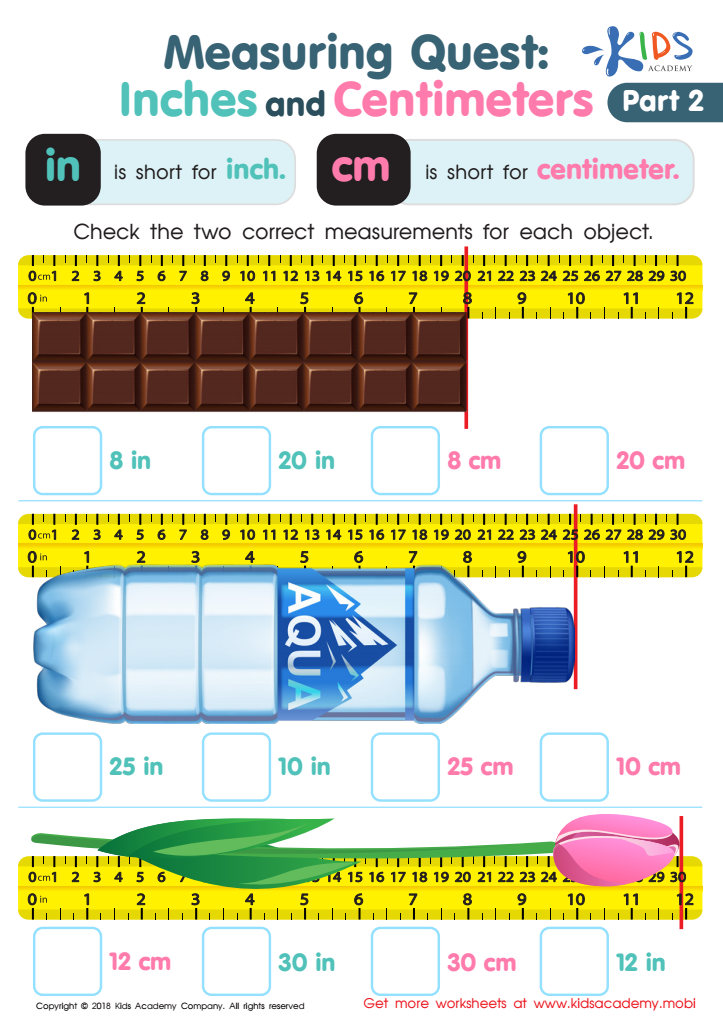
Measuring Quest: Inches and Centimeters - Part 2 Worksheet
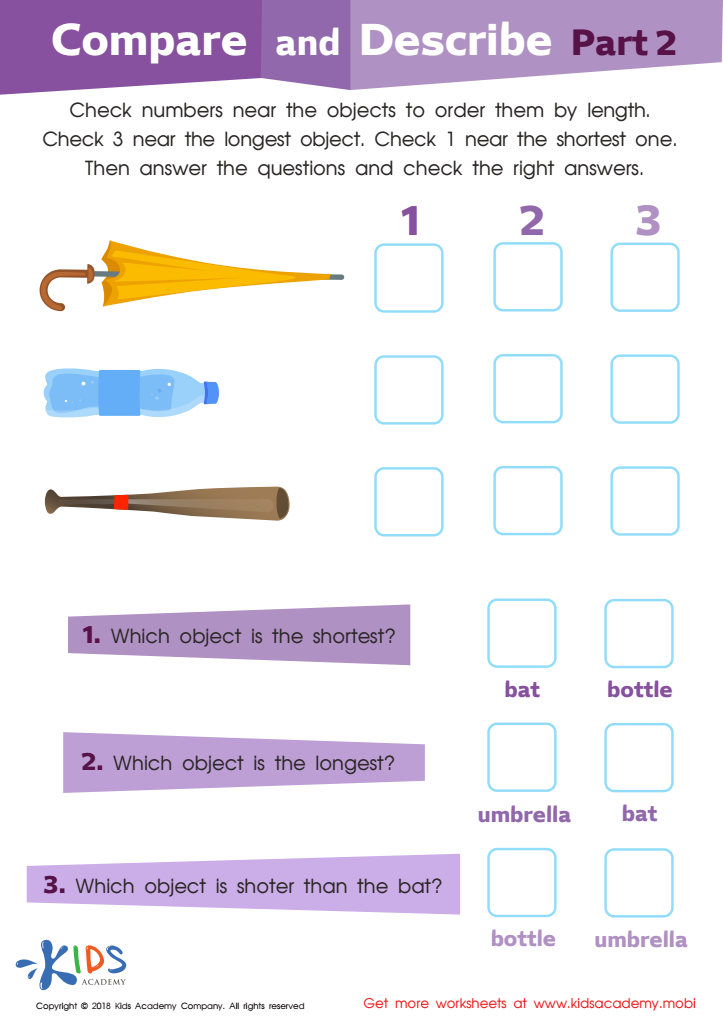
Compare and Describe: Part 2 Worksheet








Basic math skills form the foundation for children's future academic success and everyday problem-solving abilities. Normal measurement skills for ages 3-8, such as understanding shapes, sizes, weight, length, and volume, help develop critical thinking and observational skills. When parents and teachers emphasize these foundational math concepts, children learn to categorize and compare objects, which enhances cognitive development.
Understanding measures and numbers in early childhood also cultivates a child's spatial awareness and motor skills. For instance, when children learn to measure sand in a sandbox or compare the length of pencils, they use both their minds and hands, connecting abstract concepts with concrete experiences.
Investing in early math skill development benefits children academically and instills confidence and curiosity in learning more complex concepts later. Research indicates that children with strong foundational math skills are more likely to excel in higher education, leading to better career opportunities and critical decision-making abilities.: Lastly, everyday life heavily relies on basic mathematics – from cooking and shopping to planning trips and sports. By ensuring proficiency in normal measurement skills, parents and teachers equip children with essential life skills for independence and practical problem-solving throughout their lives.








