Understanding subtraction Normal Subtraction Worksheets for Ages 3-8
6 filtered results
-
From - To
Dive into the world of numbers with our "Understanding Subtraction" worksheets, designed for children aged 3-8. These engaging worksheets help young learners grasp subtraction fundamentals through fun, interactive activities. Perfect for building essential math skills, our carefully crafted worksheets use colorful visuals and straightforward exercises to make learning subtraction enjoyable and accessible. Whether your child is just starting out with basic subtraction or needs a bit of extra practice, our worksheets support their growth and confidence. Equip them with the tools they need to master subtraction today! Explore more at Kids Academy for a brighter math future.
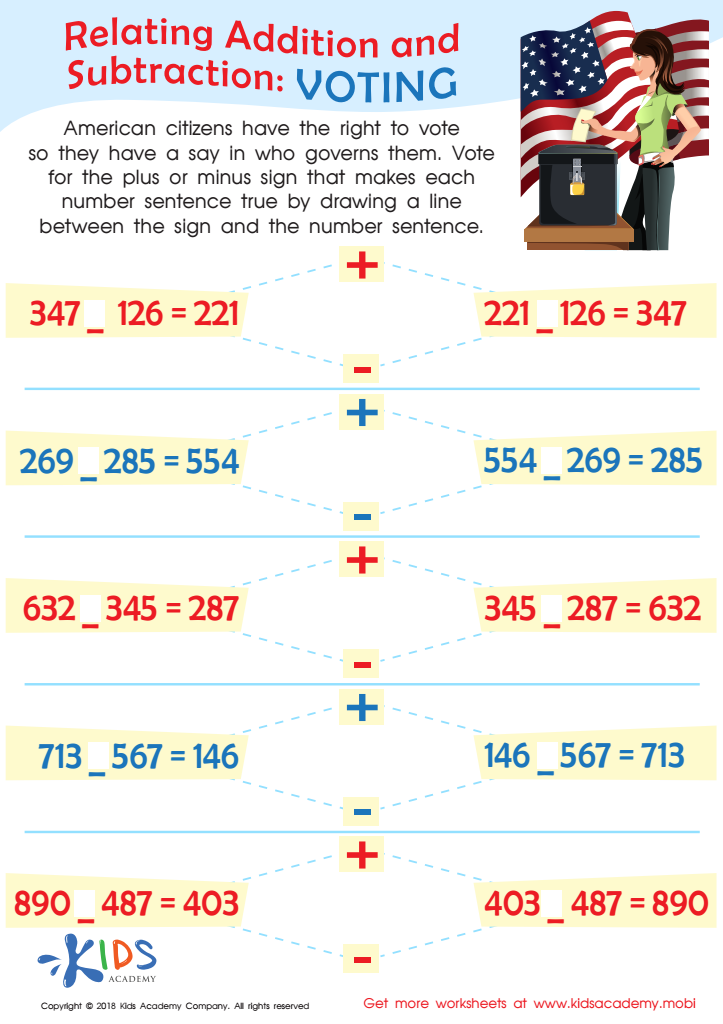
Voting Worksheet
 Assign to My Students
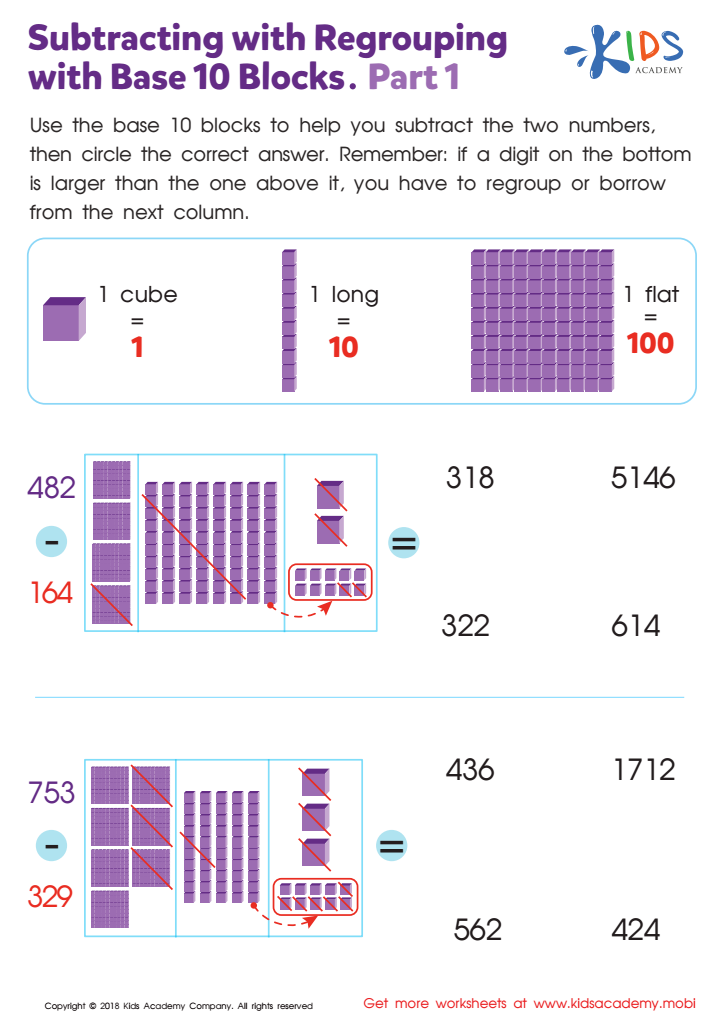
Subtracting with Regrouping with Base 10 Blocks. Part1 Worksheet
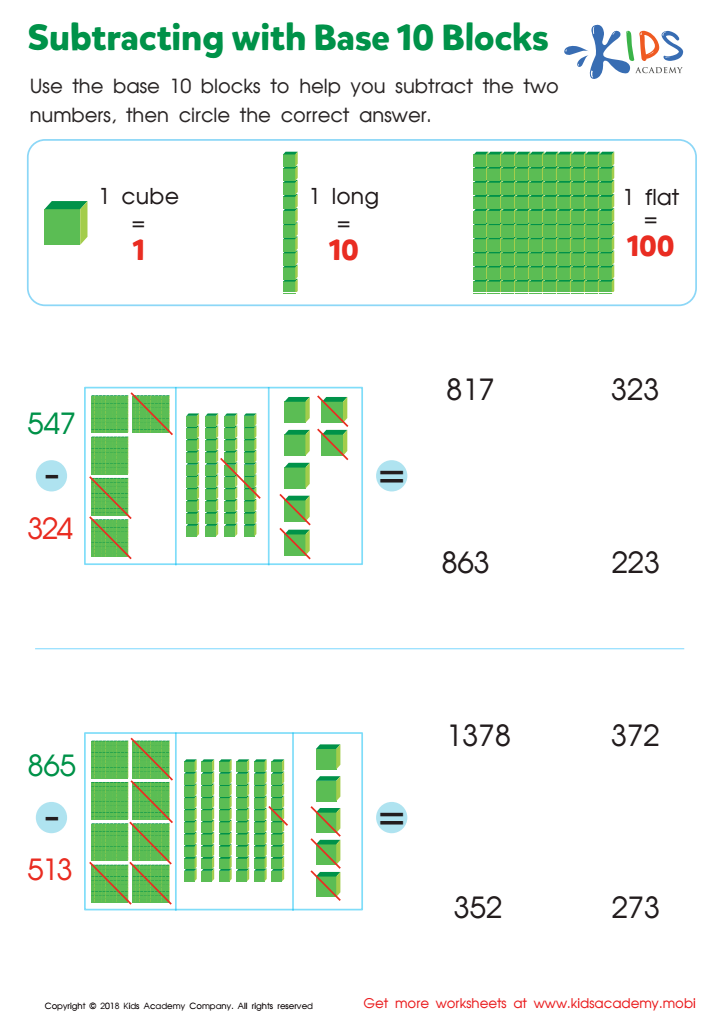
Subtracting with Base 10 Blocks Worksheet
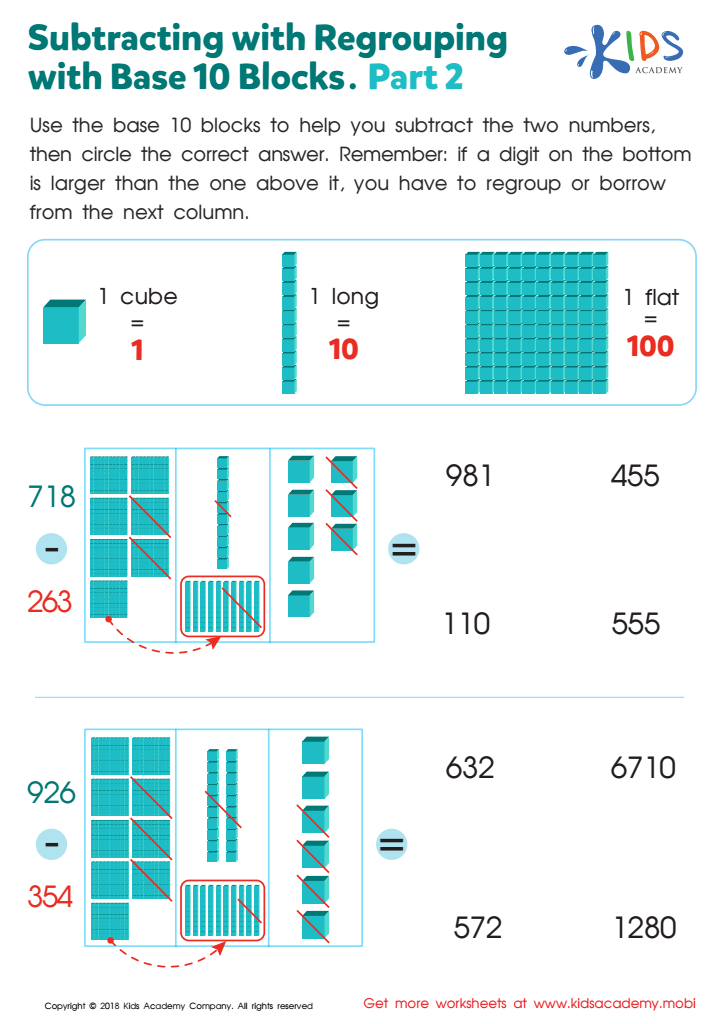
Subtracting with Regrouping with Base 10 Blocks. Part 2 Worksheet
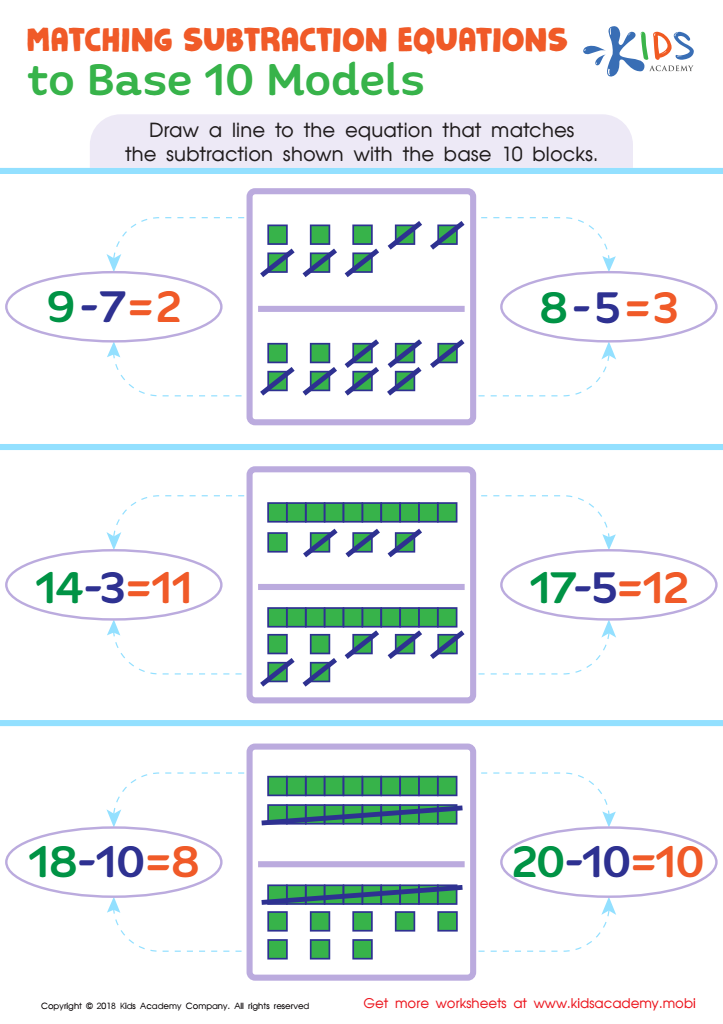
Matching Subtraction Equations To Base 10 Models Worksheet
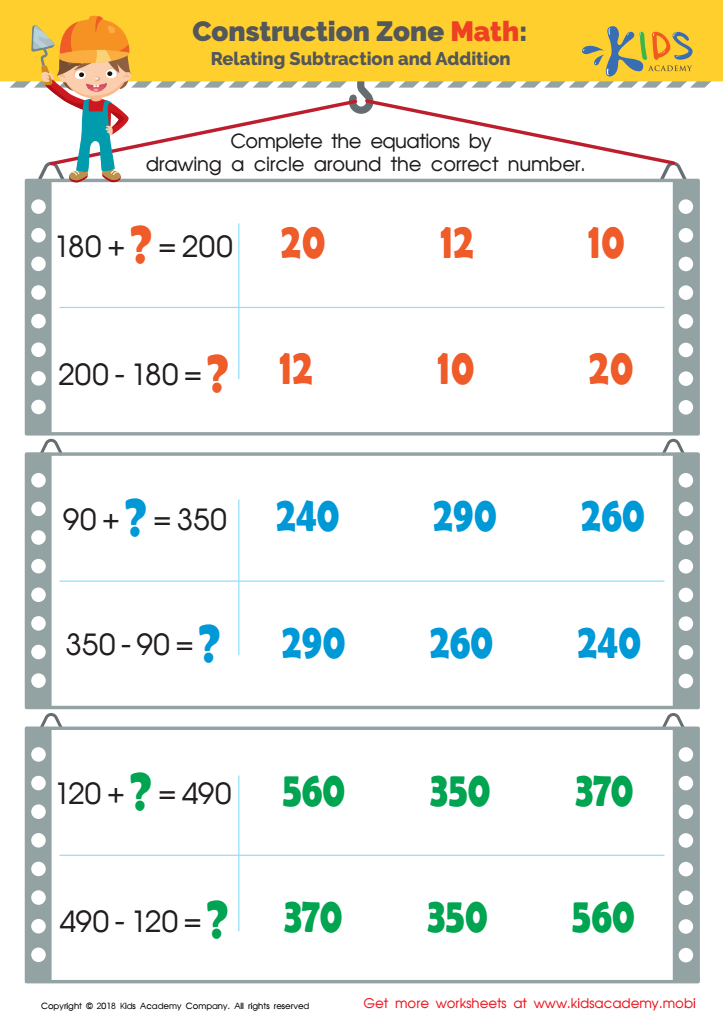
Construction Zone Math: Relating Subtraction and Addition Worksheet








Understanding subtraction is crucial for children ages 3-8 because it lays the groundwork for essential mathematical skills and critical thinking. During these formative years, mastering basic arithmetic operations, including subtraction, is vital for academic success in more advanced math topics.
Subtraction is not just about taking away numbers; it helps children understand the concept of 'difference' and 'part-whole' relationships. For example, recognizing that if you have 10 apples and take away 4, you have 6 left, teaches kids about lesser quantities, what remains, and comparison. This understanding applies daily, from divvying up snacks to determining time left for activities, helping kids navigate their world more effectively.
Mathematical proficiency also boosts problem-solving capabilities. As kids tackle subtraction problems, they develop logical reasoning and patience, which are valuable life skills. Early success in math builds confidence, reduces math anxiety, and encourages a positive attitude towards learning.
For teachers and parents, focusing on subtraction ensures that children acquire a strong numerical foundation. This solid base enables them to grasp more complex mathematical concepts with ease in the future. Being proficient in subtraction equips children with practical skills they will need throughout their education and personal lives, making it an essential component of early childhood development.