Vocabulary expansion Normal Animals Worksheets for Ages 3-8
5 filtered results
-
From - To
Introduce your child to the fascinating world of animals with our engaging "Vocabulary Expansion Normal Animals Worksheets" for ages 3-8. These worksheets are expertly designed to boost your child’s understanding of common animals while enhancing their vocabulary. Featuring colorful illustrations and interactive activities, our worksheets help kids learn animal names, traits, and habitats in a fun and educational way. Ideal for young learners, these printable resources support reading and comprehension skills, making vocabulary expansion enjoyable and effective. Give your child a head start with our comprehensive and captivating animal-themed worksheets today!
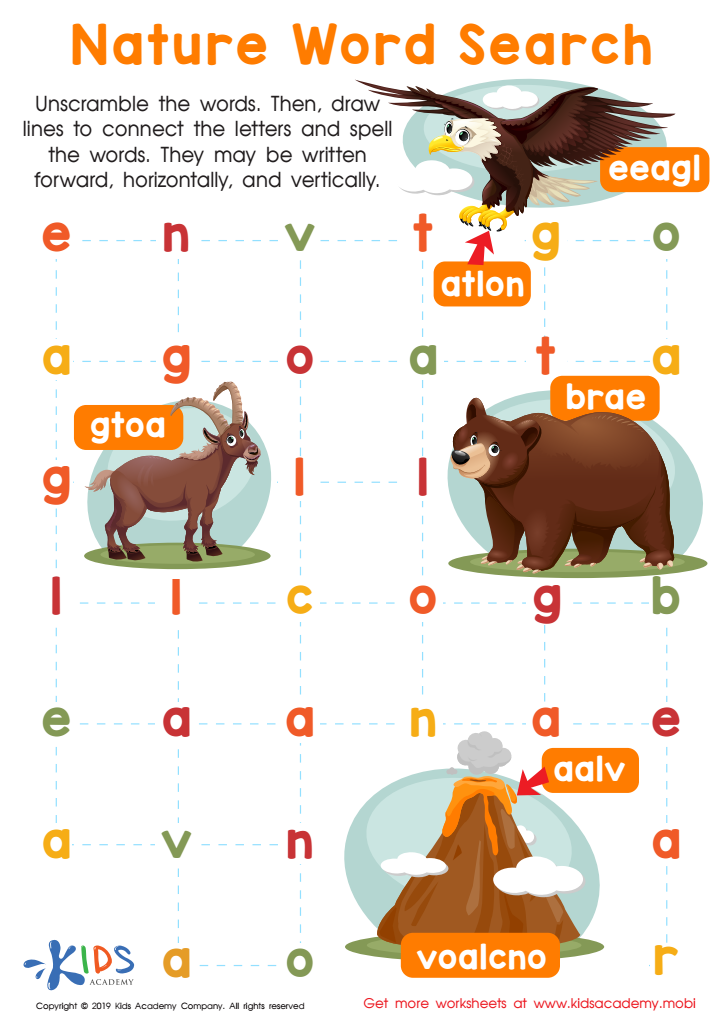
Nature Word Search Worksheet
 Assign to My Students
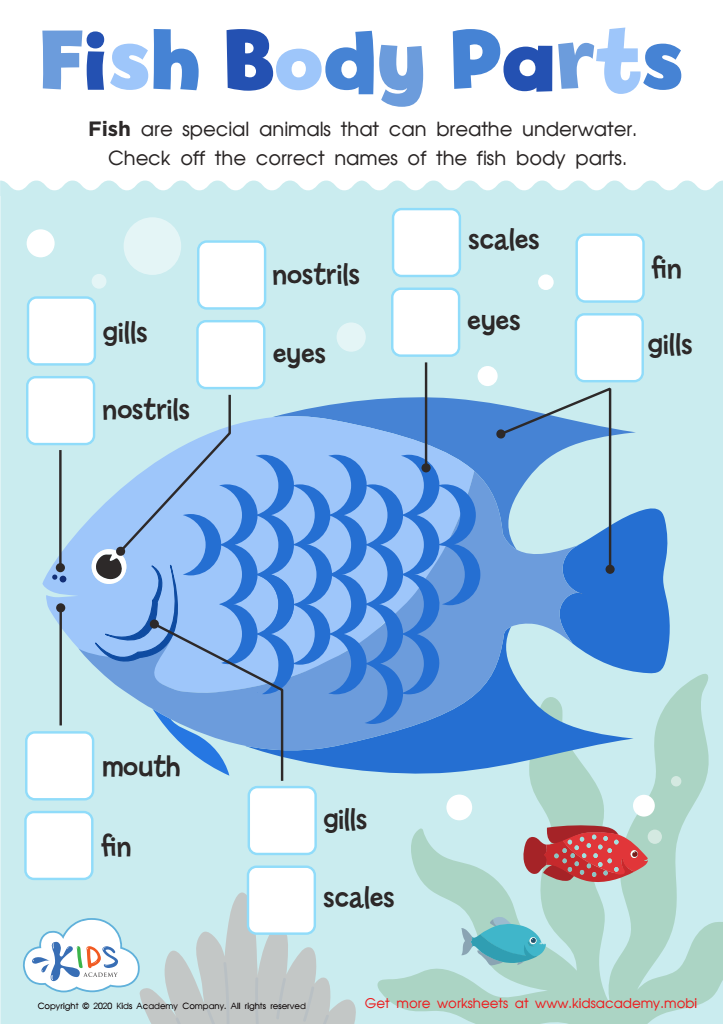
Fish Body Parts Worksheet
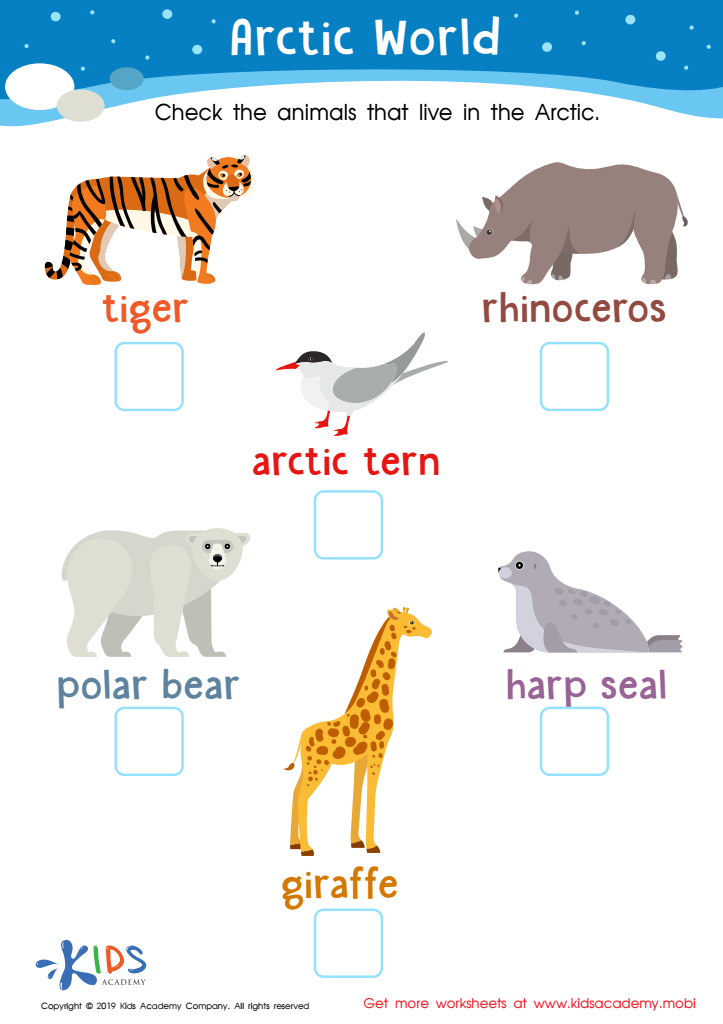
Arctic World Worksheet
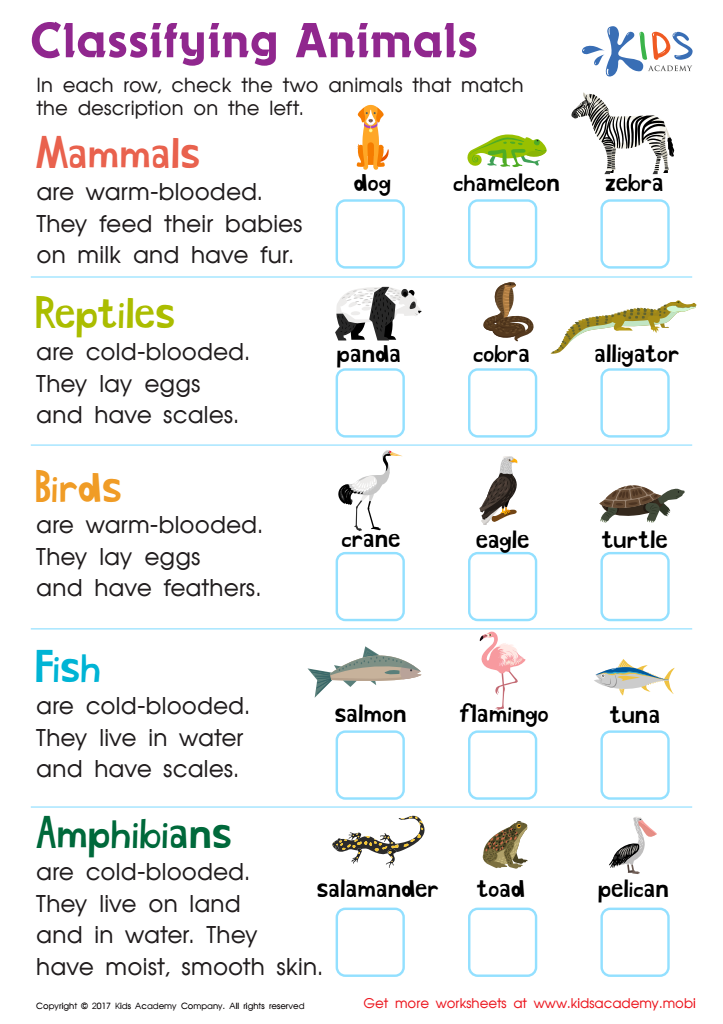
Classifying Animals Worksheet
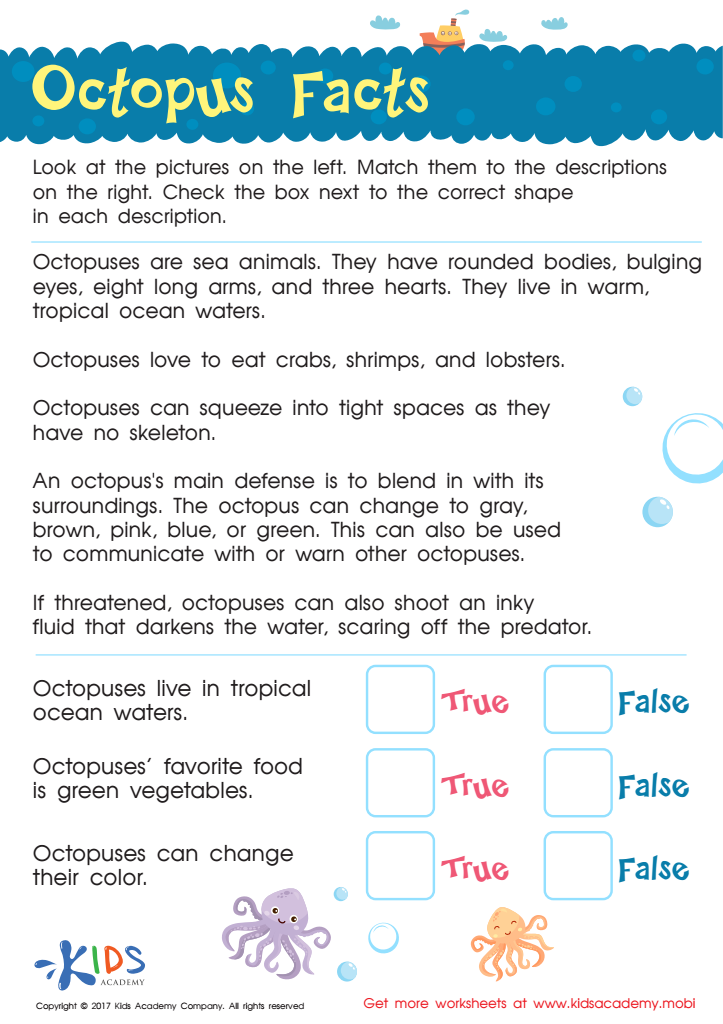
Octopus Facts Worksheet For Kids








Vocabulary expansion is crucial in the early developmental stages of children, particularly for ages 3-8. This period is marked by rapid growth in language acquisition, cognitive abilities, and social skills. By focusing on vocabulary related to Normal Animals, parents and teachers can create a multidimensional learning experience that benefits children in several ways.
First, expanding vocabulary strengthens communication skills. When children know more words and their meanings, they can express their thoughts, needs, and emotions more clearly, which is crucial for effective interaction both within and outside the family environment. This clear communication sets the foundation for strong relationships and collaborative learning.
Secondly, enriched vocabulary aids cognitive development. Learning about Normal Animals broadens a child's understanding of the world. It fosters curiosity and encourages observational skills, critical thinking, and creativity. Recognizing and naming animals and their characteristics can help children categorize and classify information, leading to better problem-solving abilities.
Lastly, a richer vocabulary boosts academic readiness and success. Early recognition of animal names and traits can enhance reading and comprehension skills. This builds a strong groundwork for literacy, making it easier for children to grasp complex texts as they progress in school.
In sum, vocabulary expansion in early childhood regarding Normal Animals is instrumental for effective communication, cognitive development, and academic success, ultimately contributing to a well-rounded, inquisitive, and knowledgeable child.








