Explore our engaging "Logical Reasoning Normal Science Worksheets for Ages 3-8" designed to enhance critical thinking and problem-solving skills in your little learners. These carefully crafted worksheets introduce age-appropriate science concepts while promoting logical reasoning through fun activities. Kids will enjoy sorting, categorizing, and exploring their environment as they develop foundational skills for future learning. Perfect for both classroom settings and home schooling, our worksheets cater to young minds' curiosity and creativity. Encourage your child's love for science today with interactive exercises that make learning a joyous adventure! Dive into our collection and watch their analytical skills grow!

Check out this FREE Trial Lesson on Science for age 3-8!

Sorting Objects into 3 Categories

Favorites
With answer key
Interactive
  • 3-8
  • Logical Reasoning
  • Science
  • Normal
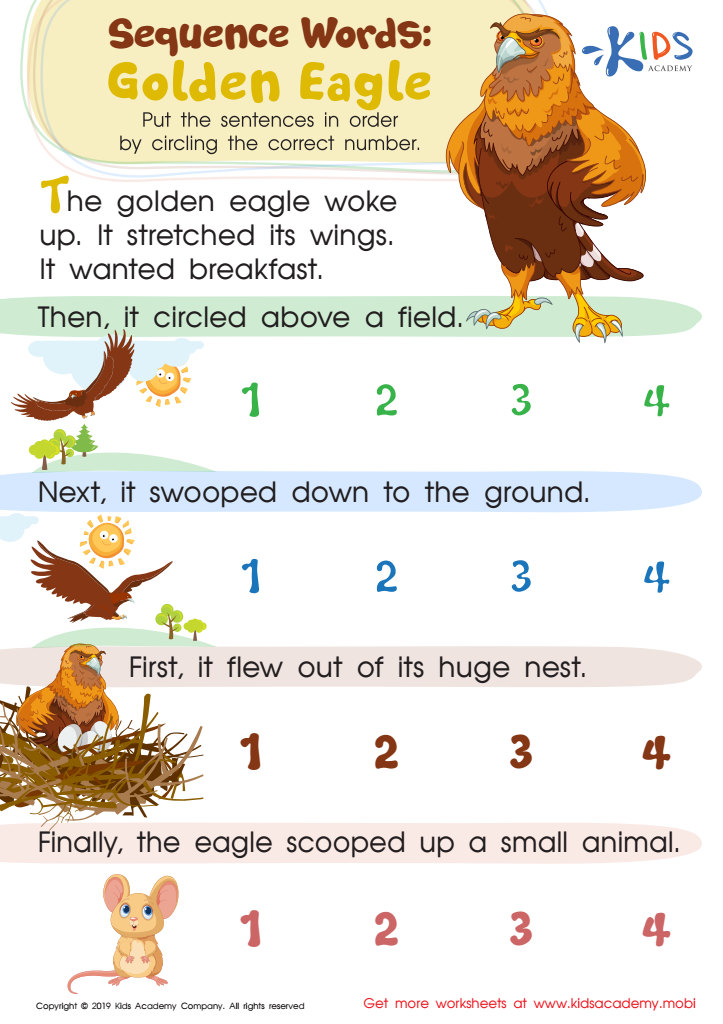
Sequence Word Eagle Worksheet

Sequence Word Eagle Worksheet

Help your child brush up on reading and writing with this fun worksheet. Read the story of the golden eagle's day, then have the child circle the numbers in the right order. Point out the sequence words that tell the order of events. This helps learners understand how to make their writing clear and understandable to others.
Sequence Word Eagle Worksheet
Worksheet
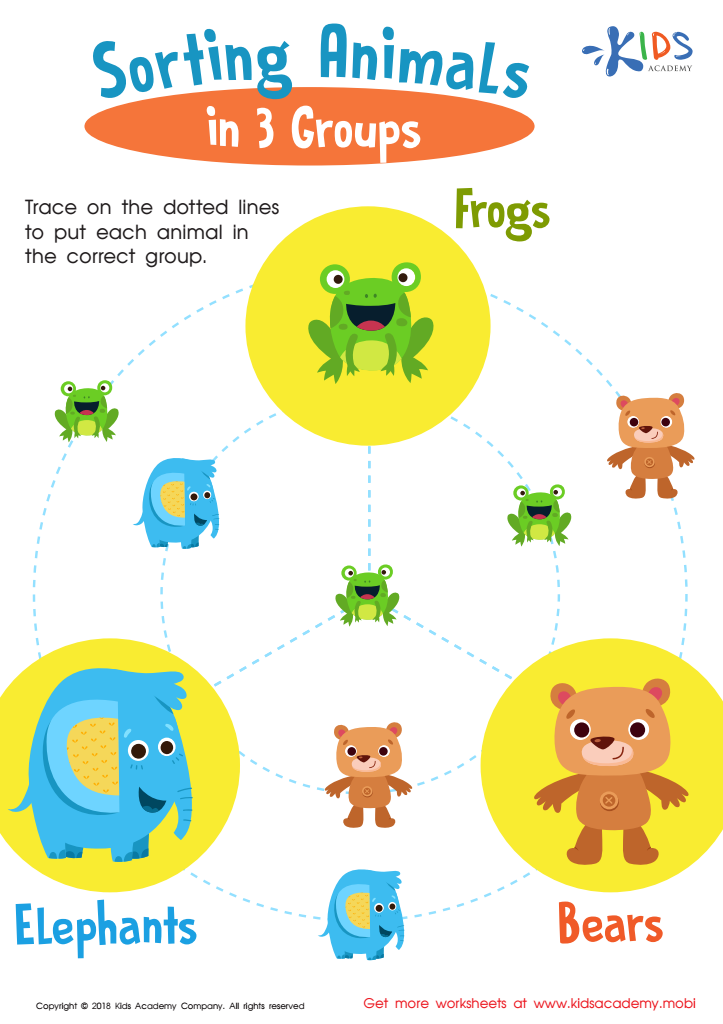
Sorting Animals in 3 Groups Worksheet

Sorting Animals in 3 Groups Worksheet

Let your kids practice and build skills for future Venn Diagrams with this PDF worksheet. They'll trace lines to match and group animals, and learn the differences and similarities of animals by categorizing with pictures and words. Plus, it's a great way to develop fine motor skills.
Sorting Animals in 3 Groups Worksheet
Worksheet
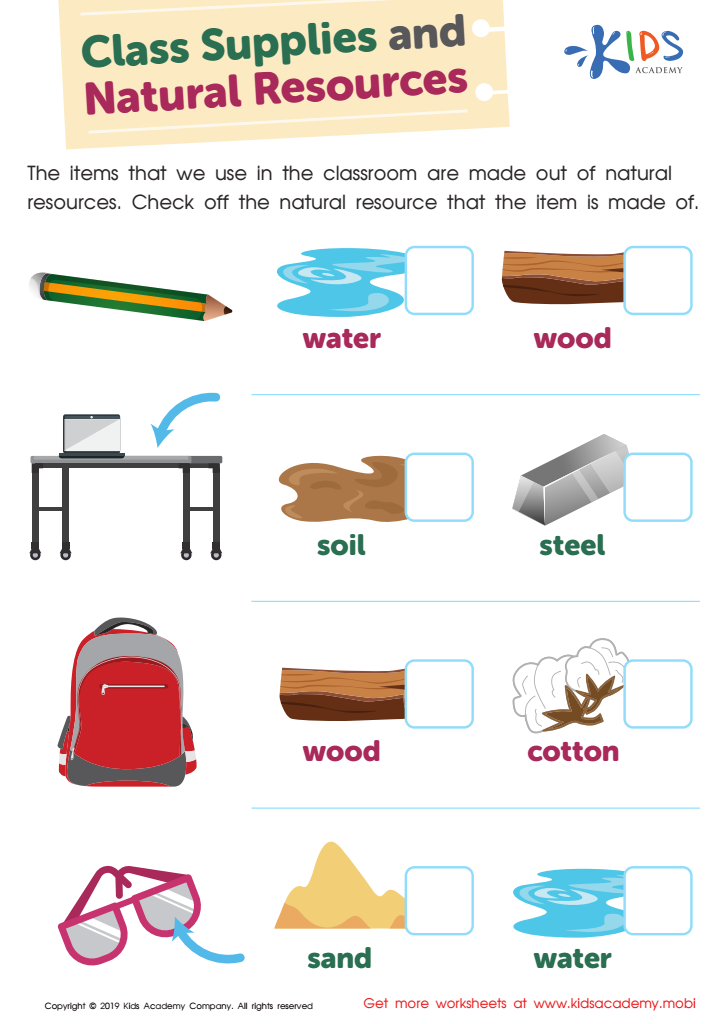
Class Supplies and Natural Resources Worksheet

Class Supplies and Natural Resources Worksheet

Look around the classroom with your students. Can they identify objects and name their natural resources? E.g. wood, cotton, steel. Ask your child to find an object made from wood. Then, look at this worksheet together. Ask your students to identify each object and check off the natural resource it's made from.
Class Supplies and Natural Resources Worksheet
Worksheet
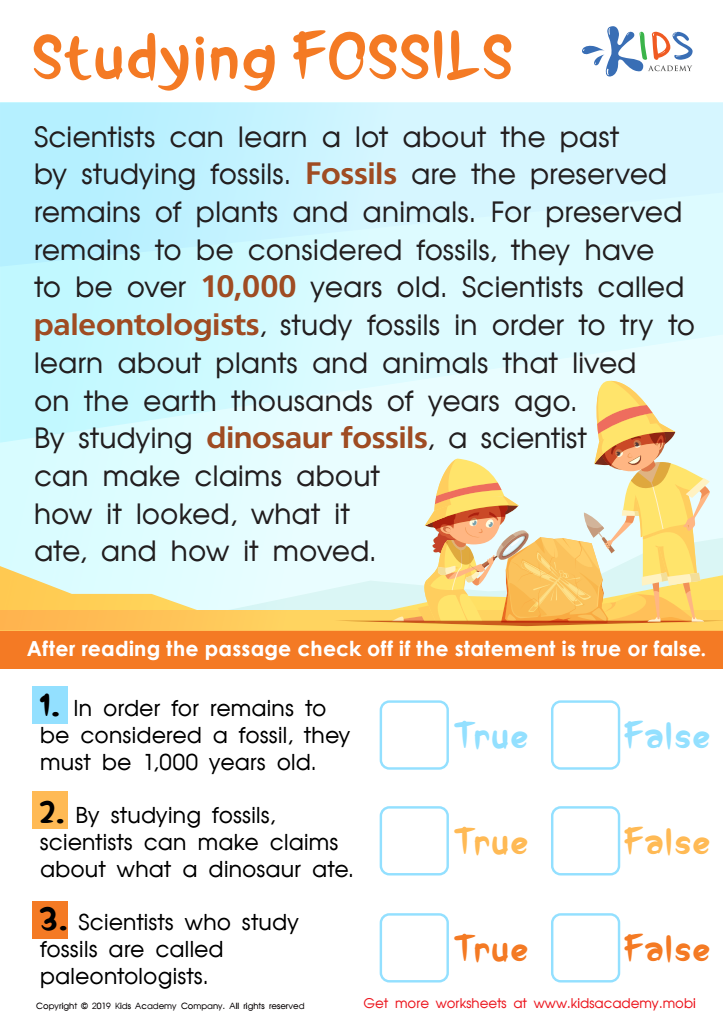
Studying Fossils Worksheet
Studying Fossils Worksheet

Fossils captivate children! It's no wonder why; when we learn about them, we are getting a glimpse into history and uncovering old mysteries! With this free download, kids will understand what a paleontologist is and how they use fossils to learn about long-gone plants and animals. They'll discover that old bones are priceless and that exploring ancient history can be exciting!
Studying Fossils Worksheet
Worksheet
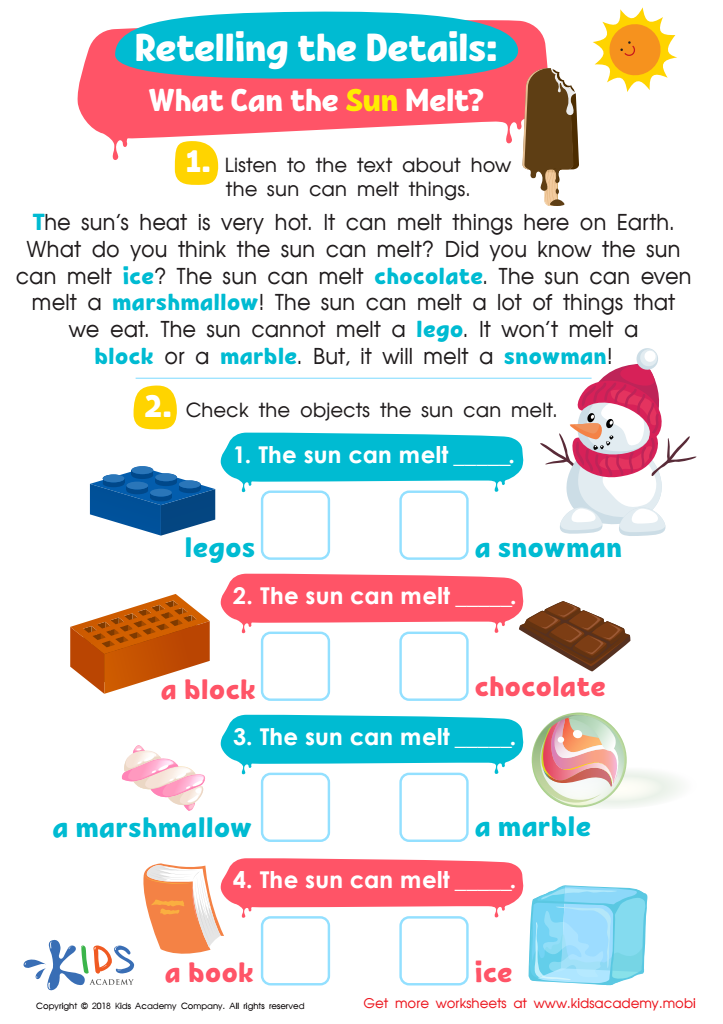
Retelling the Details: What Can the Sun Melt? Worksheet

Retelling the Details: What Can the Sun Melt? Worksheet

The sun is that hot yellow ball in the sky. Its intense heat can make us sweat and even melt things! Ask your kids what things the sun can melt. Read this short informative text and have them highlight the objects. Then, read the questions out loud and help them find the right answers.
Retelling the Details: What Can the Sun Melt? Worksheet
Worksheet
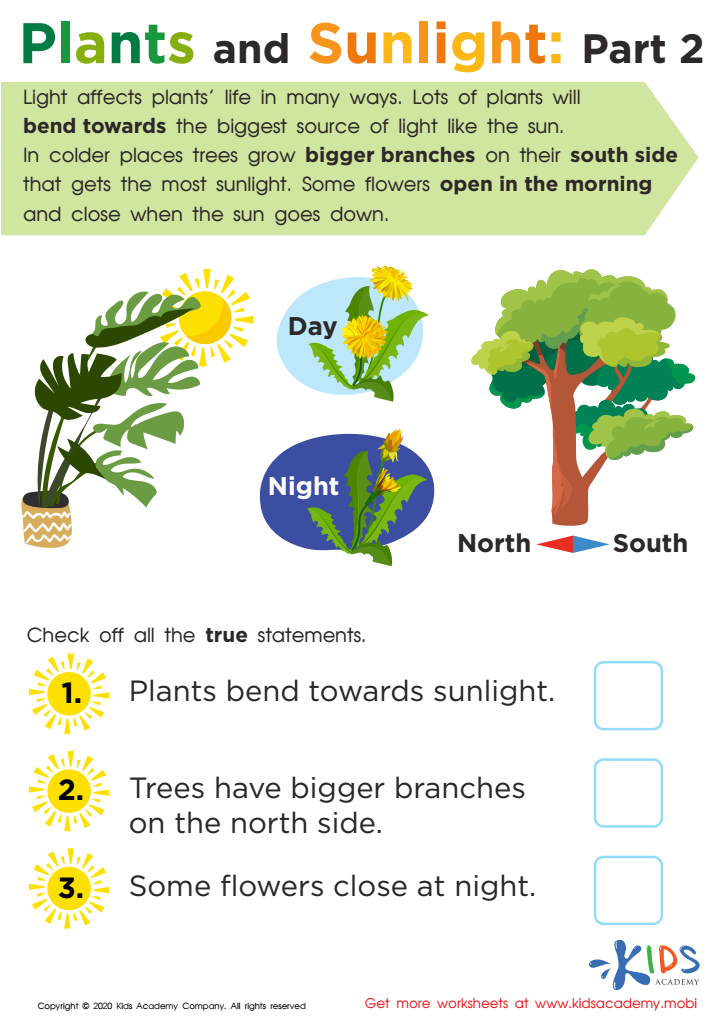
Plants and Sunlight: Part 2 Worksheet

Plants and Sunlight: Part 2 Worksheet

Place a houseplant near the window and observe how it bends to get more sunlight! The sun's effects on plants and trees are amazing - flowers opening and closing, trees growing stronger branches on the south side. Let your child learn with this free Kids Academy printable science worksheet!
Plants and Sunlight: Part 2 Worksheet
Worksheet
Siblings Quiz Worksheet

Siblings Quiz Worksheet

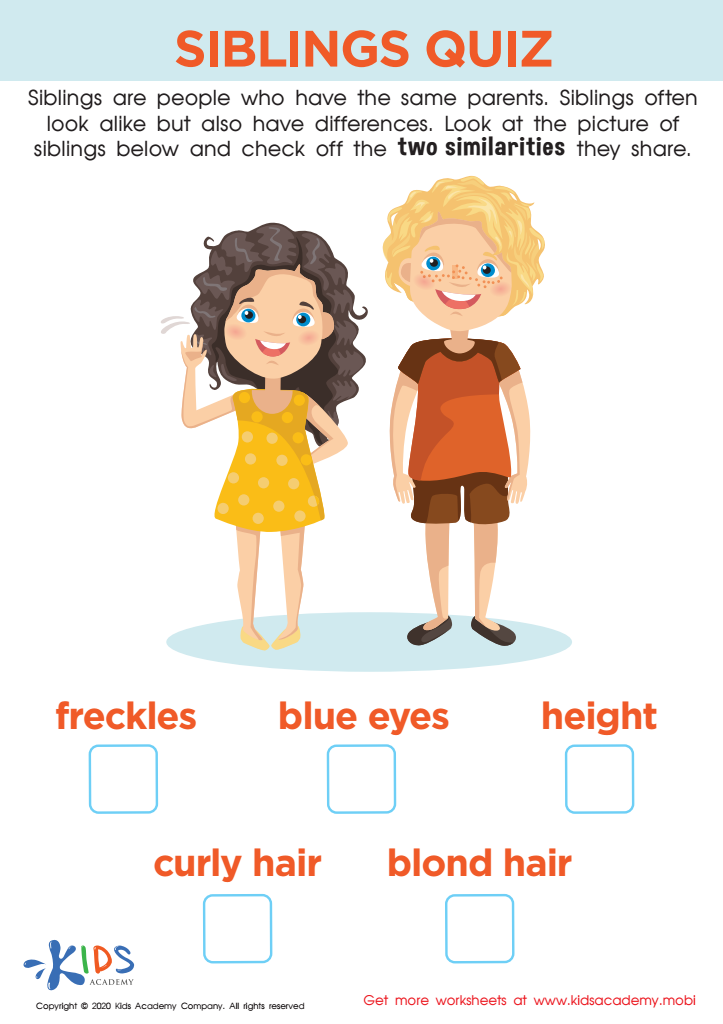
Your children may know a sibling is a sister or brother, but not realize what it means to be one. Siblings share the same parents, which means they share many genes. They are alike in many ways, but also have their own unique traits. Help your future scientist understand this early biology concept with this fun worksheet. They'll be tasked with finding similarities between two siblings on the page.
Siblings Quiz Worksheet
Worksheet
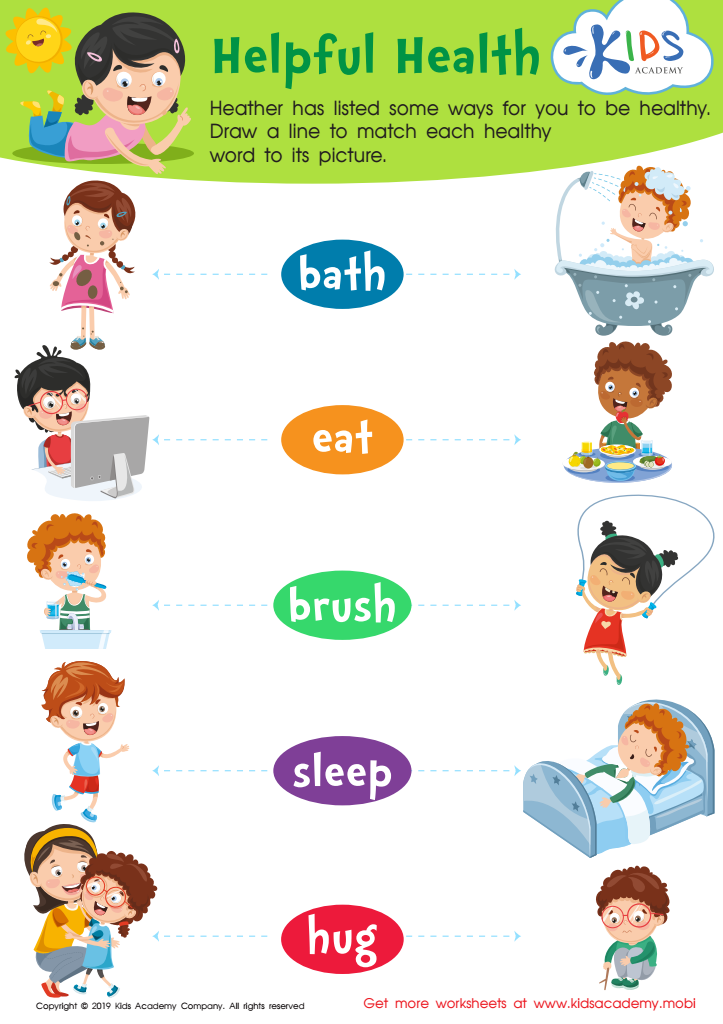
Helpful Health Worksheet


Helpful Health Worksheet

Kids can learn healthy habits with this free worksheet! With their pal Heather, they'll trace lines to connect health words with pictures like brushing teeth, hugging, and getting enough sleep. It's a great way to help young ones understand healthy activities.
Helpful Health Worksheet
Worksheet


Parents and teachers should care about Logical Reasoning Normal Science for children ages 3-8 because it lays a solid foundation for critical thinking and problem-solving skills essential in today's world. At this early age, children are naturally curious, and fostering logical reasoning helps them make sense of the world around them. Engaging in age-appropriate scientific exploration encourages them to ask questions, form hypotheses, conduct experiments, and draw conclusions.

Additionally, logical reasoning develops cognitive skills including analytical thinking, pattern recognition, and decision-making. These skills are not only crucial for academic success in science, math, and literacy but are also vital for everyday life. When children learn to think logically, they become better equipped to navigate challenges, understand complex relationships, and make informed choices.

Furthermore, logical reasoning nurtures resilience. Through trial and error, children learn that failure is part of the learning process, encouraging persistence and adaptability. Lastly, incorporating Normal Science concepts—simple, relatable scientific principles—provides context, making learning both enjoyable and meaningful. By prioritizing logical reasoning in education, parents and teachers empower young children to become thoughtful, inquisitive learners and future innovators.