
Letter tracing skills Normal Alphabet Worksheets for Ages 3-9
5 filtered results
Difficulty Level
Grade
Age
-
From - To
Subject
Activity
Standards
Boost your child's alphabet mastery with our Letter Tracing Skills Normal Alphabet Worksheets for Ages 3-9! These engaging worksheets are expertly designed to develop fine motor skills and enhance letter recognition. Perfect for young learners, each sheet provides clear, traceable letters that gradually build your child's confidence and handwriting precision. Tailored for beginners to more advanced tracers, it's ideal for practice at home or in the classroom. Download now to give your child a fun, educational head start on their writing journey! Explore how these printable worksheets turn learning the alphabet into an enjoyable and rewarding experience.
Favorites
With answer key
Interactive
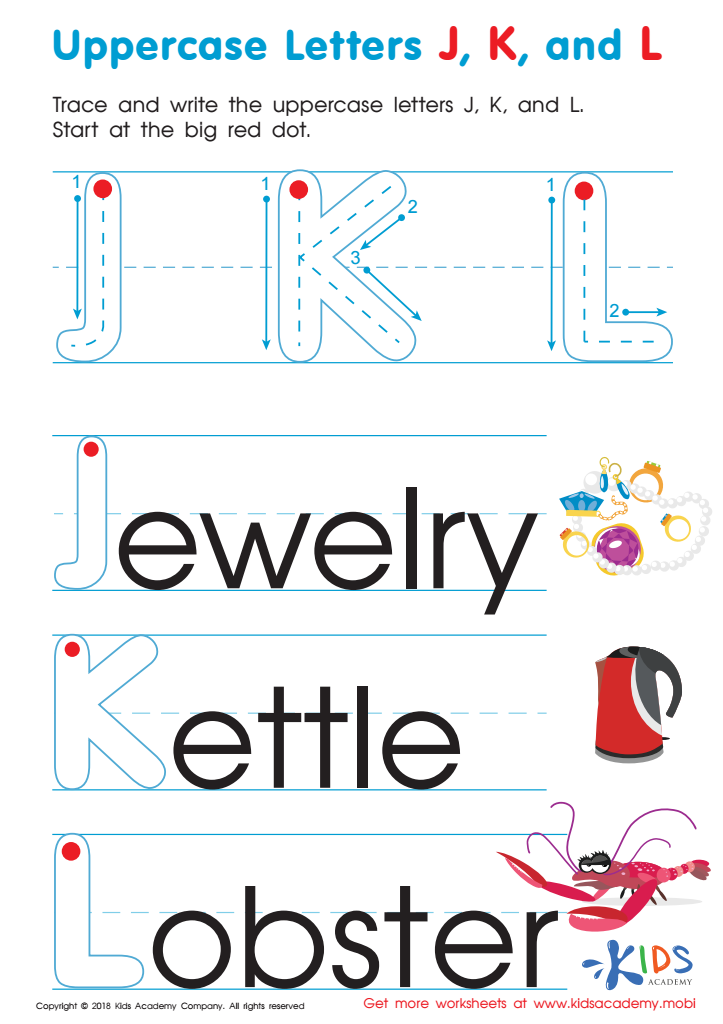
Uppercase Letters J, K, and L Worksheet
Jewelry, kettle and lobster share a common trait: their names start with J, K and L, 3 letter neighbors found in the middle of the alphabet. This traceable worksheet helps kids learn letter sounds and practice writing. Arrows and tracing lines make it easy to form neat pencil strokes. Red dot shows where kids should start. Perfect for preschoolers and kindergarteners!
Uppercase Letters J, K, and L Worksheet
Worksheet
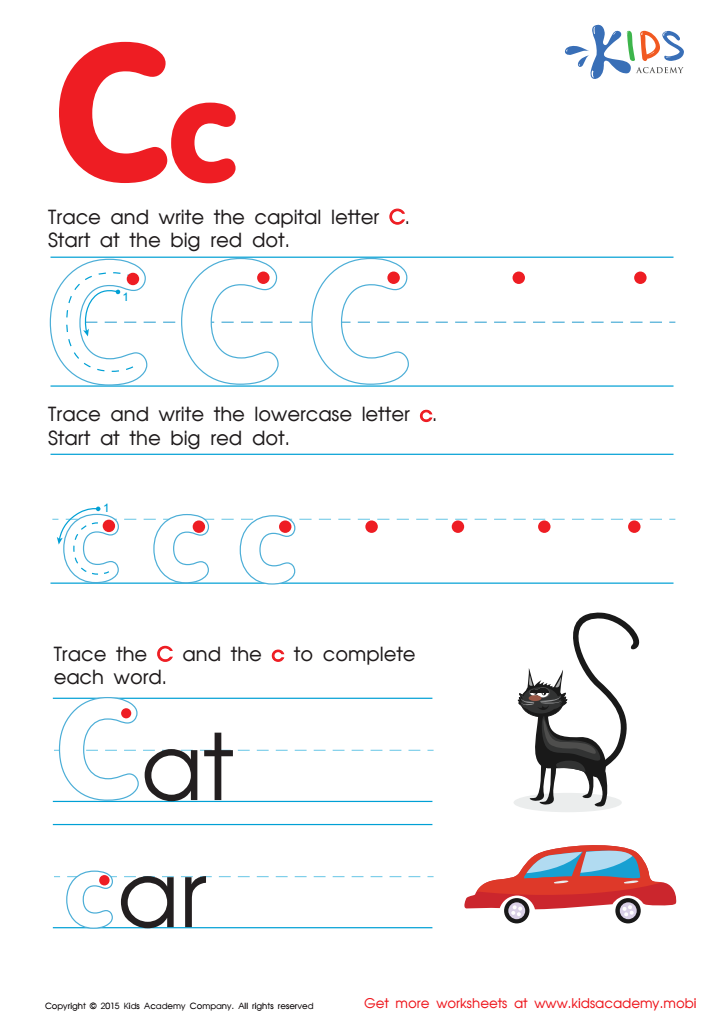
Letter C Tracing Page
Trace and write the letter 'C'! Put the pencil at the red dot then follow the lines – the capital letter first then the lowercase one. Cats love it and so will you! Get more free printables to practice tracing and writing.
Letter C Tracing Page
Worksheet
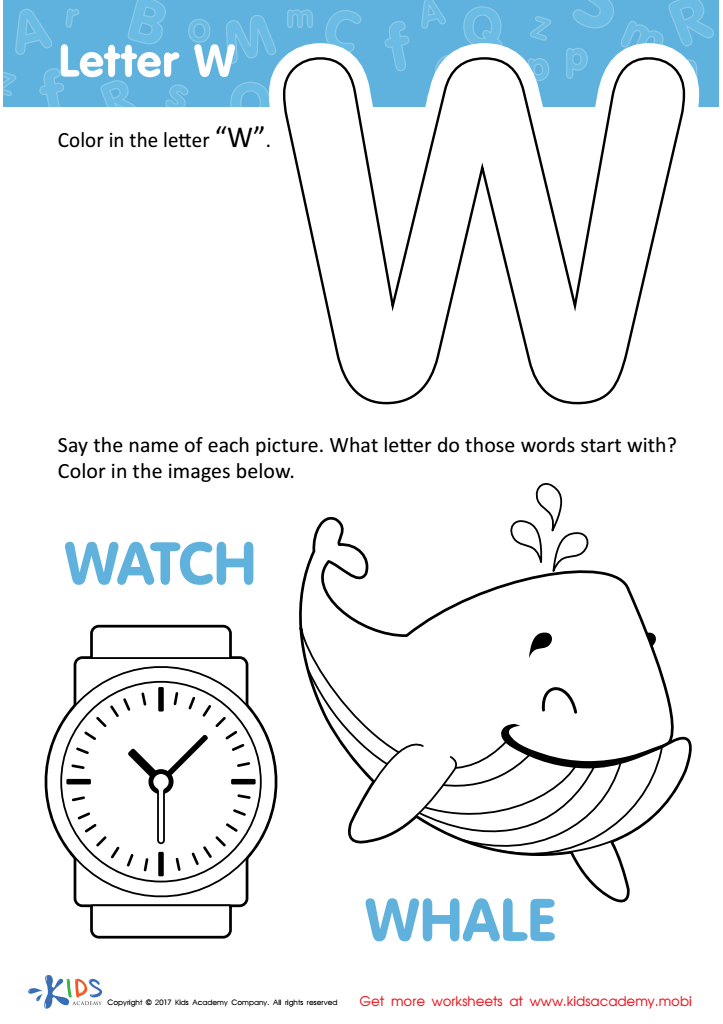
Letter W Coloring Sheet
Let your child have fun with this letter "W" coloring page! They can use their imagination to color the whale and discover the letter and its sound. Give them a helping hand to make it a whale of a time!
Download (PDF)
 Assign to My Students
Assign to My Students
Letter W Coloring Sheet
Worksheet
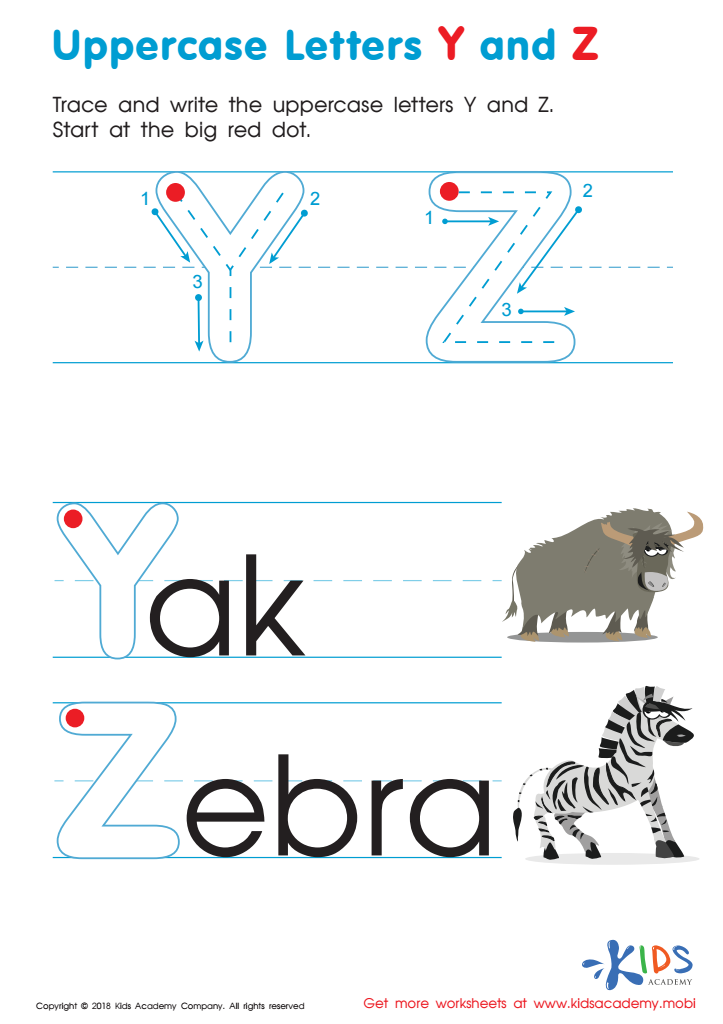
Uppercase Letters Y Z Worksheet
Help your child learn their ABCs with this fun tracing activity! They must trace and write Y and Z in uppercase form, starting from the red dot. Kids will love the fun images for extra engagement. Guiding their hand carefully will help them practice and perfect their writing skills.
Uppercase Letters Y Z Worksheet
Worksheet
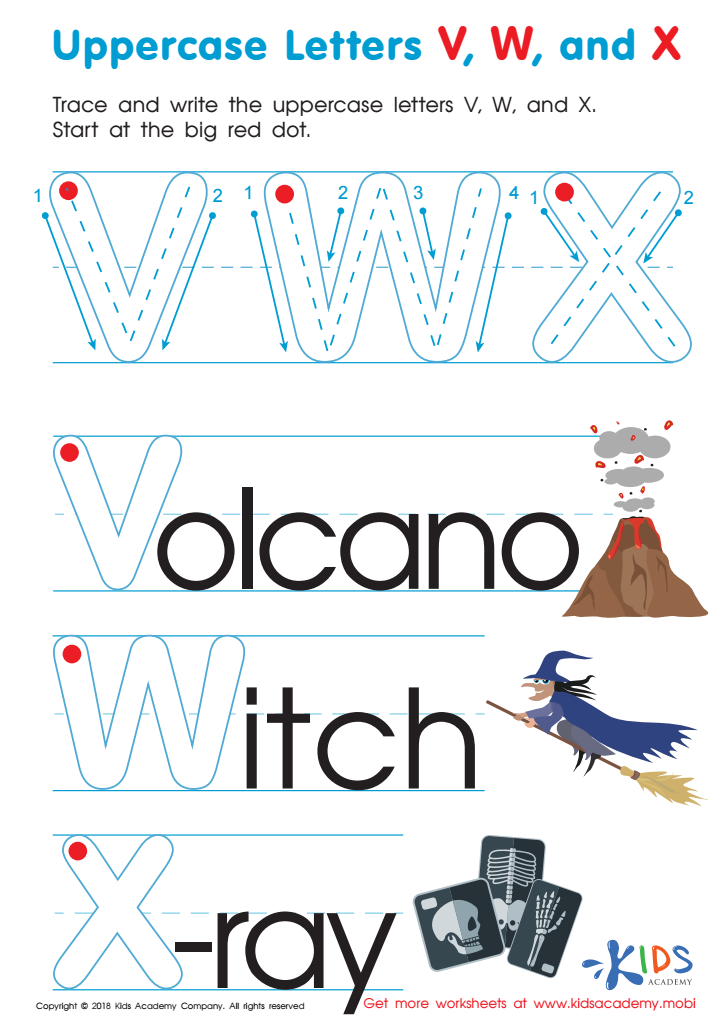
Uppercase Letters V, W, and X Worksheet
This worksheet is perfect for kids struggling to write uppercase letters V, W, and X. Warm up their brains first by having them name words starting with these letters. Then, help them trace and write each letter from the big red dot. With your assistance, they will quickly sharpen their writing skills.
Uppercase Letters V, W, and X Worksheet
Worksheet
Join Kids Academy for Free
Who is primarily going to use this learning content?








Letter tracing skills in the normal alphabet are fundamental for children aged 3-9 and crucial for parents and teachers to prioritize. Early mastery of these skills paves the way for fluent handwriting and literacy, encapsulating the basics of letter recognition and proper writing technique.
For one, letter tracing improves fine motor skills. Children learn to control their pencil grip, hand movements, and pressure, which fosters muscle memory needed for later writing tasks. This precision also extends to other activities requiring fine motor coordination, such as cutting shapes or tying shoelaces.
Furthermore, it enhances letter recognition, connecting the visual appearance of a letter with its shape and sound. This creates a strong foundation for reading proficiency, as well-practiced writers tend to be more confident readers. As children trace letters, they learn to recognize patterns and structures in the alphabet, crucial for decoding words.
Consistency in letter tracing fosters discipline and attention to detail, essential qualities for academic success. Working through the alphabet sequentially ensures that no letter is overlooked, providing balanced development.
In sum, letter tracing for young children promotes essential fine motor skills, reading readiness, and disciplined habits, forming the cornerstone of their literacy journey. Early investment in these skills by parents and teachers leads to lasting educational benefits, encouraging lifelong learning and academic achievement.







