Enhancing logical thinking Normal Worksheets for Ages 3-9
7 filtered results
-
From - To
Unlock your child's potential with our "Enhancing Logical Thinking" worksheets, tailored for kids aged 3-9 on Kids Academy. These engaging and stimulating activities help develop critical thinking skills and boost problem-solving abilities. Designed specifically for young learners, our worksheets are both fun and educational, fostering logical reasoning through puzzles, pattern recognition, and sequencing tasks. Each worksheet offers age-appropriate challenges that grow with your child, ensuring continued intellectual development. Start your child on a path to success by enhancing their cognitive skills with our expertly crafted worksheets. Visit Kids Academy to explore our collection and inspire a love for learning today!
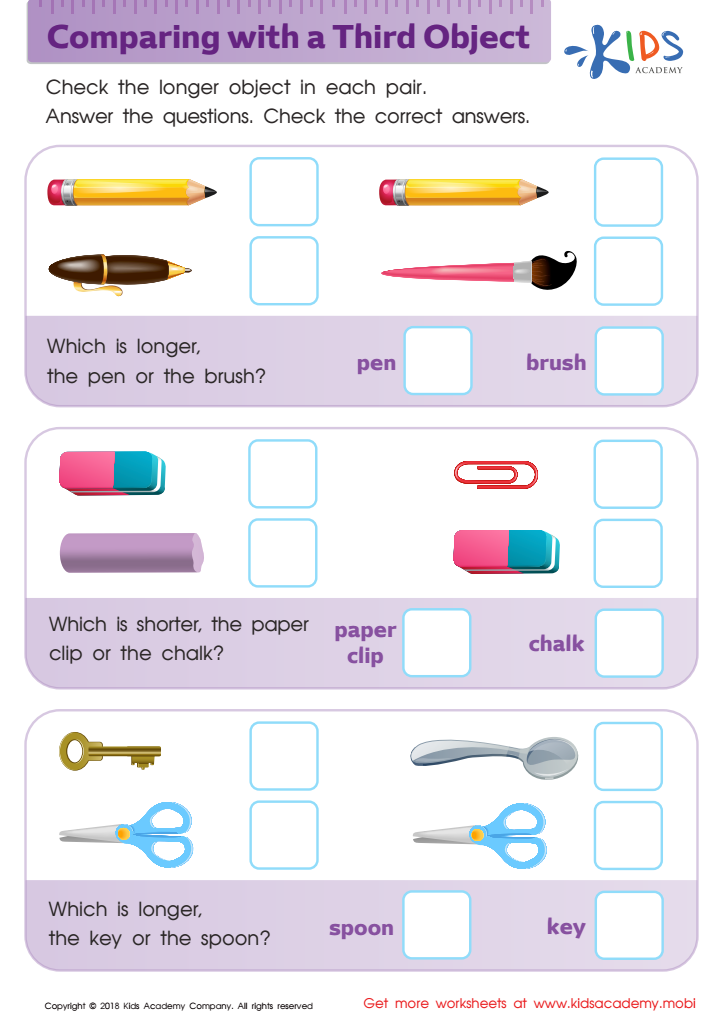
Comparing with a Third Object Worksheet
 Assign to My Students
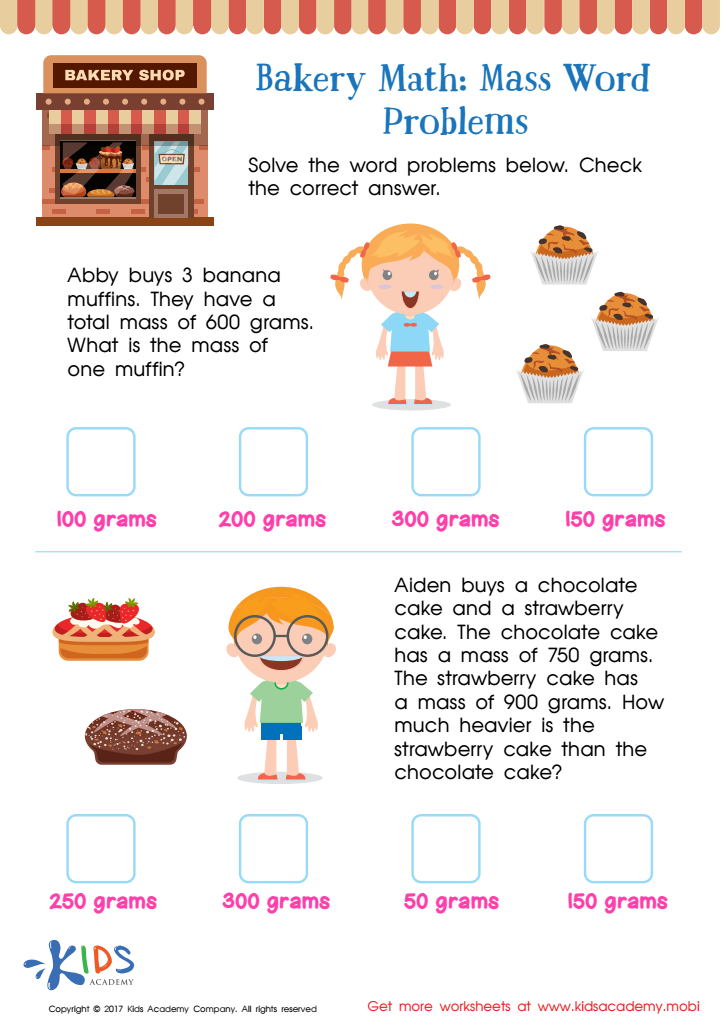
Mass Word Problems Worksheet
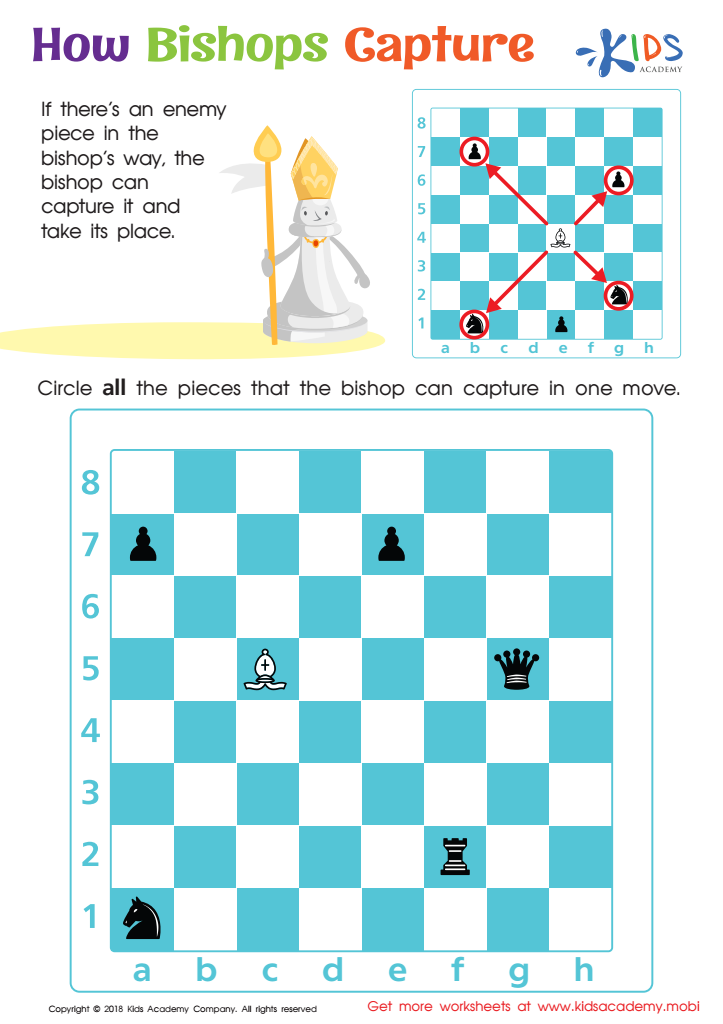
How Bishops Capture Worksheet
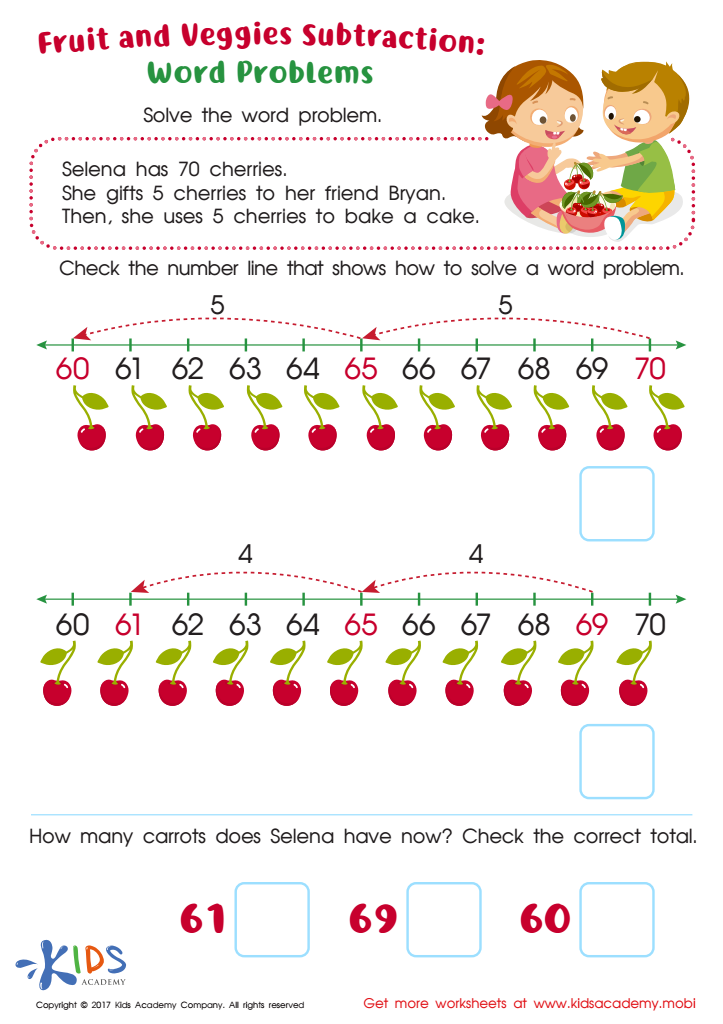
Subtraction Word Problems Free Printable
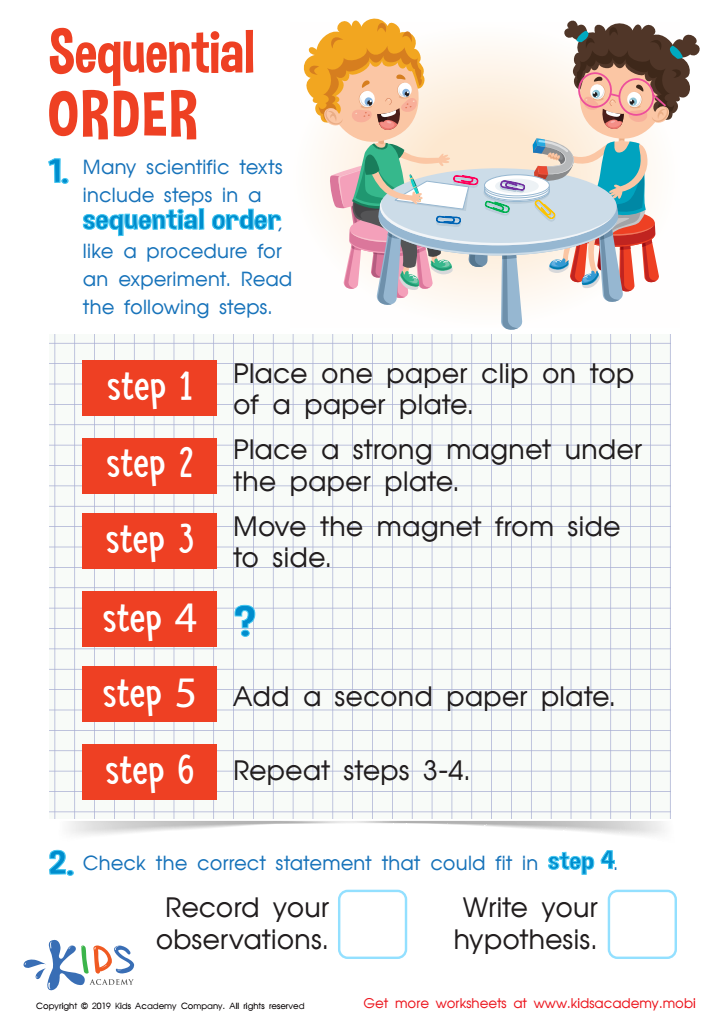
Sequencential Order Worksheet
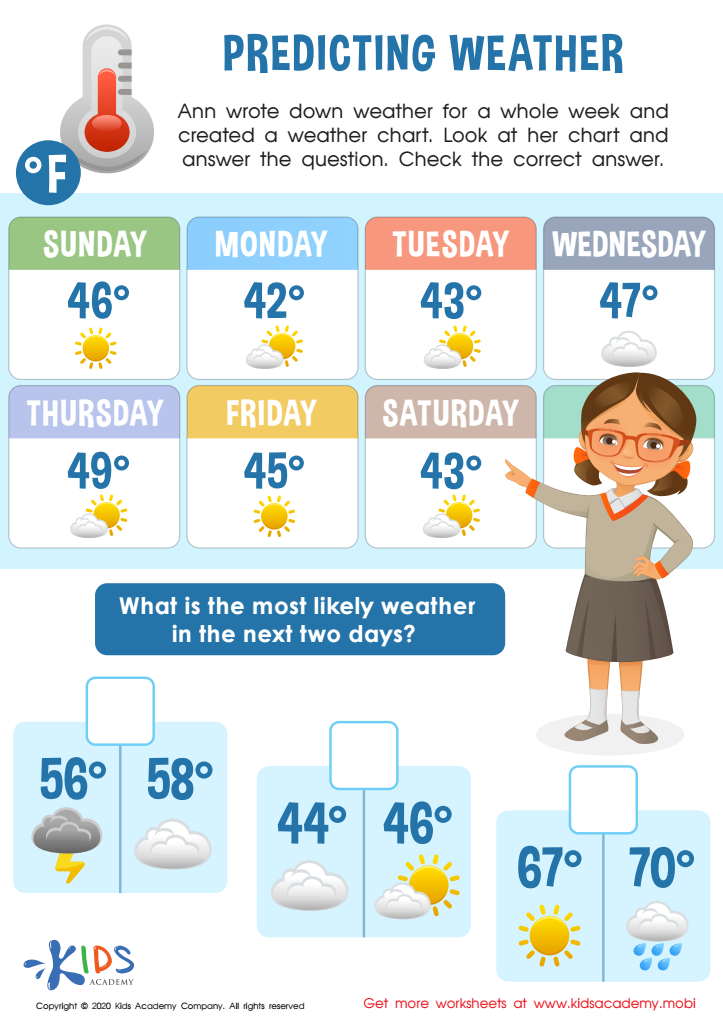
Predicting Weather Worksheet
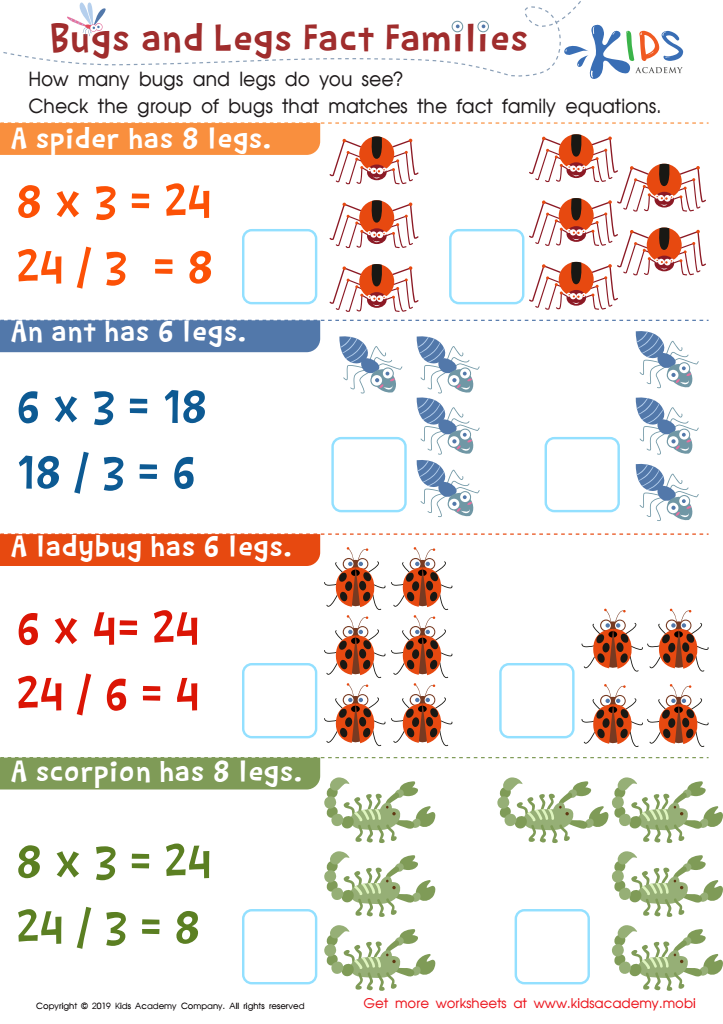
Bugs and Legs Fact Families Worksheet








Enhancing logical thinking in children aged 3-9 is crucial as it lays the foundation for effective problem-solving and decision-making skills later in life. Logical thinking helps children understand relationships, sequences, and patterns. By fostering this skill, parents and teachers promote cognitive development and improve the child's ability to reason and think critically.
For young children, logical thinking enhances academic success, starting with early-grade mathematics, reading comprehension, and science. For instance, understanding cause and effect, categorizing objects, and following multi-step directions directly contribute to scholastic achievement. Enhancing logical reasoning also promotes independence. Children who can analyze situations and anticipate outcomes are more likely to solve everyday challenges on their own, boosting their confidence and resilience.
Moreover, fostering these skills early can improve social interactions. Logical thinking helps children understand others' perspectives and develop better communication skills, resulting in healthier relationships with peers and adults.
For parents and teachers, encouraging logical thinking doesn't have to be burdensome; it can be integrated through play and daily activities like puzzles, building blocks, and simple "if-then" discussions. By emphasizing these skills during critical formative years, they are setting children up for lifelong success, underscoring the importance of cognitive and emotional development.








