Phonics understanding Normal Worksheets for Ages 3-9
3 filtered results
-
From - To
Discover a comprehensive collection of phonics understanding worksheets designed for children ages 3-9 at Kids Academy. Our printable worksheets are crafted to enhance early literacy skills through engaging and interactive activities that make learning fun! Each worksheet encourages children to recognize sounds, decode words, and build essential reading skills. From letter sound identification to simple phonetic patterns, our resources cater to various learning levels, ensuring every child progresses at their own pace. Perfect for home or classroom use, these worksheets promote a solid foundation in phonics, paving the way for confident readers. Start fostering a love for reading today!
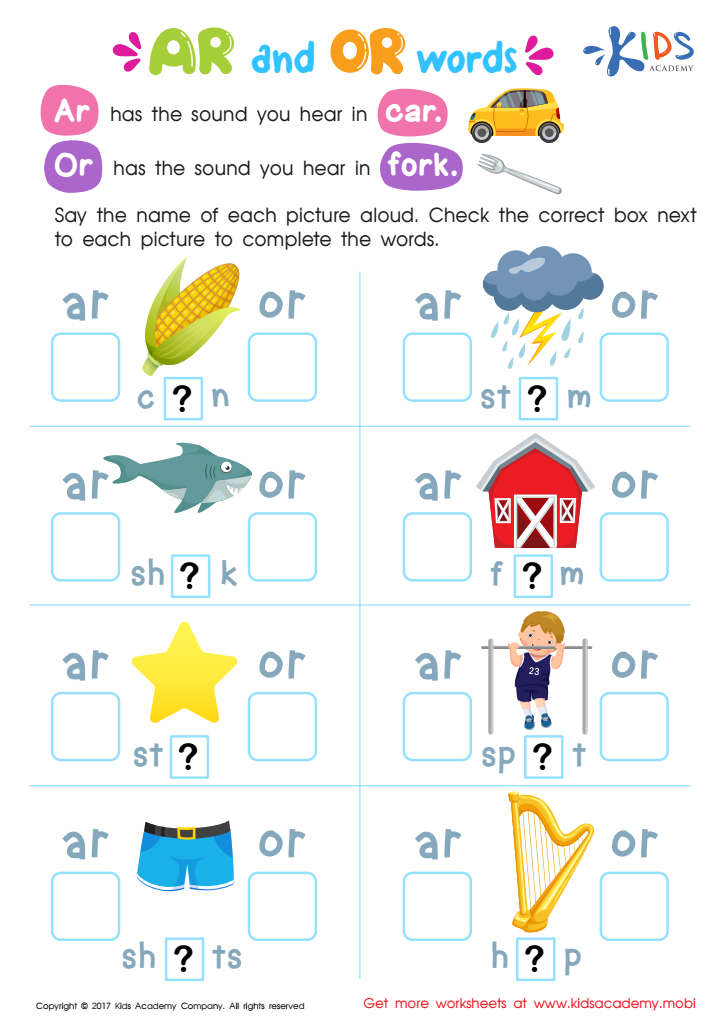
Ar and Or Words Phonics Worksheet
 Assign to My Students
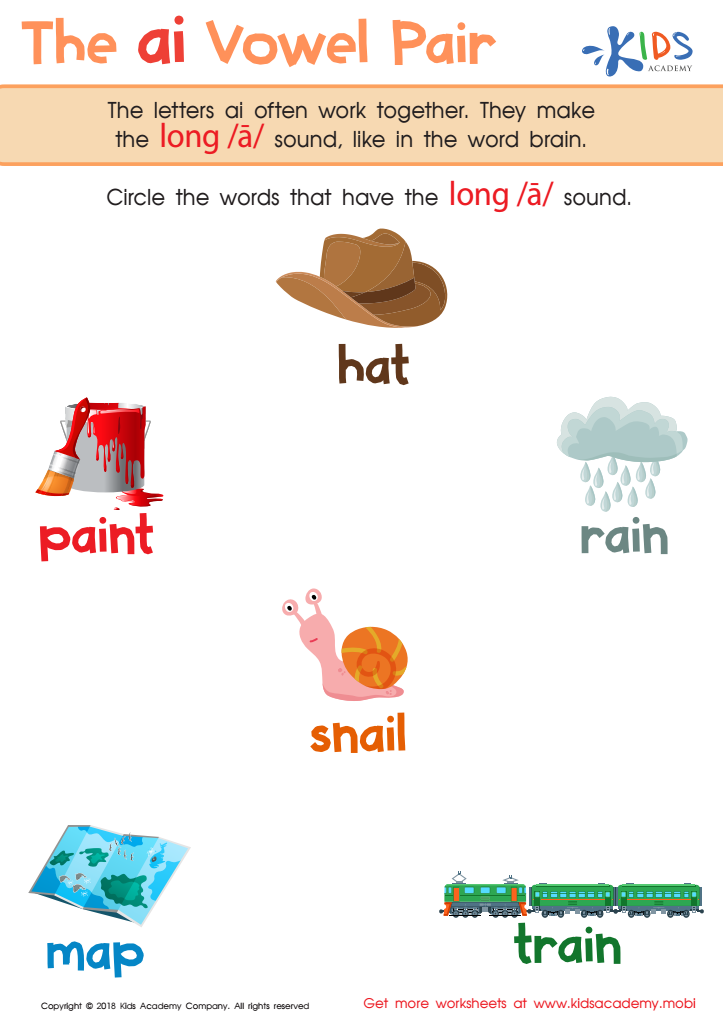
The AI Vowel Pair Worksheet
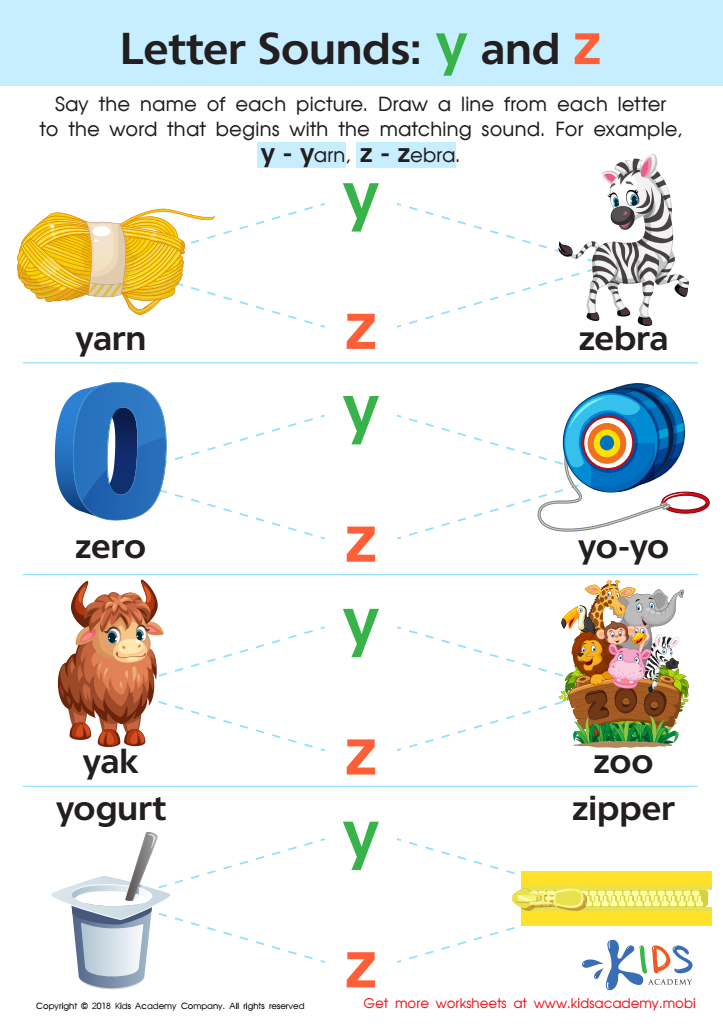
Letter Y and Z Sounds Worksheet







.jpg)
Phonics understanding is crucial for children aged 3-9 as it forms the foundation of their reading and writing skills. At this developmental stage, children are particularly receptive to language acquisition, making phonics instruction timely and impactful. Understanding phonics equips children with the ability to decode words, enabling them to read independently and comprehend texts effectively.
For parents and teachers, fostering phonics understanding enhances children's confidence and motivation to explore literacy. When children grasp the correlations between letters and sounds, they are more likely to engage with books and develop a love for reading. This early engagement not only supports academic achievement but also cultivates critical thinking and language skills.
Moreover, phonics serves as a gateway to spelling, vocabulary expansion, and overall communication proficiency. As children progress in their phonics knowledge, they become better equipped to tackle more complex language tasks as they advance in their education.
Ultimately, a solid phonics foundation benefits children not only in academic contexts but also in their overall personal development, fostering the ability to express themselves and interact effectively with the world around them. Thus, parents and teachers play a pivotal role in supporting this critical aspect of literacy advancement.








