
Basic geometry understanding Normal Geometry Worksheets for Ages 3-9
3 filtered results
Difficulty Level
Grade
Age
-
From - To
Subject
Activity
Standards
Introduce your child to the exciting world of shapes with our Basic Geometry Understanding Normal Geometry Worksheets for Ages 3-9. These expertly designed worksheets cover essential geometry concepts like identifying shapes, comparing sizes, and recognizing patterns, all geared to enhance early math skills. Through engaging activities and visually appealing exercises, children develop a solid foundation in basic geometry while having fun. Ideal for preschool to early elementary students, our worksheets support learning at home or in the classroom, promoting critical thinking and problem-solving skills. Unlock your child’s potential and make learning geometry a joyful experience!
Favorites
With answer key
Interactive
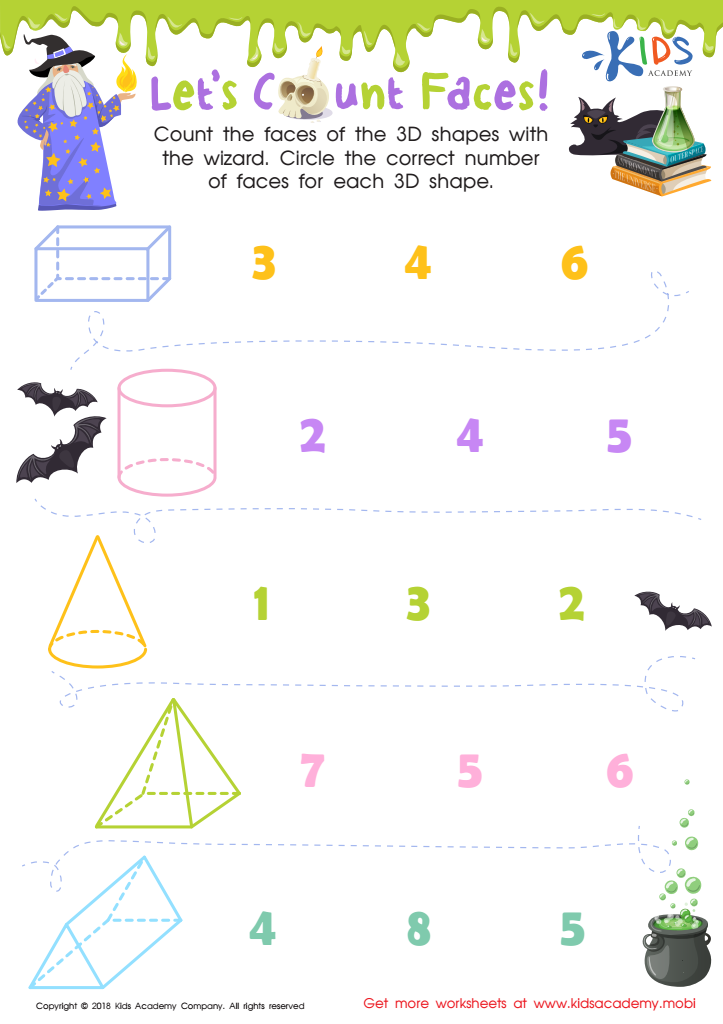
Let's Count Faces! Worksheet
Help the wizard count the faces of 3D shapes! Ask your kids to identify the shapes before beginning, then have them circle the correct number of faces. Enjoy this fun wizard-themed worksheet with your kids!
 Assign to My Students
Let's Count Faces! Worksheet
Worksheet











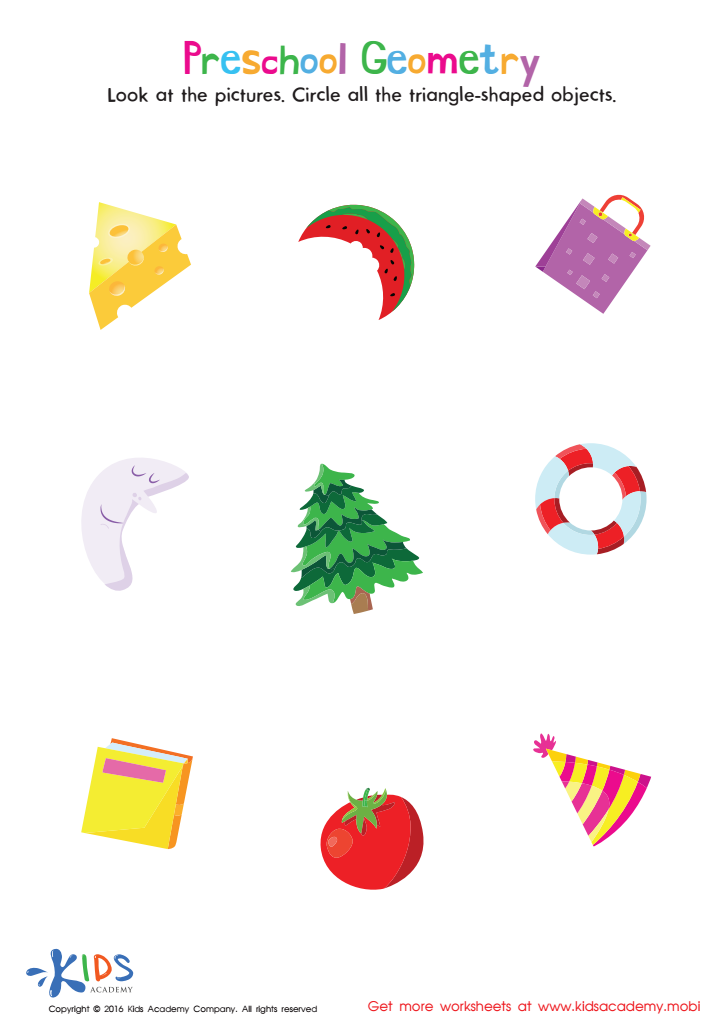
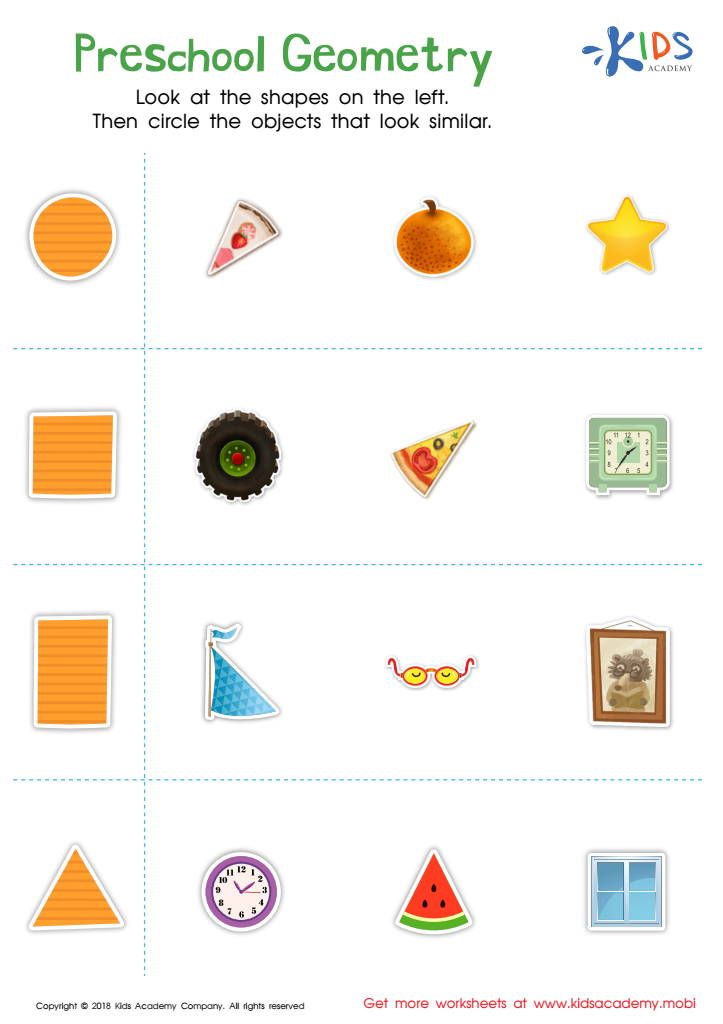
Preschool Geometry Worksheet
This worksheet gives 3rd graders the basics of geometry. Kids match everyday objects to shapes they know, e.g. an orange to a circle, a square to a slice of watermelon and a rectangle to a picture frame. It's a fun way to give them confidence to tackle more complex geometry in the future.
Preschool Geometry Worksheet
Worksheet
Join Kids Academy for Free
Who is primarily going to use this learning content?








Understanding basic geometry at a young age is crucial for multiple important reasons. For children aged 3-9, geometry isn't just about learning shapes and sizes; it's about laying a strong foundation for future learning in math, science, and technology.
First, early geometry skills enhance spatial reasoning—the ability to understand objects and their relationships in space. This skill helps children solve everyday problems and succeed in more complex subjects later in their academic careers, such as trigonometry and calculus.
Second, geometry teaches critical thinking and problem-solving. When children identify and categorize shapes, they learn to notice patterns, analyze differences, and think logically. These skills are transferable and beneficial across all areas of learning and personal development.
Moreover, understanding geometry helps children make sense of their physical world. Recognizing shapes and spatial relationships can improve cognitive and physical coordination, such as when they play with blocks, draw, or navigate spaces.
In addition, early exposure to geometry can boost confidence in math. Many children develop a phobia of math due to a lack of understanding early on. Starting with something as visual and tactile as geometry can make math feel accessible and fun.
Thus, both parents and teachers should prioritize basic geometry to help broaden young minds, setting them up for success in various fields and practical everyday situations.








