Counting skills Normal Geometry Worksheets for Ages 3-9
6 filtered results
-
From - To
Discover our engaging Counting Skills Normal Geometry Worksheets, designed specifically for children aged 3 to 9! These interactive worksheets combine essential geometry concepts with fun counting activities, fostering both mathematical understanding and confidence. Perfect for early learners, our resources help children recognize shapes, count elements, and explore spatial relationships while developing critical thinking and problem-solving skills. Each worksheet features vibrant illustrations and age-appropriate exercises to keep young minds interested. Support your child's learning journey and enhance their counting and geometry skills today with our thoughtfully crafted materials, making learning enjoyable and effective. Explore the full collection and unlock the joy of math!
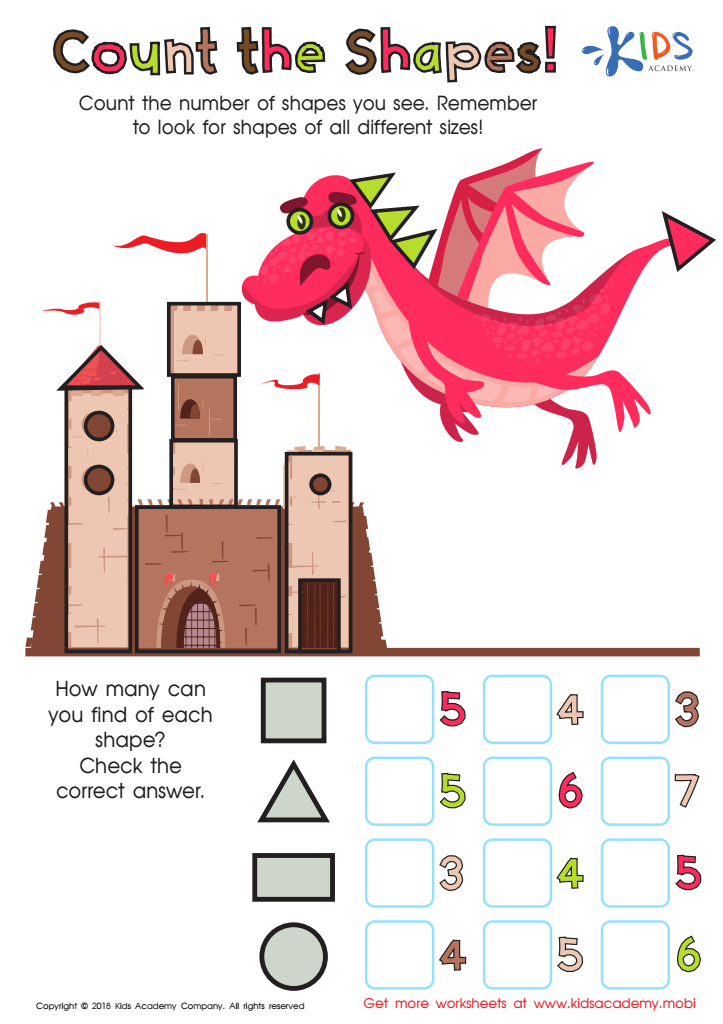
Count the Shapes Worksheet
 Assign to My Students











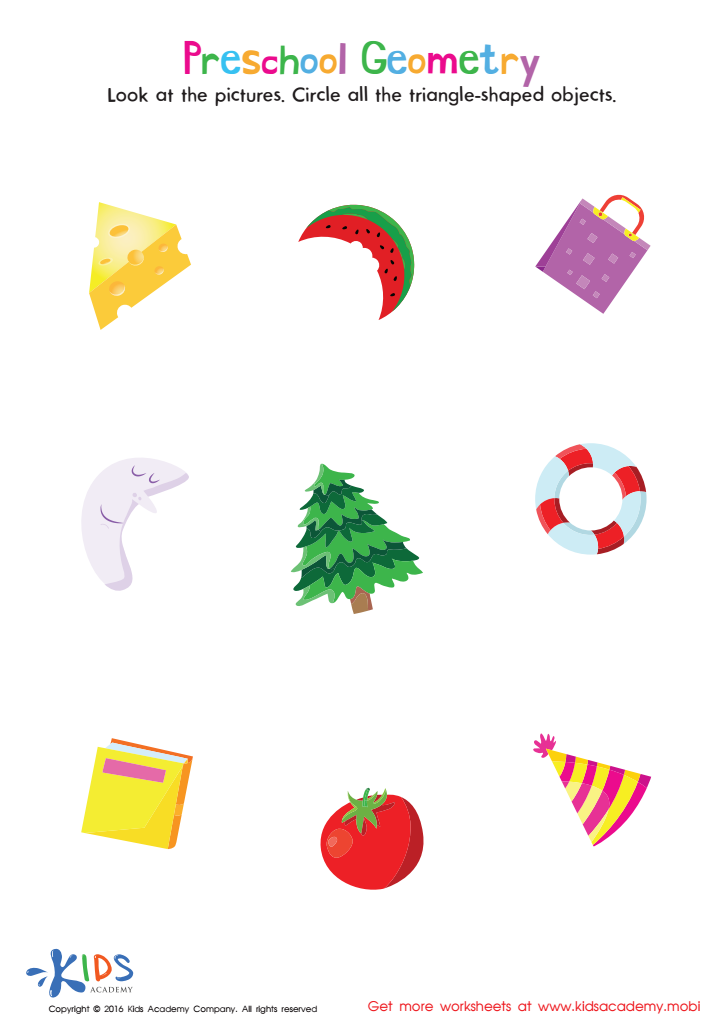
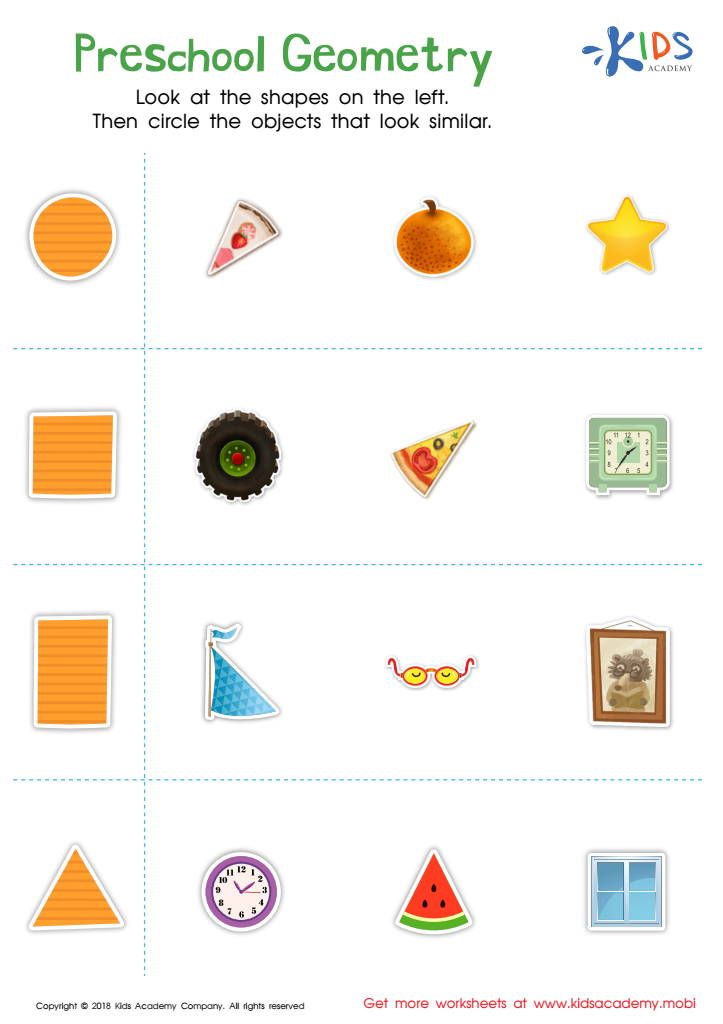
Preschool Geometry Worksheet
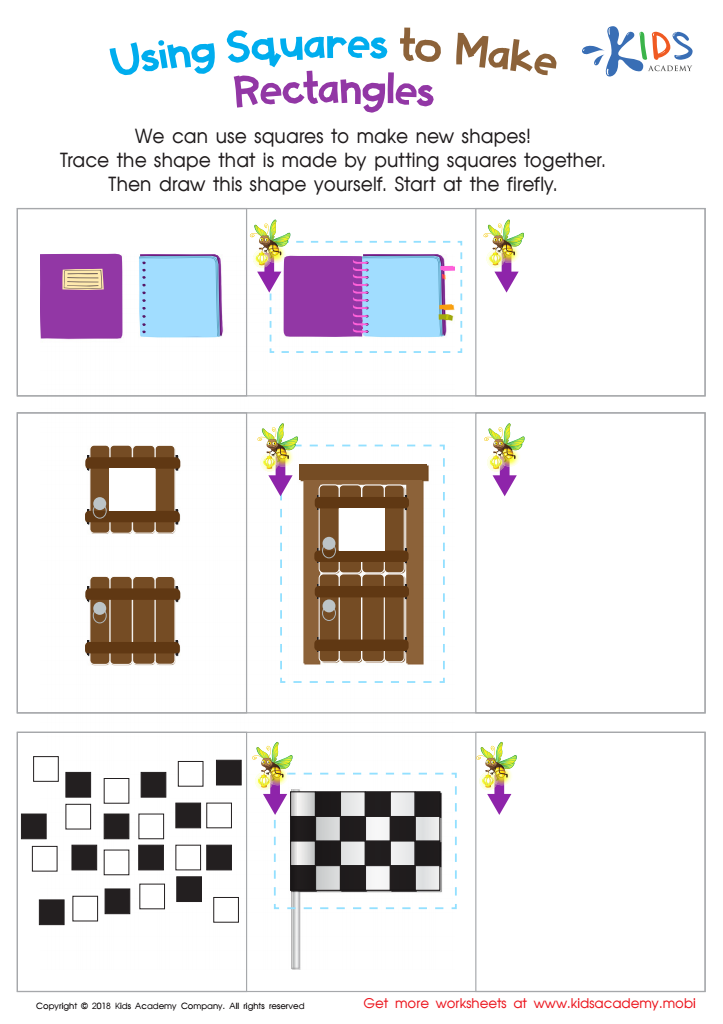
Using Squares to Make Rectangles Worksheet
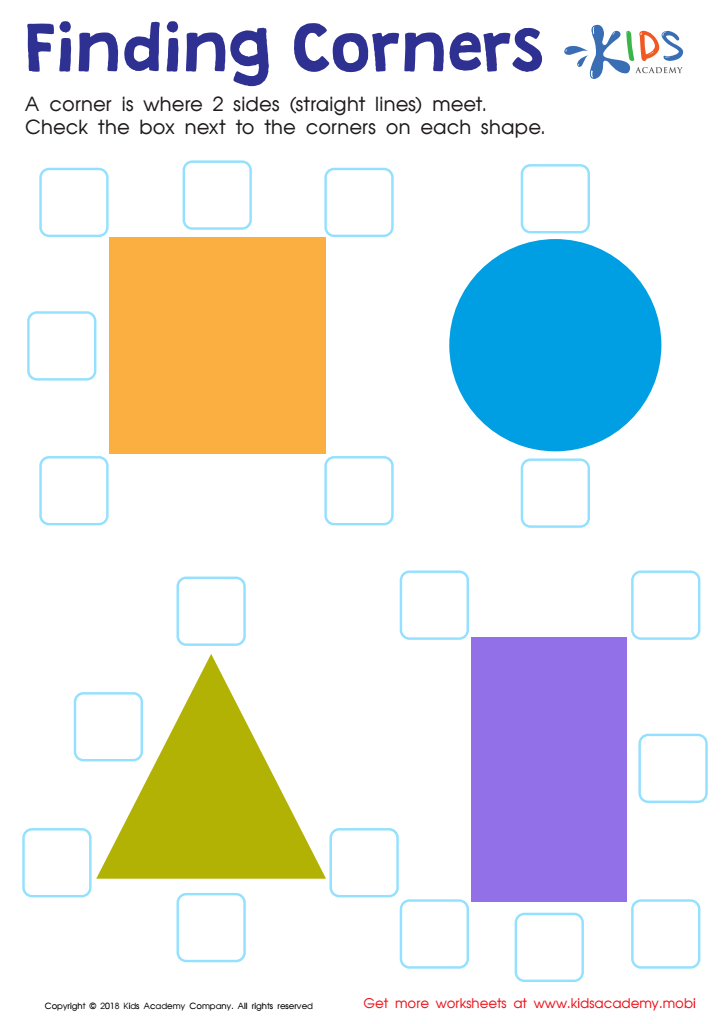
Finding Corners Worksheet
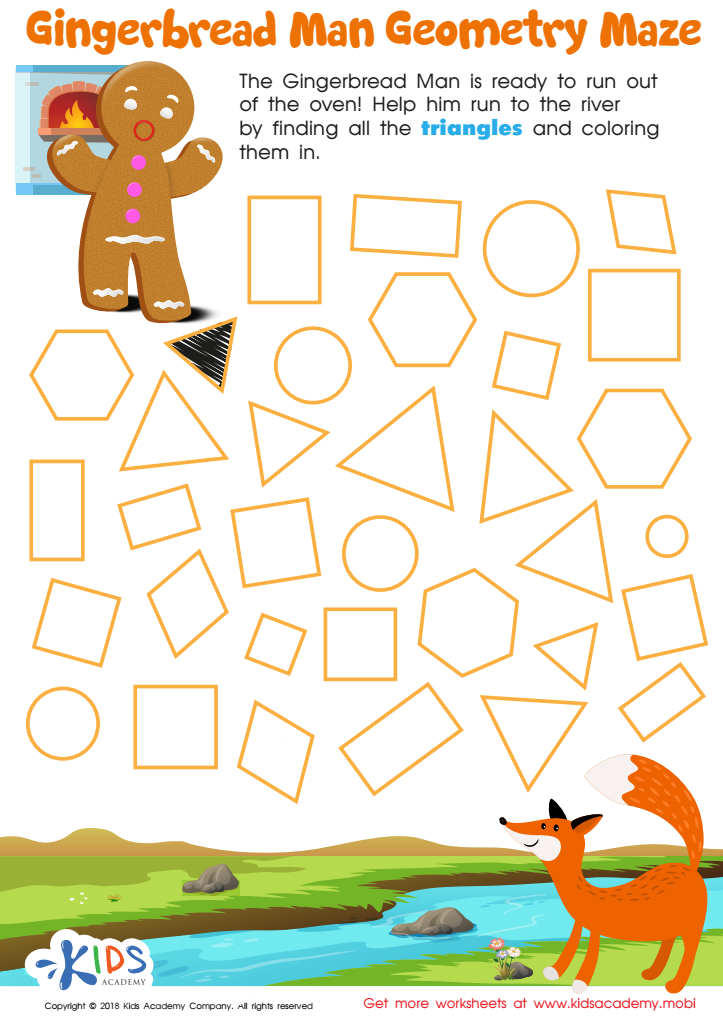
Gingerbread Man Geometry Maze Worksheet








Counting skills and a basic understanding of geometry are fundamental building blocks for young children's mathematical development, particularly between the ages of 3 and 9. First, counting skills foster number sense, which is crucial for future arithmetic proficiency. These skills enable children to understand quantity, sequence, and the relationships between numbers, laying the groundwork for more complex math concepts.
Geometry, on the other hand, introduces children to shapes, spatial awareness, and visual reasoning. Learning about shapes and their properties helps children make sense of the world around them, as they begin to identify and categorize objects in their environment. This foundational knowledge enhances critical thinking and problem-solving abilities.
Engaging in counting and geometry activities also aids cognitive development. Ready access to these skills encourages creativity and exploration. For instance, children can build with blocks—reinforcing both counting and geometric understanding.
Lastly, fostering these skills from an early age can lessen math anxiety later in life. When parents and teachers actively nurture counting and geometry understanding, they equip children with the confidence and foundational knowledge essential for academic success in mathematics and beyond. Ultimately, caring about these areas is investing in their lifelong learning journey.








