Enhancing Counting Skills Normal Numbers Worksheets for Ages 3-9
5 filtered results
-
From - To
Discover our "Enhancing Counting Skills Normal Numbers Worksheets," designed for children ages 3-9. Our curated worksheets make learning numbers fun and engaging, promoting early math skills through interactive and exciting exercises. Perfect for home or classroom use, these resources help young learners understand and practice counting basics, number sequence, and recognition. By incorporating colorful visuals and diverse activities, we ensure children remain motivated and confident in their math journey. Trust our expertly crafted materials from Kids Academy to foster a love for numbers in your child's formative years. Unlock endless possibilities for success through enriching math practice today!
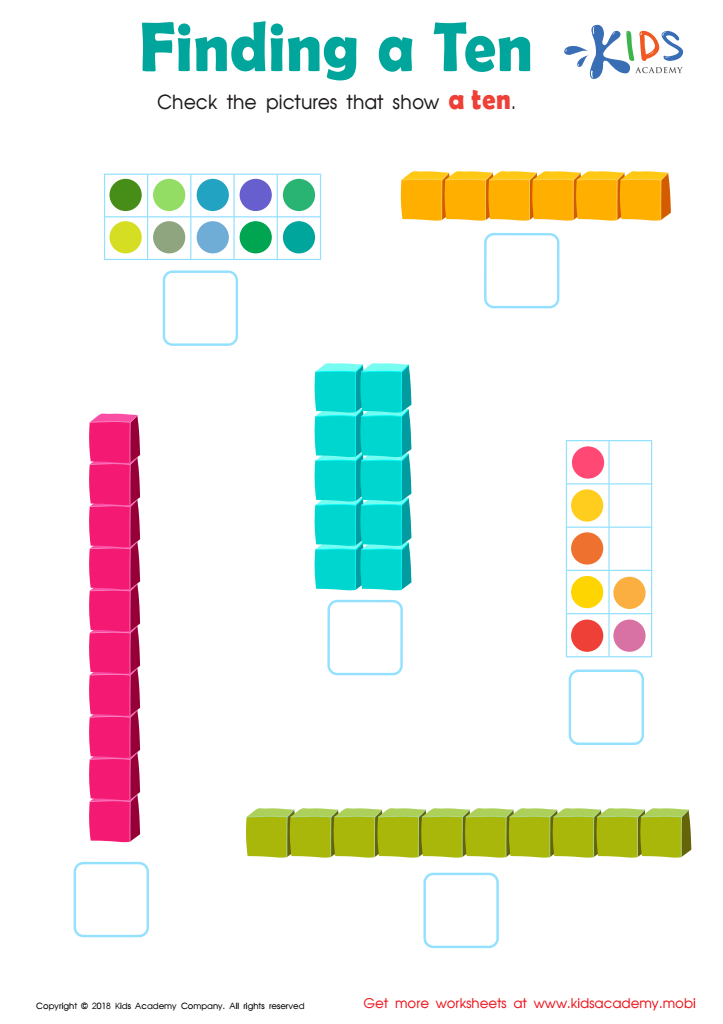
Finding a Ten Worksheet
 Assign to My Students
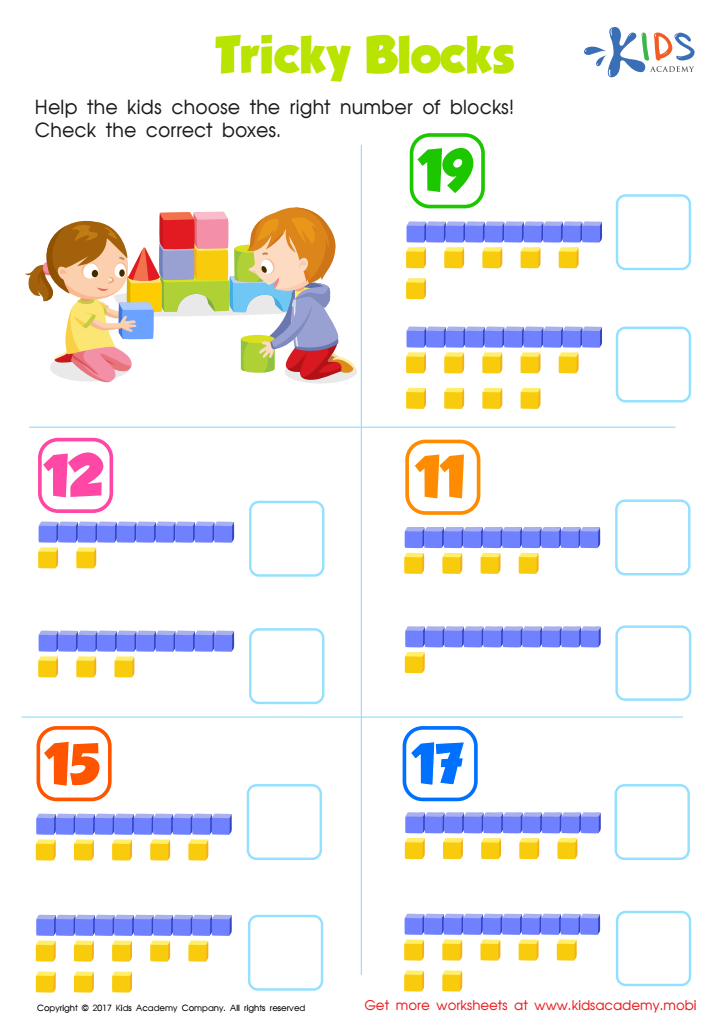
Tricky Blocks Worksheet
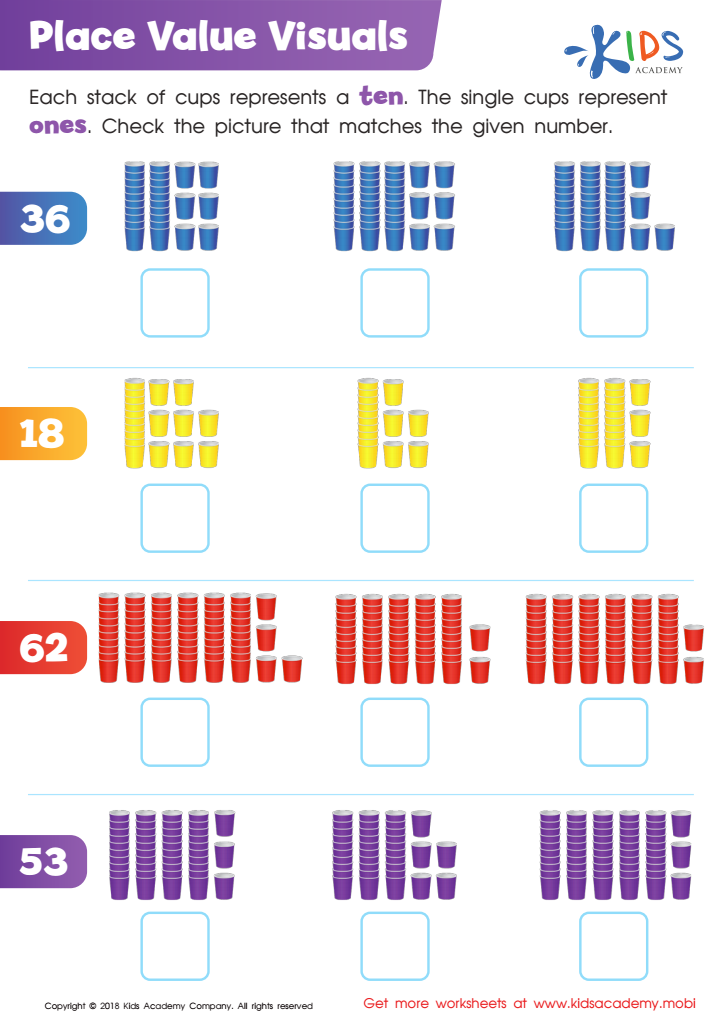
Place Value Visuals Worksheet
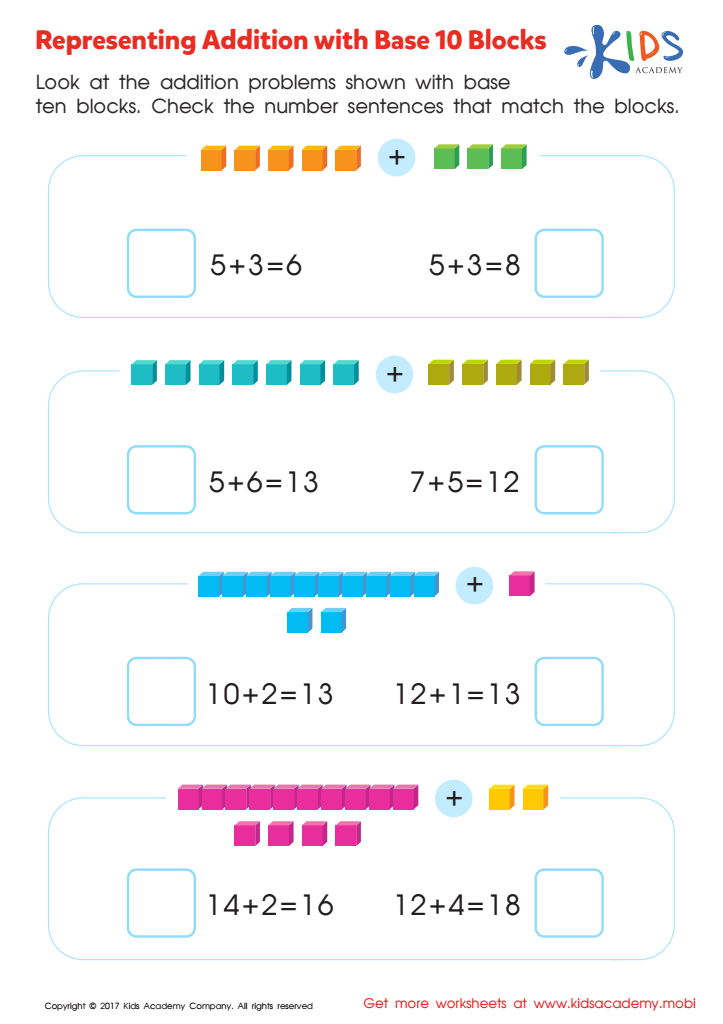
Representing Addition with Base 10 Blocks Worksheet
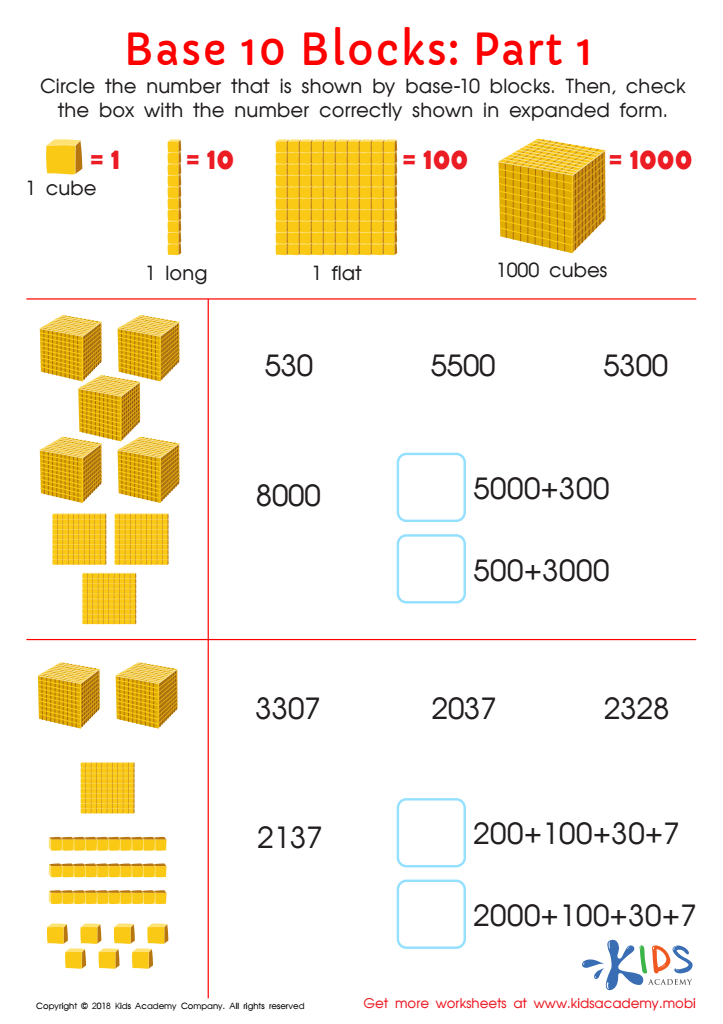
Base 10 Blocks Worksheet: Part 1






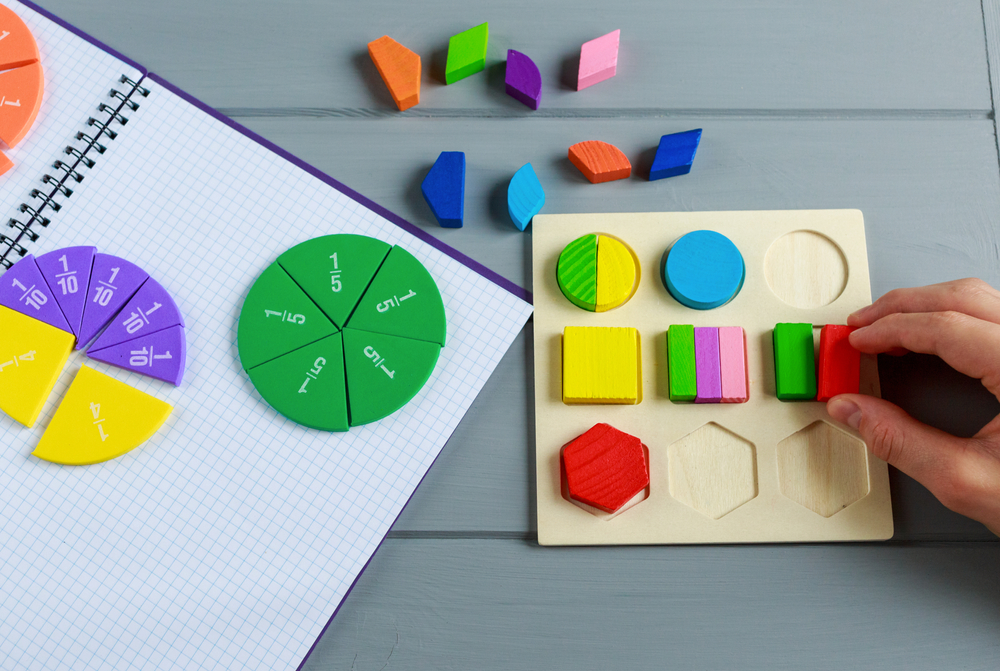

Enhancing counting skills in young children, particularly those ages 3-9, is crucial for their overall development and future academic success. Early counting skills form the foundational building blocks of mathematics, as they are directly linked to understanding number sequences, recognizing patterns, and developing arithmetic proficiency. When parents and teachers prioritize improving these skills, they equip children with essential tools that facilitate critical thinking, problem-solving, and analytical reasoning.
Counting teaches essential numerical concepts such as quantity, order, and relationships between numbers. It also supports more advanced math skills like addition, subtraction, multiplication, and division. For instance, understanding number order and the concept of "one more" or "one less" are fundamental for these operations.
Moreover, counting skills have broader cognitive and developmental benefits. They enhance memory, improve language skills through number-related vocabulary, and boost spatial awareness by helping children visualize numbers on a number line. Effective counting practice can also build confidence and a positive attitude towards learning mathematics, reducing math anxiety later in life.
Importantly, developing these skills early provides a strong foundation for more advanced mathematical concepts introduced in later grades. Therefore, it’s crucial for parents and teachers to engage children in fun and interactive counting activities to nurture a lifelong appreciation and understanding of mathematics.








