Understanding rounding Normal Numbers Worksheets for Ages 3-9
5 filtered results
-
From - To
Explore our "Understanding Rounding Normal Numbers Worksheets" designed specifically for children aged 3-9. These engaging and age-appropriate activities introduce young learners to the essential concept of rounding numbers in a fun and interactive way. Our worksheets feature colorful illustrations and relatable examples, helping kids grasp the idea of rounding up and down with ease. Perfect for classrooms or at-home learning, these resources aim to build confidence in mathematics while supporting critical thinking skills. With a variety of exercises to choose from, children will enjoy developing their understanding of rounding in a supportive environment. Start rounding off their math skills today!
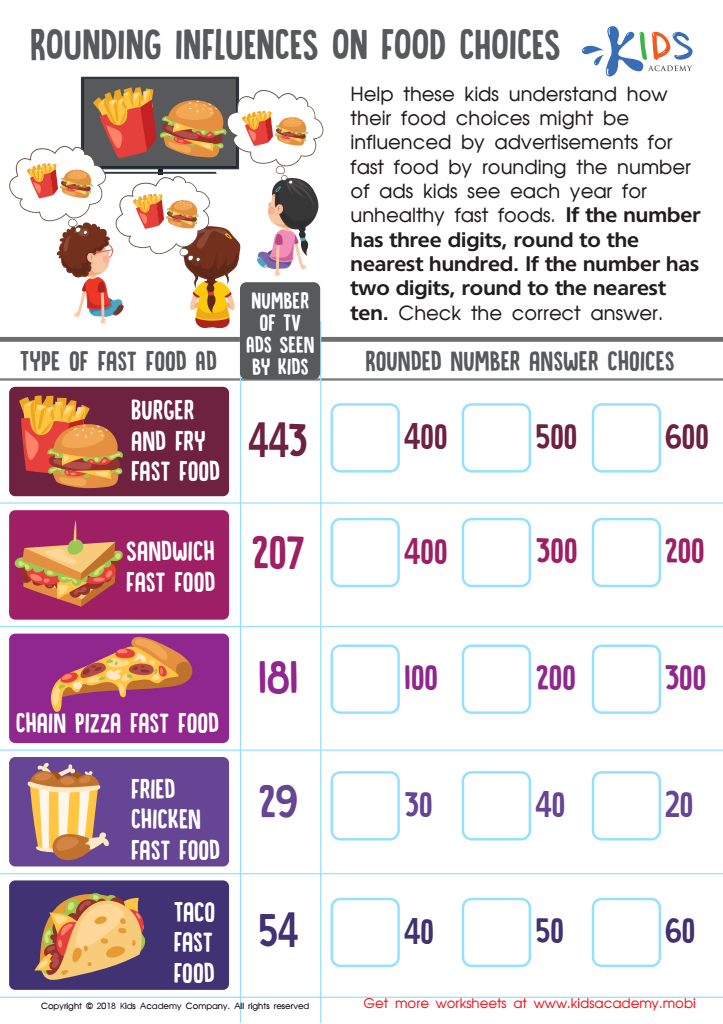
Rounding Influences Food Choices Worksheet
 Assign to My Students
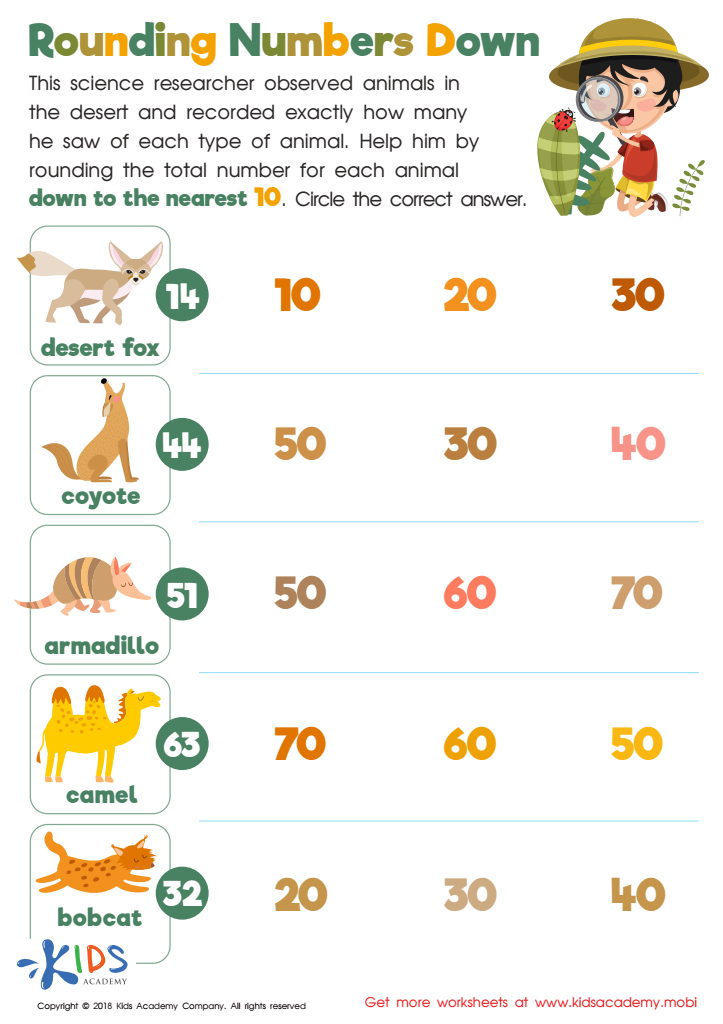
Rounding Numbers Down Worksheet
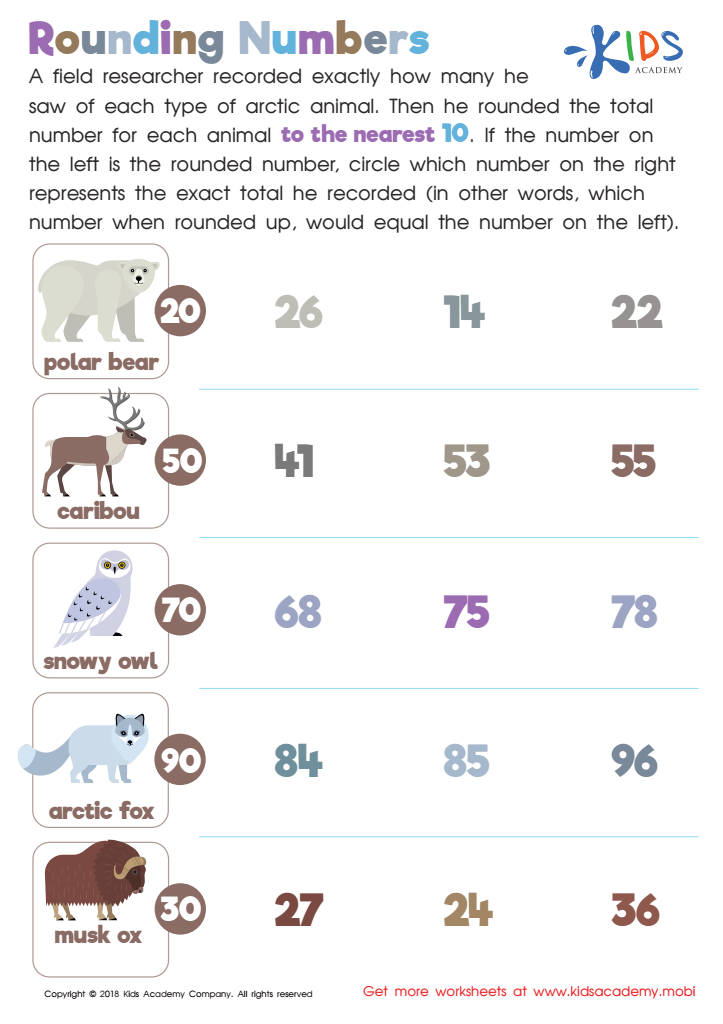
Rounding Numbers Worksheet
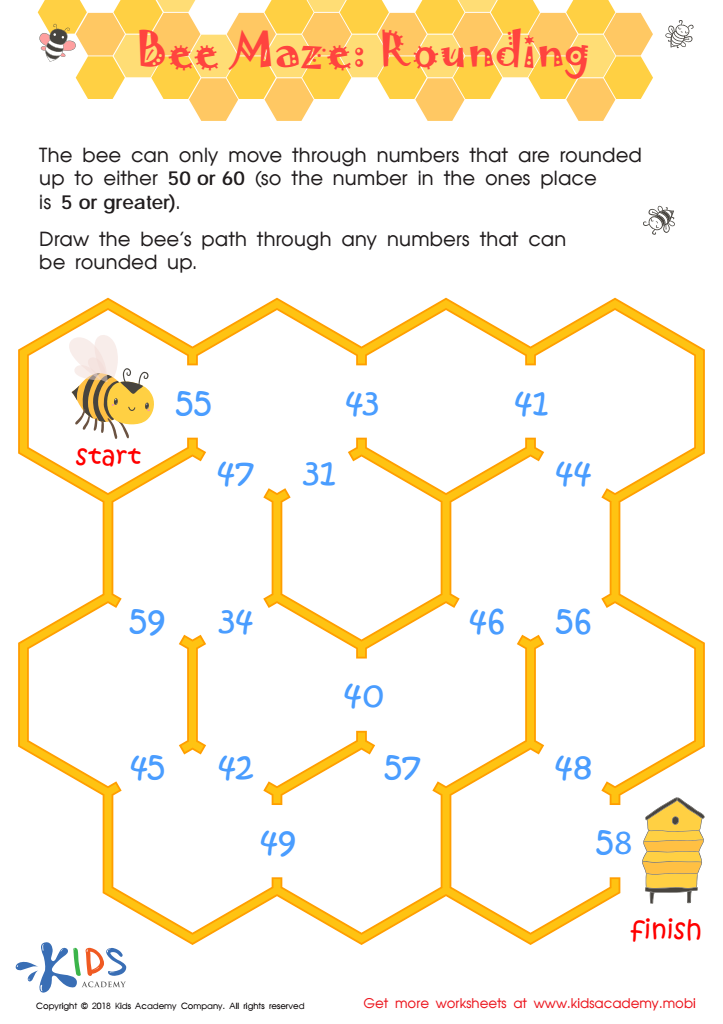
Bee Maze Rounding Worksheet
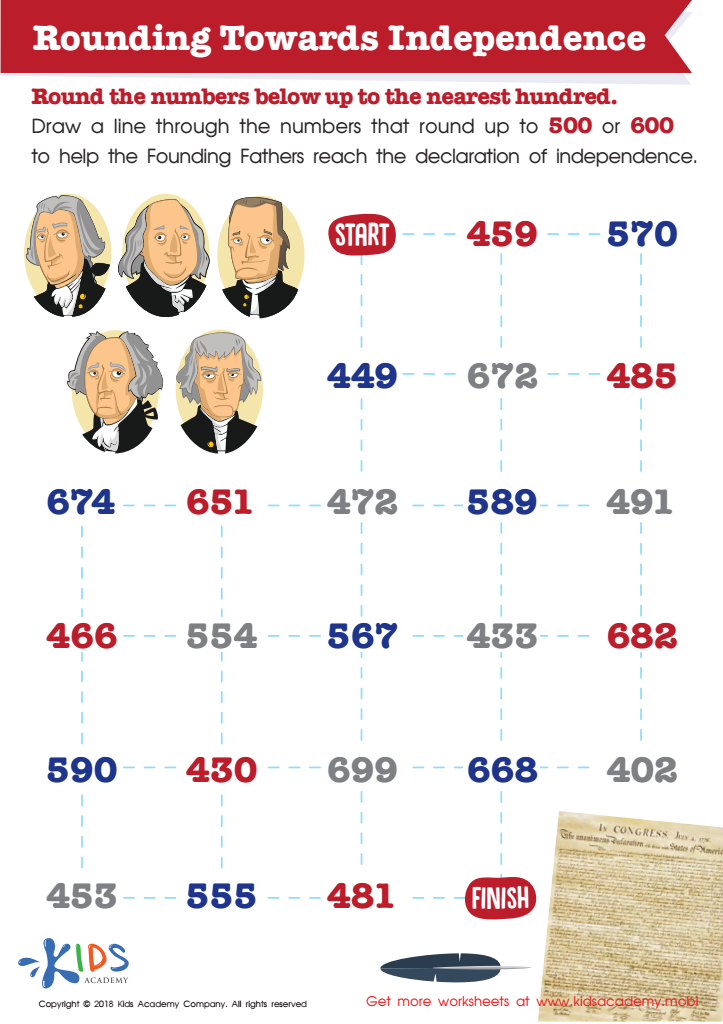
Rounding Towards Independence Worksheet








Understanding rounding and normal numbers is crucial for children ages 3-9 as it forms the foundation of essential mathematical skills. At this developmental stage, children begin to explore numbers and develop their numerical intuition. Learning about normal numbers—those that we typically use in everyday situations—helps them recognize and expand their understanding of quantities, improving their ability to relate math concepts to real-world contexts.
Rounding teaches children how to simplify numbers to make calculations easier and more manageable. This skill is important not only for basic arithmetic but also for problem-solving and critical thinking. For instance, when estimating costs or measurements, rounding allows children to quickly assess situations without getting stuck in complex calculations.
Moreover, a strong grasp of rounding normal numbers fosters confidence in young learners, helping them see math as a useful and relevant part of daily life. Teachers and parents play a pivotal role in providing engaging, hands-on experiences that emphasize these concepts through games, stories, and practical applications. This encouragement cultivates a positive attitude toward math, paving the way for a successful academic journey and lifelong mathematical proficiency. In essence, caring about these skills lays the groundwork for future learning and empowerment in mathematics.








