
Basic Addition Skills Normal Math Worksheets for Ages 3-9
12 filtered results
Difficulty Level
Grade
Age
-
From - To
Subject
Activity
Standards
Discover our engaging Basic Addition Skills worksheets, meticulously designed for children ages 3-9. These printable math resources make learning addition fun and interactive, fostering essential math skills in young learners. With a variety of activities like matching, counting, and mini math games, children will reinforce their understanding of simple addition concepts in a playful manner. Perfect for classroom use or at-home practice, these worksheets cater to various learning styles, helping kids build confidence as they master foundational math skills. Start your child’s mathematical journey today and watch them excel in addition with ease and enjoyment!
Favorites
With answer key
Interactive
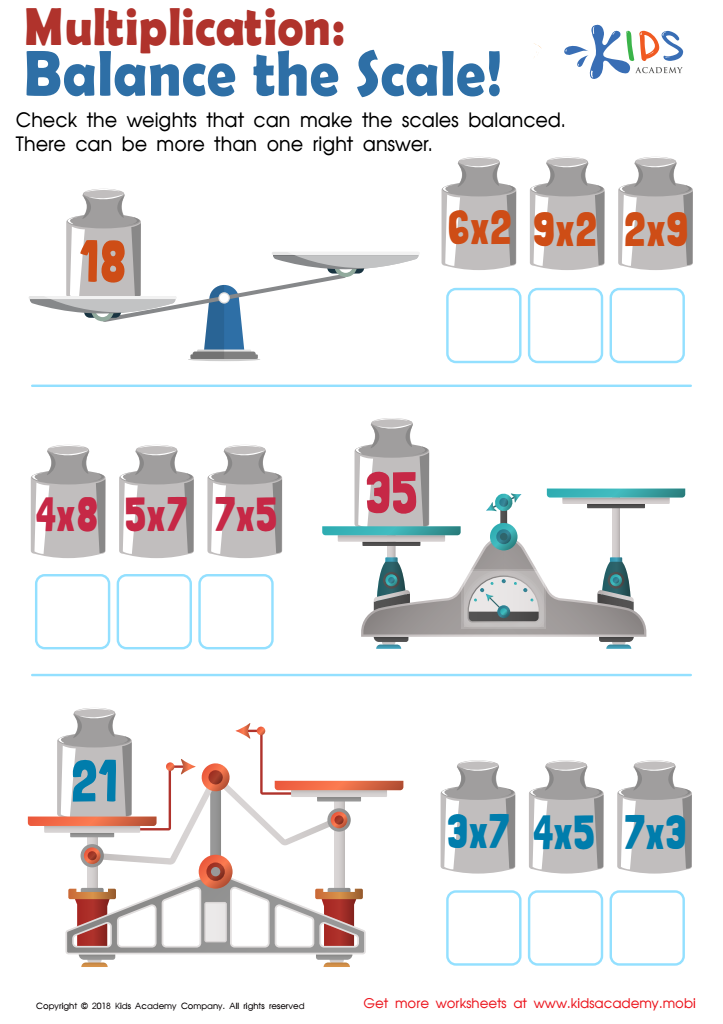
Balance the Scales Multiplication Worksheet
Challenge your child to practice math with our 'Balance the Scales' multiplication worksheet! Get them to solve each multiplication problem and select the weights that make them equal. Hint: it might be more than one!
 Assign to My Students
Balance the Scales Multiplication Worksheet
Worksheet
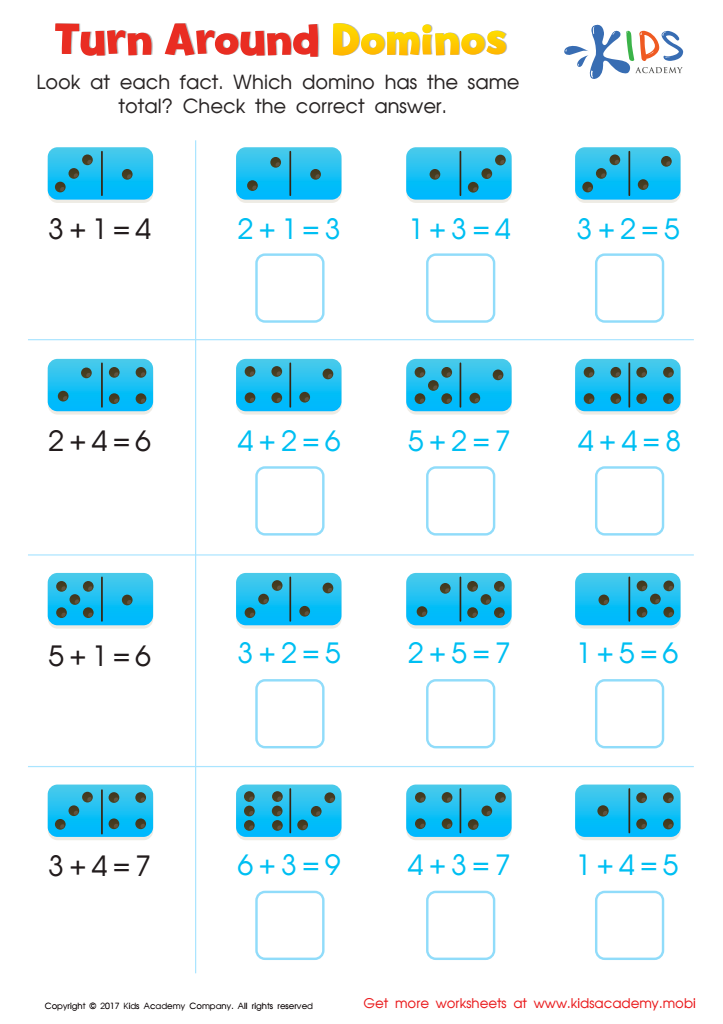
Turn Around Dominos Worksheet
Encourage your child to flex their mental muscles with this math worksheet. Look through the left side's dominos and their values and then check the three boxes on the right. Ask your child if any of the right box's dominos are similar. This requires focus and careful observation.
Turn Around Dominos Worksheet
Worksheet
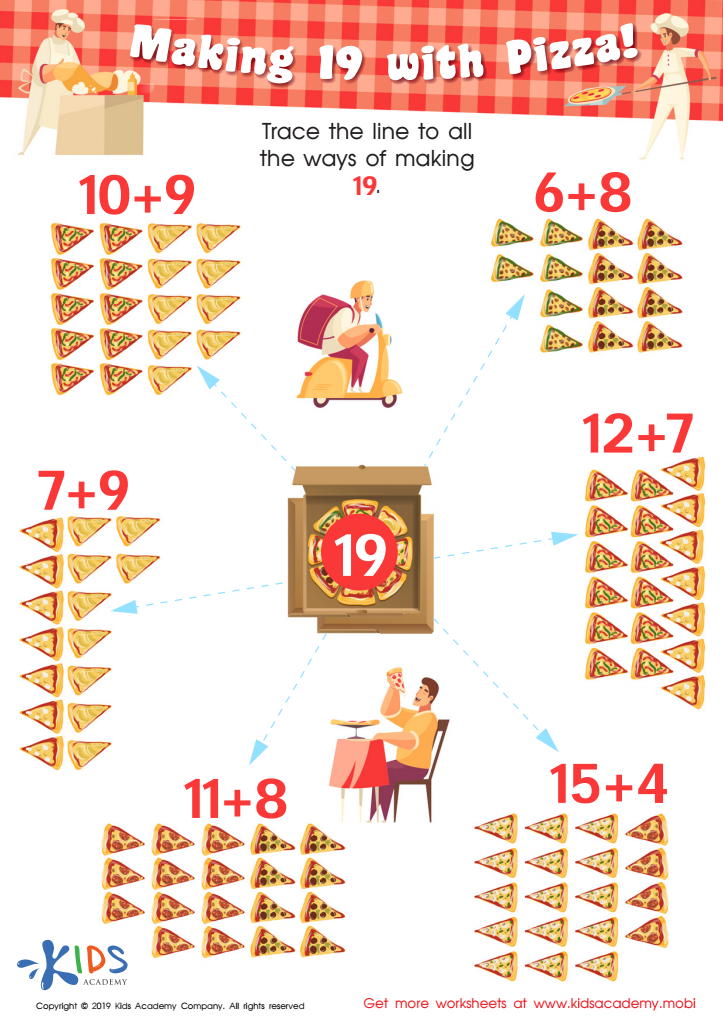
Making 19 with Pizza! Worksheet
Who loves pizza? Your kids do! Next time you need to teach them math, make it fun by combining it with something they enjoy. This worksheet uses a pizza-themed problem to help them practice solving equations. Have them trace the line to figure out how to make 19. It's a great way to make learning math fun!
Making 19 with Pizza! Worksheet
Worksheet
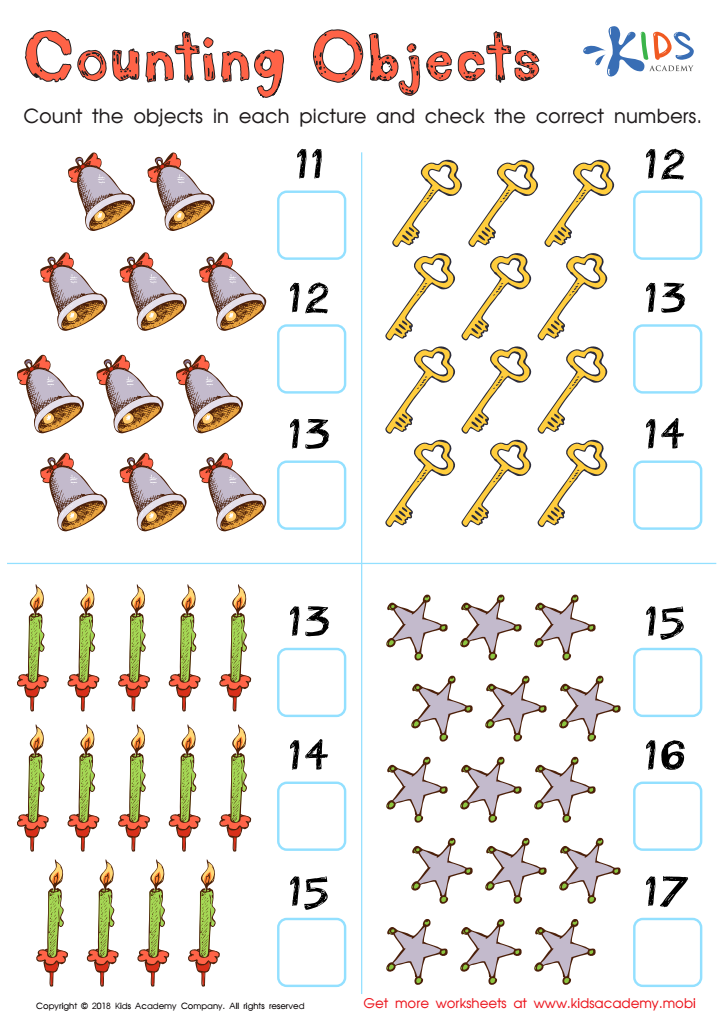
Counting Numbers Worksheet For Kindergarten
This worksheet is a great way to get your child practicing foundational math skills. With bright pictures to count, counting numbers just got a lot more fun! Get them ready for future math success and help them hone their early math skills.
Counting Numbers Worksheet For Kindergarten
Worksheet
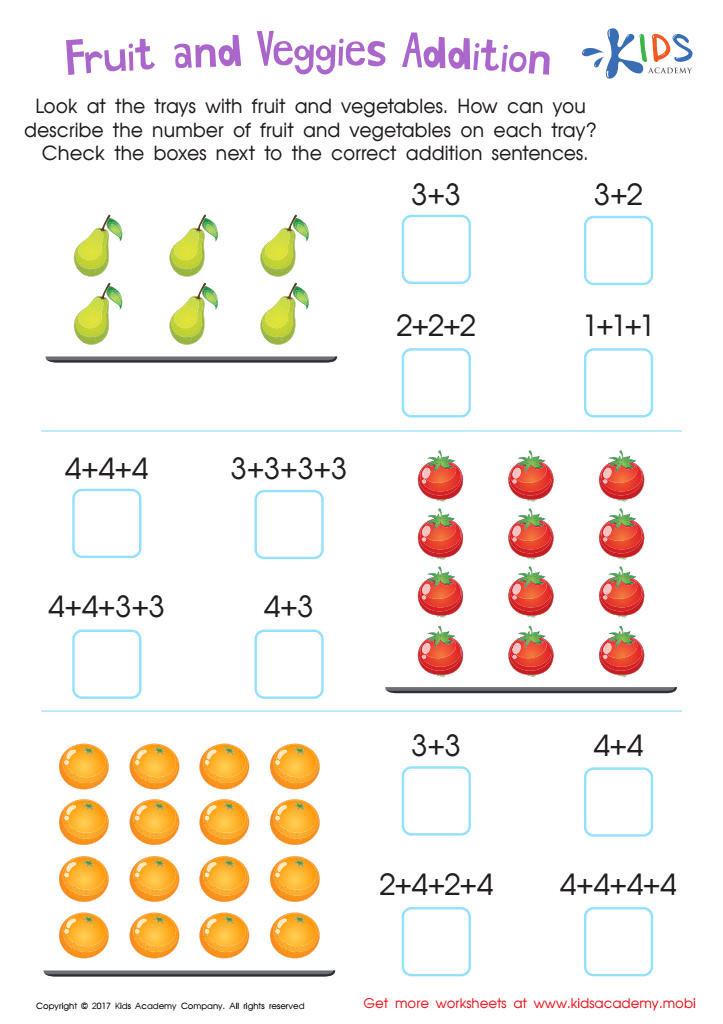
Fruit and Veggies Worksheet
It promotes problem-solving and analytical skills as kids match pictures to correct addition sentences. Help your child go beyond simple addition with this PDF worksheet!
Fruit and Veggies Worksheet
Worksheet
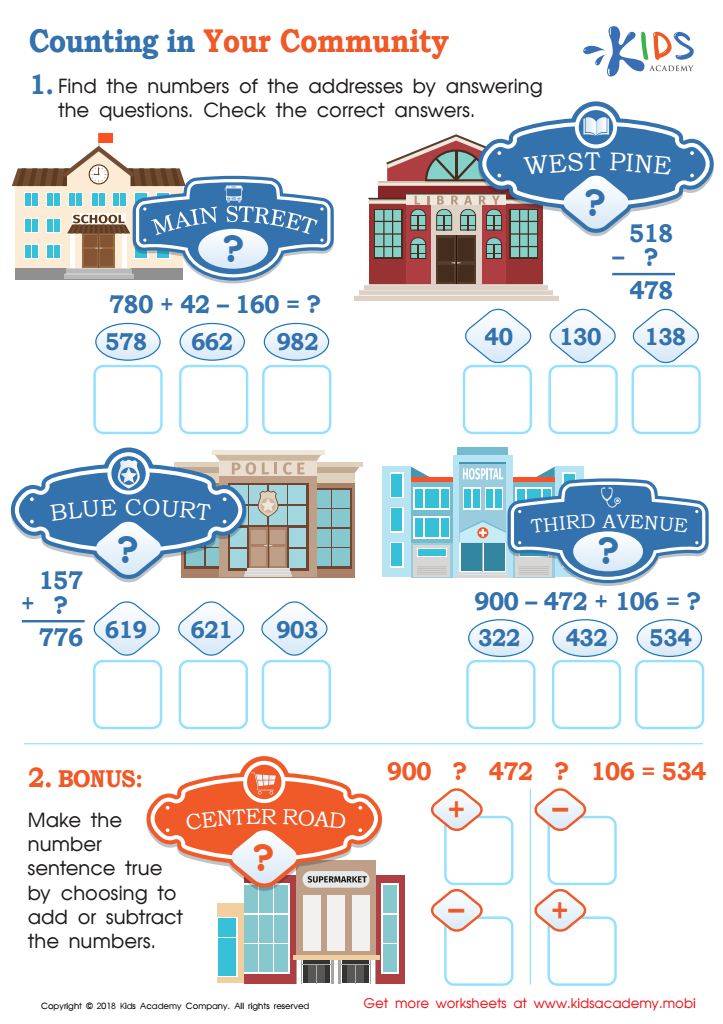
Counting in Your Community Worksheet
Introduce your kids to the idea of a community, where different people and buildings co-exist, each playing their part for the community's progress. Ask them to name the buildings they see in their community. Then work through this worksheet to find the numbers of the addresses by answering the questions. Check the answers once they've solved the equations.
Counting in Your Community Worksheet
Worksheet
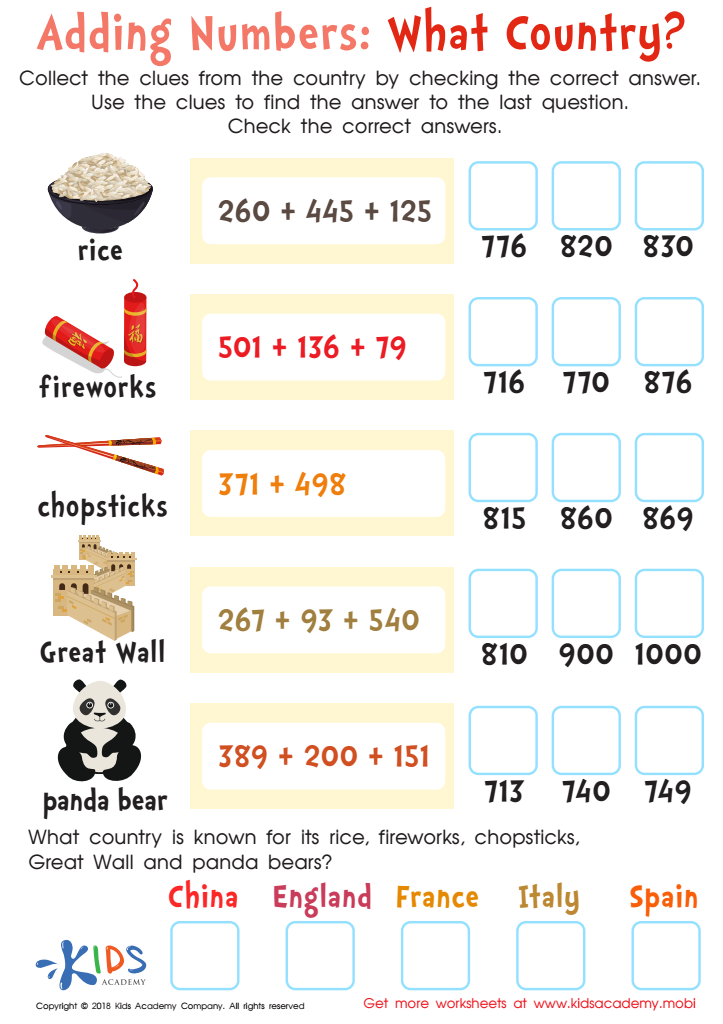
Adding Numbers: What Country Worksheet
Students can use this worksheet to learn more about different countries. Have them collect clues from the worksheet to answer the last question. Help them check the correct answer, and they'll gain knowledge about each country's food, animals, celebrations, and landmarks.
Adding Numbers: What Country Worksheet
Worksheet
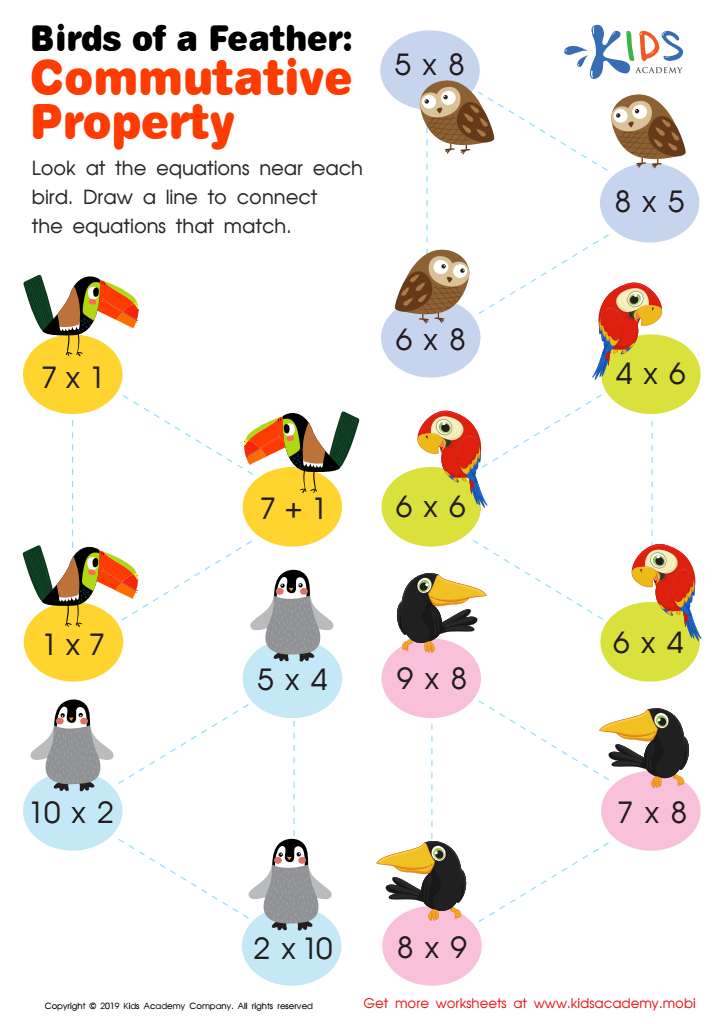
Birds of a Feather: Commutative Property Worksheet
The commutative property states that order of factors doesn't affect the product. Use it to help your kids solve simple problems. If they love birds, they'll love the colorful worksheet to identify exotic ones. Practicing is the best way to understand difficult topics. Look at the equations in this tracing sheet; help them draw a line to connect equations that match.
Birds of a Feather: Commutative Property Worksheet
Worksheet
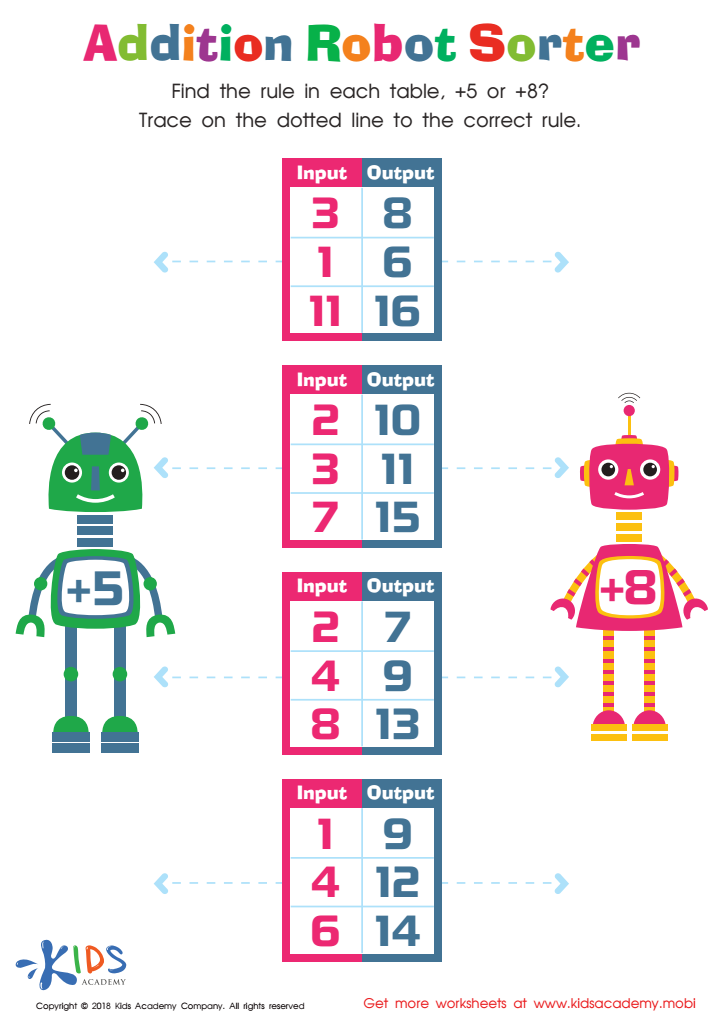
Addition Robot Sorter Worksheet
This worksheet helps your child understand addition. Have them trace the dotted lines to the correct equations: +8 and +5. It's a great way to aid their mathematical comprehension and get them comfortable with adding equations.
Addition Robot Sorter Worksheet
Worksheet
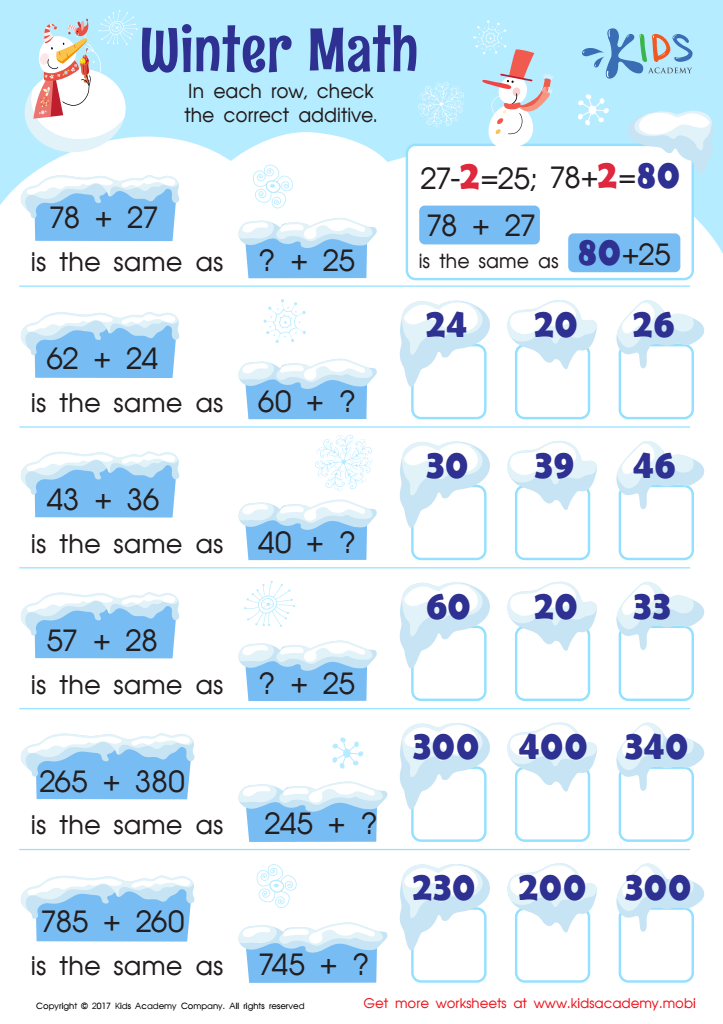
Free Addition Worksheet
Perfect for a wintry day, challenge your 3rd grader to compare addition equations and fill in the missing numbers in the PDF.
This winter-themed worksheet is sure to bring a smile while your 3rd grader practices their addition skills. Perfect for a blustery day, challenge your child to compare addition equations and complete the missing numbers in the PDF.
Free Addition Worksheet
Worksheet
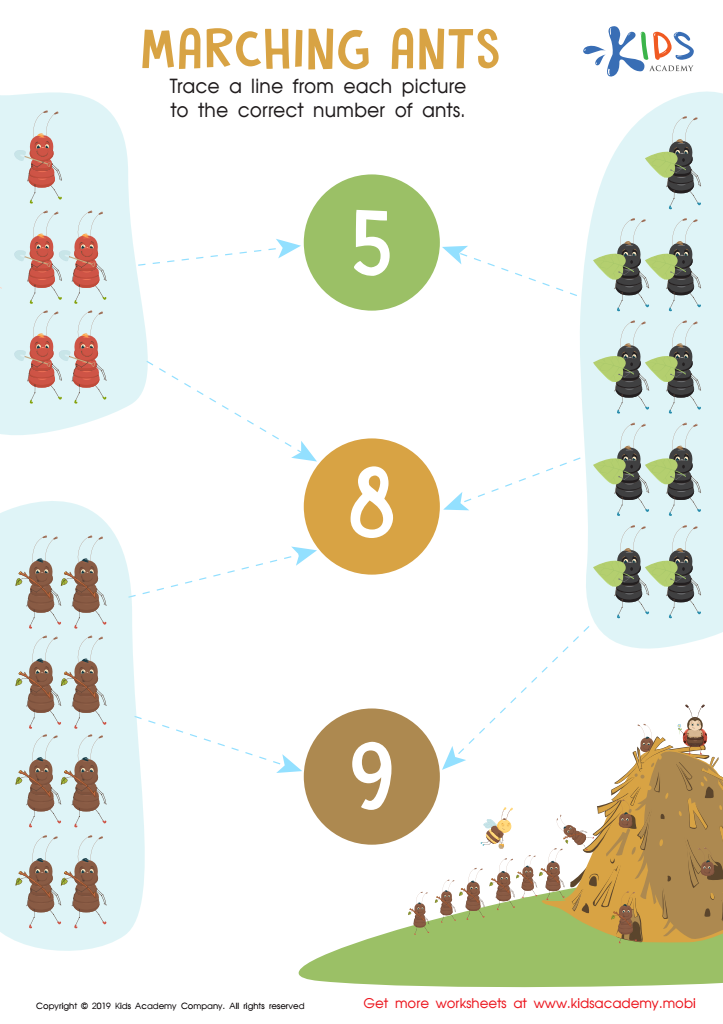
Marching Ants Worksheet
Assess and help your kids practice counting with this worksheet. Ask them to identify the four groups of ants in the picture. Guide them as they count each group and trace the lines to the corresponding number.
Marching Ants Worksheet
Worksheet
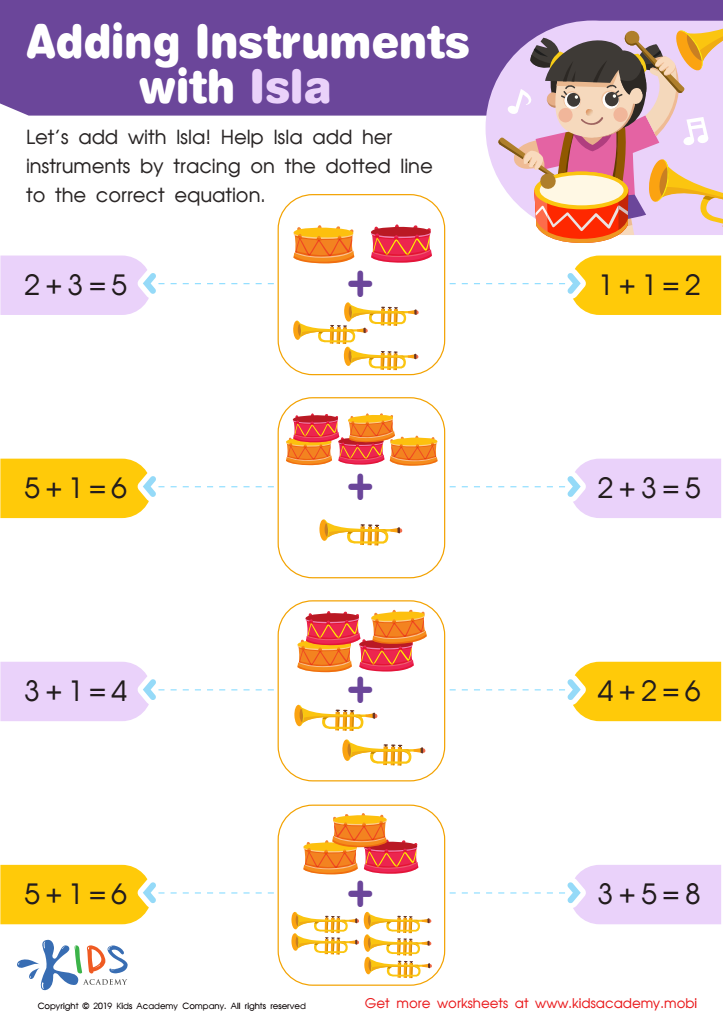
Adding Instruments with Isla Worksheet
Your kids can have fun helping Isla add her musical instruments. With colorful pics and one-to-one representation, they can pick the correct addition sentence. They can connect each pic with traceable lines and get to the right sum up to 10.
Adding Instruments with Isla Worksheet
Worksheet
Join Kids Academy for Free
Who is primarily going to use this learning content?




.jpg)


Parents and teachers should prioritize basic addition skills for children ages 3-9 because these foundational math competencies are crucial for long-term academic success. Mastering basic addition lays the groundwork for higher-level math concepts; children develop essential problem-solving skills and mathematical thinking early on. Incorporating basic math education at a young age not only enhances cognitive abilities but also boosts confidence in learning.
Additionally, early exposure to addition through engaging activities fosters a positive attitude towards math. Children learn better when they have fun with the content, supporting their natural curiosity and creativity. As they master simple addition, they are also encouraged to connect math with daily life—counting items during shopping trips or adding snacks during playtime. This relevance enhances their understanding and makes learning more meaningful.
Furthermore, developing basic addition skills can help in identifying individual learning needs. Children who struggle can receive early interventions tailored to their needs, preventing potential challenges as standards increase in later grades. Ultimately, focusing on basic addition prepares youngsters for a range of academic and real-world challenges, setting a strong trajectory for lifelong learning and success in various disciplines. Therefore, engaging parents and educators in this process is vital.








