
Animal Classification Normal Sorting Worksheets for Ages 3-9
3 filtered results
Difficulty Level
Grade
Age
-
From - To
Subject
Activity
Standards
Discover our engaging "Animal Classification Normal Sorting Worksheets," designed for kids ages 3-9! These colorful and interactive worksheets help young learners enhance their sorting skills by categorizing various animals based on distinct characteristics. Each worksheet features a variety of classifications, encouraging children to recognize patterns, similarities, and differences in the animal kingdom. Perfect for homeschooling or classroom activities, these resources foster critical thinking and provide a fun educational experience. Empower your child’s learning journey while they explore the fascinating world of animals. Download the worksheets today and make learning both enjoyable and meaningful! Ideal for early grade teachers and parents alike.
Favorites
With answer key
Interactive
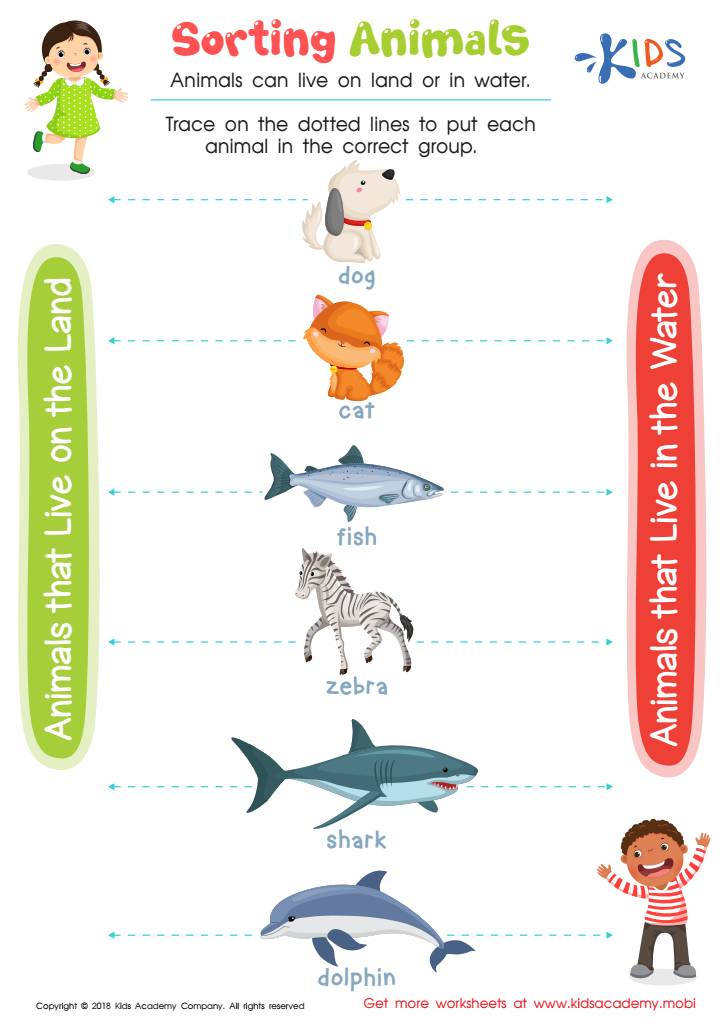
Sorting Animals Worksheet
Your kids will love this free, interactive worksheet! With image clues, they can read and trace the animal names, and then sort them into groups of land or water animals. It's an enjoyable way to boost their critical thinking, fine motor and prior knowledge skills.
 Assign to My Students
Sorting Animals Worksheet
Worksheet
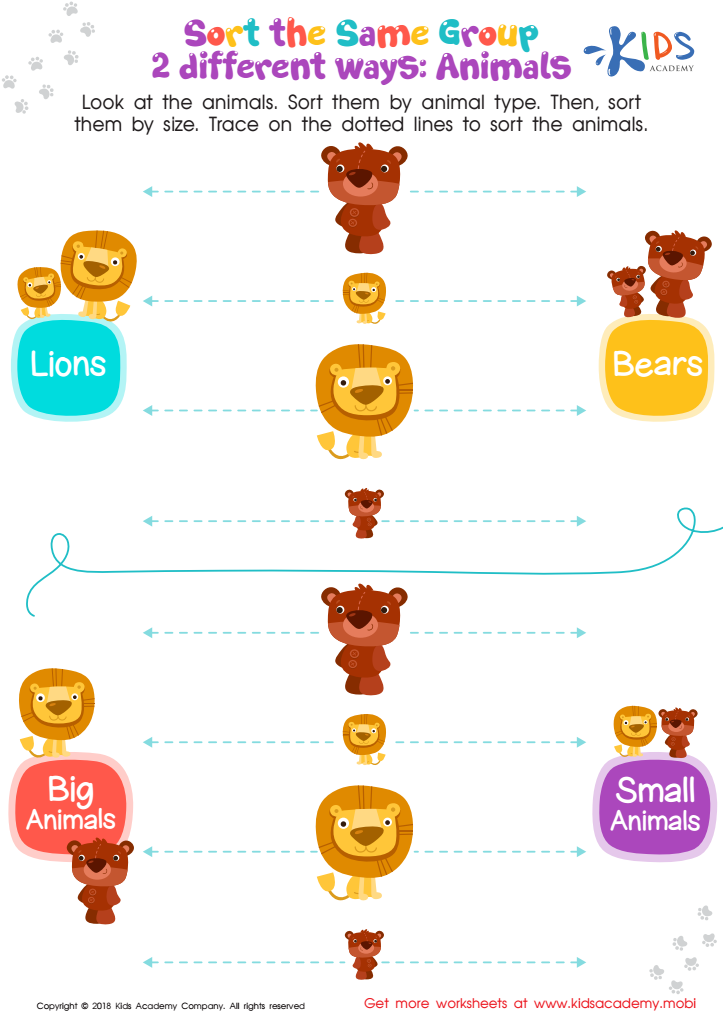
Sort the Same Group 2 Different Ways: Animals Worksheet
Look at the animals with your child. Ask them to name them, then sort them by type (e.g. lions and bears). Next, help them sort by size, tracing the dotted lines. This will teach them sorting skills.
Sort the Same Group 2 Different Ways: Animals Worksheet
Worksheet
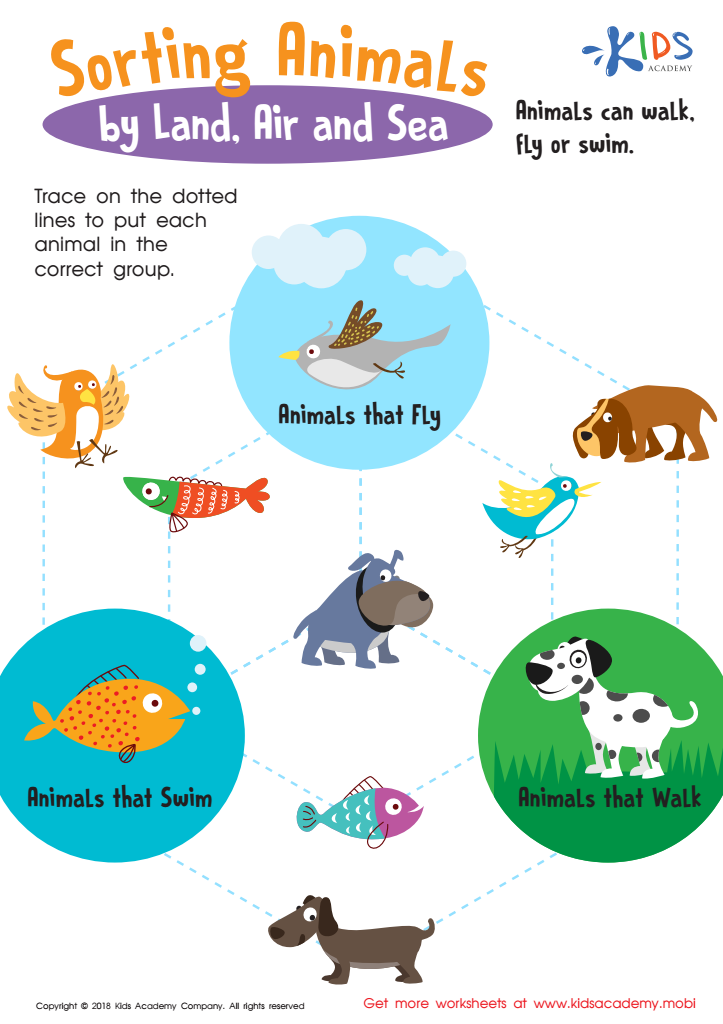
Sorting Animals by Land, Air and Sea Worksheet
Kids will use critical thinking and fine motor skills with this worksheet! They'll analyze animal traits and draw lines to sort them into groups of those that fly, swim, or walk. It's a fun way to hone skills and have a great time!
Sorting Animals by Land, Air and Sea Worksheet
Worksheet
Join Kids Academy for Free
Who is primarily going to use this learning content?







Animal classification and sorting activities are vital for young learners aged 3-9 as they lay the foundation for critical thinking and cognitive development. By engaging in animal classification, children learn to categorize animals based on shared characteristics, such as habitats, physical traits, or behaviors. This process sharpens their observational skills and enhances their ability to make connections between different species.
Teachers and parents should care about these activities because they promote essential skills like problem-solving, language development, and scientific reasoning. When children classify animals, they practice descriptive language by identifying attributes, which enriches their vocabulary and communication skills. Additionally, sorting fosters an understanding of broader concepts like ecosystems and biodiversity, nurturing a sense of environmental stewardship from a young age.
Furthermore, such activities encourage curiosity and engagement with nature, critical aspects of holistic development. They also provide opportunities for social interaction; children can work collaboratively, learning teamwork and respect for others’ ideas. Overall, incorporating animal classification into early education offers children a fun, hands-on way to explore the world around them while building essential academic and life skills. Thus, parents and teachers play a critical role in supporting these enriching experiences.








