Contextual understanding Normal Reading Worksheets for Ages 3-9
6 filtered results
-
From - To
Discover Kids Academy's engaging Normal Reading Worksheets designed specifically for children ages 3-9. Our carefully curated worksheets foster contextual understanding, helping young readers grasp the meaning of words within sentences and stories. Fun, age-appropriate activities, such as word matching, sentence completion, and story sequencing, enhance comprehension skills in an enjoyable way. These resources are perfect for parents and educators aiming to build strong reading foundations in early learners. Empower your child's reading journey with Kids Academy’s expert-crafted content, and watch as their confidence and enthusiasm for reading grow alongside their understanding. Explore our collection today!
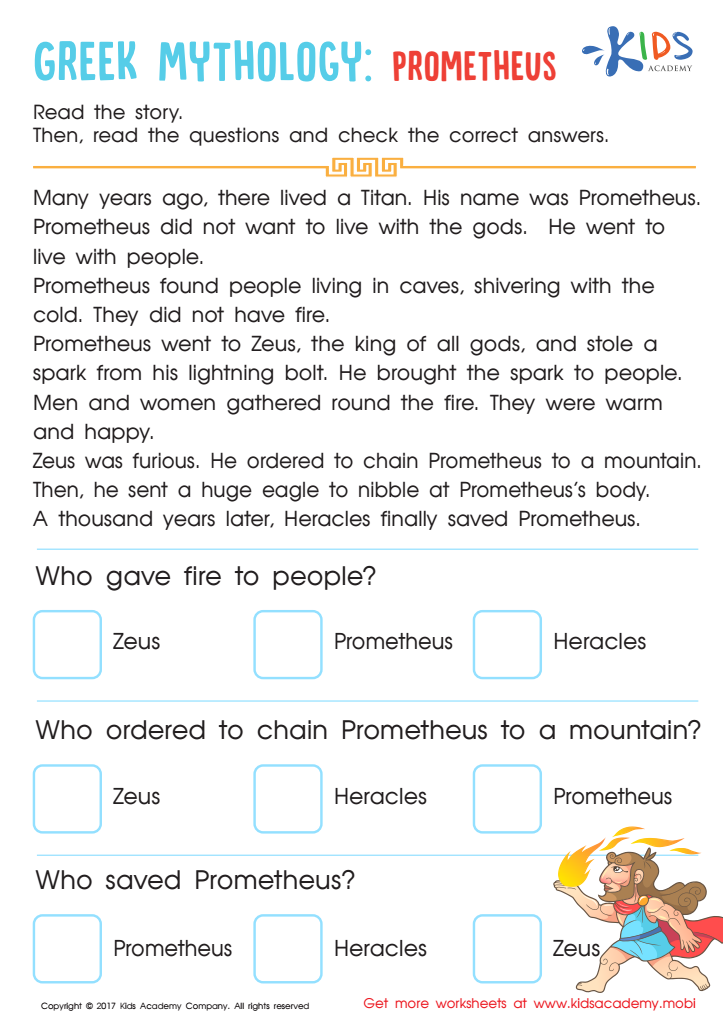
Prometheus Story Worksheet
 Assign to My Students
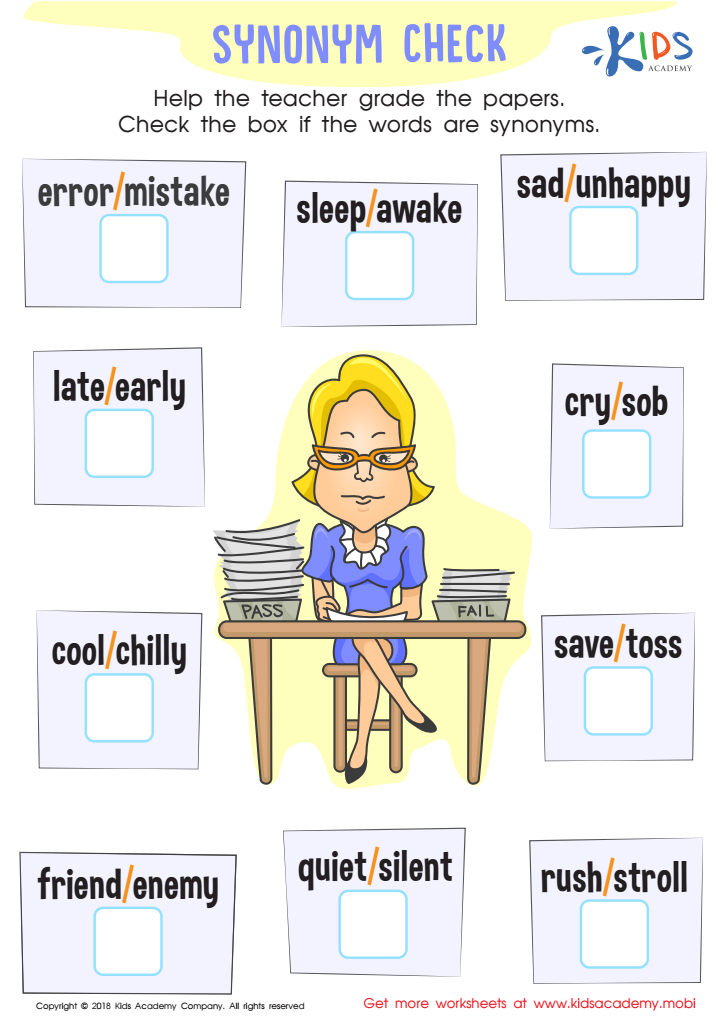
Synonym Check Worksheet
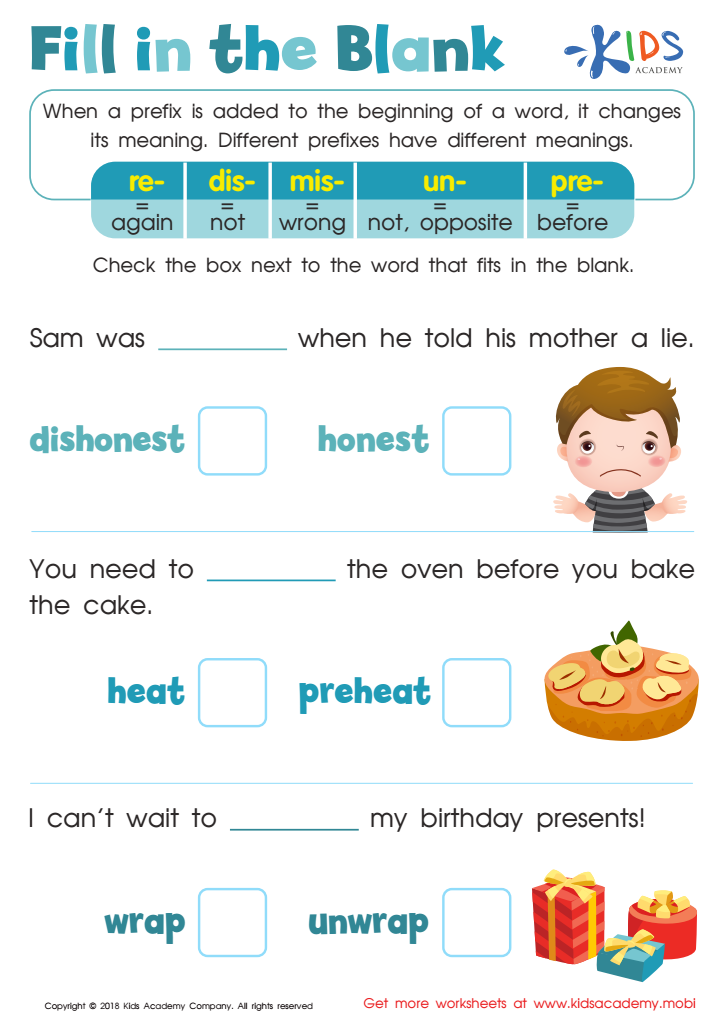
Reading: Fill in the Blank Worksheet
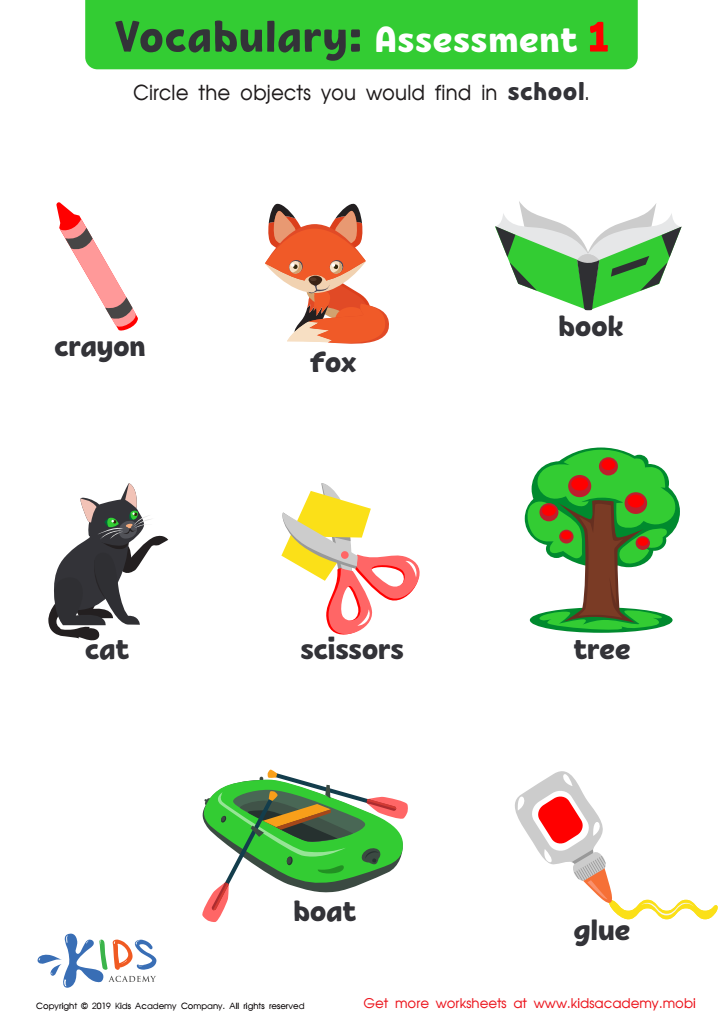
Vocabulary: Assessment 1 Worksheet
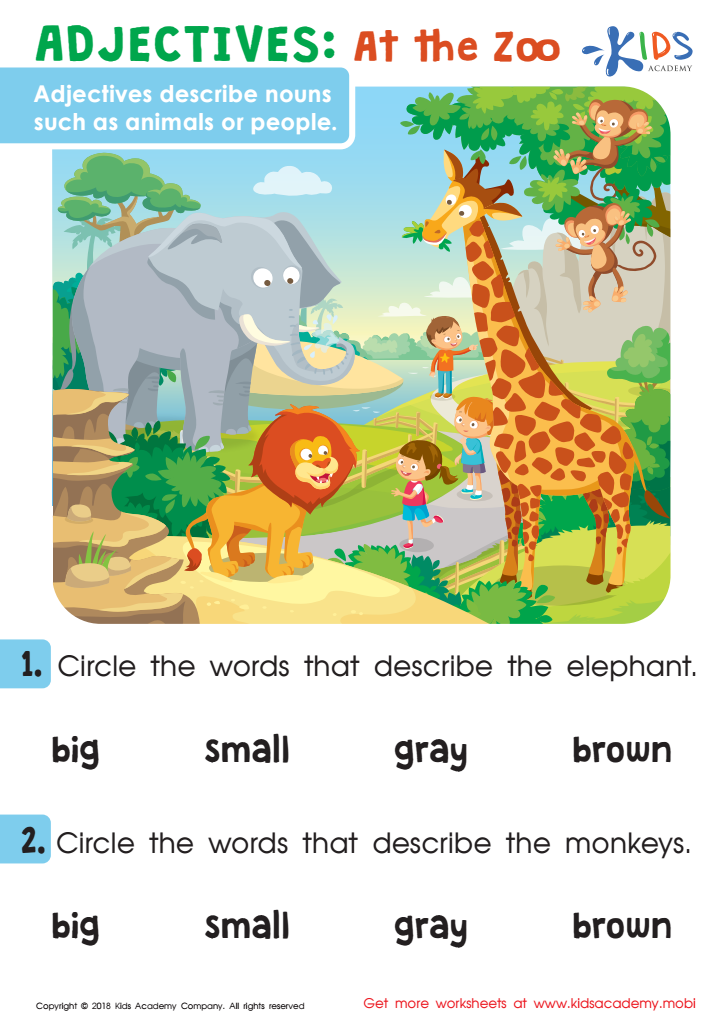
Adjectives: At The Zoo Worksheet
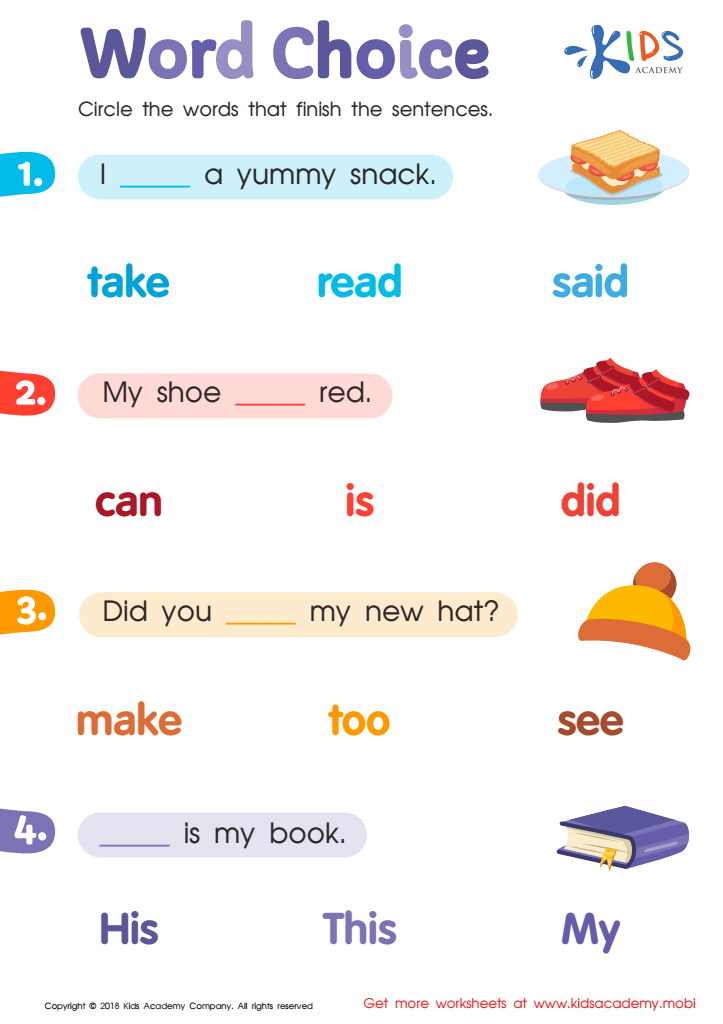
Word Choice Worksheet





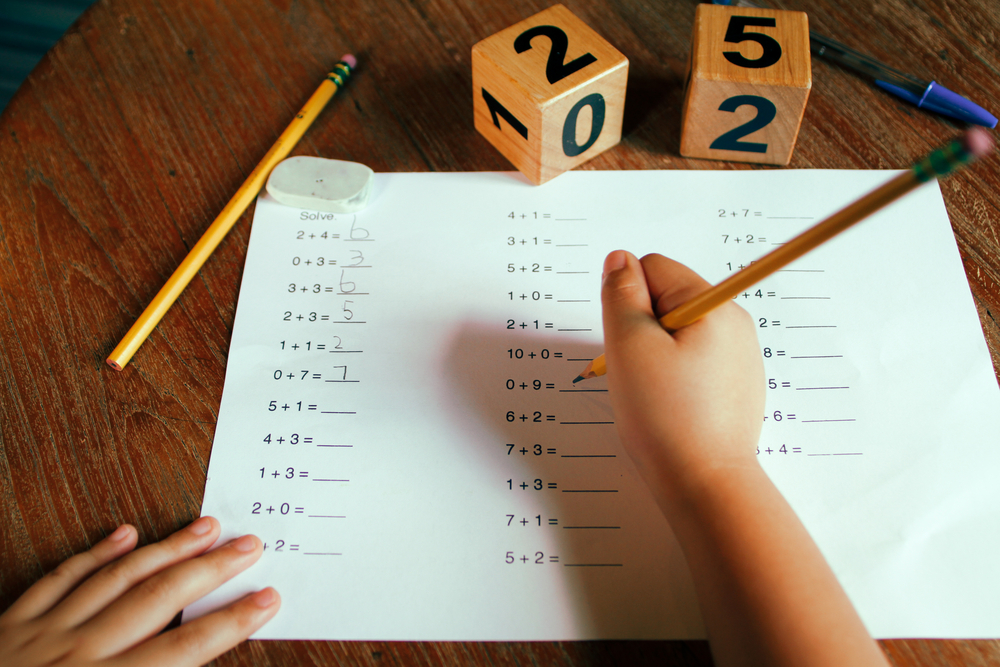

Contextual understanding in normal reading is vital for children aged 3-9 because it lays the foundation for effective communication and lifelong learning. At this formative stage, children are not just learning to decode words but also to comprehend their meanings in various contexts. This skill is crucial for building robust reading comprehension, which directly impacts academic success and critical thinking.
When children understand the context, they can grasp nuanced meanings, make connections to their own experiences, and predict what might happen next in a story. This enhances engagement and makes reading a more enjoyable and meaningful activity. Importantly, contextual reading helps in vocabularly building because children learn how words can have different meanings depending on the setting or situation.
For parents and teachers, fostering contextual understanding is essential because it supports social-emotional development. By interpreting context, children learn to understand characters' emotions and motivations, leading to better empathy and social skills. Additionally, contextual comprehension aids in problem-solving and decision-making, vital skills for both academic settings and everyday life.
In sum, caring about contextual understanding in reading ensures that children develop into competent, empathetic, and critical thinkers, equipped not just to succeed academically but to navigate life's varied and complex situations.








