Text analysis Normal Reading Worksheets for Ages 3-9
3 filtered results
-
From - To
Enhance your child’s reading skills with our Text Analysis Normal Reading Worksheets, specially designed for ages 3-9. These engaging worksheets encourage young learners to explore text comprehension and critical thinking in a fun, interactive way. With a variety of activities tailored for different age groups, your child will practice identifying key ideas, making predictions, and drawing conclusions. Our worksheets not only boost reading proficiency but also foster a love for literature. Perfect for both classroom and home use, they provide essential resources for early education. Help your child become a confident reader with our comprehensive and enjoyable text analysis worksheets!
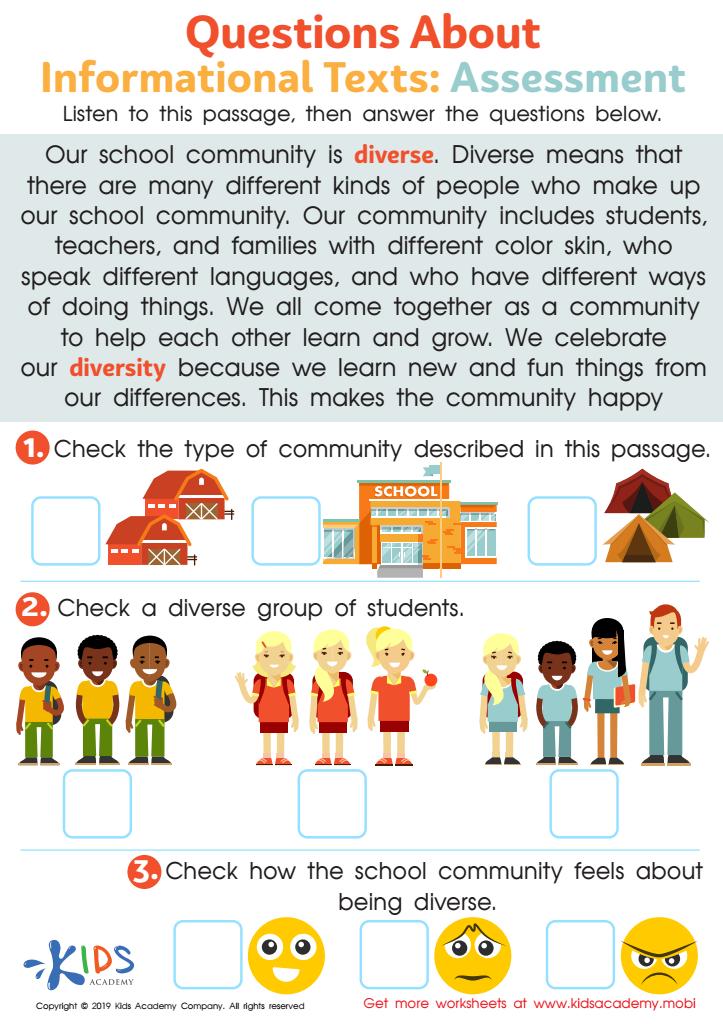
Questions About Informational Texts: Assessment 1 Worksheet
 Assign to My Students
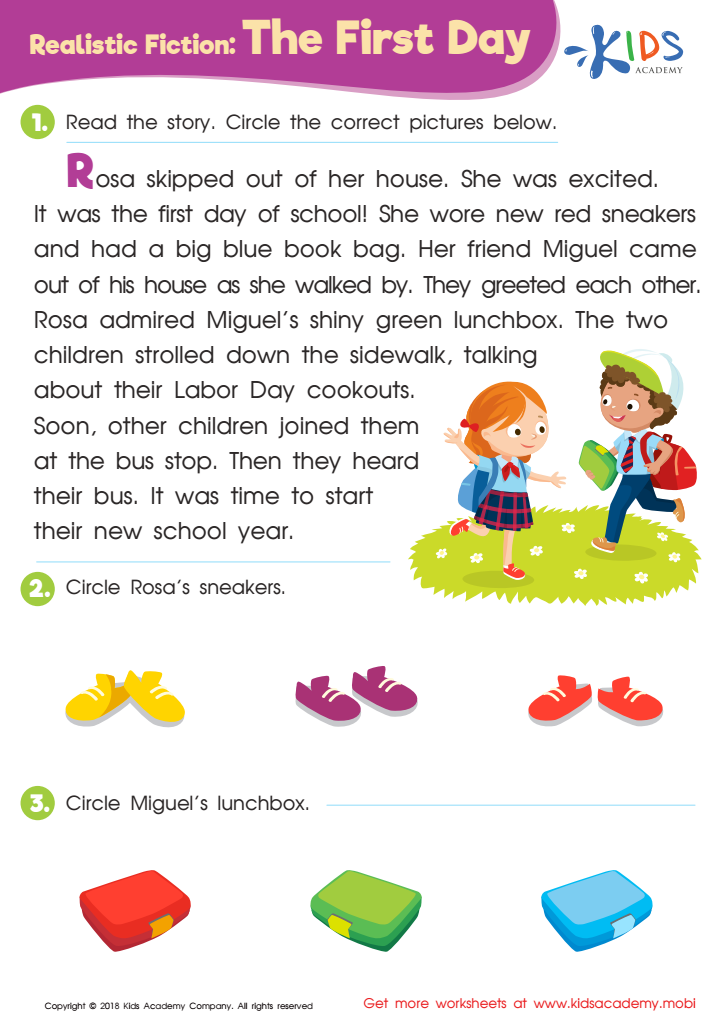
Realistic Fiction: The First Day Worksheet
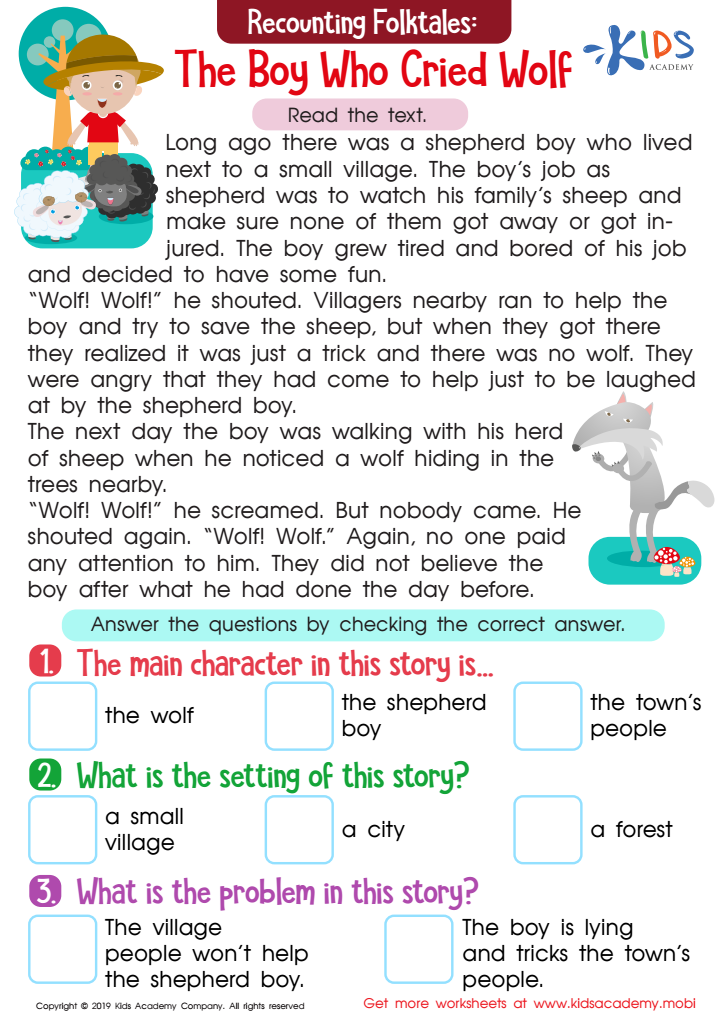
The Boy Who Cried Wolf Part 1 Worksheet





.jpg)


Text analysis normal reading is essential for children aged 3-9 as it lays the foundation for effective literacy skills. During this critical developmental stage, children are not merely learning to read; they are also developing comprehension, vocabulary, and critical thinking skills. When parents and teachers engage in text analysis, they help children understand the structure, themes, and context of stories, which enriches their overall reading experience.
By analyzing texts together, parents and teachers can encourage discussions that foster a deeper understanding of the material. This verbal engagement stimulates cognitive development and enhances children's ability to express their thoughts and feelings. Additionally, early text analysis facilitates a love for reading, as children become more curious and interested in narratives.
Moreover, understanding how to analyze texts aids in recognizing different genres, styles, and perspectives, helping children develop empathy and a broader worldview. In an increasingly complex society, these skills are essential for both academic success and personal growth. Thus, investing time in text analysis not only nurtures fundamental literacy skills but also empowers children to become informed, thoughtful, and engaged members of their communities. This is why parents and teachers must prioritize text analysis during these formative years.