Learning about ecosystems Normal Animals Worksheets for Ages 3-9
3 filtered results
-
From - To
Discover the wonders of ecosystems with our "Learning about Ecosystems: Normal Animals Worksheets" designed for children ages 3-9. Tailored to spark curiosity, these engaging worksheets help young learners understand various animal habitats and their roles within ecosystems. Through fun activities, kids will explore different animals, their environments, and how they interact within nature. Perfect for cultivating a love for science, these worksheets promote critical thinking and observational skills, laying a foundation for lifelong learning and environmental awareness. Enrich your child's educational journey with our expertly crafted, easy-to-use printables and inspire a deeper appreciation for our planet's biodiversity.
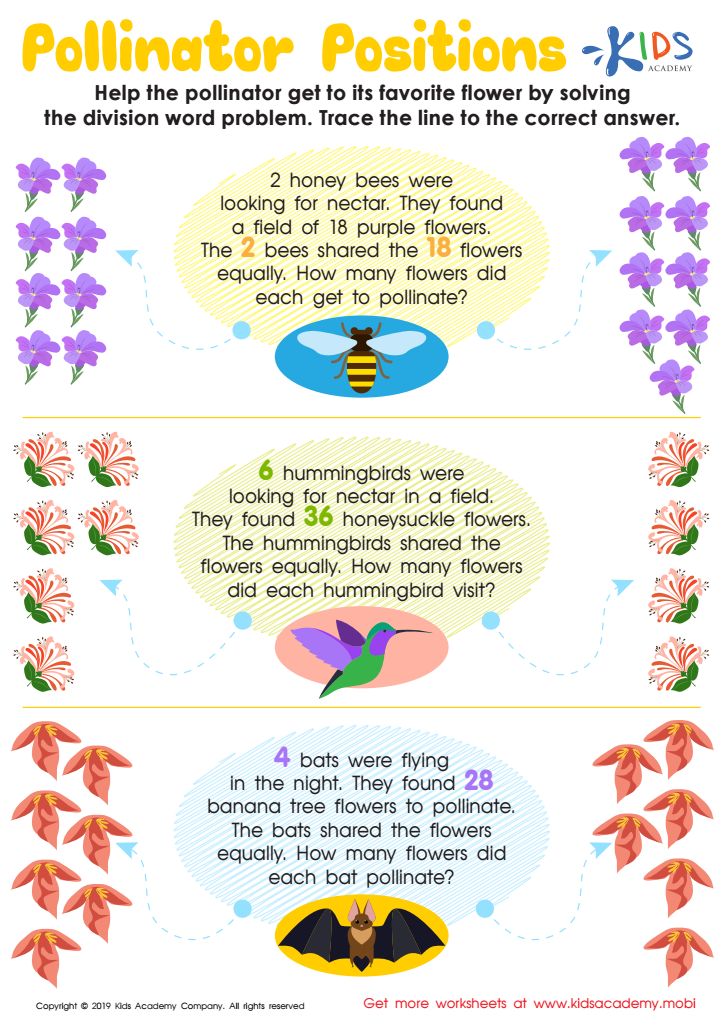
Pollinator Positions Worksheet
 Assign to My Students
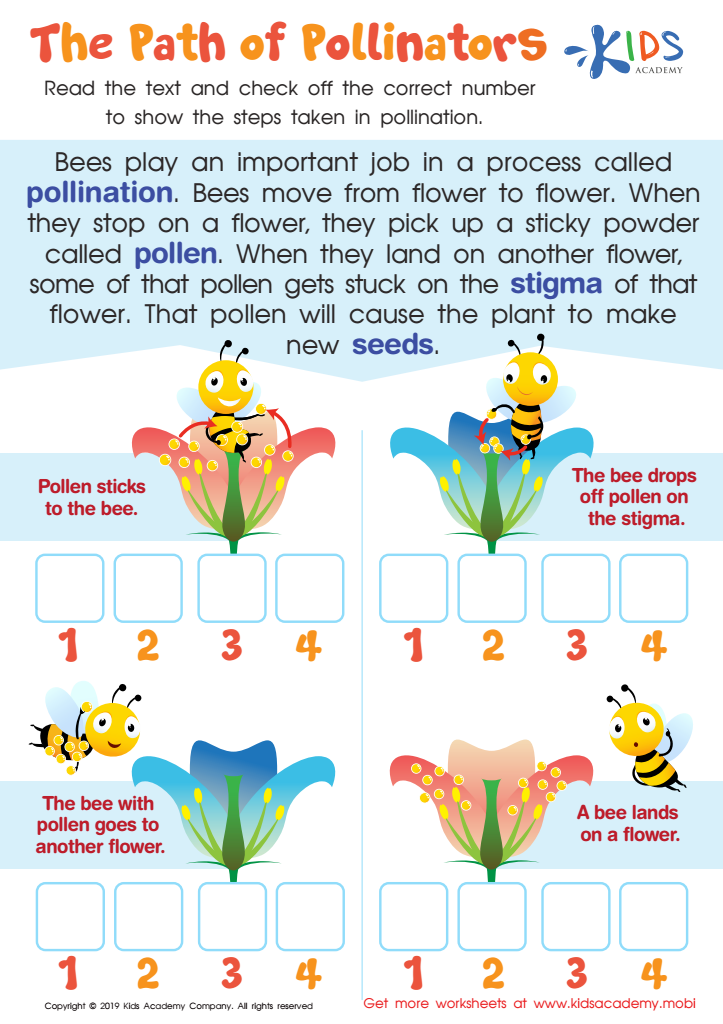
The Path of Pollinators Worksheet
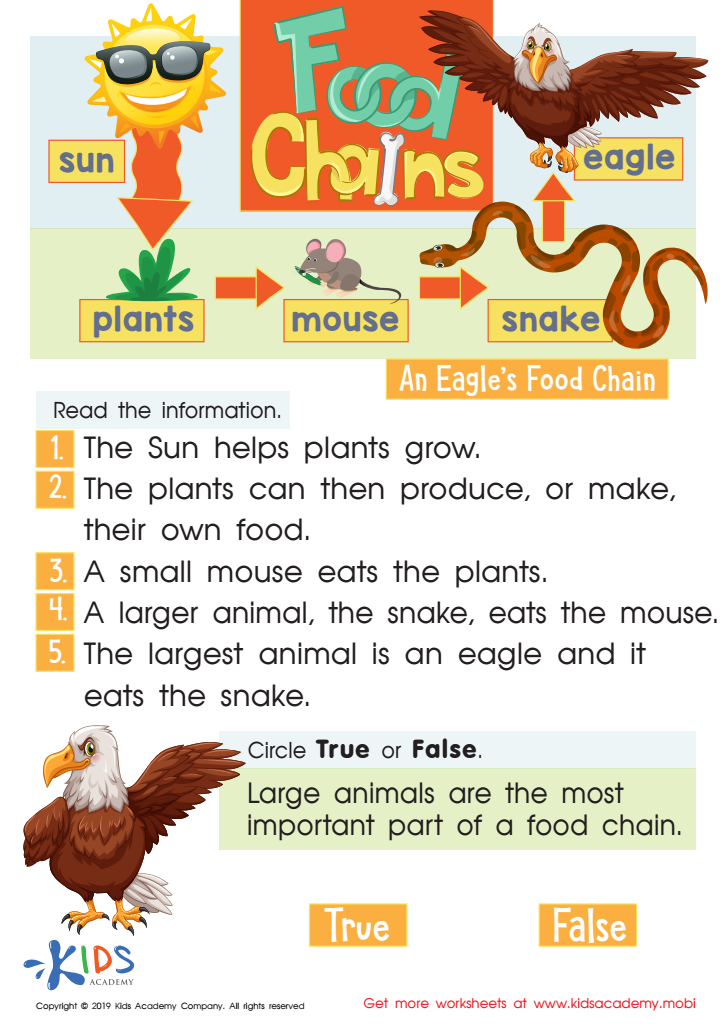
Food Chains Worksheet








Understanding ecosystems and normal animals is crucial for children aged 3-9 because these formative years are key for developing curiosity, empathy, and basic scientific knowledge. Early education about ecosystems nurtures a child's appreciation for the environment and fosters a sense of responsibility towards nature. It helps them understand the interdependence between plants, animals, and humans, laying a foundation for future environmental stewardship.
Learning about everyday animals found in various ecosystems also protects their emotional and cognitive growth. It encourages observational skills and critical thinking, as children learn to ask questions about wildlife and their habitats. This knowledge not only strengthens vocabulary and conceptual understanding but also ties into important subjects like geography, biology, and social studies.
Moreover, engaging with nature broadens a child's world view. Discovering that ants have colonies or how bees produce honey can be fascinating, sparking a lifelong interest in science and exploration. Through active and hands-on learning, like observing birds or growing a plant, children gain practical experiences that resonate far more than abstract teachings.
Parents and teachers must prioritize these lessons to inspire mindfulness in young learners. Youths educated about ecosystems and animals tend to grow into adults who respect and care for the planet, making vital contributions to solving environmental issues.








