Problem-Solving Skills Normal Numbers Worksheets for 3-Year-Olds
5 filtered results
-
From - To
Develop essential problem-solving skills early with our engaging Normal Numbers Worksheets for 3-Year-Olds. These thoughtfully crafted printable worksheets from Kids Academy offer a fun and interactive way for young learners to grasp fundamental math concepts. Designed specifically for toddlers, these activities focus on recognizing and understanding normal numbers, enhancing cognitive and analytical abilities. Perfect for home or preschool settings, the worksheets make learning both enjoyable and educational. Ignite curiosity and a love for math in your child with our expertly developed resources that lay a strong foundation for future academic success.
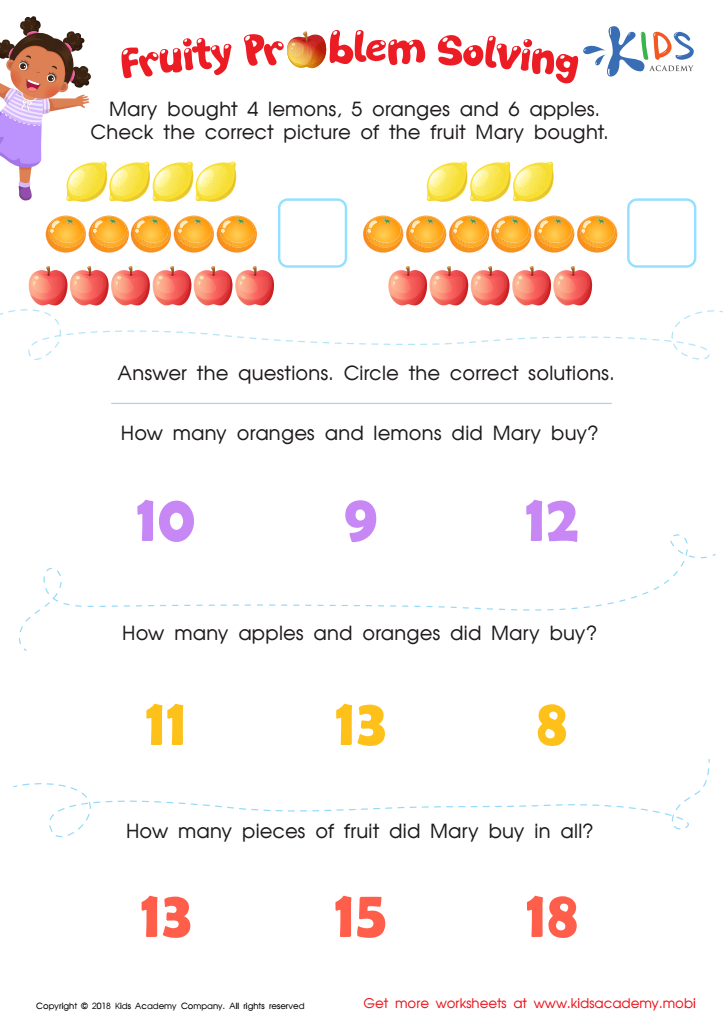
Fruity Problem Solving Worksheet
 Assign to My Students
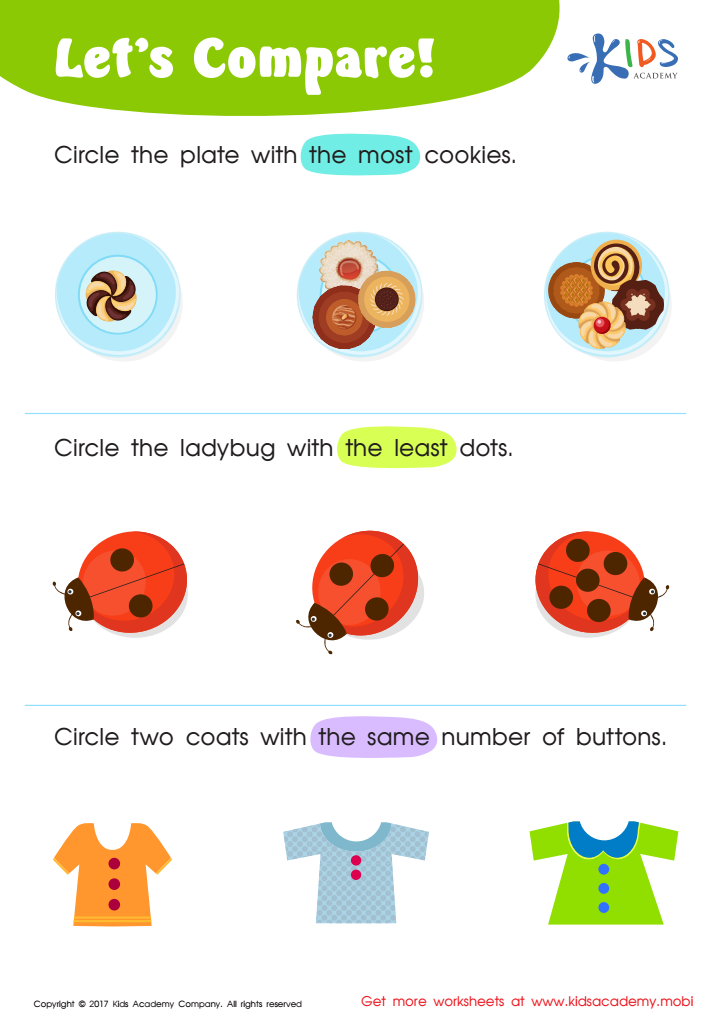
Matching: Classifying Toys by Size Worksheet
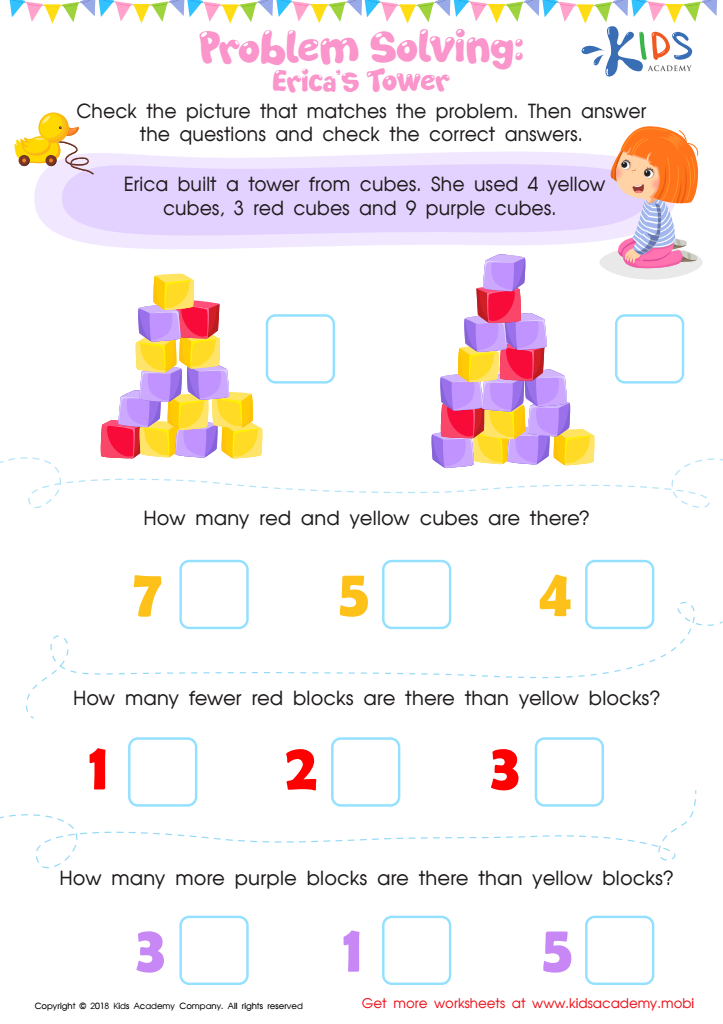
Problem Solving: Erica's Tower Worksheet
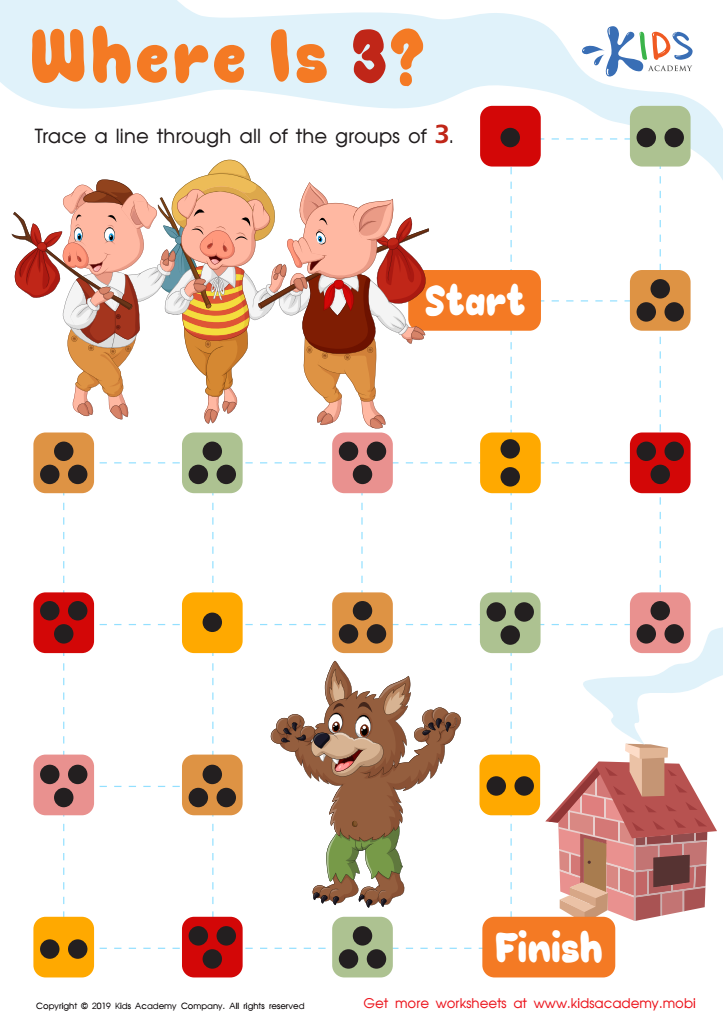
Where Is 3? Worksheet
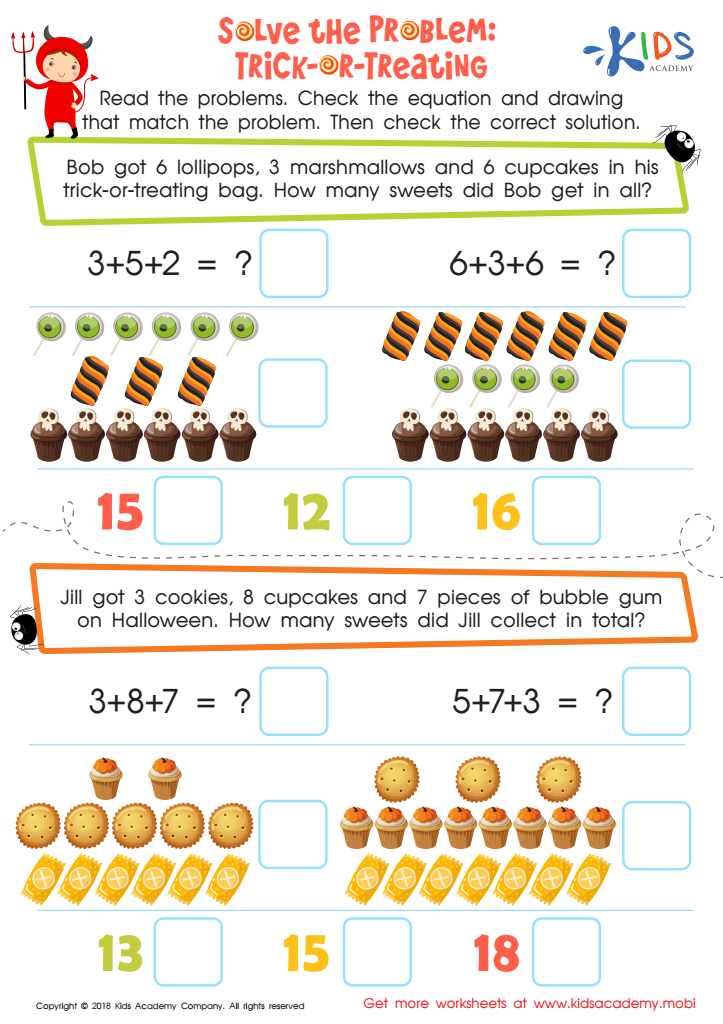
Solve the Problem: Trick–or–treating Worksheet








Parents and teachers should prioritize developing problem-solving skills for 3-year-olds as these foundational abilities are crucial for the child's cognitive and social development. At this tender age, children begin to interact more independently with their environment, facilitating early learning experiences that are core to their later academic and life success.
Introducing problem-solving activities helps enhance a young child's critical thinking, logical reasoning, and decision-making capacities. These activities can include simple puzzles, sorting games, or everyday challenges like figuring out how to fit a toy in a box. When children grapple with problems and experiment with solutions on their own, they become more confident, innovative, and resilient in the face of challenges.
Involving normal (age-appropriate) numerical concepts in these problems is equally significant. Early familiarization with numbers fosters mathematical thinking, a skill that underpins not only academic subjects but also practical, day-to-day tasks. By engaging in counting, recognizing numerical patterns, and understanding basic quantitative relationships, children lay down the formative structures of numeracy.
Moreover, collaboration between parents and teachers in nurturing these skills ensures consistency and support, regardless of the setting. This unified approach provides children with stable encouragement and ample opportunities to apply and hone their problem-solving skills in varied contexts, helping them become more adaptable and capable individuals as they grow.








