Basic geometry understanding Normal Math Worksheets for 3-Year-Olds
3 filtered results
-
From - To
Welcome to our Basic Geometry Understanding Normal Math Worksheets for 3-Year-Olds! Designed to foster early math skills, our worksheets introduce young learners to fundamental geometry concepts in a fun and engaging way. Through age-appropriate activities, children will explore shapes, understanding their properties and relationships. Each worksheet is crafted to enhance fine motor skills as kids trace, color, and identify shapes, promoting visual recognition and critical thinking. Ideal for parents and educators, these printable worksheets encourage a strong mathematical foundation while keeping the learning experience enjoyable. Empower your child’s education today with our interactive geometry resources!
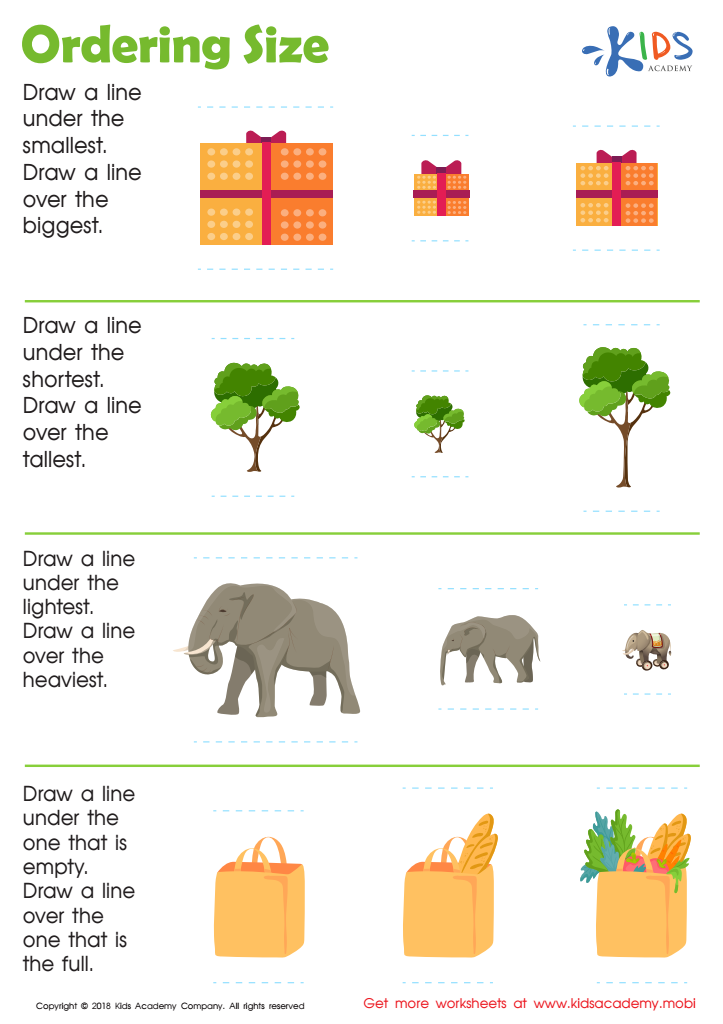
Ordering Size Worksheet
 Assign to My Students
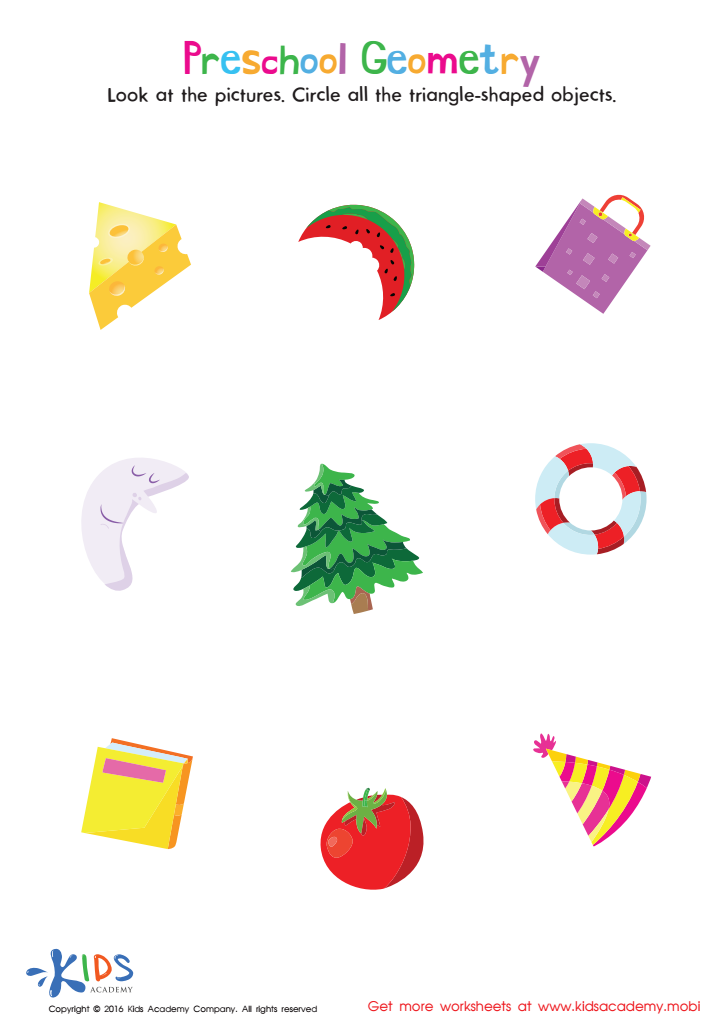
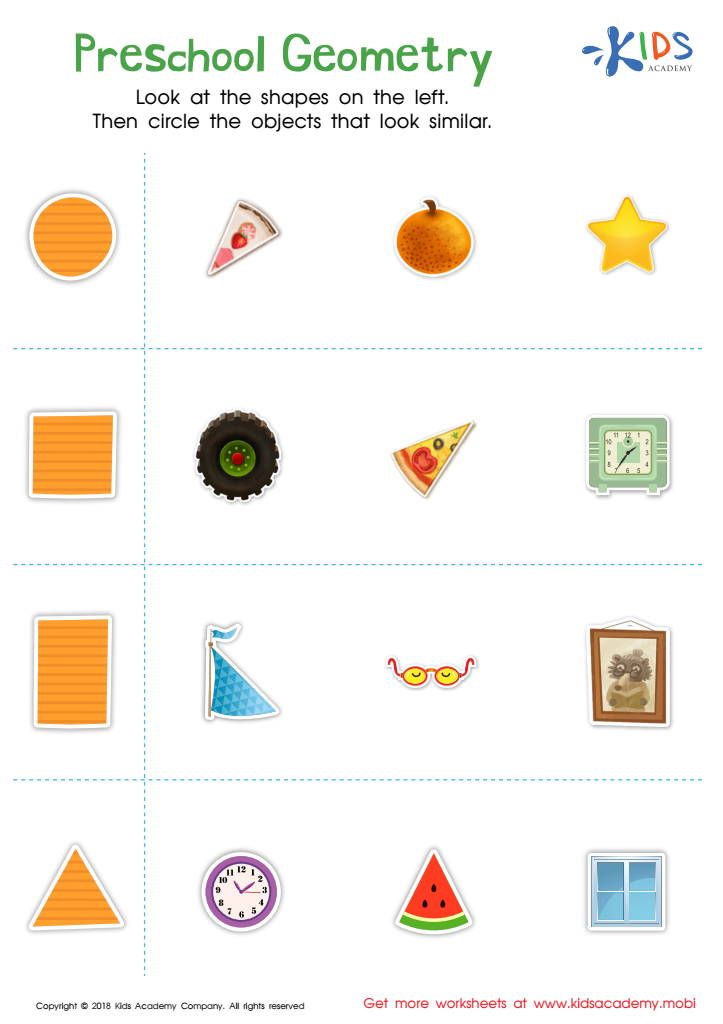
Preschool Geometry Worksheet






Understanding basic geometry is crucial for children's overall cognitive development, particularly for 3-year-olds, as it lays the foundation for critical thinking and problem-solving skills. At this age, children are naturally curious and eager to explore their environment. Introducing geometric concepts, such as shapes, sizes, and spatial relationships, helps them make sense of the world around them.
Learning basic geometry through fun activities—like shape sorting, building with blocks, and art projects—stimulates cognitive abilities, enhances motor skills, and fosters creativity. Recognizing shapes and understanding their properties can also improve language development, as children learn to describe objects and relationships.
Moreover, early exposure to geometry aligns with future math skills. It supports children in grasping more complex concepts later on, reducing math anxiety and promoting confidence in their abilities. Parents and teachers play a pivotal role in this learning process; by incorporating everyday geometric experiences, they inspire curiosity and enhance learning.
Ultimately, caring about basic geometry nurtures a child's intellectual growth and prepares them for academic success, making it essential for parents and teachers to recognize its importance in early childhood education. Engaging children with these concepts enriches their play and lays a critical foundation for lifelong learning.








