
Categorization skills Normal Math Worksheets for 3-Year-Olds
7 filtered results
Difficulty Level
Grade
Age
-
From - To
Subject
Activity
Standards
Develop your child's cognitive abilities with our "Categorization Skills Normal Math Worksheets for 3-Year-Olds." These expertly designed worksheets foster critical thinking by helping young learners identify, sort, and group objects based on various attributes like size, color, and shape. Each fun and engaging activity aims to build a strong foundation for future mathematical understanding. Perfect for parents and educators, our printable resources adapt to your child's learning pace, making early math both enjoyable and effective. Boost your three-year-old's categorization skills today and watch their confidence grow with every worksheet!
Favorites
With answer key
Interactive
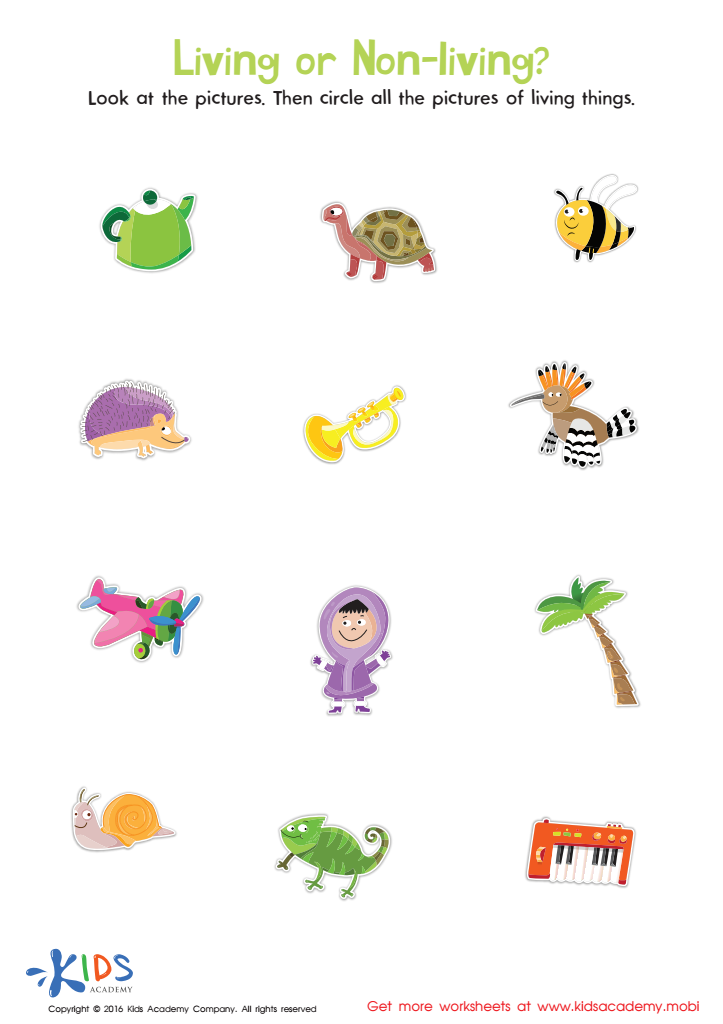
Identifying Living and Non–living Things Sorting Worksheet
Help your child sort living and non-living objects with this cute worksheet. Kids will use problem-solving skills to recognize and categorize the images they see. Matching worksheets available to help their skills soar.
 Assign to My Students
Identifying Living and Non–living Things Sorting Worksheet
Worksheet
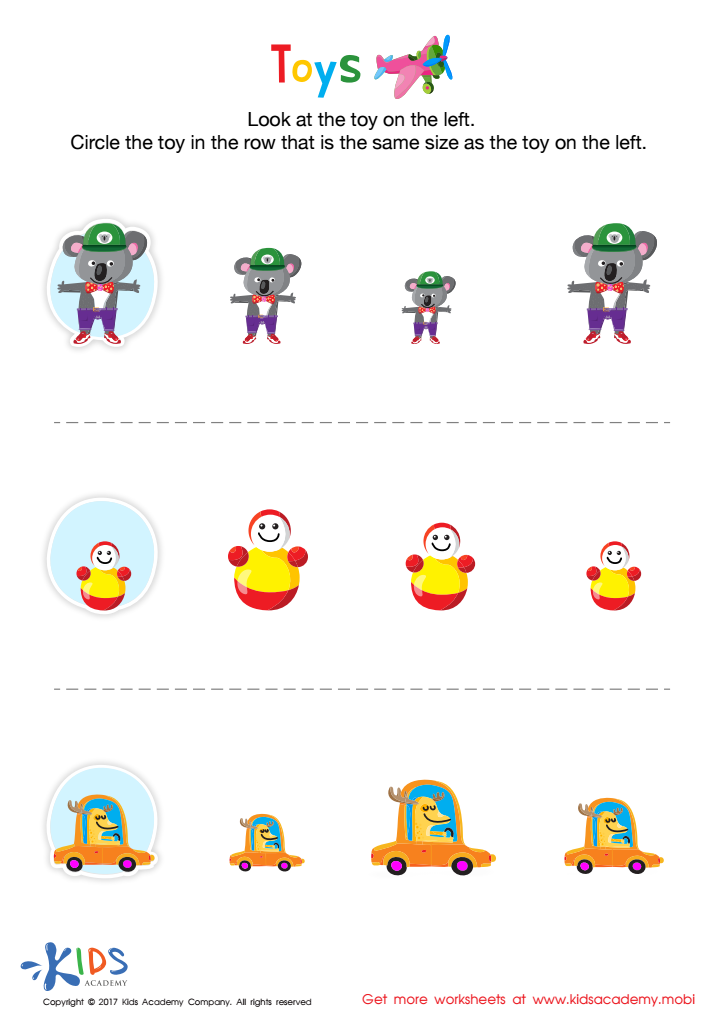
Matching: Classifying Toys by Size Worksheet
Sorting worksheets are an effective way to help your preschooler learn life and educational skills. Spatial awareness, direction recognition, and reading directions all help build a strong foundation for future educational success.
Matching: Classifying Toys by Size Worksheet
Worksheet
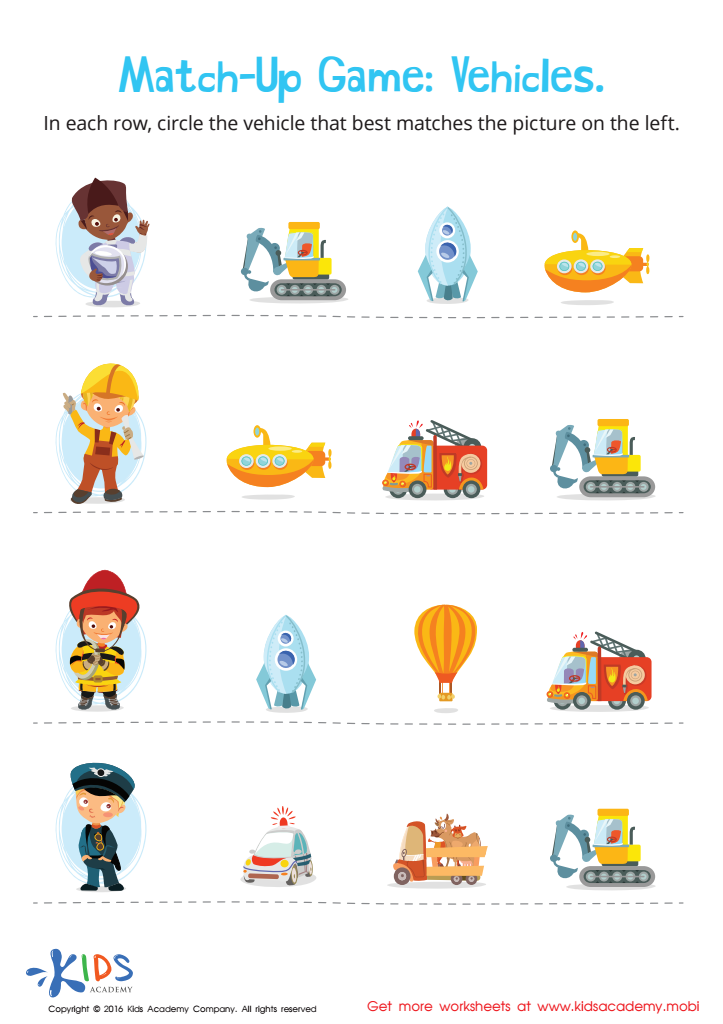
Vehicles Worksheet
Beep, beep! Your little driver will love this matching game! Matching vehicles with their drivers can help your child discover new jobs and practice problem-solving skills. It can even start a conversation about different careers. Don’t be surprised if they start playing with more cars and trucks! Use this and other sorting activities to practice with colors, shapes and patterns.
Vehicles Worksheet
Worksheet
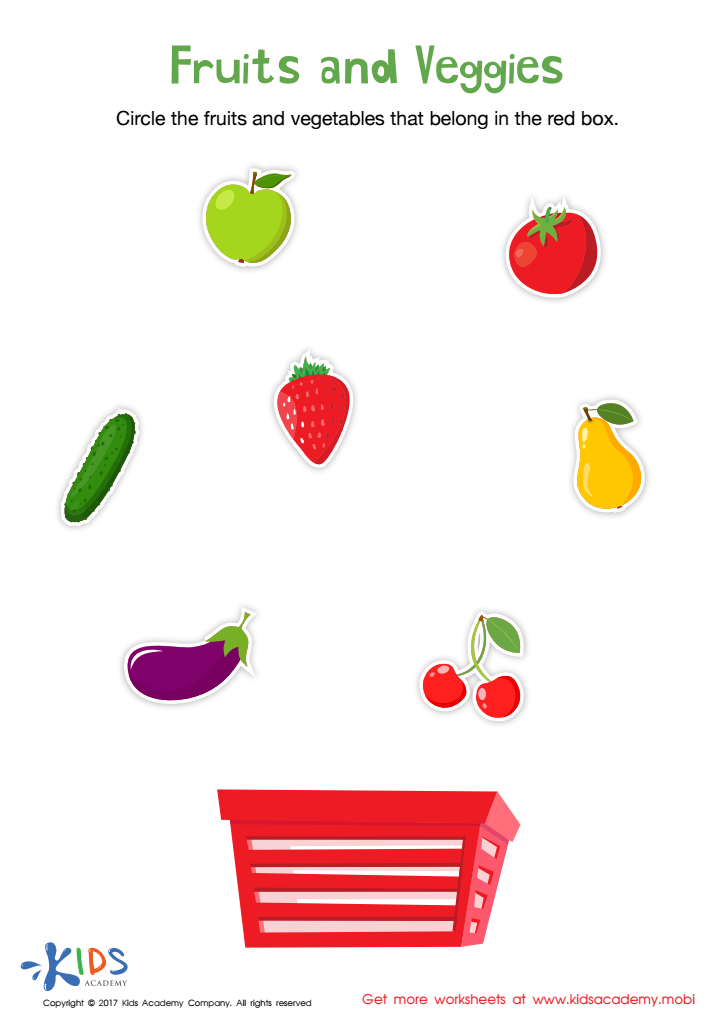
Classifying Fruits and Veggies by Color Sorting Worksheet
Worksheet
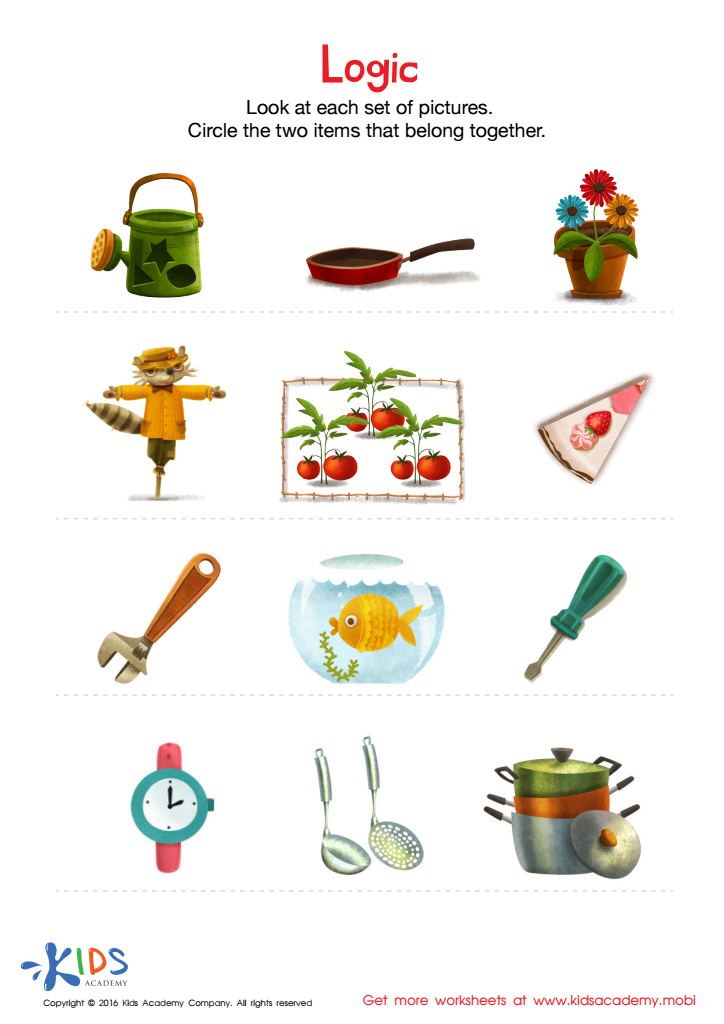
Logic Game Sorting Worksheet
Start your child's logic and reasoning development early with this fun matching worksheet! Through cute images and simple conversations, your little one can learn problem-solving, categorization, and matching skills. Plus, it's a great way for children to explore how items are used in real life. Try it and watch them boost skills with ease and fun!
Logic Game Sorting Worksheet
Worksheet
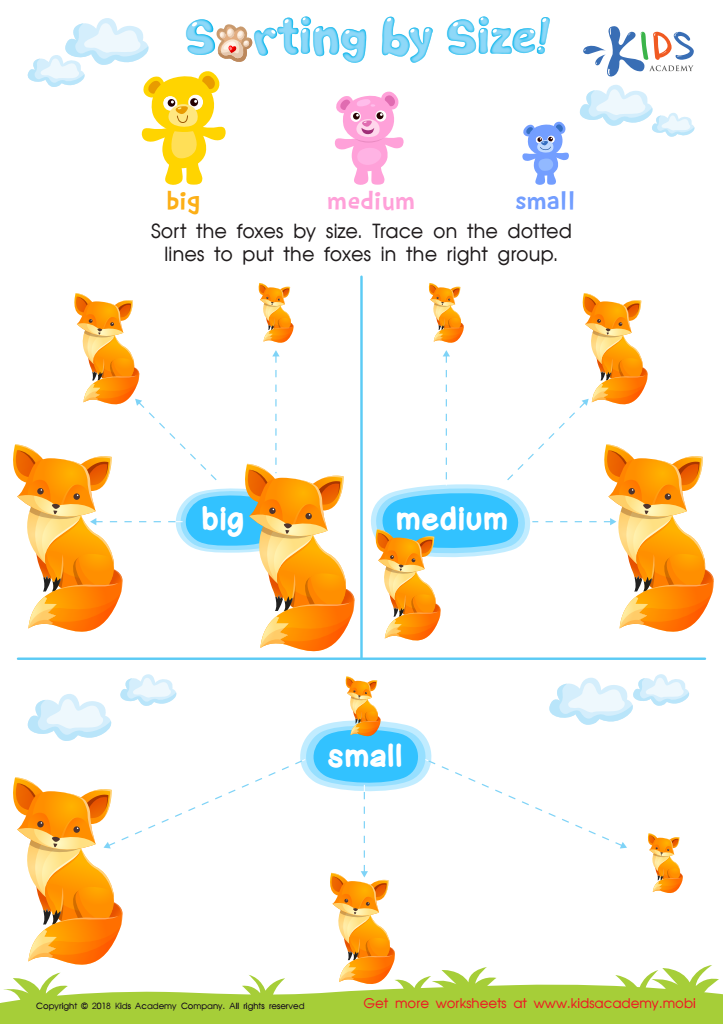
Sorting by Size Worksheet
This bright printout lets your students sort the foxes by size. Ask them to identify objects, then trace the dotted lines to put the foxes in the right group. Clear and easy instructions make this a fun and colorful exercise for your young ones.
Sorting by Size Worksheet
Worksheet
Join Kids Academy for Free
Who is primarily going to use this learning content?








Categorization skills involve the ability to organize objects, ideas, or information into groups based on shared characteristics, and developing these skills is crucial for 3-year-olds. For parents and teachers, fostering categorization skills lays the foundational groundwork for future cognitive development, including more advanced math and literacy skills.
When young children categorize objects, they start to notice differences and similarities, which are fundamental concepts in mathematics. By sorting toys by color, shape, or size, children begin to understand basic principles such as grouping, patterns, and sequences. This understanding is a precursor to more complex math skills like addition, subtraction, and even multiplication.
Moreover, categorization helps children improve their language skills by broadening their vocabulary as they learn to label and describe different groups. This process also enhances their ability to follow instructions and solve problems, as they learn to apply the concept of categorization to daily activities.
In essence, the development of categorization skills supports overall intellectual growth, which translates to better academic performance in the long term. Encouraging these skills in a fun and engaging manner helps build a solid foundation for a child's future learning in both math and other critical educational areas. Thus, parents and teachers play a pivotal role in nurturing these skills from an early age.








