Critical Thinking Normal Geometry Worksheets for Ages 4-5
5 filtered results
-
From - To
Explore our engaging "Critical Thinking Normal Geometry Worksheets for Ages 4-5," designed to nurture young learners' cognitive skills while introducing the basics of geometry. These thoughtfully crafted worksheets encourage children to recognize shapes, understand spatial relationships, and solve simple problems through fun activities. Each worksheet promotes critical thinking through interactive tasks, helping kids develop essential reasoning skills and boosting their confidence in math. Perfect for early education settings or at-home learning, these resources make geometry enjoyable and accessible for preschoolers. Unlock the potential of your child's mind and foster a love for learning with our stimulating geometry worksheets!
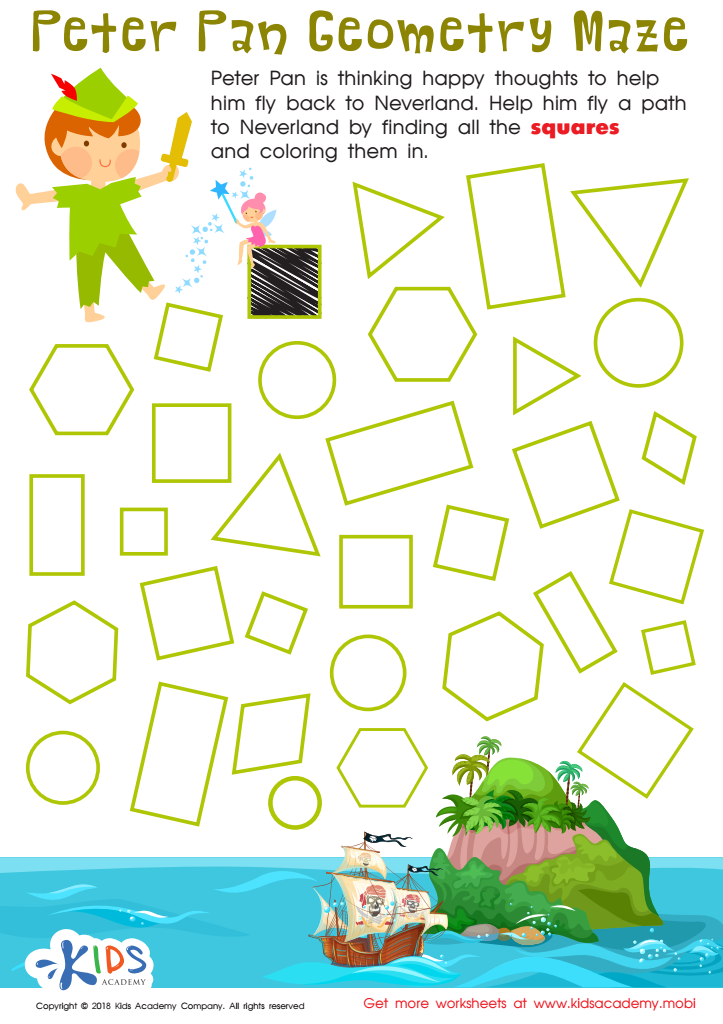
Peter Pan Worksheet
 Assign to My Students











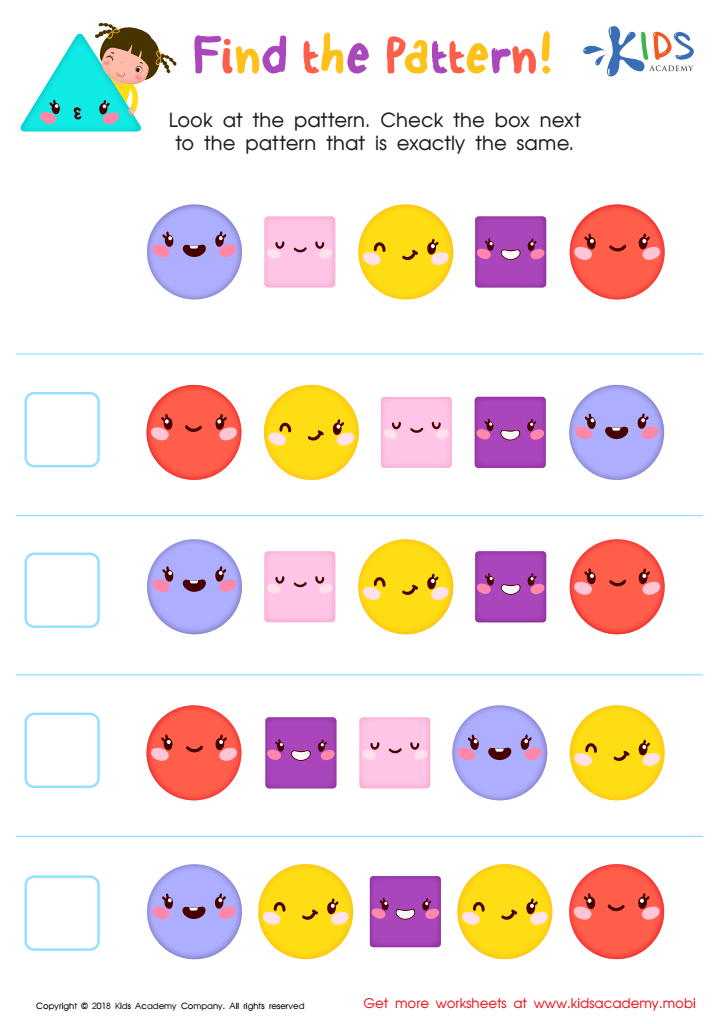
Find the Pattern Worksheet
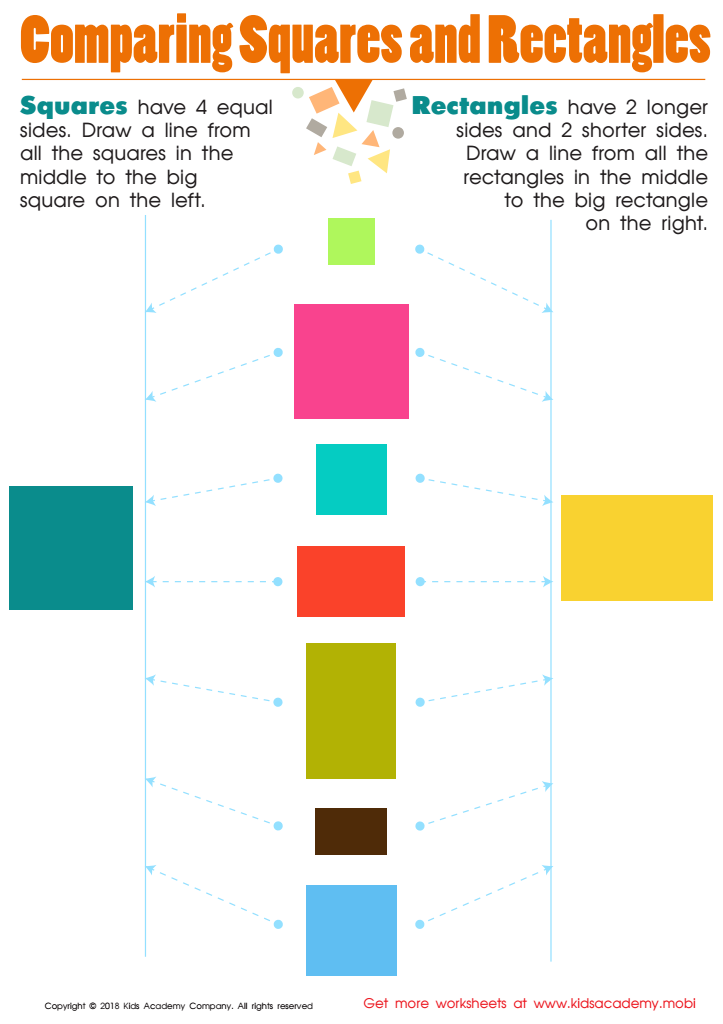
Comparing Squares Rectangles Worksheet
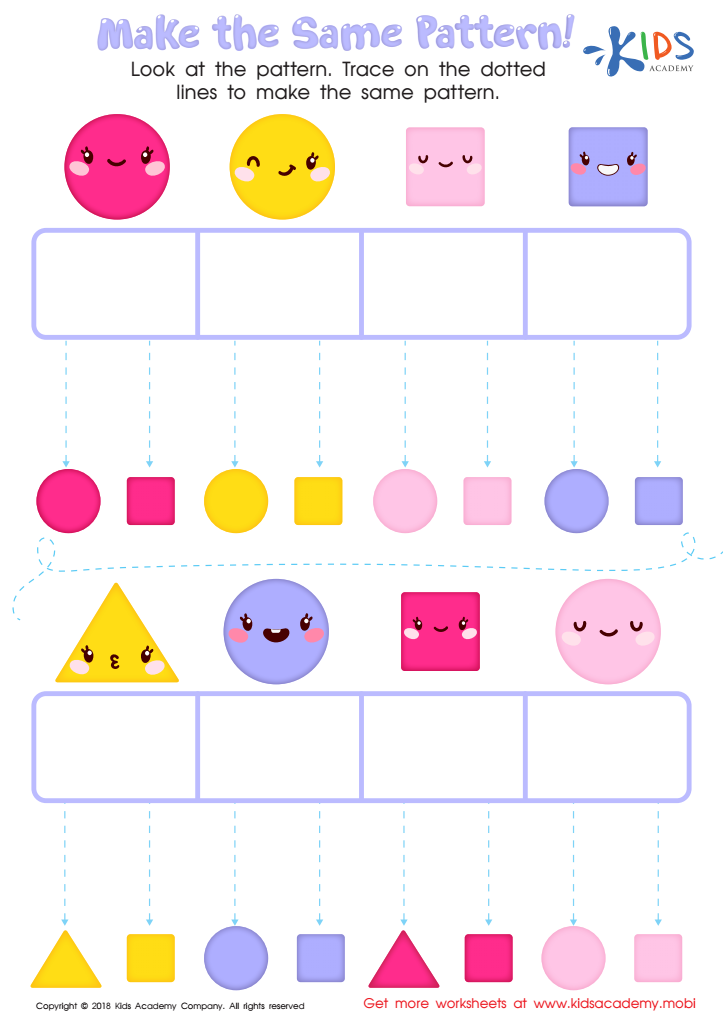
Make the Same Pattern Worksheet
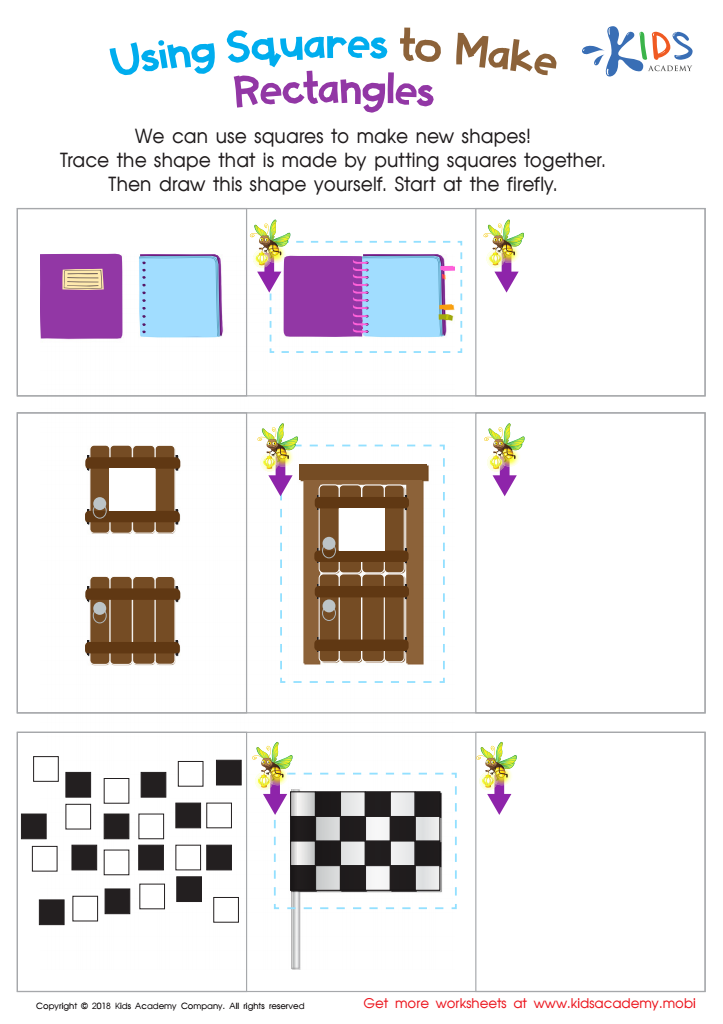
Using Squares to Make Rectangles Worksheet








Parents and teachers should care about introducing Critical Thinking Normal Geometry to children aged 4-5 because early experiences in mathematics lay the foundation for later learning. At this age, children are naturally curious and have the cognitive ability to explore and understand basic geometric concepts. Engaging them in activities that promote critical thinking encourages not just rote learning, but deeper comprehension of shapes, spatial relationships, and problem-solving strategies.
Integrating critical thinking through geometry reinforces important skills such as classification, comparison, and analytical reasoning. For example, when children identify shapes in their environment or create their own, they practice observation and reasoning skills that enhance cognitive development. Furthermore, learning how to reason with geometry connects math to real-life situations, making it relevant and stimulating for young learners.
In a world increasingly driven by technology and innovation, possessing strong critical thinking and analytical skills is essential. Early exposure helps cultivate these abilities, preparing children for future academic challenges and lifelong learning. Ultimately, building a solid foundation in critical thinking and geometry promotes intellectual curiosity and a love for learning that can influence all areas of a child’s education.








