
Critical Thinking Normal Math Worksheets for Ages 4-5
11 filtered results
Difficulty Level
Grade
Age
-
From - To
Subject
Activity
Standards
Introducing our "Critical Thinking Normal Math Worksheets for Ages 4-5," designed to stimulate young minds and develop foundational skills in mathematics. These engaging worksheets from Kids Academy are crafted to enhance critical thinking, problem-solving, and analytical abilities in preschoolers. Each activity combines fun, vibrant illustrations with thought-provoking questions to make learning math a joyful and enriching experience. By integrating real-life scenarios and interactive exercises, our worksheets encourage children to think outside the box and build confidence in their mathematical abilities, laying a strong foundation for future academic success. Perfect for parents and teachers seeking to inspire young learners!
Favorites
With answer key
Interactive
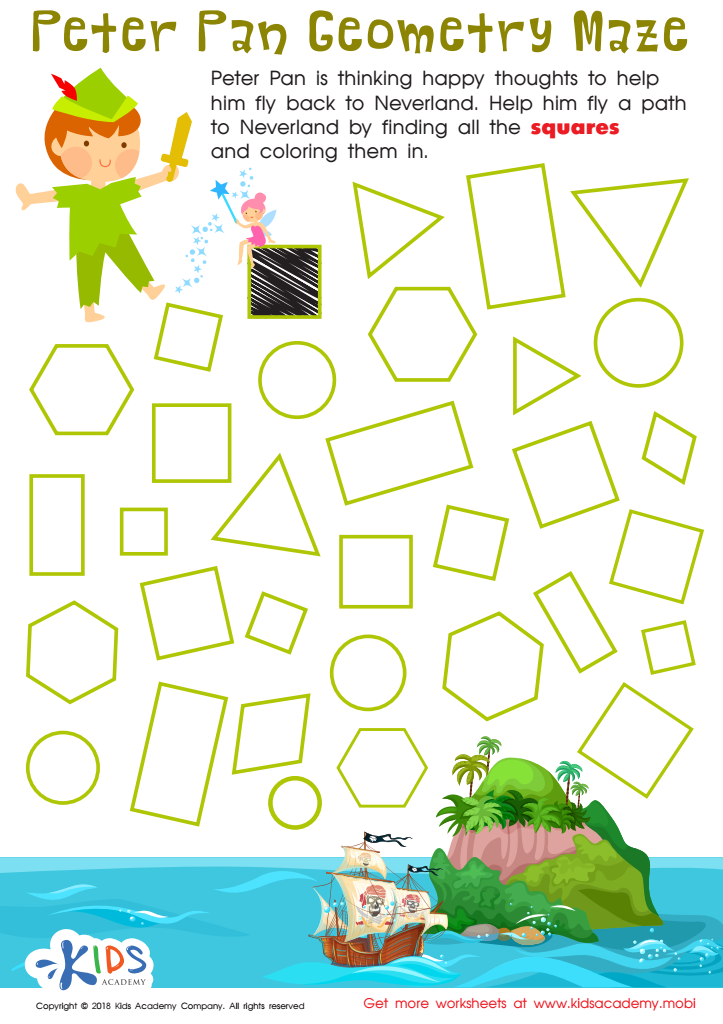
Peter Pan Worksheet
Kindergarteners can join Peter Pan on an adventure to Neverland! They can help him by coloring squares to create a path, strengthening their shape identification skills in a fun maze. Let the journey begin!
 Assign to My Students
Peter Pan Worksheet
Worksheet
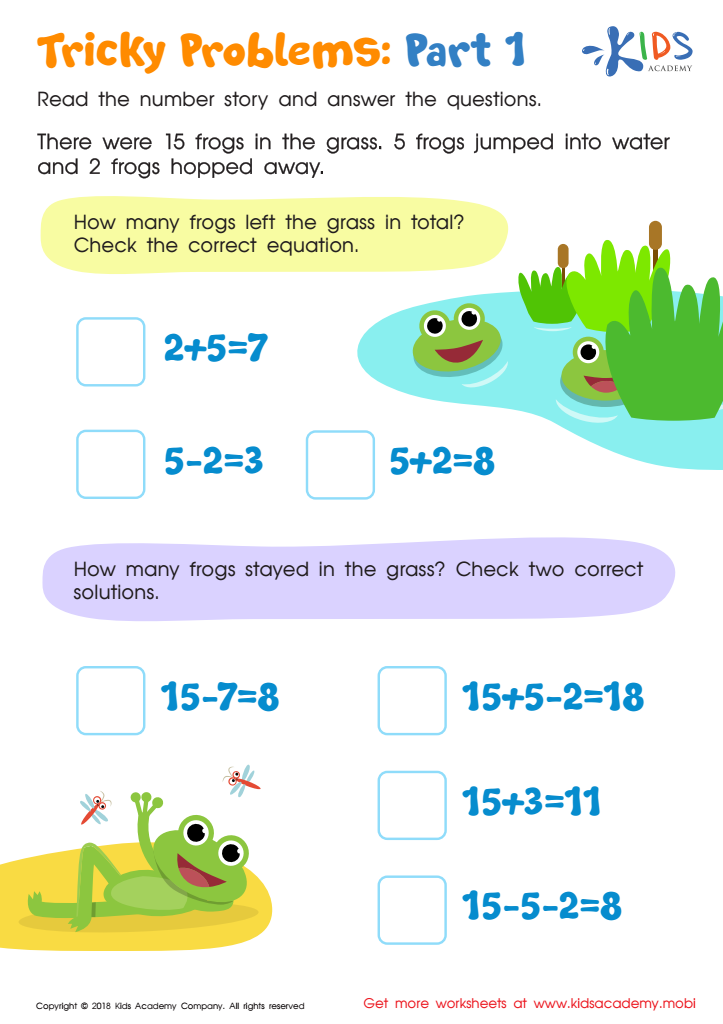
Tricky Problems Worksheet: Part 1
Visualizing word problems can help students solve them. This fun PDF worksheet encourages students to create mental images using math facts, then check boxes to match the equations for basic addition problems. It's a great way to build confidence in solving math.
Tricky Problems Worksheet: Part 1
Worksheet
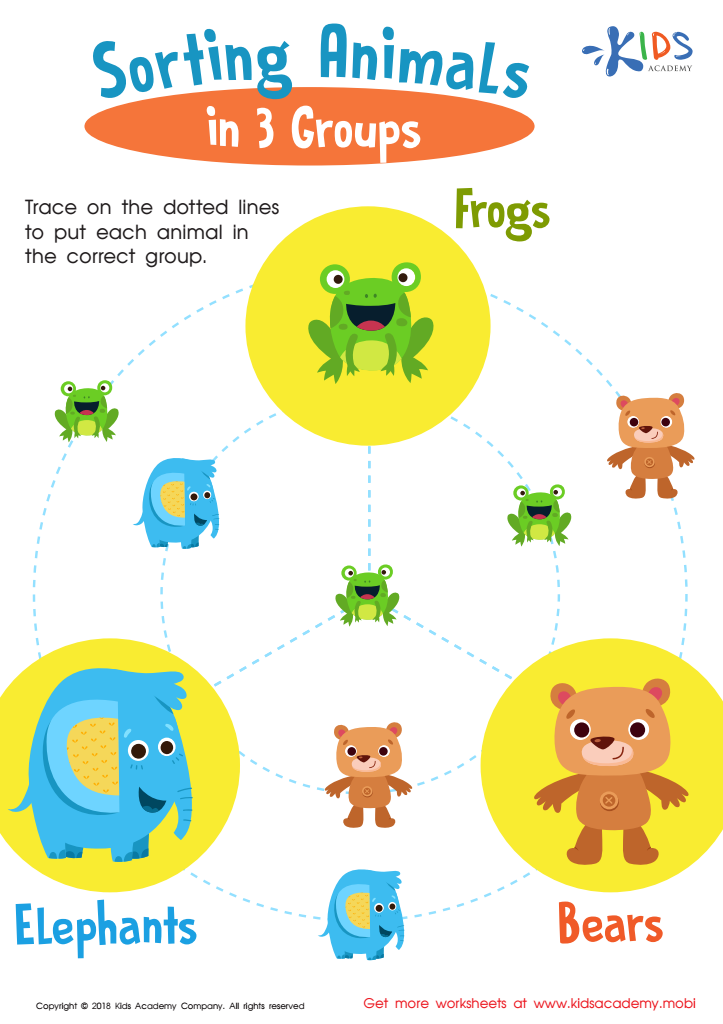
Sorting Animals in 3 Groups Worksheet
Let your kids practice and build skills for future Venn Diagrams with this PDF worksheet. They'll trace lines to match and group animals, and learn the differences and similarities of animals by categorizing with pictures and words. Plus, it's a great way to develop fine motor skills.
Sorting Animals in 3 Groups Worksheet
Worksheet
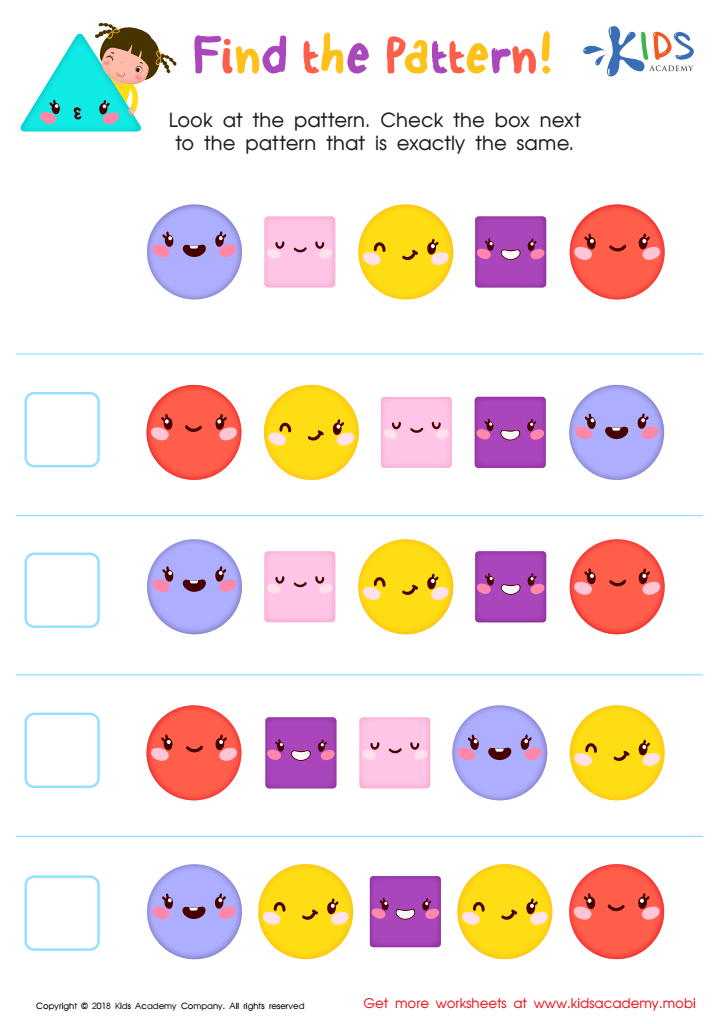
Find the Pattern Worksheet
This colorful pattern worksheet is perfect for testing your kids' pattern recognition. The bright colors will keep them engaged, while they check the box next to the pattern that is the same. Ask your kids to identify the colors used and see how well they can spot similarities!
Find the Pattern Worksheet
Worksheet
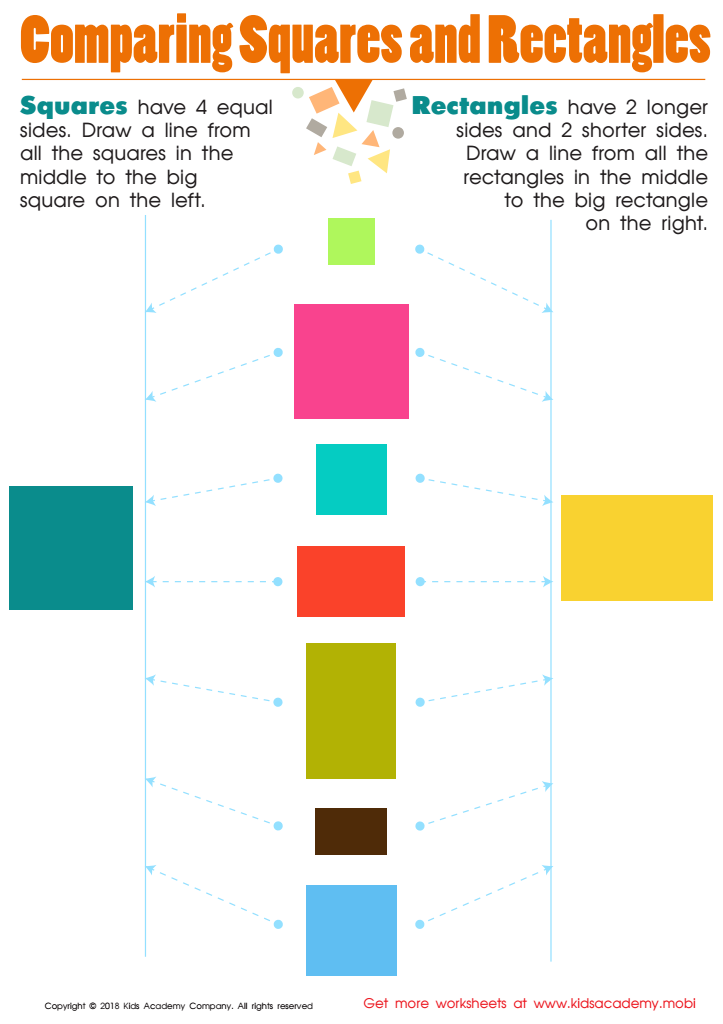
Comparing Squares Rectangles Worksheet
Help your little learner distinguish rectangles from squares with this fun geometry worksheet from Kids Academy! Read the definitions at the top, use the shapes on either side as a guide, then trace over the dotted line to match the rectangles and squares!
Comparing Squares Rectangles Worksheet
Worksheet
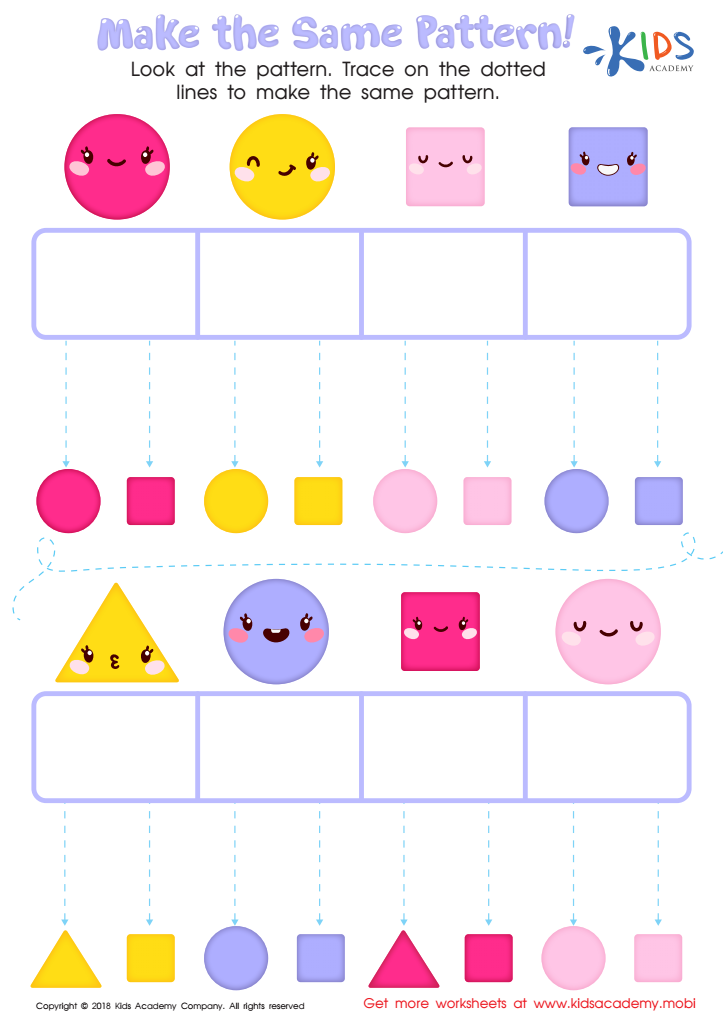
Make the Same Pattern Worksheet
Help your child look at the patterns in the tracing sheet and guide them to trace the dotted lines to match the shapes. This exercise tests their ability to copy pictures correctly, so emphasize the importance of paying attention to the instructions and details.
Make the Same Pattern Worksheet
Worksheet
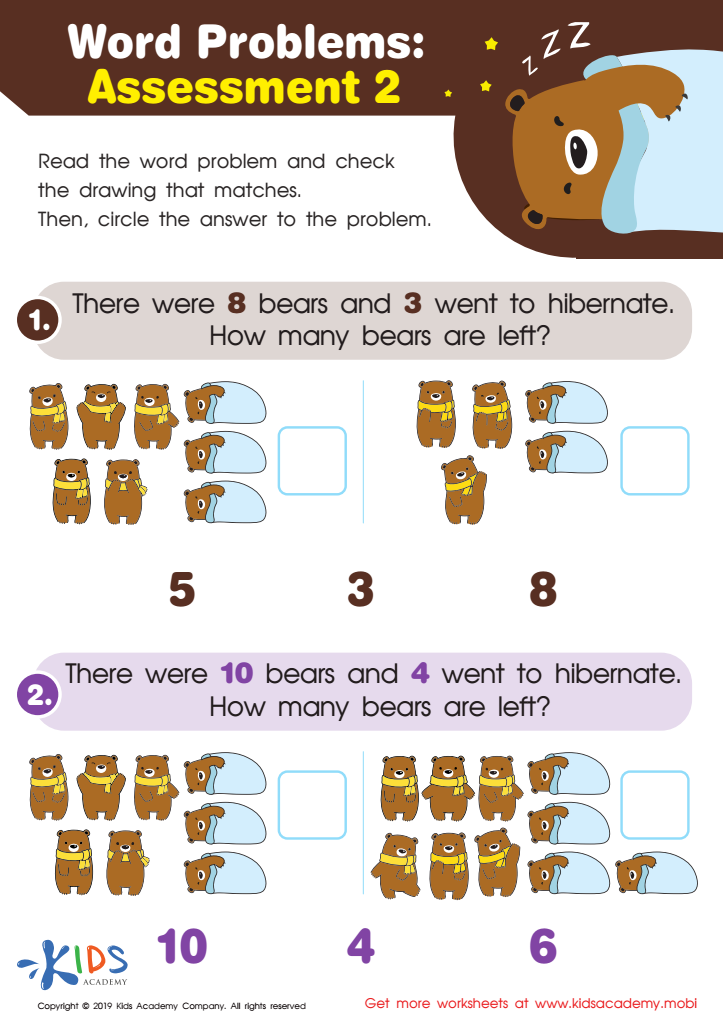
Word Problems: Assessment 2 Worksheet
This bear-themed worksheet is a great way to test subtraction skills. Have your child read the word problems and match the correct drawing with the answer. It's a fun way to quiz them without them even knowing. Enjoy counting cute snoozing bears! (80 words)
Word Problems: Assessment 2 Worksheet
Worksheet
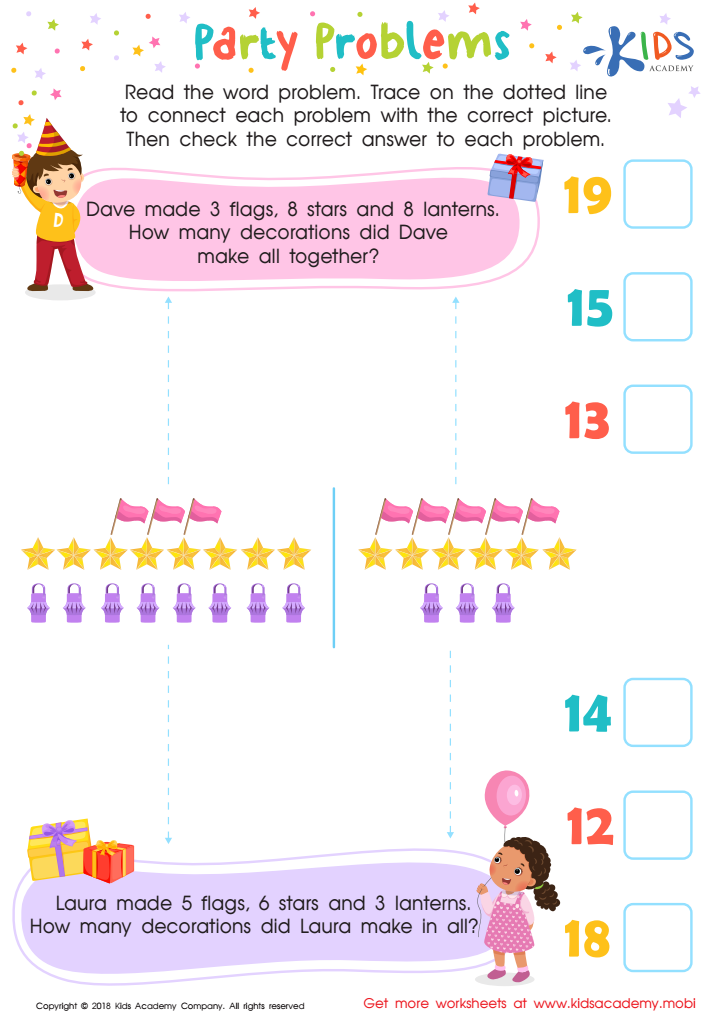
Party Problems Worksheet
Problems at parties? No problem! With this engaging PDF worksheet, your student can connect word problems to pictures, check correct answers, and find the sum of 3 addend problems. They'll be a party-saving hero in no time!
Party Problems Worksheet
Worksheet
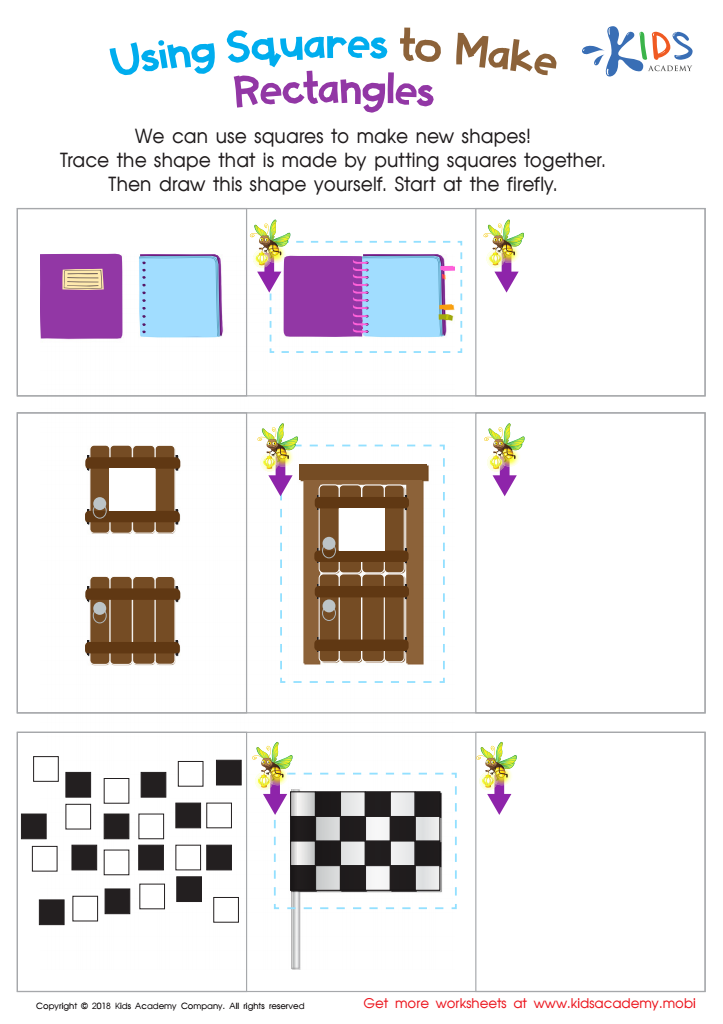
Using Squares to Make Rectangles Worksheet
Creating shapes from other shapes (composing shapes) develops spatial skills, an essential geometry standard for young students. This worksheet introduces familiar square objects, then demonstrates how they create rectangles. Students practice tracing and then drawing the shape independently. Download this free math resource for the classroom today! (80 words)
Using Squares to Make Rectangles Worksheet
Worksheet
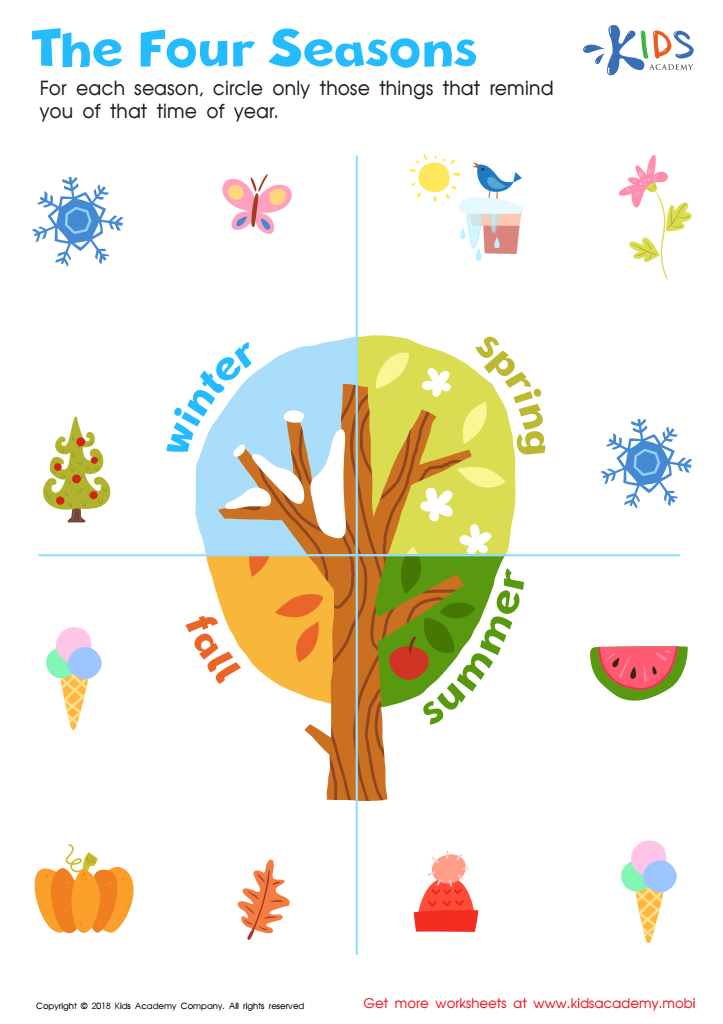
The Four Seasons Worksheet
Tell your child to circle things that remind them of each season. The tree has four squares, one for each season. Some things in each square match the season, others don't. Ask if any are out of place. Help them circle only items that remind them of that season.
The Four Seasons Worksheet
Worksheet
Join Kids Academy for Free
Who is primarily going to use this learning content?







Parents and teachers should care about introducing critical thinking in early math education for ages 4-5 because it lays the groundwork for lifelong cognitive and problem-solving skills. At this tender age, children's brains are extraordinarily plastic and open to learning new concepts. By embedding critical thinking in normal math exercises, youngsters learn how to reason, assess situations, and come up with creative solutions rather than just memorizing procedures or facts.
Incorporating critical thinking helps young learners understand the 'why' behind math concepts. For example, when children grasp why two sets of items combined make a larger set, rather than just memorizing that 1 + 1 = 2, they start learning about fundamentals like addition and broader principles such as comparison and categorization. These skills are transferrable and will aid them in other subjects and in various life situations.
Moreover, engaging in critical thinking from an early age fosters curiosity and enthusiasm for learning. It empowers children to ask questions, seek answers, and not be afraid of making mistakes. This, in turn, promotes a positive attitude toward learning and builds their confidence, preparing them for more complex mathematical reasoning and analytical tasks as they grow older. Encouraging this mindset and skillset early on has profound implications for their academic success and their ability to navigate everyday challenges.








