Understanding fractions Normal Worksheets for Ages 4-6
4 filtered results
-
From - To
Understanding fractions can be made simple and fun with the worksheets on our website, specially designed for children aged 4-6. These engaging printables help young learners grasp the basic concept of fractions through interactive exercises and colorful illustrations. Kids will practice identifying halves, thirds, and quarters in a playful manner, enhancing their foundational math skills. Perfect for both classroom and at-home learning, these worksheets are an excellent resource for teachers and parents alike. Empower your child’s mathematical journey today by making fractions a breeze with our easy-to-understand and enjoyable activities!
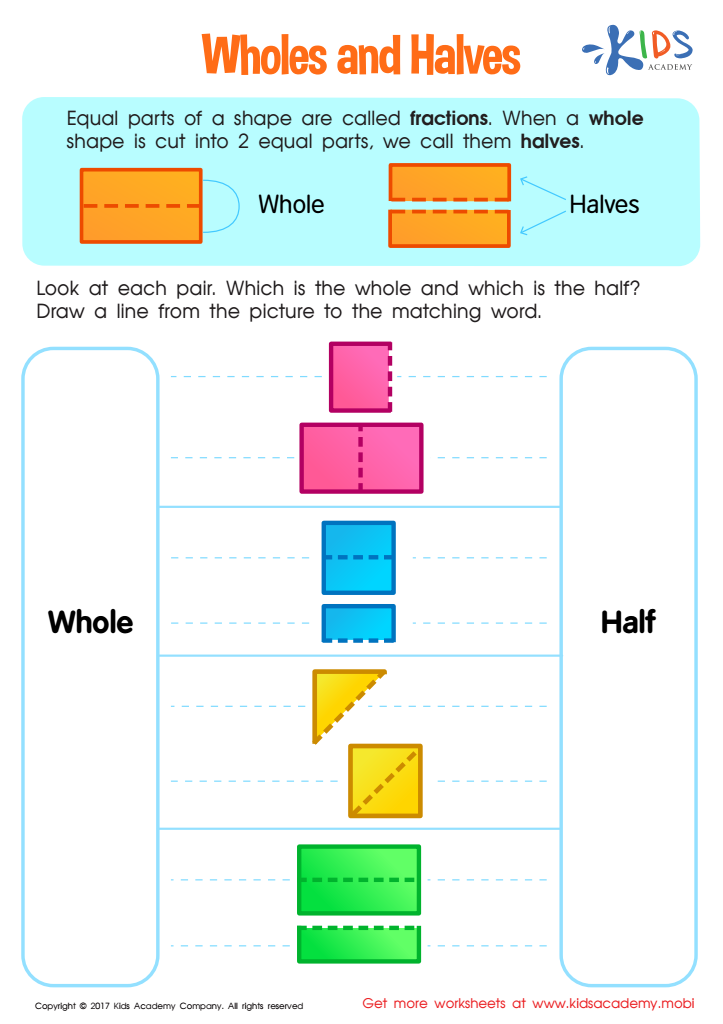
Wholes and Halves Worksheet
 Assign to My Students
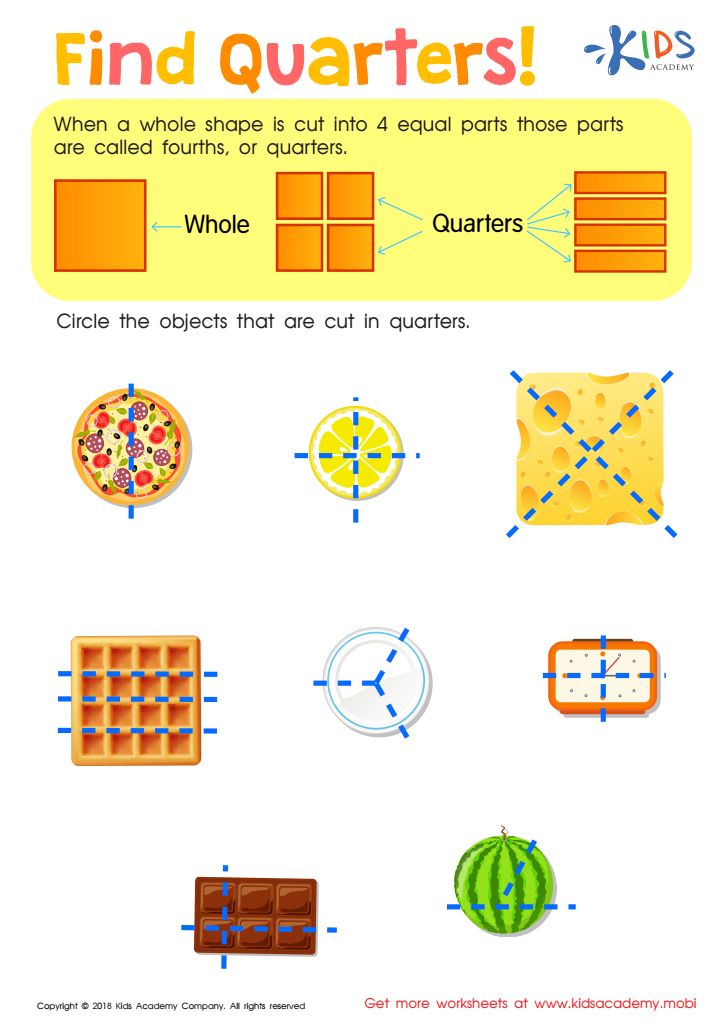
Find Quarters Worksheet
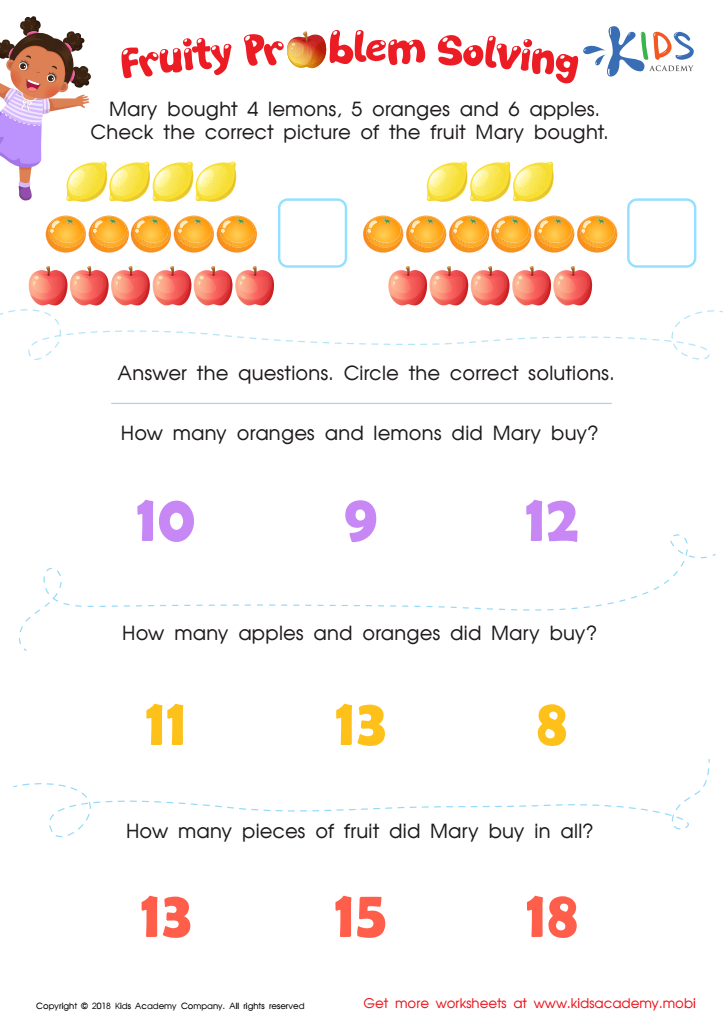
Fruity Problem Solving Worksheet
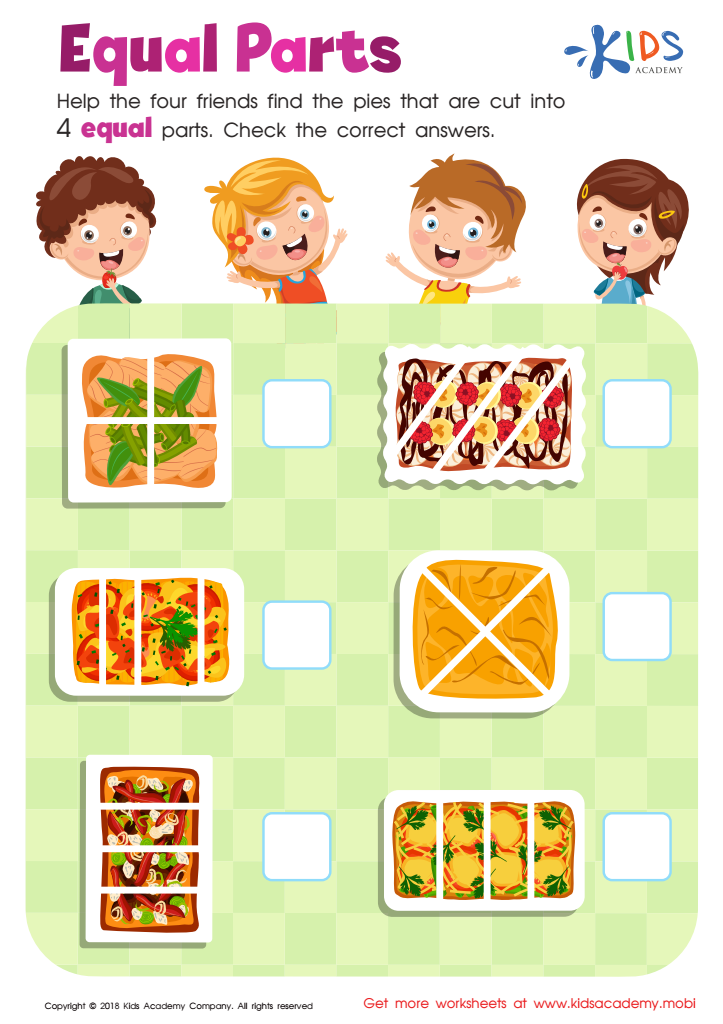
Equal Parts: Food Worksheet




%20(1).jpg)



Understanding fractions at an early age, even as young as 4-6, lays a foundational stone for a child's future success in mathematics and everyday life. For parents and teachers, fostering this comprehension is crucial. Young children are naturally curious and eager to explore new ideas, making early childhood the perfect window to introduce mathematical concepts in a simple and engaging manner.
Firstly, fractions are everywhere – from dividing pizza slices to measuring ingredients while baking. Introducing fractions early helps children relate mathematical concepts to their immediate environment, making learning relevant and fun. This early exposure demystifies what is often seen as a complex topic, easing future anxiety around math.
Secondly, developing a robust understanding of fractions improves problem-solving and critical thinking skills. When children break down objects or quantities into smaller parts, they learn to analyze and work through multi-step problems, skills that are not only essential in math but also in science, economics, and daily decision-making.
Lastly, building confidence in basic fractions sets the stage for more advanced mathematical ideas such as ratios, percentages, and algebra. As children transition from concrete to abstract thinking, a thorough grasp of foundational concepts like fractions ensures they are well-prepared for the increasing complexity of school curricula.
By investing time in teaching fractions early, parents and teachers provide children with a valuable toolkit for academic success and practical life skills.








