
Hand-eye Coordination Normal Addition & Subtraction Worksheets for Ages 4-6
3 filtered results
Difficulty Level
Grade
Age
-
From - To
Subject
Activity
Standards
Enhance your child's math skills and fine motor development with our Hand-eye Coordination Normal Addition & Subtraction Worksheets for ages 4-6. These engaging sheets feature fun and interactive exercises designed to reinforce basic addition and subtraction while simultaneously improving hand-eye coordination. Perfect for young learners, our worksheets use vibrant illustrations and clear instructions to create a stimulating environment that encourages practice and learning. Ideal for classroom use or at-home practice, they help kids become more confident in their math abilities and develop essential skills that support overall academic growth. Try them today from Kids Academy!
Favorites
With answer key
Interactive
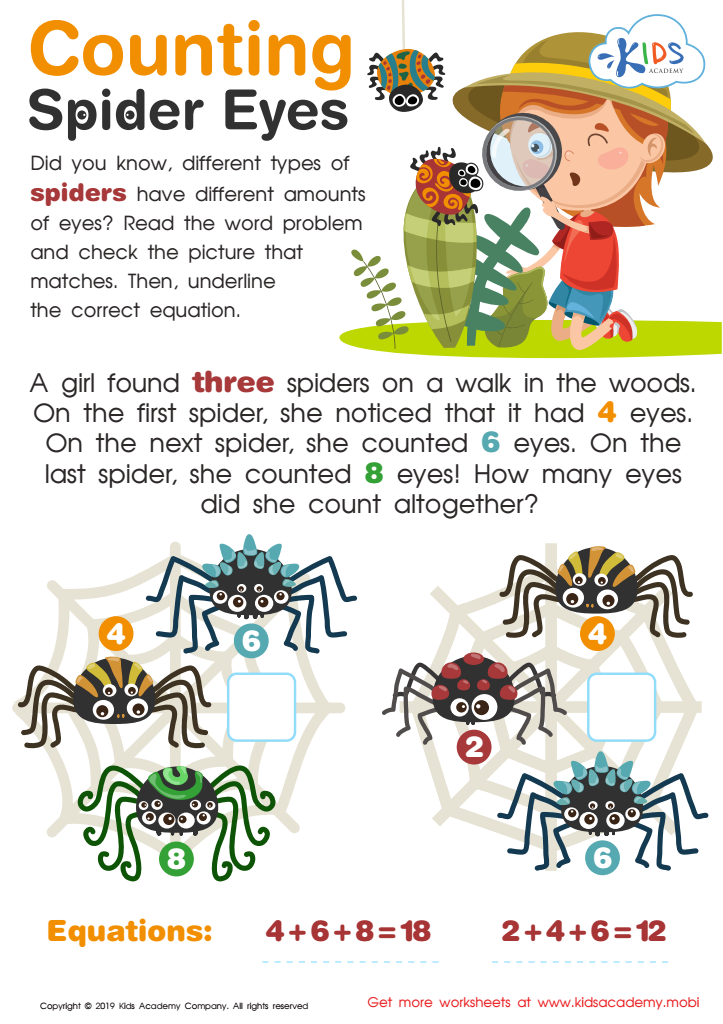
Counting Spider Eyes Worksheet
Did you know different spiders have different eye numbers? Kids will love learning this fact and solving the spider word problems on this free worksheet! Word problems promote a deeper understanding of the concept, plus they get to add up the spiders’ eyes while solving addition problems with more than one addend. Fun and math all in one!
 Assign to My Students
Counting Spider Eyes Worksheet
Worksheet
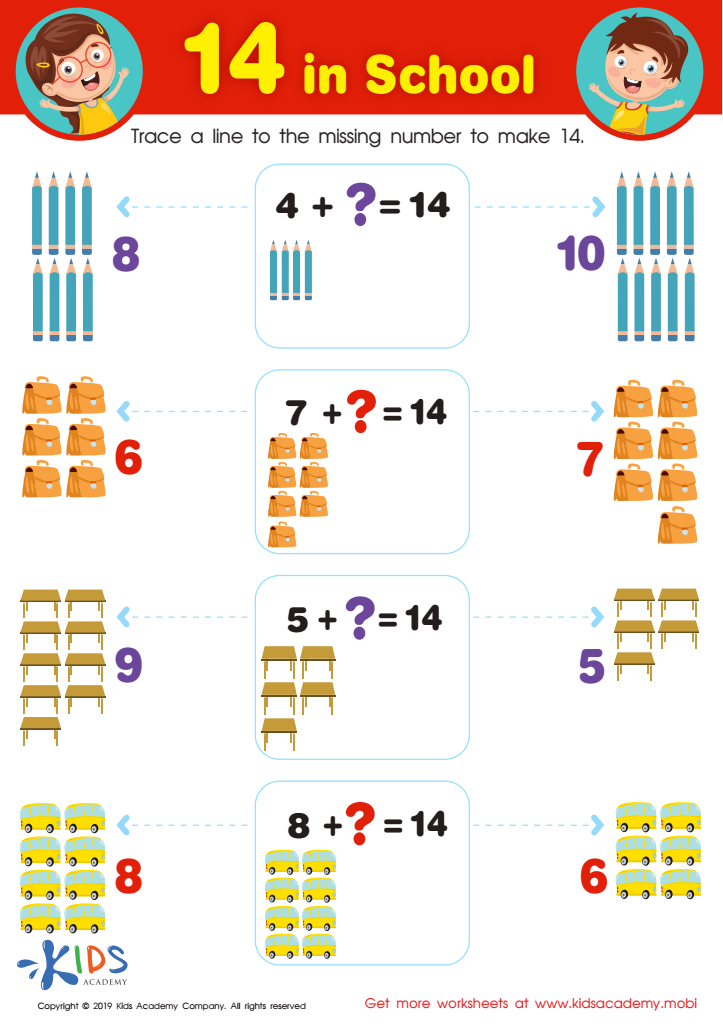
14 in School Worksheet
Remind your kids that adding different sets of numbers can give the same total (e.g. 2+3=5, 4+1=5). Ask them for more examples. Afterwards, work through the exercise. Help them count the objects and trace a line to the missing number that makes the total 14.
14 in School Worksheet
Worksheet
Join Kids Academy for Free
Who is primarily going to use this learning content?








Hand-eye coordination is vital for young children, especially when learning foundational skills like addition and subtraction between the ages of 4-6. This crucial developmental phase lays the groundwork for future academic success and physical activities. By fostering hand-eye coordination through interactive math exercises, parents and teachers ensure that children develop the fine motor skills needed for writing, drawing, and daily tasks.
Building hand-eye coordination involves integrating visual inputs with motor responses, essential for tasks such as placing counters, drawing numerical representations, or using educational tools like number lines or math manipulatives. These activities not only help children grasp basic addition and subtraction conceptually but also boost their ability to execute precise movements, increasing confidence and readiness for more complex tasks ahead.
Furthermore, engaging children in games and activities that require the use of hands and eyes simultaneously, such as sorting objects or playing number-based puzzles, enhances attentiveness and problem-solving skills. Successfully integrating these elements makes math more enjoyable and accessible, cultivating a positive attitude towards learning.
Ultimately, reinforcing hand-eye coordination in early math education provides a balanced approach that marries cognitive growth with physical development, leading to well-rounded, confident, and capable learners. For parents and teachers, this deliberate focus supports long-term academic achievement and fine motor proficiency that will benefit children throughout their educational journey and beyond.








