
Following instructions Normal Geometry Worksheets for Ages 4-6
3 filtered results
Difficulty Level
Grade
Age
-
From - To
Subject
Activity
Standards
Our "Following Instructions Normal Geometry Worksheets for Ages 4-6" are meticulously designed to blend fun and education. These engaging printable worksheets help young learners grasp basic geometric concepts while enhancing their ability to follow instructions. Through vibrant images and simple tasks, children will recognize shapes, patterns, and spatial relationships with ease. Perfect for early classrooms or at-home learning, these worksheets aim to strengthen foundational math skills in a playful, interactive manner. Cultivate a love for geometry and bolster critical thinking and problem-solving abilities in your young scholars with these enriching activities. Download today to jumpstart your child’s mathematical journey!
Favorites
With answer key
Interactive
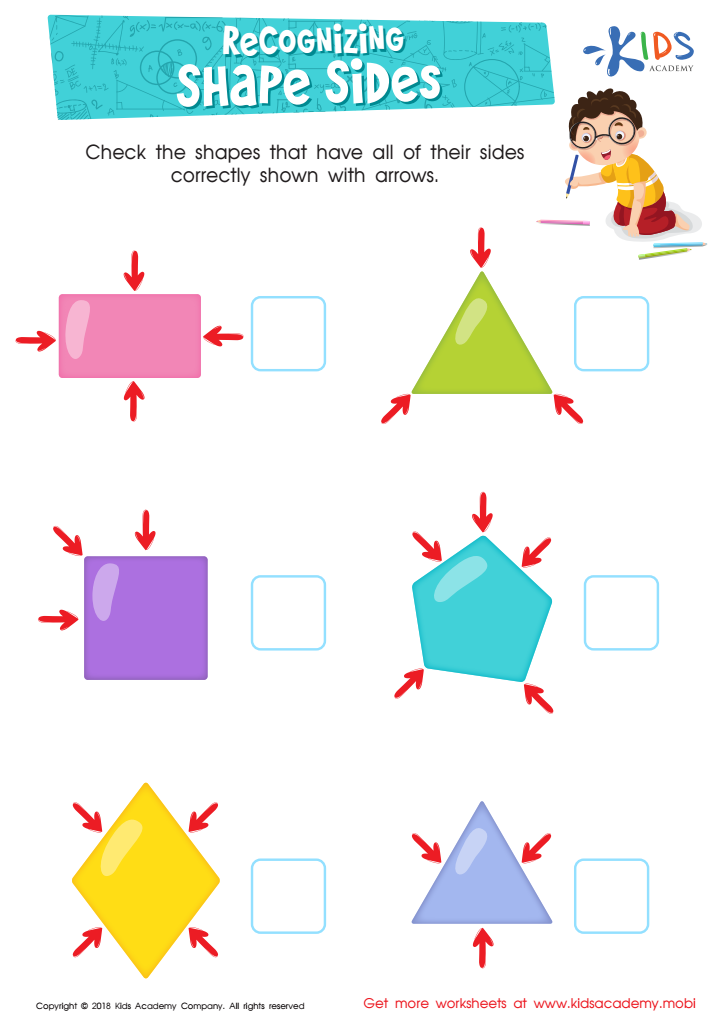
Recognizing Shape Sides Worksheet
This exercise will help your child recognize shape sides. Go over the difference between sides and angles first, then have them check the shapes with arrows to show the sides. They'll quickly get the hang of it and find it much easier after completing the colorful worksheet.
 Assign to My Students
Recognizing Shape Sides Worksheet
Worksheet











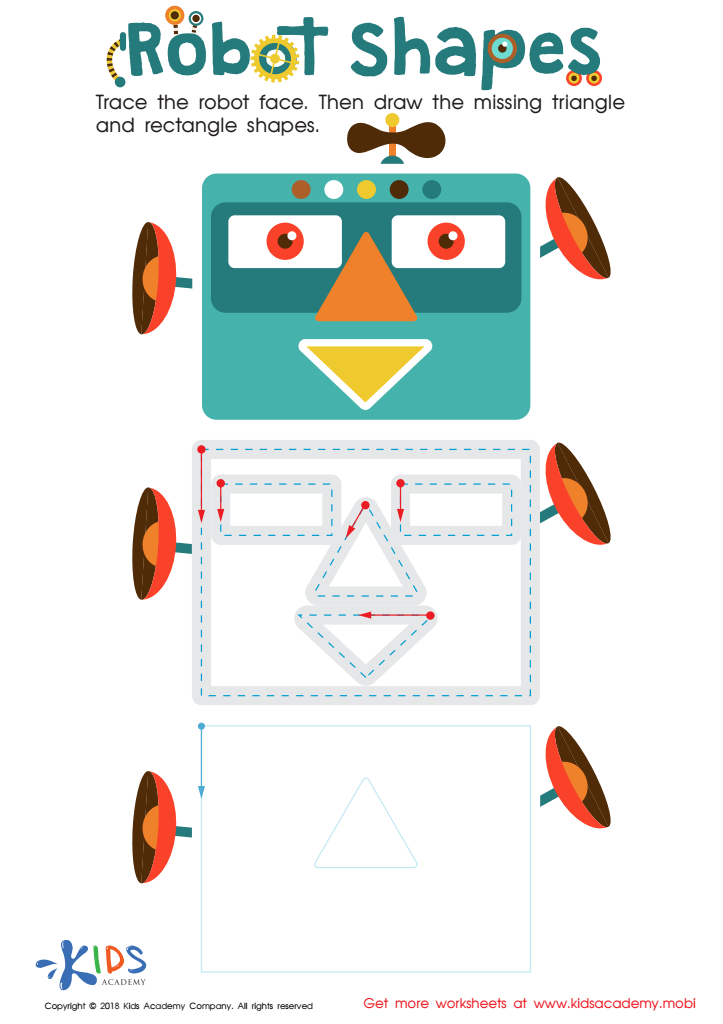
Robot Shapes Worksheet
Help your preschooler get started with math skills while having fun with this shape tracing worksheet featuring a cute robot! Ask them to study the first image, trace the dotted lines to draw the shapes in the second, and color the third. With this activity, they'll learn shapes while enjoying the funny robot pictures!
Robot Shapes Worksheet
Worksheet
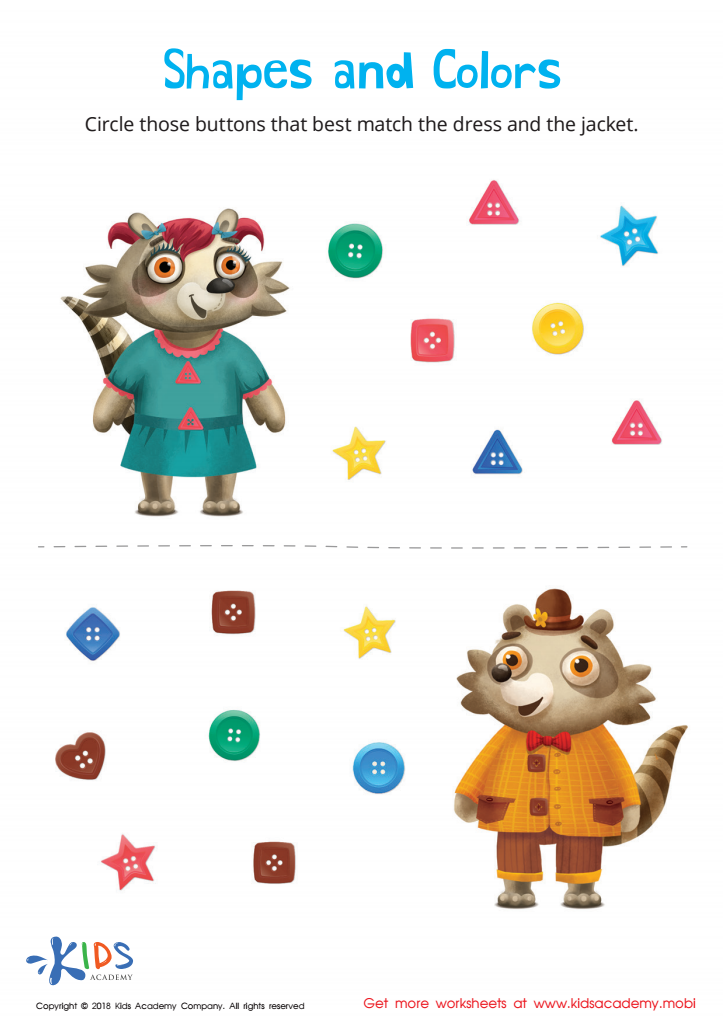
Shapes and Colors Worksheet
This worksheet is a fun way to teach toddlers shapes and colors! It has them match buttons on adorable racoon characters. Encourage your child to note the shape and color of the buttons then sort through and circle the matches. This helps build important attention to detail skills!
Shapes and Colors Worksheet
Worksheet
Learning Skills
Join Kids Academy for Free
Who is primarily going to use this learning content?








Parents and teachers should care about following instructions in normal geometry for ages 4-6 because it lays the foundation for essential cognitive and academic skills. At this formative age, children’s brains are highly adaptable and eager to learn. Teaching geometry in a structured way benefits not only their mathematical understanding but also significantly contributes to their overall cognitive development.
Following instructions specifically helps young learners develop critical listening skills, an essential component of effective communication. When children practice listening attentively to geometric instructions, such as identifying shapes, following positional cues, or creating simple patterns, they simultaneously enhance their ability to process and interpret spoken information accurately.
Moreover, geometry fosters spatial awareness by helping children understand concepts of space and position. Engaging with shapes and their properties aids in developing visual and spatial reasoning abilities that are crucial for everyday tasks and future mathematical learning. For example, grasping geometric shapes is not only foundational for advanced math but also for fields like engineering, architecture, and art.
Teaching normal geometry also promotes problem-solving and logical thinking. Kids learn to follow sequences and understand relationships between different elements, which encourages orderly thinking and organization. In the long run, these foundational skills ensure a smoother academic trajectory and more robust intellectual development. Therefore, a focused early education in geometry is pivotal in nurturing well-rounded, confident young learners.








