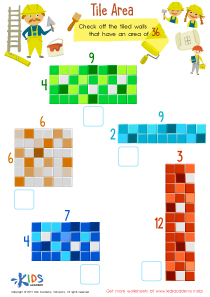
Problem-Solving Skills Normal Numbers Worksheets for Ages 4-6
9 filtered results
-
From - To
Enhance your child's learning experience with our "Problem-Solving Skills Normal Numbers Worksheets" designed for ages 4-6. These engaging, interactive worksheets focus on developing essential problem-solving skills through fun activities centered around normal numbers. Each worksheet encourages children to explore number identification, comparison, and simple mathematical operations in a playful approach. By tackling enriching challenges, young learners build confidence and critical thinking abilities while enjoying colorful illustrations and playful themes. Ideal for home or classroom use, these worksheets conveniently support foundational math skills in a gentle and enjoyable way. Join us in fostering a love for math and problem solving today!
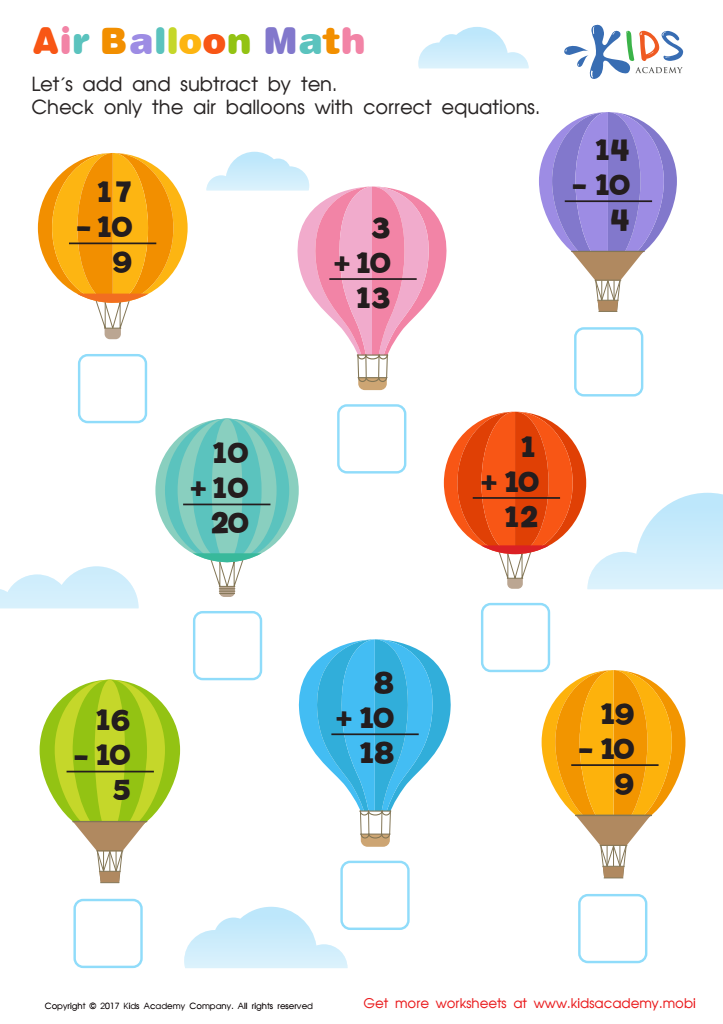
Air Balloon Math Worksheet
 Assign to My Students
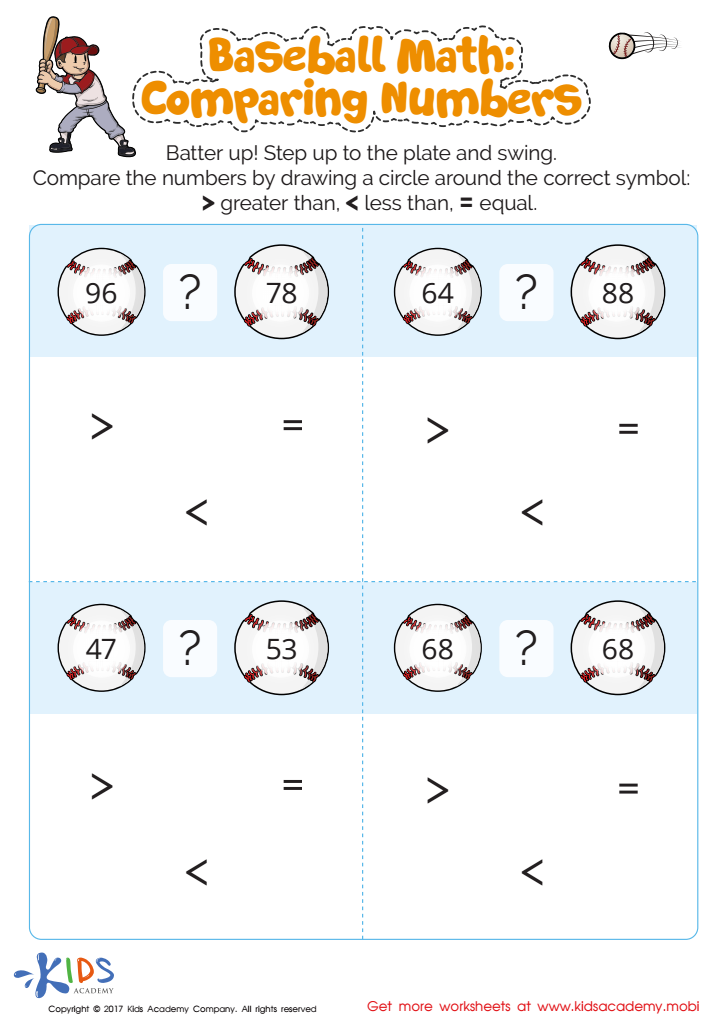
Compare Numbers Printable
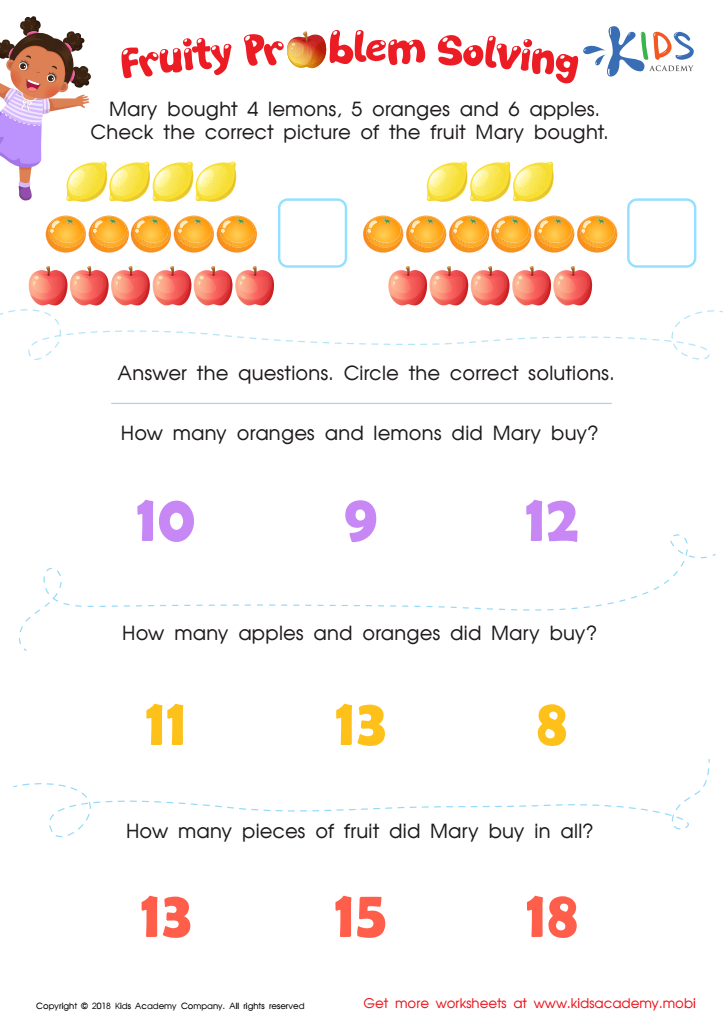
Fruity Problem Solving Worksheet
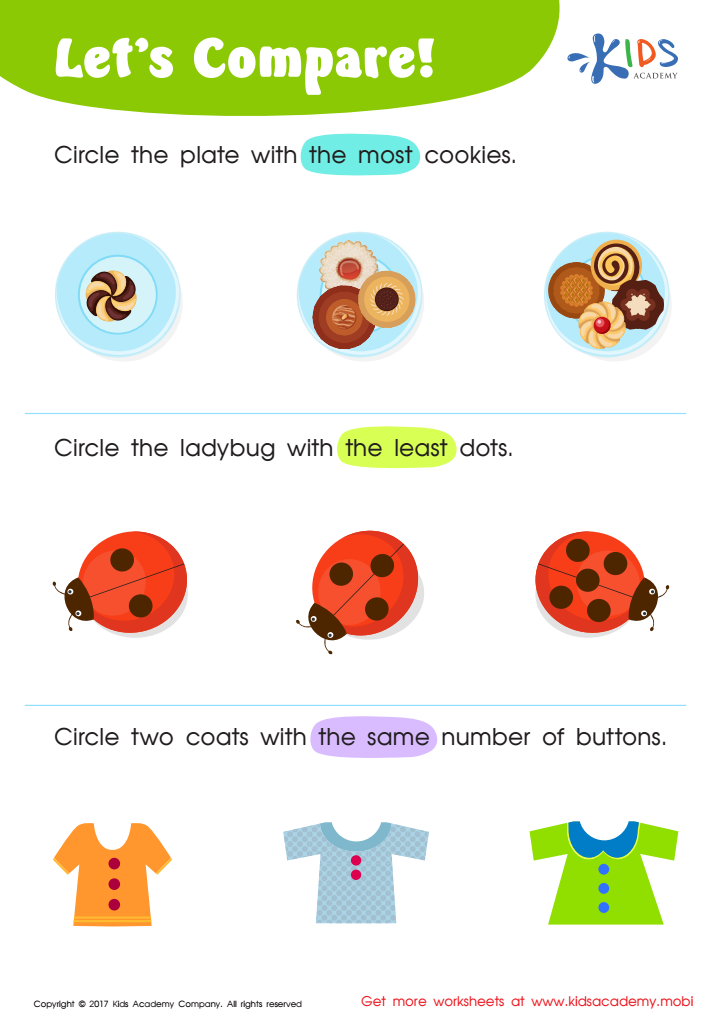
Matching: Classifying Toys by Size Worksheet
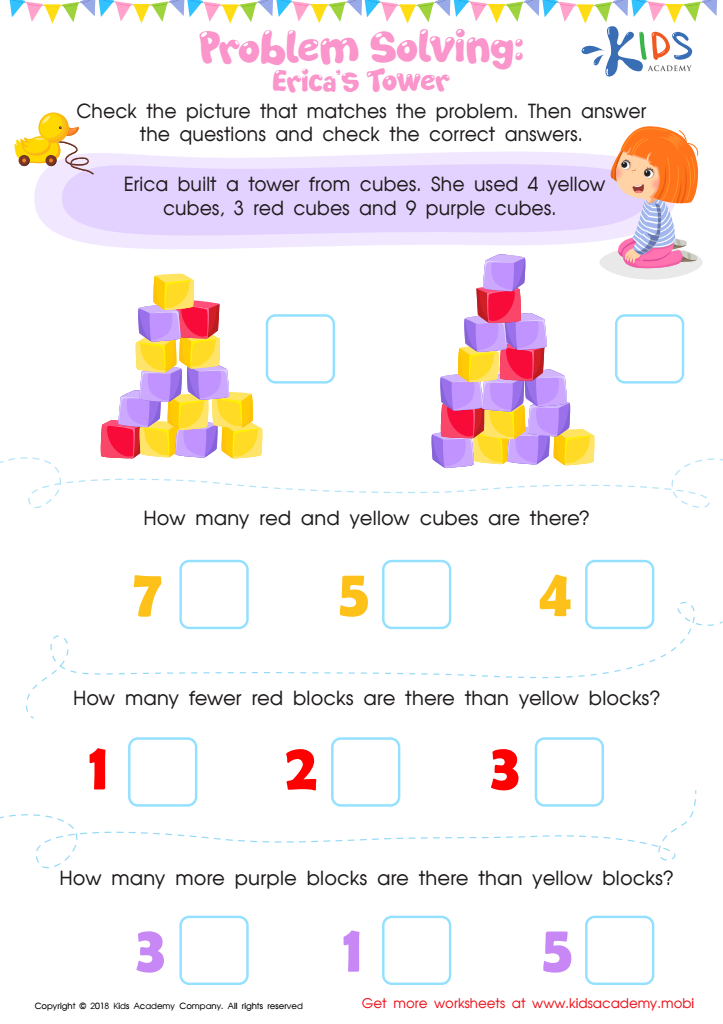
Problem Solving: Erica's Tower Worksheet
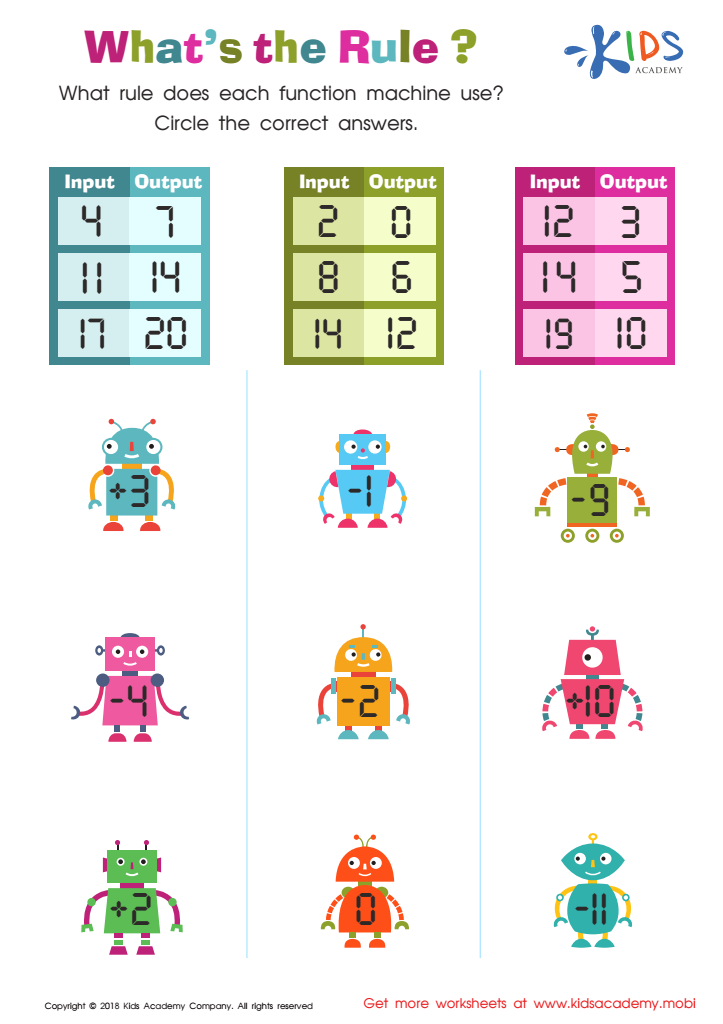
What's the Rule Worksheet
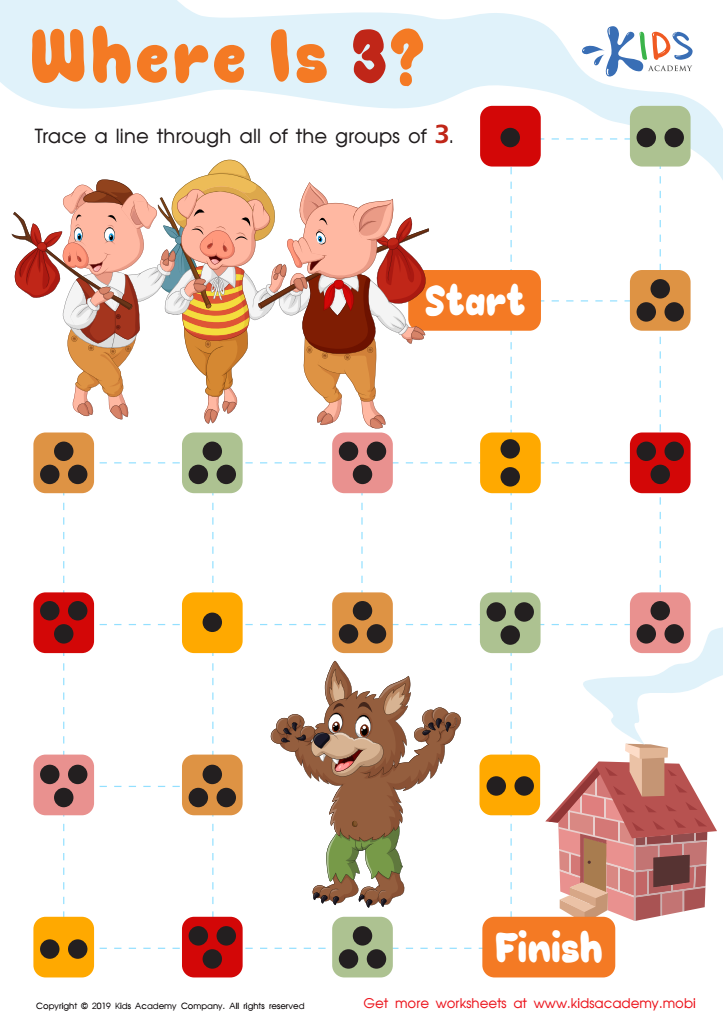
Where Is 3? Worksheet
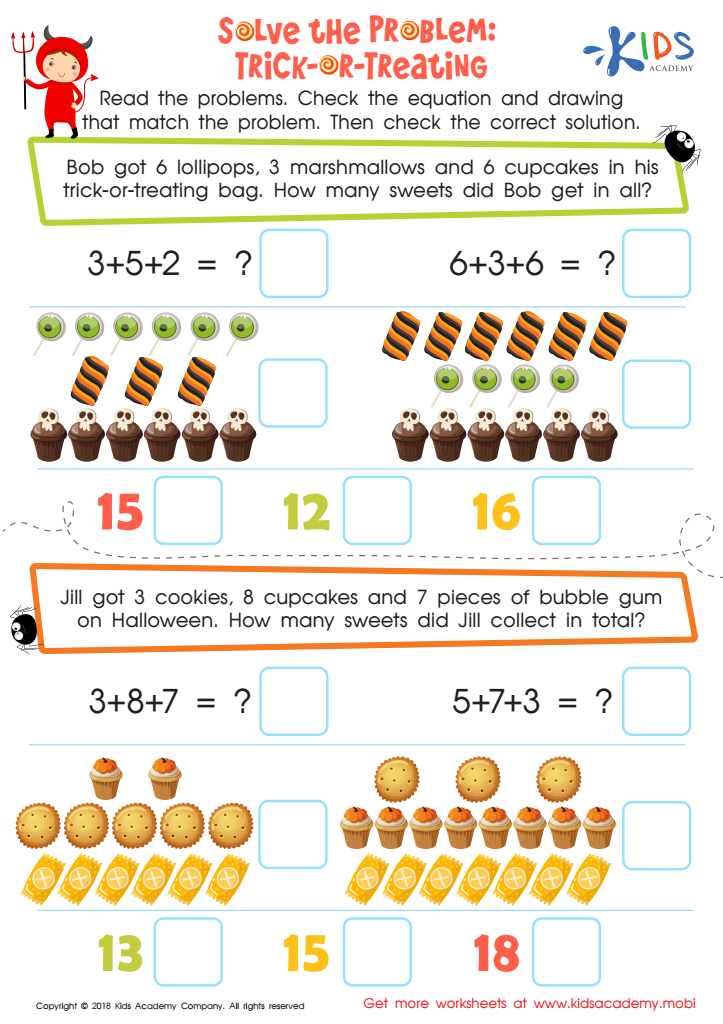
Solve the Problem: Trick–or–treating Worksheet
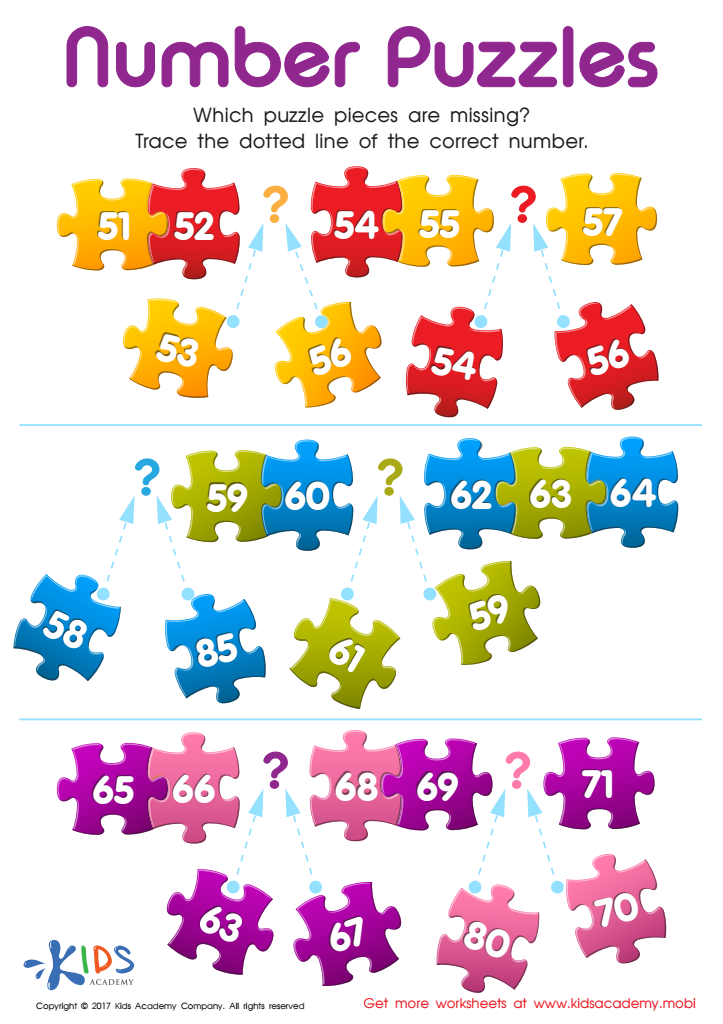
Number Puzzles Worksheet








Problem-solving skills in young children, specifically with normal numbers, are essential for several reasons. At ages 4-6, children are at a critical stage of cognitive development where foundational math abilities begin to form. When parents and teachers nurture these skills, they equip children not only with basic arithmetic understanding but also enhance their critical thinking, logical reasoning, and creativity.
Problem-solving involving numbers encourages children to explore relationships between quantities and to understand abstract concepts in a tangible way. By engaging with everyday situations that involve counting or simple math, children learn to navigate challenges, whether it's sharing toys, dividing snacks, or understanding their environment. These experiences foster resilience and adaptability, which are vital skills as they encounter increasingly complex problems later in life.
Moreover, strong problem-solving abilities are directly linked to academic success. Early experiences with mathematics set the stage for future learning, reducing math anxiety and building confidence in navigating numerical challenges. Ultimately, by prioritizing problem-solving with normal numbers, parents and teachers play a crucial role in laying a solid foundation for children’s lifelong learning and fostering a positive attitude towards math, paving the way for better academic and personal outcomes.