Understanding subtraction Normal Numbers Worksheets for Ages 4-6
3 filtered results
-
From - To
Discover engaging subtraction worksheets designed for children aged 4-6 that make learning math fun and interactive! Our "Understanding Subtraction Normal Numbers" worksheets help young learners grasp essential subtraction concepts through colorful illustrations and easy-to-follow exercises. With a variety of activities, these worksheets promote essential counting and problem-solving skills, setting a solid foundation for future math success. Ideal for both classroom and home use, they encourage independent learning while making math approachable and enjoyable. Explore our resources to support your child's early learning journey and watch their confidence grow as they master subtraction in a delightful way!
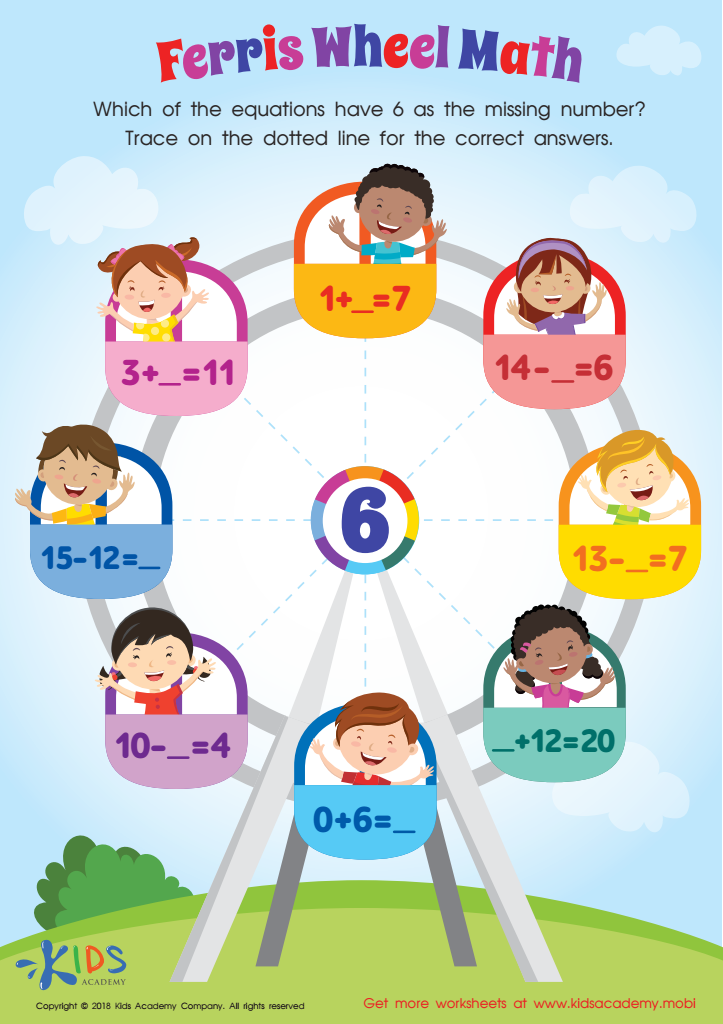
Missing Number: Ferris Wheel Math Worksheet
 Assign to My Students
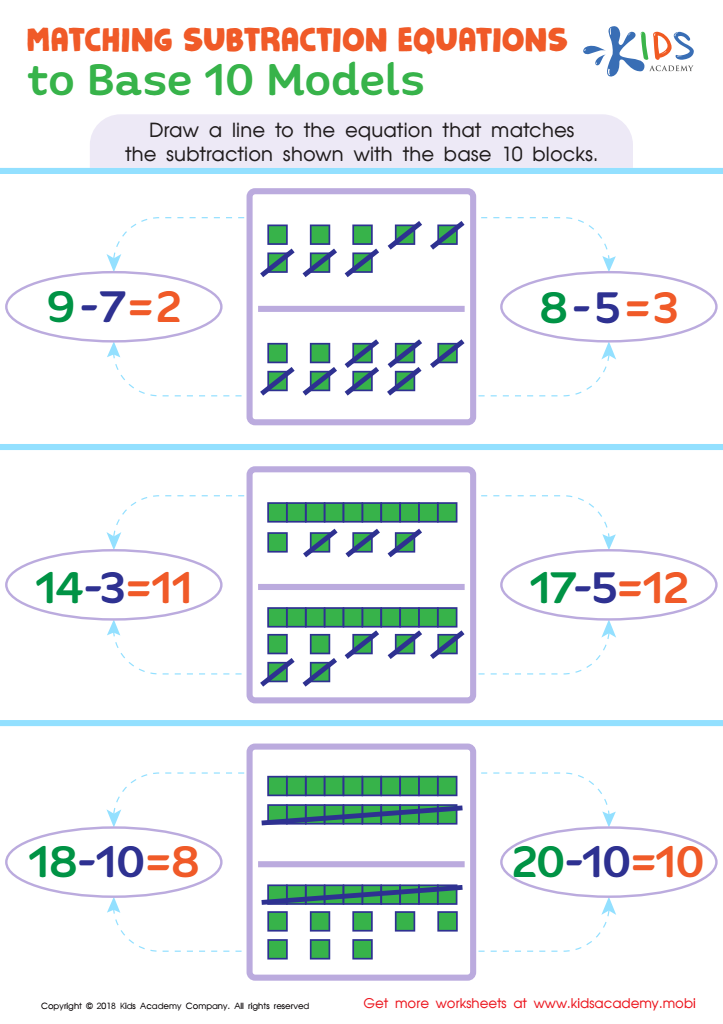
Matching Subtraction Equations To Base 10 Models Worksheet
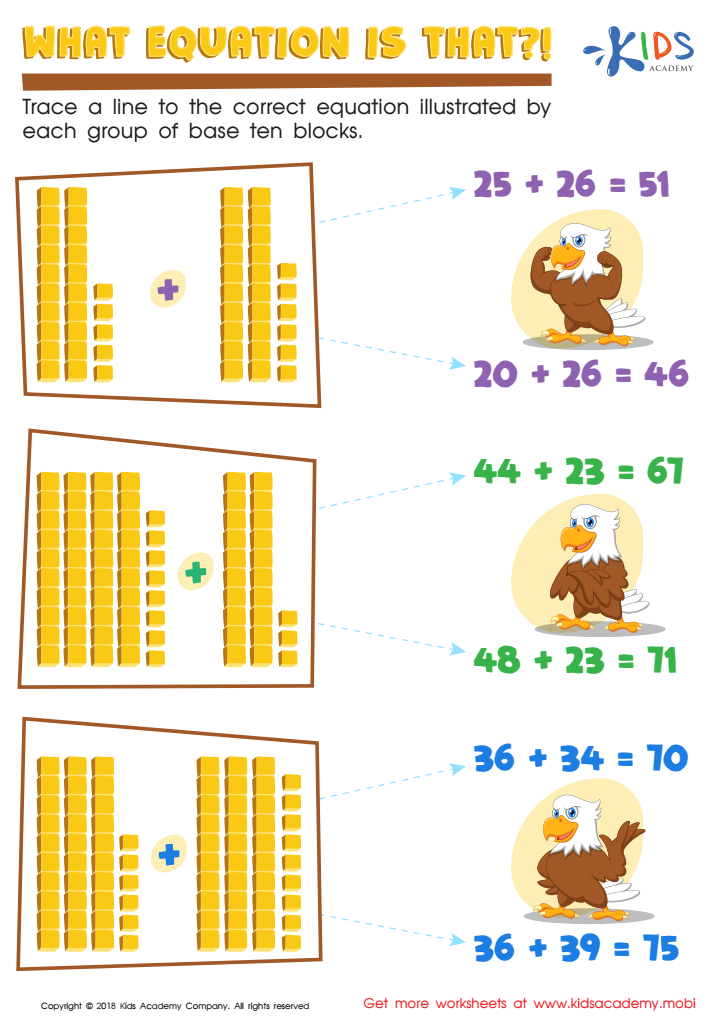
What Equation Is That? Worksheet








Understanding subtraction with normal numbers is crucial for children aged 4-6 because it lays the groundwork for their mathematical development and critical thinking skills. At this young age, children begin to grasp foundational math concepts, and subtraction is a core part of this learning journey. It not only helps them learn how to calculate but also enhances their ability to solve real-world problems, fostering independence in everyday situations, such as sharing items or understanding how many remain after taking some away.
Parents and teachers play a critical role in guiding children through these early experiences. By introducing subtraction in engaging and relatable ways—using objects, visuals, or interactive activities—they can ignite a child’s interest in mathematics. Understanding subtraction promotes logical reasoning and strengthens cognitive skills such as counting, number recognition, and basic problem-solving.
Moreover, a solid grasp of subtraction can boost children's confidence in their math abilities, which is essential as they progress in their education. This early mastery creates a positive attitude towards math, reducing the number of students who later struggle with math concepts. Therefore, prioritizing the understanding of subtraction benefits not just academic success but their overall development, paving the way for lifelong learning.








