
Reading comprehension Normal Matching Worksheets for Ages 4-6
7 filtered results
Difficulty Level
Grade
Age
-
From - To
Subject
Activity
Standards
Help your child enhance their reading comprehension skills with our engaging Normal Matching Worksheets designed for ages 4-6. These worksheets provide fun and interactive exercises that promote literacy development through matching activities. Children will explore various themes and contexts, improving their understanding of stories while strengthening their ability to identify key details. Our worksheets are perfect for home or classroom use, making learning enjoyable and effective. With colorful illustrations and age-appropriate content, these resources cater to young learners, fostering a love for reading and comprehension. Dive into our collection today and support your child's educational journey!
Favorites
With answer key
Interactive
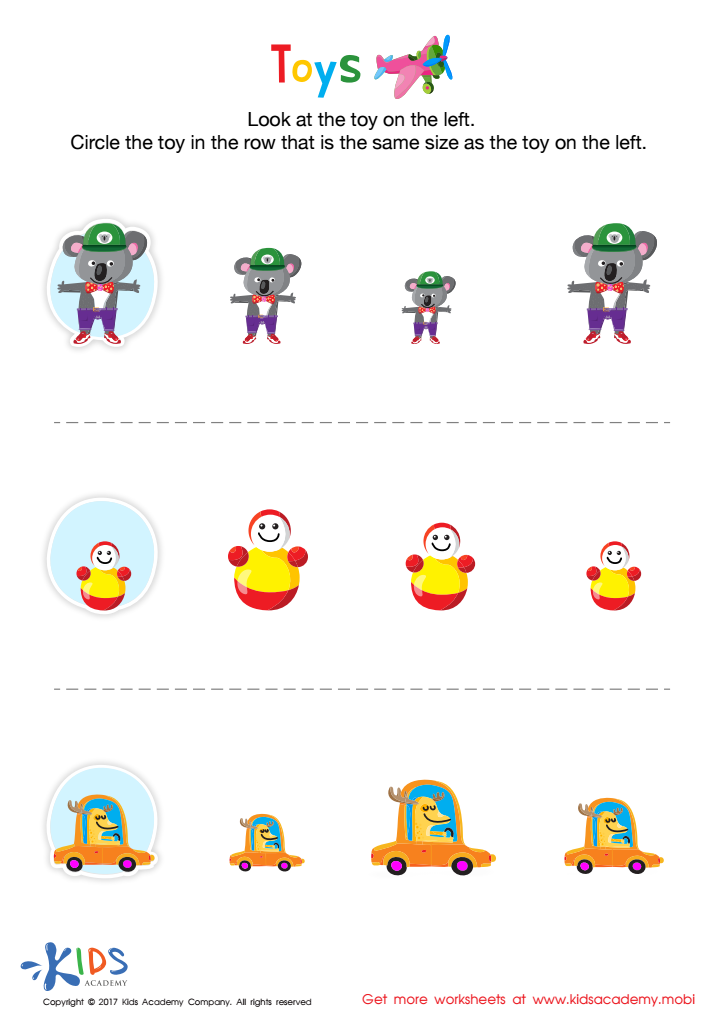
Matching: Classifying Toys by Size Worksheet
Sorting worksheets are an effective way to help your preschooler learn life and educational skills. Spatial awareness, direction recognition, and reading directions all help build a strong foundation for future educational success.
 Assign to My Students
Matching: Classifying Toys by Size Worksheet
Worksheet
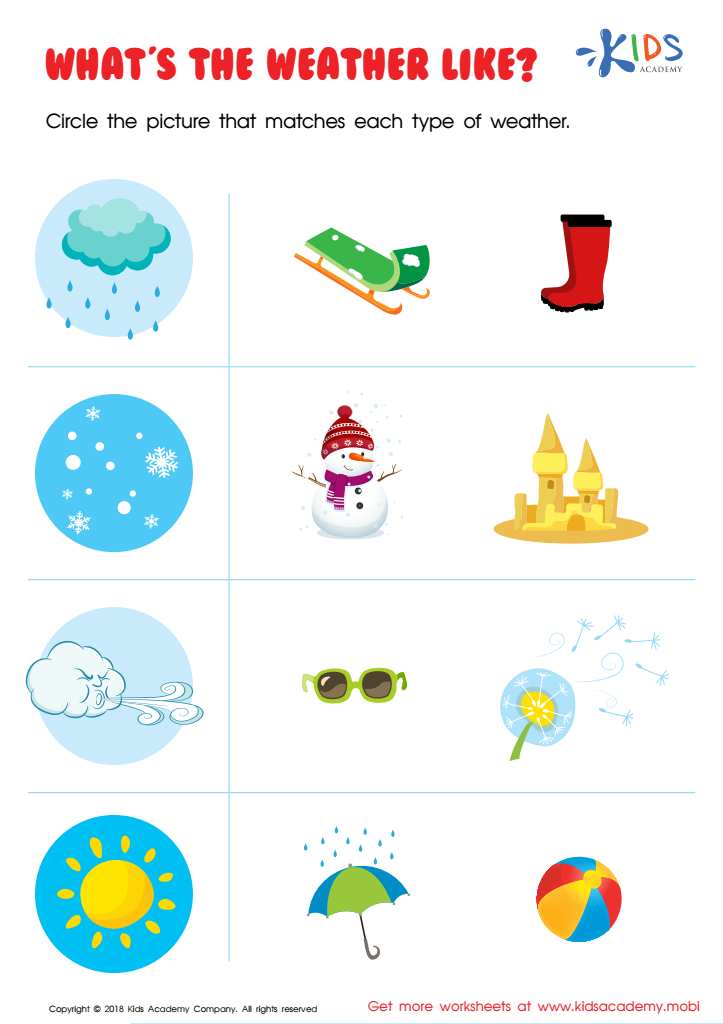
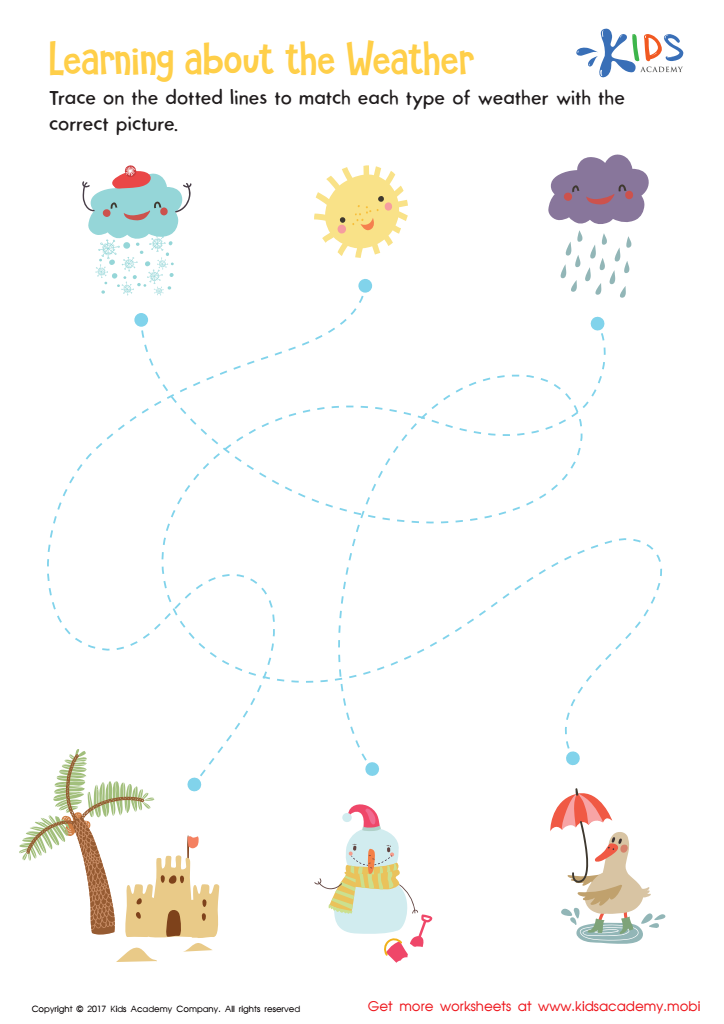
What's the Weather Like? Worksheet
Help budding meteorologists practice matching weather to seasons with this PDF worksheet. Picture clues help identify seasons and fine motor skills are practiced circling the correct weather patterns. Bright and engaging characters make learning fun and reinforce weather knowledge.
What's the Weather Like? Worksheet
Worksheet
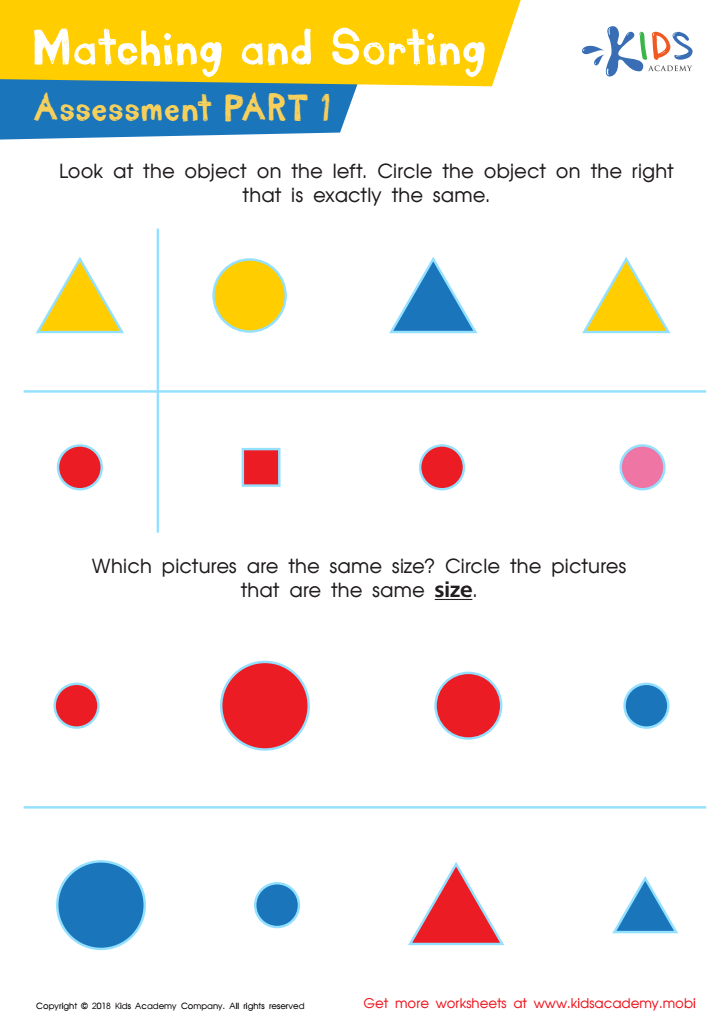
Matching and Sorting for Kindergarten: Assessment 1 Worksheet
Kids can sharpen their visual discrimination skills and analyze properties of shapes with this free downloadable worksheet. They'll identify color, size, shape, and symmetry, working with bright primary colors. This helps build a strong geometric foundation, learning to identify shape attributes.
Matching and Sorting for Kindergarten: Assessment 1 Worksheet
Worksheet
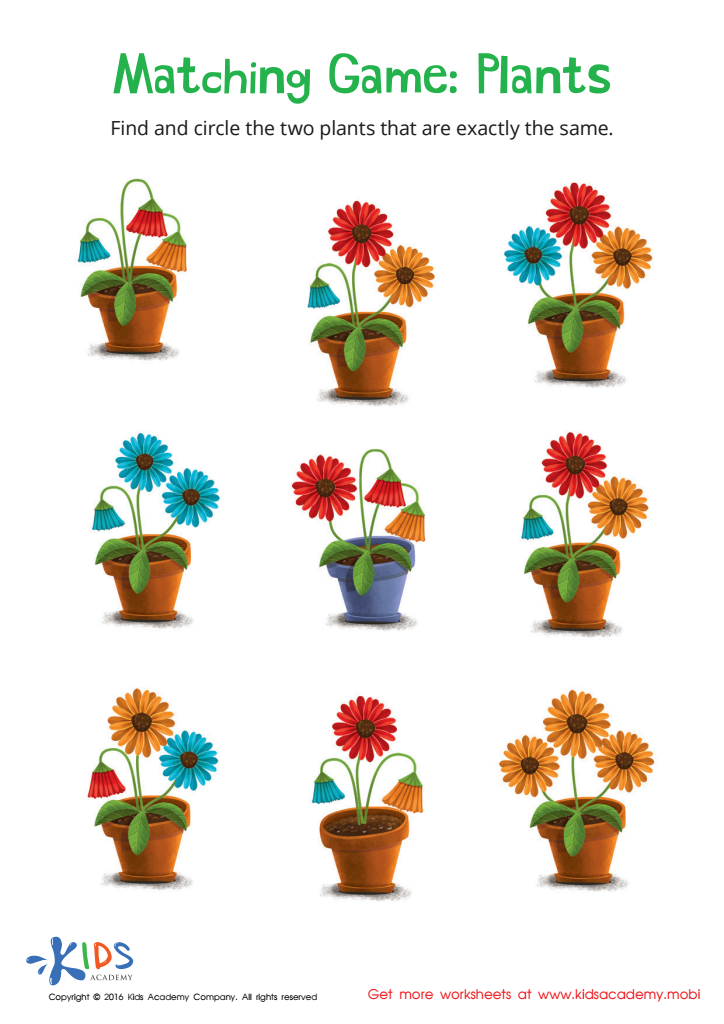
Matching: Plants Worksheet
This worksheet helps your child focus on details to build pattern recognition, problem solving and sorting/matching skills. Your child will enjoy the challenge of searching for similar images that match. Point out how small differences can exist in similar things and excite them with bright pictures and a fun challenge.
Matching: Plants Worksheet
Worksheet
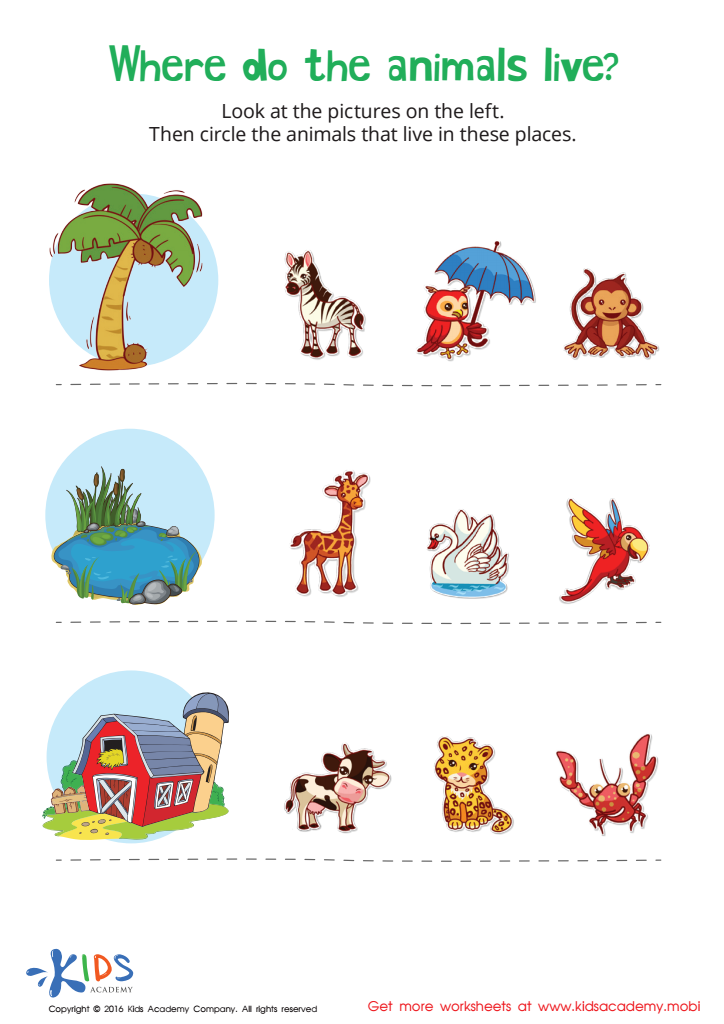
Where Animals Live Worksheet
Teaching early reading and math skills is important, but don't forget about science. With the Where Animals Live PDF worksheet, kids can identify their favorite animals and the environments they live in. Ask them what type of environment the animals like and introduce them to geography. It's great for logical reasoning and classification skills. Your kid will practice with their favorite animals and love the trip to the zoo afterwards!
Where Animals Live Worksheet
Worksheet
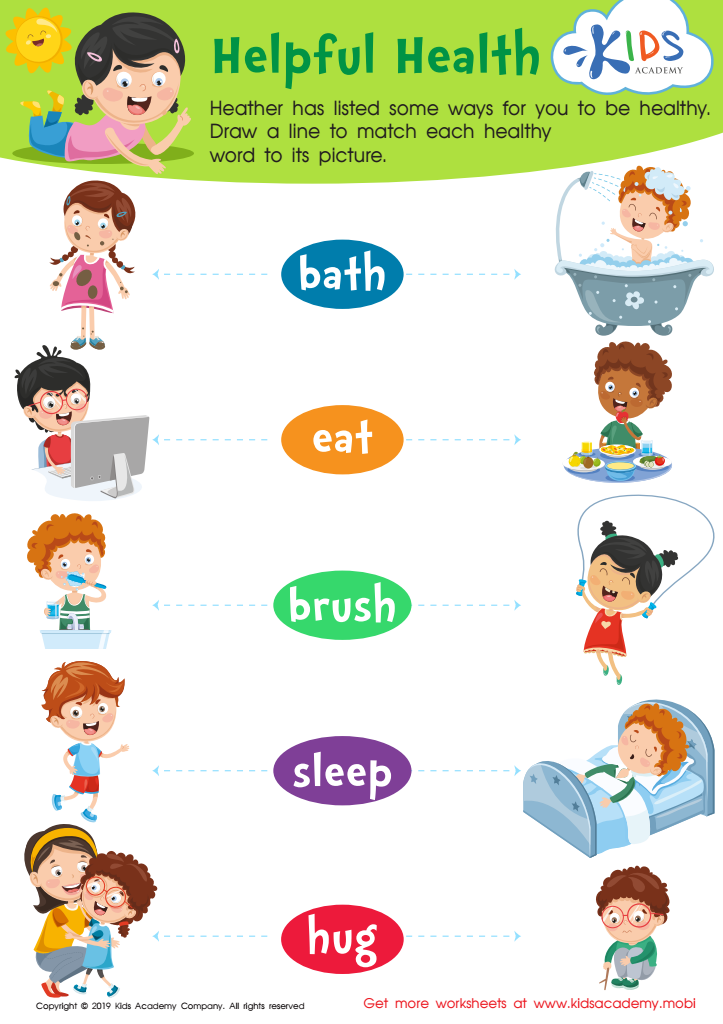
Helpful Health Worksheet
Kids can learn healthy habits with this free worksheet! With their pal Heather, they'll trace lines to connect health words with pictures like brushing teeth, hugging, and getting enough sleep. It's a great way to help young ones understand healthy activities.
Helpful Health Worksheet
Worksheet
Join Kids Academy for Free
Who is primarily going to use this learning content?








Reading comprehension is a fundamental skill that significantly affects a child's overall academic success and cognitive development. For children aged 4-6, this skill is particularly crucial as it lays the groundwork for future learning. Understanding what they read helps children develop critical thinking skills, build vocabulary, and improve their ability to express themselves both verbally and in writing.
Matching activities, such as "Reading Comprehension Normal Matching," engage young learners in ways that are interactive and enjoyable. These activities often require children to make connections between text and illustrations or different concepts, thereby enhancing their ability to retain information. When children practice these matching activities, they also learn to identify key elements in stories, such as characters and events, guiding them to summarize and infer meanings effectively.
Moreover, fostering early reading comprehension can aid in developing a lifelong love for reading, as children who understand stories are more likely to engage with books enthusiastically. Consequently, parents and teachers play a vital role in introducing these concepts and practices, ultimately preparing children for academic milestones and enriching their emotional and social skills as they navigate their early education journey.








