Vocabulary Building Normal Matching Worksheets for Ages 4-6
5 filtered results
Difficulty Level
Grade
Age
-
From - To
Subject
Activity
Standards
Introducing our engaging Vocabulary Building Normal Matching Worksheets designed for children aged 4-6! These interactive worksheets enhance early language skills by encouraging young learners to match words with corresponding images. Featuring colorful graphics and age-appropriate vocabulary, these activities spark curiosity and make learning fun. Each worksheet promotes word recognition, comprehension, and language development, crucial during these formative years. Perfect for classroom use or at-home practice, our resources help children build confidence in their vocabulary. Foster a love for language and learning with our expertly crafted worksheets today, ensuring your child is on the right path to mastering essential vocabulary skills!
Favorites
With answer key
Interactive
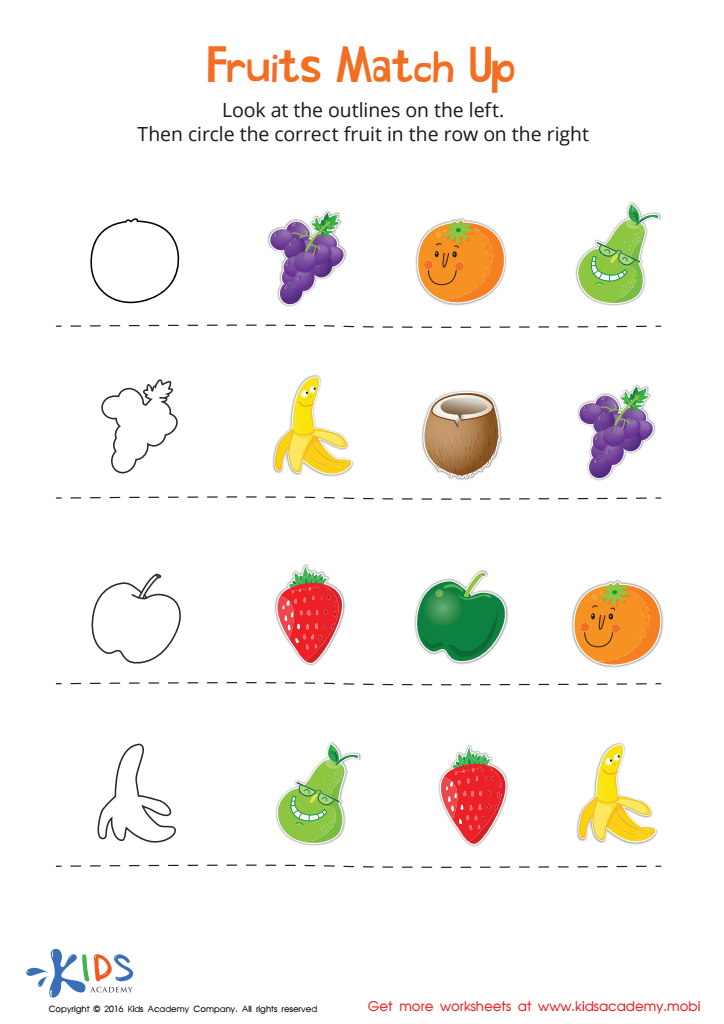
Fruits Match Up Worksheet
Motivate your child to count and sharpen their spatial reasoning skills with this vivid fruit worksheet.
 Assign to My Students
Fruits Match Up Worksheet
Worksheet
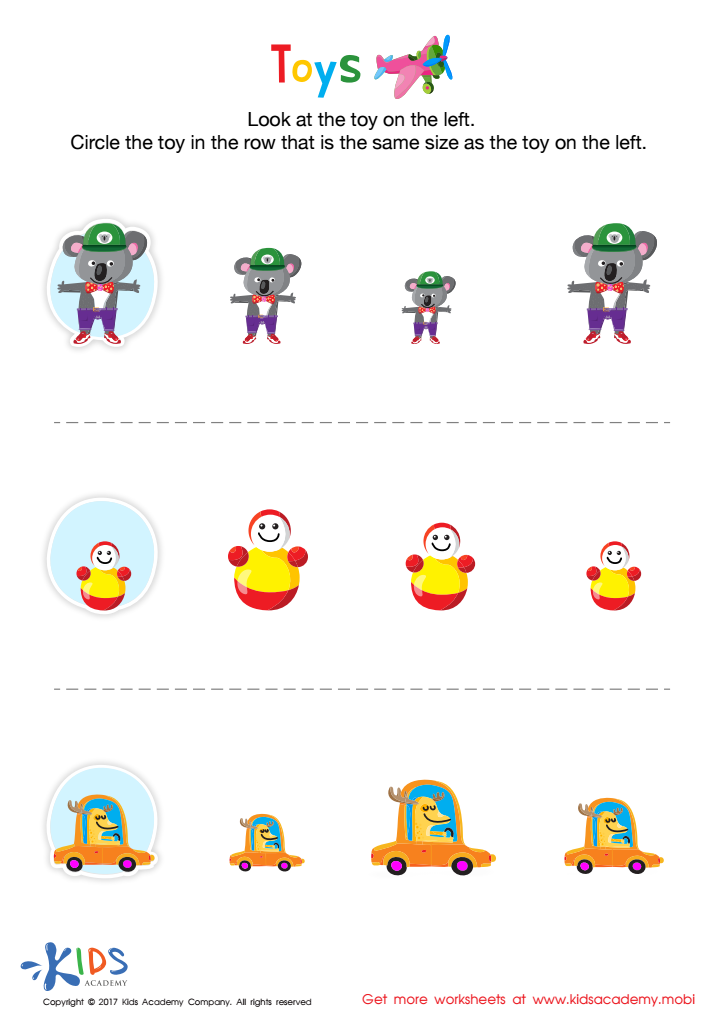
Matching: Classifying Toys by Size Worksheet
Sorting worksheets are an effective way to help your preschooler learn life and educational skills. Spatial awareness, direction recognition, and reading directions all help build a strong foundation for future educational success.
Matching: Classifying Toys by Size Worksheet
Worksheet
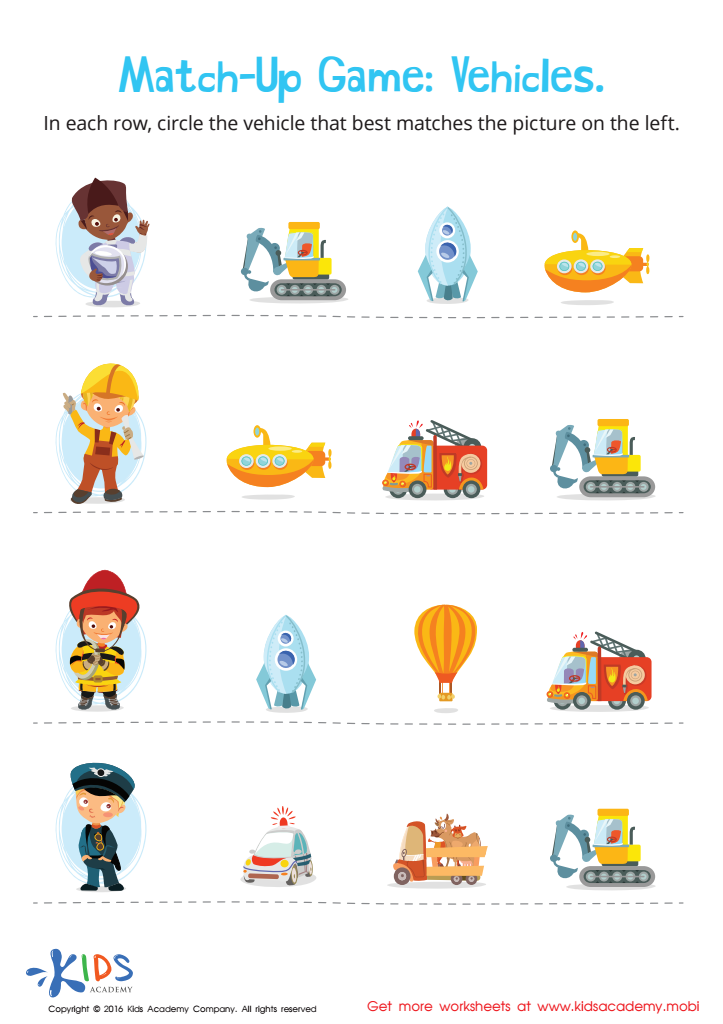
Vehicles Worksheet
Beep, beep! Your little driver will love this matching game! Matching vehicles with their drivers can help your child discover new jobs and practice problem-solving skills. It can even start a conversation about different careers. Don’t be surprised if they start playing with more cars and trucks! Use this and other sorting activities to practice with colors, shapes and patterns.
Vehicles Worksheet
Worksheet
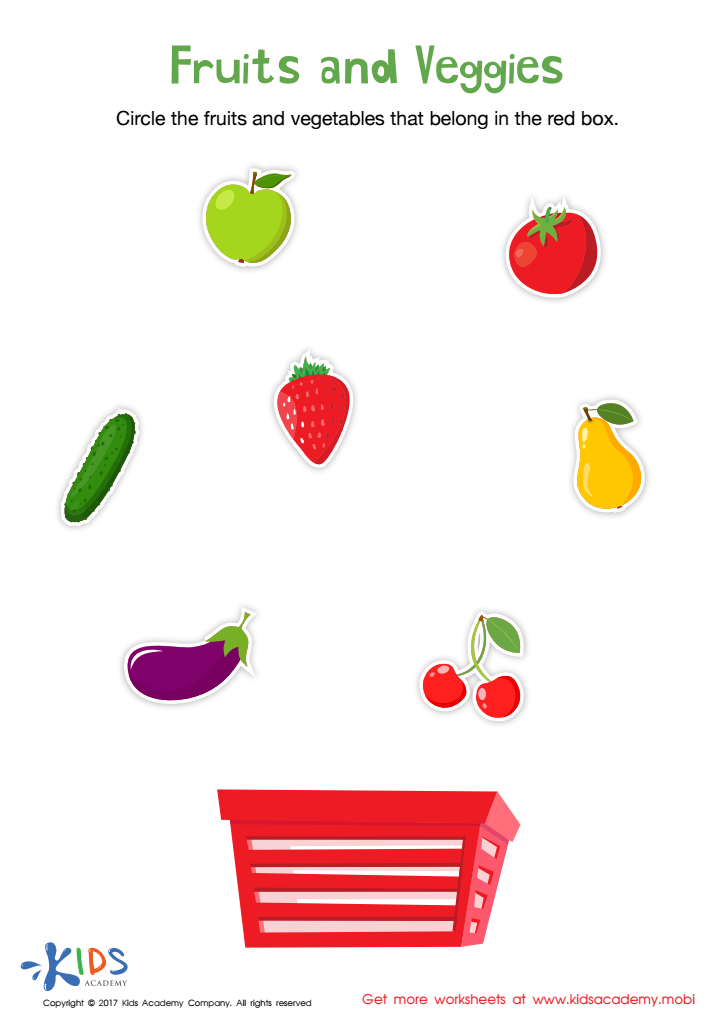
Classifying Fruits and Veggies by Color Sorting Worksheet
Worksheet
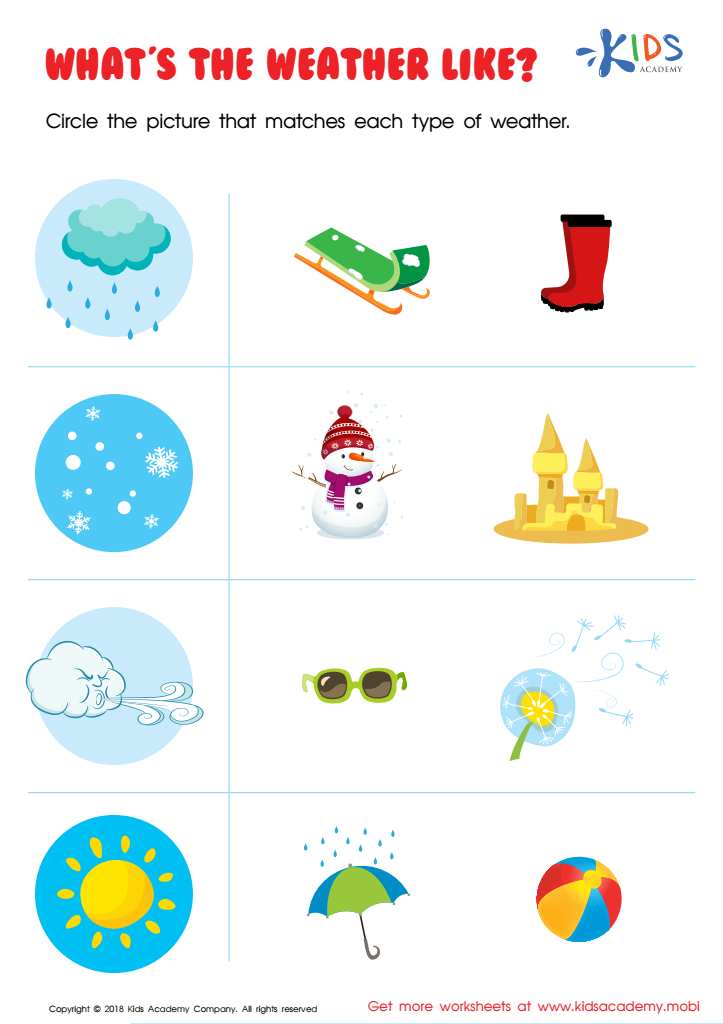
What's the Weather Like? Worksheet
Help budding meteorologists practice matching weather to seasons with this PDF worksheet. Picture clues help identify seasons and fine motor skills are practiced circling the correct weather patterns. Bright and engaging characters make learning fun and reinforce weather knowledge.
What's the Weather Like? Worksheet
Worksheet
Join Kids Academy for Free
Who is primarily going to use this learning content?







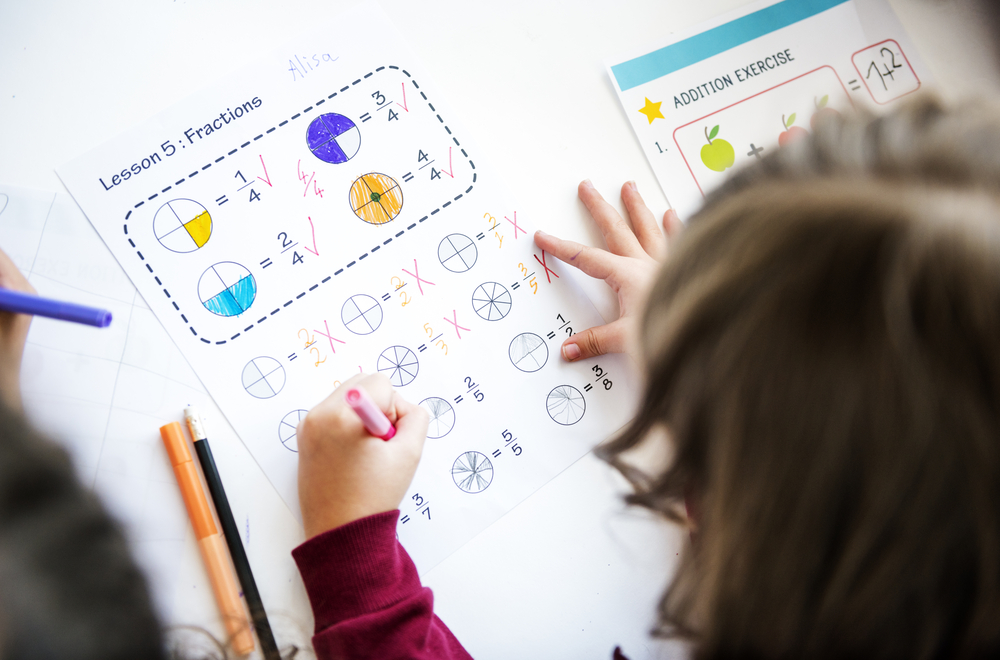
Vocabulary Building Normal Matching (VB-NM) is a crucial educational tool for children aged 4 to 6, as it lays the foundation for language development and literacy skills. During this formative stage, children are rapidly acquiring new words and learning how to use them in context. Engaging in VB-NM activities helps enhance their vocabulary by encouraging them to match words with pictures or definitions, fostering both recognition and understanding.
Parents and teachers should care about VB-NM because a rich vocabulary empowers children to express themselves clearly, boosts their confidence in communication, and improves their reading comprehension skills. As children begin to read, a solid vocabulary enables them to decode and grasp the meaning of texts, thus nurturing a lifelong love for reading.
Moreover, strong vocabulary skills have been linked to academic achievement. By investing in vocabulary-building activities, adults can provide children with a head start in their educational journey, potentially influencing their performance in school years to come. Additionally, reinforcing vocabulary through VB-NM also promotes cognitive skills, such as critical thinking and memory retention, by challenging children to make connections and recall information. Ultimately, by prioritizing vocabulary development, parents and teachers play a vital role in advancing a child's learning and future success.