Filters

11 filtered results

Clear all filters
Favorites
With answer key
Interactive

11 filtered results

Difficulty Level

Grade


Boost your child's language skills with our Vocabulary Expansion Normal Science Worksheets for ages 4-6! Designed to introduce young learners to essential science terms in a fun and engaging way, these worksheets make learning both enjoyable and effective. Kids will discover new words related to nature, animals, and everyday phenomena through colorful illustrations and simple exercises. The activities promote critical thinking and early reading skills while enhancing vocabulary. Perfect for home use or in the classroom, these worksheets provide a solid foundation for budding scientists. Begin a learning adventure today with our expertly crafted worksheets that cater specifically to young minds!

Check out this FREE Trial Lesson on Science for age 4-6!

Sound Is All Around Us

Favorites
With answer key
Interactive
  • 4-6
  • Vocabulary expansion
  • Science
  • Normal
Thorns and Spikes Worksheet
Thorns and Spikes Worksheet

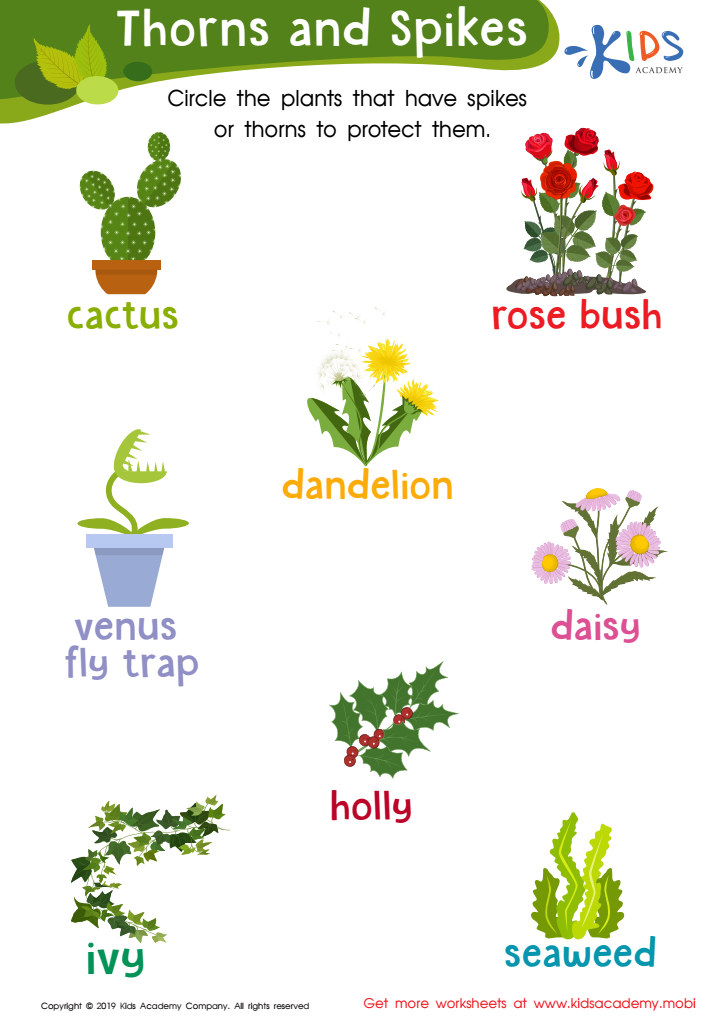
Can your students name and identify the plants and flowers in this worksheet? Ask them to read out the names and circle the ones with spikes or thorns. Help them appreciate nature's beauty and understand how plants protect themselves.
Thorns and Spikes Worksheet
Worksheet
Astronomer Coloring Page Worksheet

Astronomer Coloring Page Worksheet

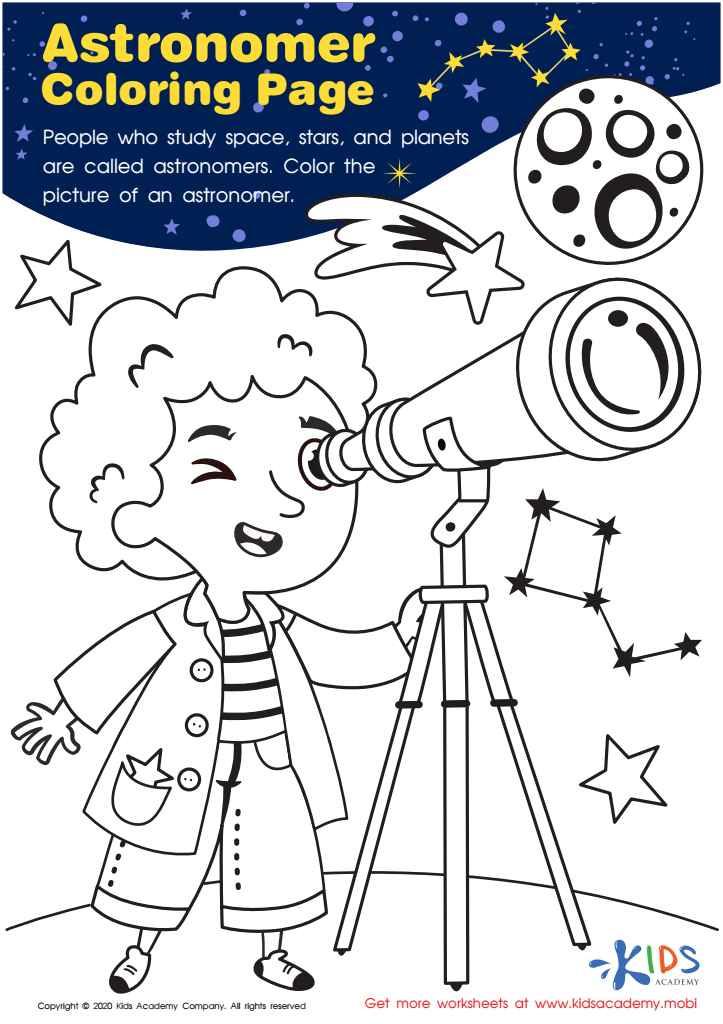
Encourage your child to explore the night sky with a fun coloring page! Discuss the possibility of a career in astronomy while they put their imagination to work creating the best colors to make this scene come to life. Astronomers use microscopes to study planets and stars, learning about space and teaching us more about the universe!
Download (PDF)
Assign to My Students
Astronomer Coloring Page Worksheet
Worksheet
Noisy Park Worksheet

Noisy Park Worksheet

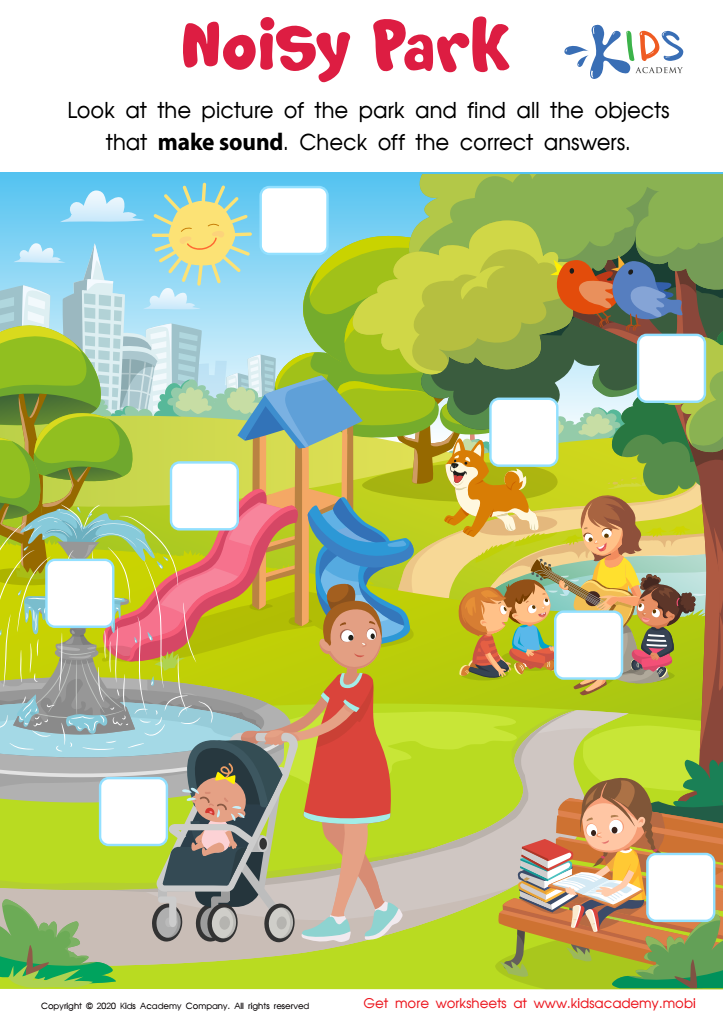
Get your students ready for the exercise by asking them to name things they see and do at the park. Then, have them identify the things in the picture, look for objects that make sounds, and verify the answers.
Noisy Park Worksheet
Worksheet
How’s the Weather Printable Worksheet

Hows the Weather Worksheet

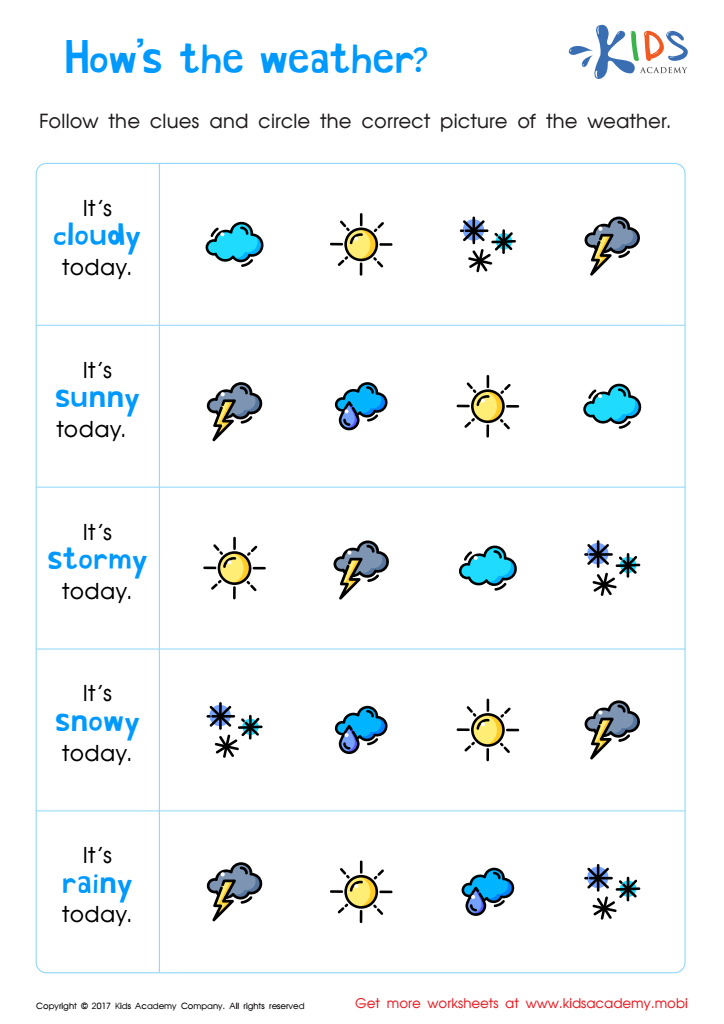
Teaching kids about weather is a fun way to start science learning. This worksheet helps recognize symbols, literacy skills and make real world connections. Your child will love it!
Hows the Weather Worksheet
Worksheet
Fish Body Parts Worksheet

Fish Body Parts Worksheet

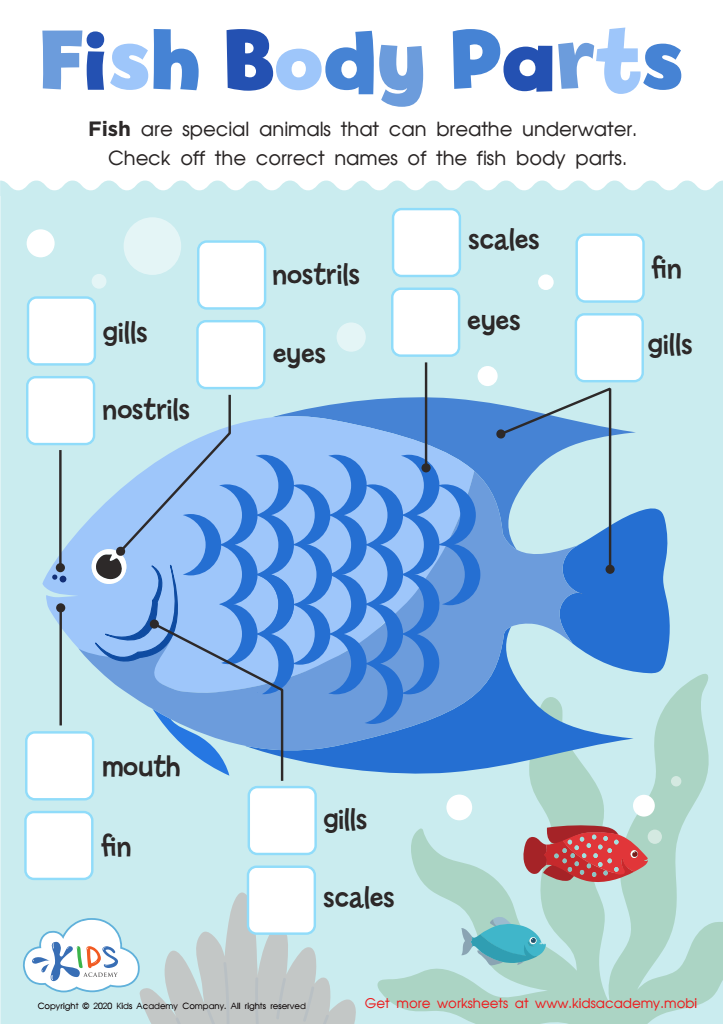
Fascinate kids with fish: teach them about these amazing creatures with this free Kids Academy printable worksheet. Let little learners study the vibrant blue fish, identify its different body parts, and discover why it can survive underwater. From gills to fins, your child will gain an early appreciation for life science!
Fish Body Parts Worksheet
Worksheet
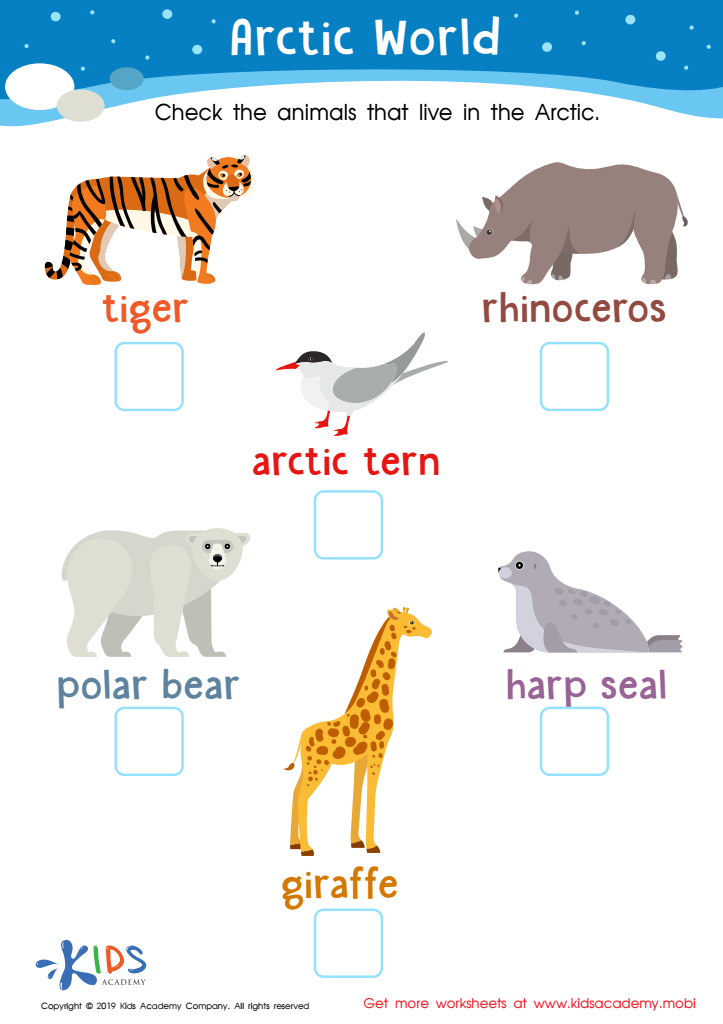
Arctic World Worksheet

Arctic World Worksheet

Ask your students if they know where the Arctic is located and what lives there. If not, use a world atlas to show them. The Arctic is very cold and snow-covered; native animals have adapted to survive the harsh conditions. Look at the animals in the worksheet and help your students decide which ones live in the Arctic.
Arctic World Worksheet
Worksheet
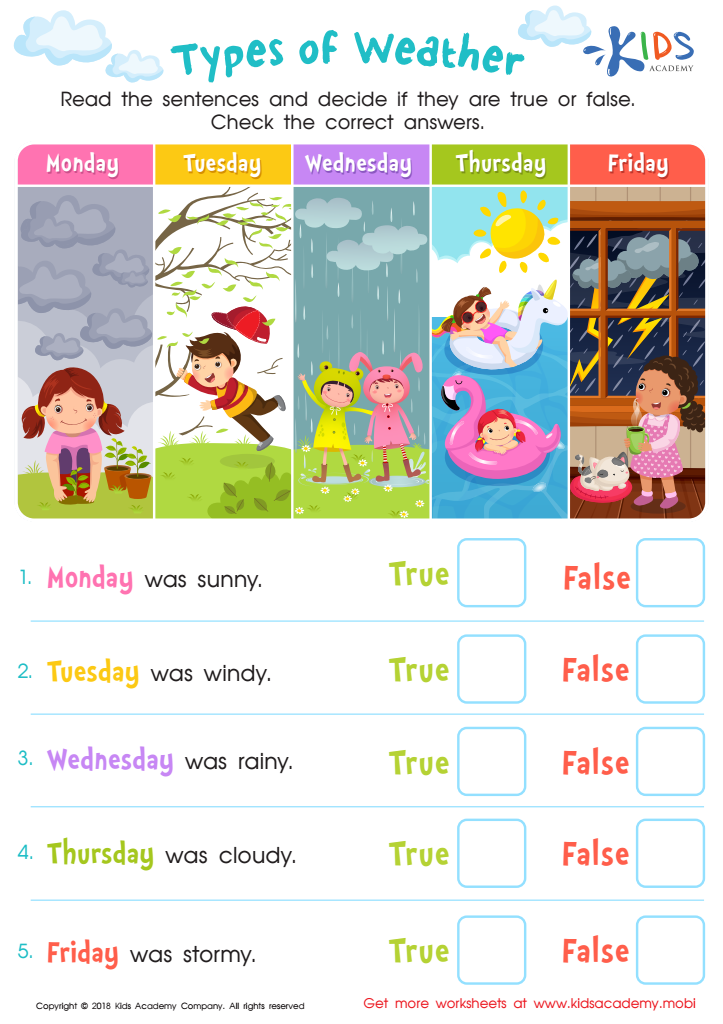
Types of Weather Worksheet

Types of Weather Worksheet

This worksheet will test your child's knowledge of the weather. Show them the pictures of five days of the week, each with a different weather and ask them to describe it. Then read the sentences and ask if they're true/false. Help them find the right answers.
Types of Weather Worksheet
Worksheet
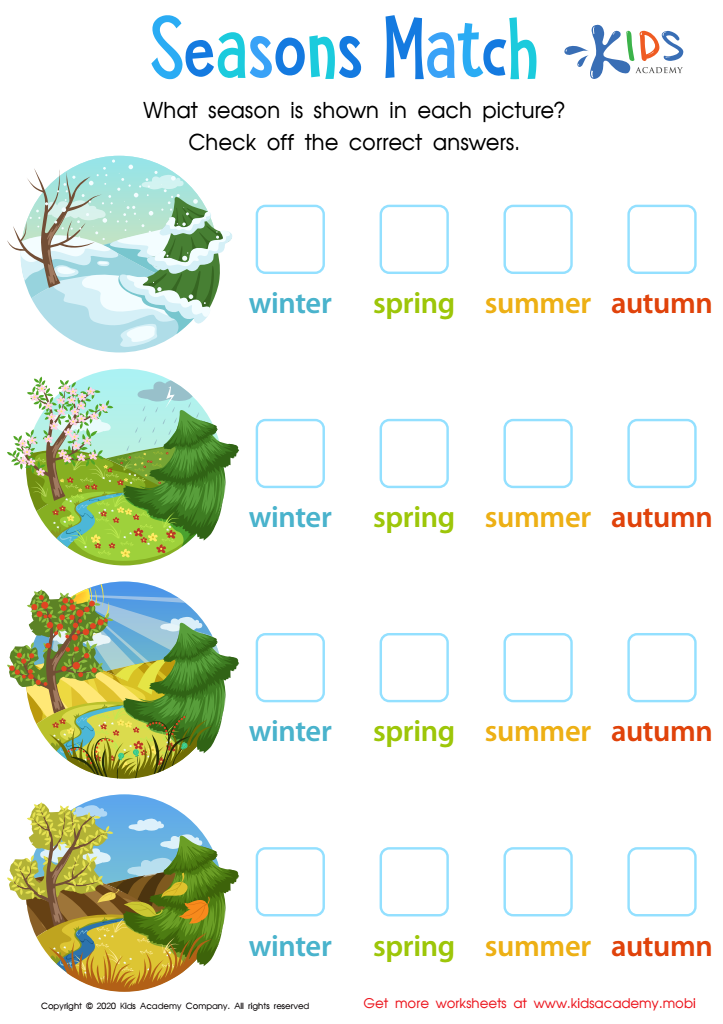
Seasons Match Worksheet

Seasons Match Worksheet

Preschoolers should begin learning about seasons and weather early. Most can tell what season it is by upcoming holidays or school activities. Test their knowledge with a printable PDF worksheet. It asks them to match each image with its corresponding season!
Seasons Match Worksheet
Worksheet
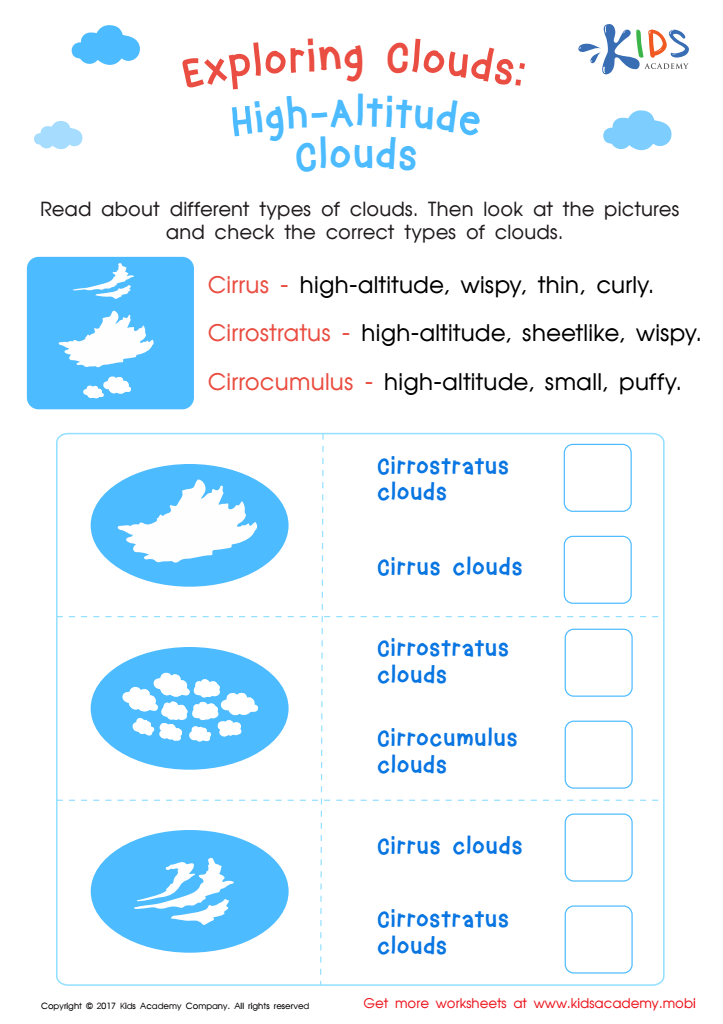
Worksheet: type of high altitude clouds

Exploring Clouds: High Altitude Clouds Worksheet
Explore the different types of high altitude clouds with this fun and informative worksheet. Then, head outside to see if your child can spot any of the clouds in the sky!
Exploring Clouds: High Altitude Clouds Worksheet
Worksheet
What's the Weather? Worksheet

What's the Weather? Worksheet

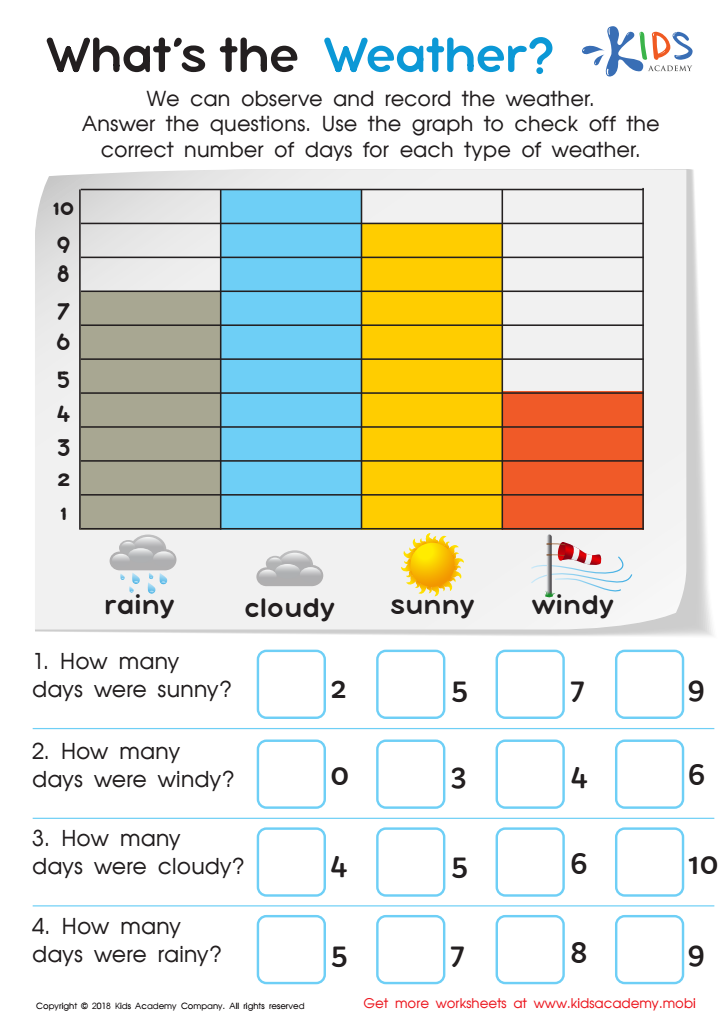
Check the weather outside. Help kids learn and practice science and math by tracking different types of days using this printable worksheet. Have them count bars next to weather types like cloudy, sunny, windy, and rainy. Answer the questions and take the lesson further by creating a bar graph to show the monthly weather.
What's the Weather? Worksheet
Worksheet
Siblings Quiz Worksheet


Siblings Quiz Worksheet

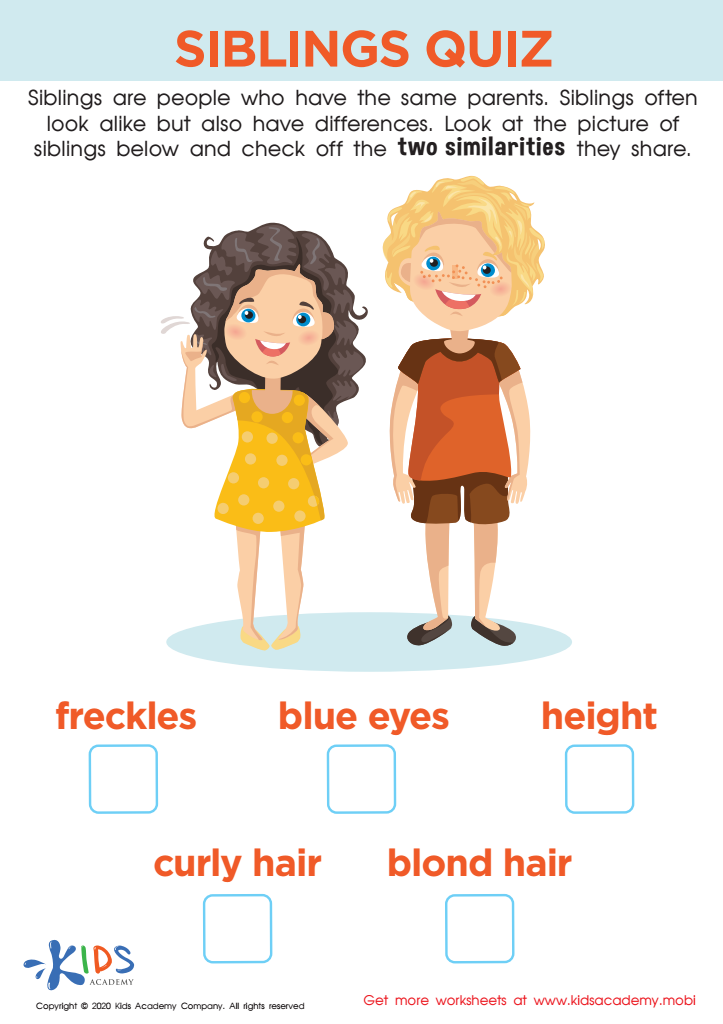
Your children may know a sibling is a sister or brother, but not realize what it means to be one. Siblings share the same parents, which means they share many genes. They are alike in many ways, but also have their own unique traits. Help your future scientist understand this early biology concept with this fun worksheet. They'll be tasked with finding similarities between two siblings on the page.
Siblings Quiz Worksheet
Worksheet


Vocabulary expansion for children aged 4-6 is crucial for their cognitive and academic development. During these formative years, children's brains are like sponges, absorbing information rapidly. A rich vocabulary forms the foundation for effective communication, reading comprehension, and critical thinking.

Parents and teachers should prioritize vocabulary growth because it directly affects a child's ability to grasp complex concepts and follow instructions in a classroom setting. When kids understand and use a wide range of words, they can better express their thoughts and feelings, contributing to improved social interactions and emotional intelligence.

Moreover, a strong vocabulary is a cornerstone of literacy skills. It enables children to recognize written words easily and infer meanings of new words in texts, enhancing their reading skills. This, in turn, promotes a love for reading, opening doors to a lifetime of learning.

In the realm of Normal Science, specifically, having a robust vocabulary allows young learners to accurately name and describe observations and phenomena, ask informed questions, and understand explanations. A child's curiosity about the natural world can be deeply satisfied and nurtured when they have the words to explore and articulate it.

By investing in vocabulary expansion, parents and teachers set up meaningful academic advancements, effective communication skills, and a lifelong curiosity about the world.