Phonics comprehension Normal Worksheets for Ages 4-7
3 filtered results
-
From - To
Welcome to our Phonics Comprehension Worksheets for Ages 4-7! These engaging, printable worksheets are tailored to enhance your child’s reading skills through phonics activities. Designed for early learners, our resources help children identify sounds, build words, and comprehend simple texts. By incorporating fun exercises and captivating illustrations, kids will enjoy practicing essential phonics skills while they learn. Each worksheet promotes language development and aids in early literacy, ensuring a strong foundation for future reading success. Perfect for classroom use or at-home learning, these worksheets make phonics instruction interactive and enjoyable. Start your child's reading journey today!
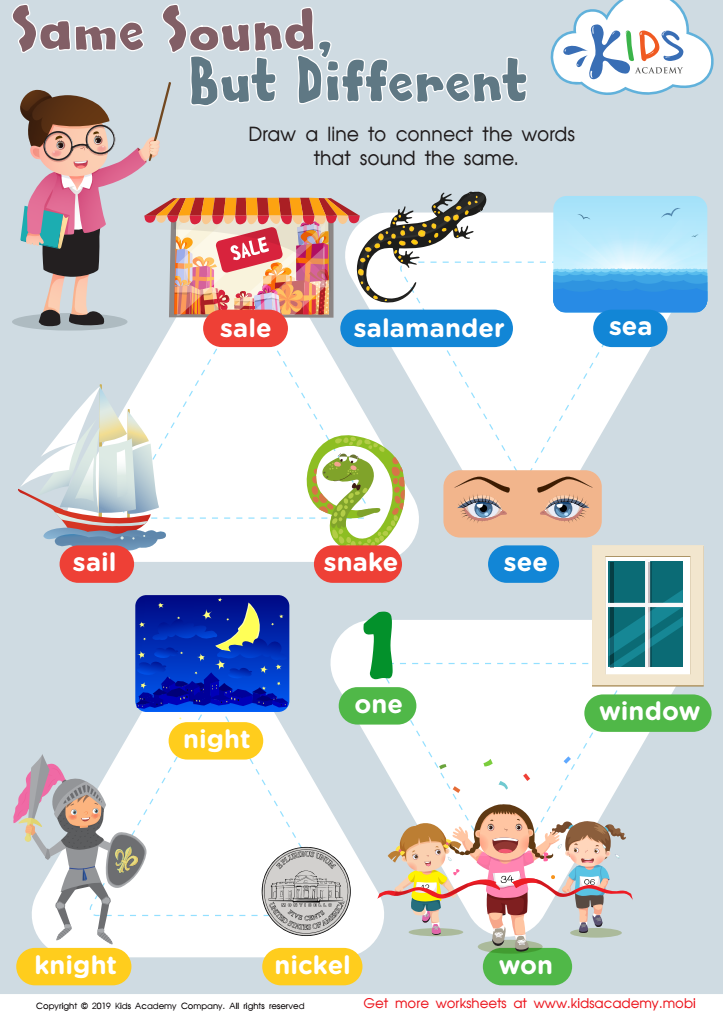
Sound Different Worksheet
 Assign to My Students
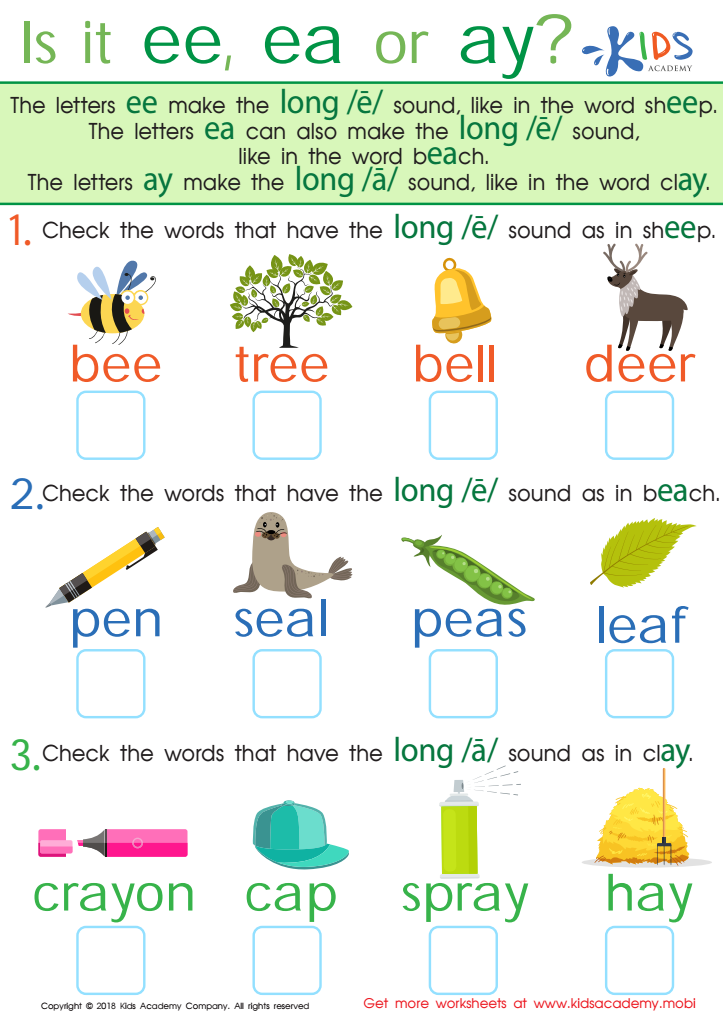
Is It EE, EA, or AY? Worksheet
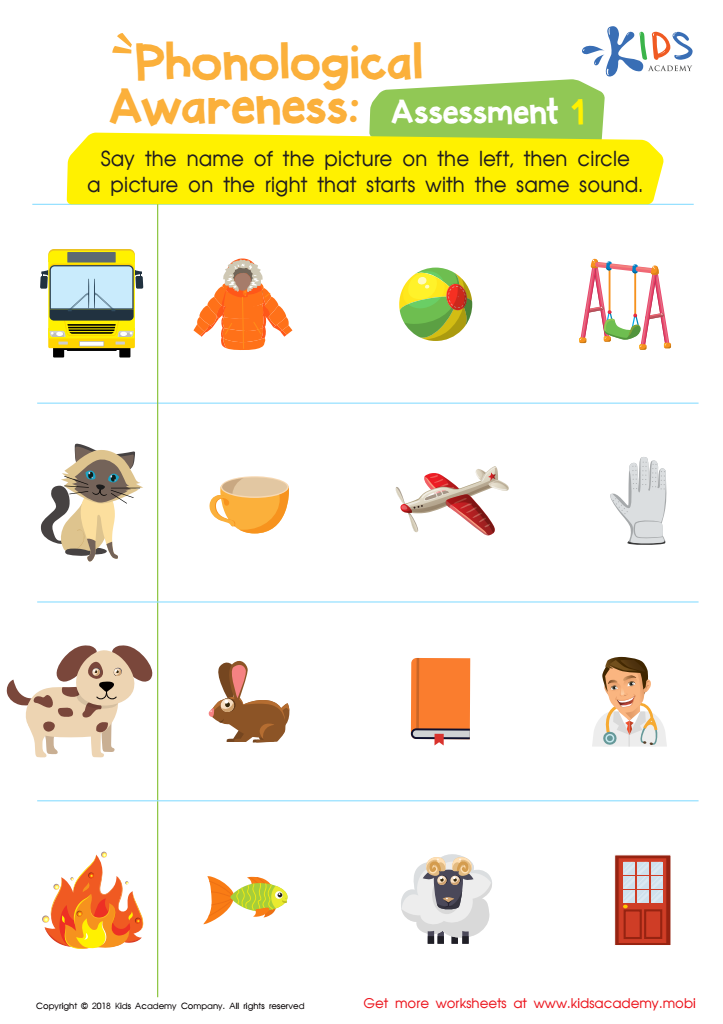
Phonological Awareness: Assessment 1 Worksheet







Phonics comprehension is a foundational skill for children aged 4-7, crucial for their literacy development. Understanding phonics—the relationship between letters and sounds—empowers young learners to decode words independently, fostering confidence and enthusiasm for reading. Early mastery of these skills lays the groundwork for future academic success, as proficient reading is linked to better performance in all subjects.
Parents and teachers should prioritize phonics because it not only promotes reading skills but also enhances vocabulary and comprehension. As children learn to recognize letter sounds and patterns, they can more easily encounter and understand new words. This vocabulary development is essential for effective communication and cognitive growth.
Additionally, strong phonics skills can prevent reading difficulties later on. By identifying phonetic sounds early, educators and parents can help children feel secure in their abilities, reducing frustration and disinterest in reading tasks. In nurturing these skills, one builds a love for reading that can last a lifetime.
Ultimately, investing time and resources in phonics education helps cultivate capable readers who are equipped to engage with literature and the world around them, leading to lifelong learning and success.








